
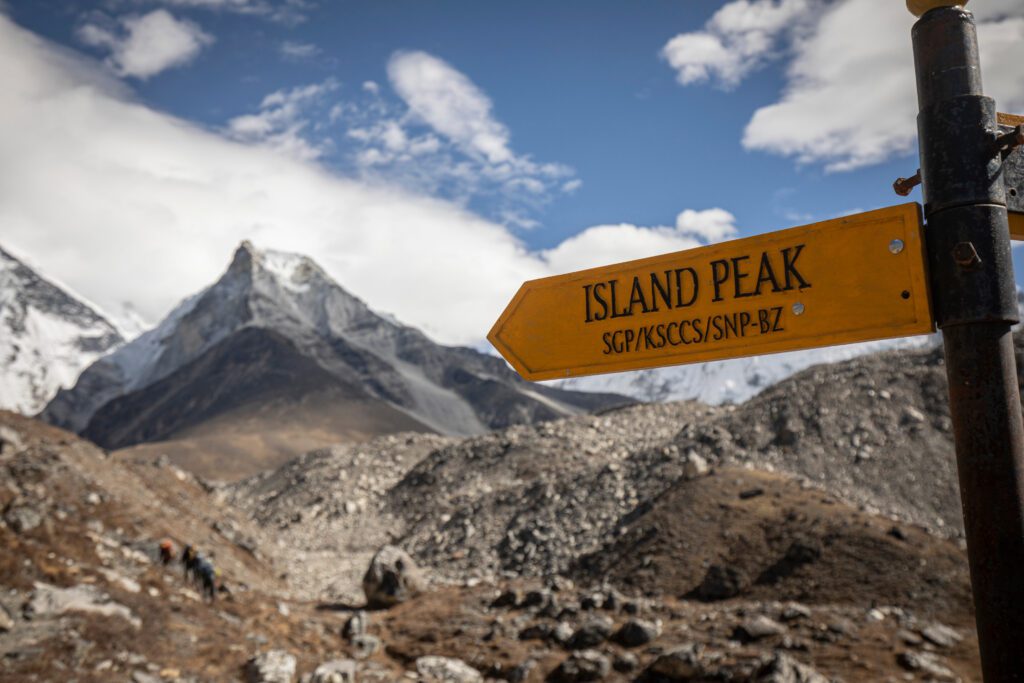
Best Island Peak Operators: 4 Commercial Operators Compared for 2026
Island Peak (Imja Tse, 6,189m) is Nepal’s most popular technical trekking peak — a structured technical introduction to Himalayan climbing featuring fixed-rope headwall, glacier travel with crevasse crossings, exposed summit ridge, and use of jumars on fixed line. The mountain was originally used by Hillary and Tenzing as training for the historic 1953 Everest expedition. Located in the Imja Valley between Lhotse and Ama Dablam, Island Peak commercial expeditions are typically combined with the Everest Base Camp trek for natural acclimatization. The commercial operator field spans premium Western IFMGA leadership through Adventure Consultants, UK Mera + Island Peak combo specialist Jagged Globe, Nepali-direct established Seven Summit Treks, and the structurally distinctive UK-Nepal hybrid model of Adventure Alternative. For climbers building toward 8000m commercial expeditions, Island Peak delivers the technical climbing skills that Mera Peak’s altitude-tolerance focus does not develop.
Imja Valley Khumbu
price range
(with EBC trek)
Mar–May
seasons
Island Peak occupies a structurally specific position in Himalayan commercial mountaineering: Nepal’s most popular technical trekking peak whose structured technical character — fixed-rope headwall, glacier travel with crevasse crossings, exposed summit ridge — develops the specific climbing skills required for 8000m commercial expeditions including Everest. The mountain’s 1953 historical significance as Hillary and Tenzing’s training peak before their successful Everest summit establishes Island Peak’s structural role as Nepal’s training mountain — over 70 years later, the peak remains the dominant commercial technical introduction for climbers building Khumbu commercial mountaineering capability. Standard 2026 commercial frameworks combine Island Peak with the Everest Base Camp trek for natural acclimatization, single-trip cost-efficiency, and shared Khumbu Valley infrastructure utilization. This comparison evaluates 4 commercial Island Peak operators against the eight criteria framework.
Island Peak is widely regarded as the essential technical climbing skill development peak for Nepal commercial mountaineering progression. The route’s structured technical elements — fixed-rope ascent of steep headwall, crampon and ice axe technique on glaciated terrain, crevasse crossings using ladders, exposed summit ridge with airy traverses, jumar technique on fixed line — develop the specific climbing skills required for 8000m commercial expeditions. The skills overlap with Everest commercial framework includes ladder crossings (used in Khumbu Icefall), fixed-rope ascending throughout the upper mountain, exposed terrain comfort, and team coordination through technical sections. Many serious 8000m aspirants attempt Island Peak as the technical climbing skill development counterpart to Mera Peak’s altitude tolerance preparation — Mera-then-Island is the natural progression for comprehensive Nepal commercial trekking peak preparation.
The “trekking peak” classification reflects regulatory framework, not technical character. Island Peak’s summit approach involves fixed-rope ascent of a steep headwall (45-50 degrees in places), exposed summit ridge with significant drops, and sustained technical climbing where inadequately prepared climbers create safety risks. Climbers should arrive with strong cardiovascular fitness, comfort moving on glaciated terrain, basic alpine equipment familiarity (boots, crampons, harness), and prior 4,000m+ altitude experience. Reputable operators include pre-climb training day at Base Camp covering crampon, ice axe, fixed-rope, and harness technique — but training day cannot substitute for prior alpine experience. Climbers without prior alpine experience should attempt Mera Peak (altitude tolerance preparation) before Island Peak, or complete alpine club courses, guided alpine climbing, or structured mountaineering instruction.
4 operators evaluated against the eight criteria framework. Pricing is 2026-estimated and should be verified directly with operators. The structural similarity between operators (all using the standard Imja Valley approach with Chhukung approach, Island Peak Base Camp at 5,000m, High Camp at 5,600m, summit via fixed-rope headwall) means evaluation focuses on commercial structure, EBC trek combination framework, guide-client ratio, and 8000m progression continuity rather than fundamentally different on-mountain experiences. Twice-yearly review cycle. Next scheduled review: September 2026.
Why Island Peak? Nepal’s Dominant Technical Introduction Peak
Island Peak occupies a structurally distinctive position in Himalayan commercial mountaineering:
The 1953 Hillary and Tenzing training peak heritage. Island Peak’s structural significance includes its historical role as the training peak for the 1953 Everest expedition. Hillary, Tenzing, and other British expedition members used Island Peak (then unnamed) for technical practice climbs to hone skills before their successful Everest summit. The peak was named “Island Peak” by Eric Shipton in 1953 because, viewed from Dingboche, it appears as an island in a sea of ice. The Nepali name Imja Tse was officially adopted in 1983. Over 70 years later, the peak’s structural role as Nepal’s commercial training mountain remains unchanged — Island Peak develops the technical climbing skills required for subsequent Everest, Lhotse, and other 8000m commercial expeditions.
Structured technical elements developing 8000m skills. Island Peak’s commercial route includes structured technical elements that develop skills directly transferable to 8000m commercial expeditions:
- Fixed-rope ascending on steep headwall — develops jumar technique used throughout Everest’s South Col route
- Glacier travel with crevasse crossings — uses ladders comparable to Khumbu Icefall infrastructure
- Crampon and ice axe technique on glaciated terrain — fundamental skills for all 8000m commercial expeditions
- Exposed summit ridge with airy traverses — develops comfort with significant drops on technical terrain
- Multi-day high camp rotation — Base Camp (5,000m) → High Camp (5,600m) → Summit (6,189m) → return mirrors 8000m commercial progression structure
Standard EBC trek combination framework. Most 2026 commercial Island Peak programs combine Island Peak with the Everest Base Camp trek. The combination framework matters structurally: the EBC trek provides 12-14 days of natural acclimatization above 4,000m before the Island Peak summit attempt, dramatically improving summit success probability; single-trip cost-efficiency vs separate expeditions saves international flights and Nepal entry costs; shared Khumbu Valley infrastructure (Lukla, Namche Bazaar, Tengboche, Dingboche, Chhukung) supports integrated logistics. Standard commercial Island Peak + EBC programs run 16-20 days vs 12-15 days for Island Peak only. Most reputable operators offer both options.
Imja Valley setting between iconic Khumbu giants. Island Peak’s location in the Imja Valley between Lhotse (8,516m) South Wall, Nuptse (7,861m), Baruntse (7,129m), and Ama Dablam (6,812m) delivers extraordinary mountaineering setting. The summit views include Mount Everest, Lhotse, Makalu, Nuptse, Baruntse, and Ama Dablam — direct visualization of subsequent 8000m and technical objectives for climbers building Khumbu mountaineering progression.
Structurally accessible cost framework. Island Peak commercial expeditions range $2,200-$5,500 depending on operator structure — meaningfully below Ama Dablam ($7,500-$22,000) while delivering technical climbing experience that Mera Peak’s altitude focus does not develop. The accessible cost framework means climbers can build technical Khumbu mountaineering capability through Mera + Island Peak progression for combined cost approximately $5,000-$10,000 — substantially below single Ama Dablam attempt while developing both altitude tolerance and technical climbing skills.
Two seasons: spring and autumn. Island Peak’s commercial climbing seasons run spring (March-May, with April-May dominant) and autumn (September-November). Spring offers blooming rhododendrons in the Khumbu Valley with rising temperatures and moderately stable conditions. Autumn delivers more stable weather and clearer skies with cooling temperatures. Climbing outside primary windows encounters monsoon (June-August, fog and rain shutting down Lukla flights), or deep winter (December-February, dangerously cold conditions beyond commercial framework).
2026 Island Peak Operator Awards
Four operators selected to represent the structural diversity of the Island Peak commercial operator field — premium Western IFMGA-led, UK Mera + Island Peak combination specialist, Nepali-direct established commercial framework, and UK-Nepal hybrid model. Each delivers structurally distinct value for different client priorities.
Adventure Consultants
New Zealand-based international IFMGA operator with comprehensive Island Peak commercial programs alongside Everest, Lhotse, Cho Oyu, Manaslu, Ama Dablam, and broader Himalayan portfolio. Adventure Consultants delivers institutional 8000m progression continuity — climbers can attempt Island Peak as technical skill development with the operator, then progress to Ama Dablam, Cho Oyu, Manaslu, or Everest with the same Western IFMGA expedition framework. The operator’s safety philosophy explicitly addresses the technical risks of commercial Island Peak operations — investing in Western IFMGA expedition leader presence alongside experienced Sherpa staff support.
For climbers prioritizing Western IFMGA expedition culture, integrated travel coordination from international departure points, and operator continuity to subsequent technical and 8000m commercial expeditions, Adventure Consultants delivers structurally specific value. The operator’s commercial materials explicitly address the technical preparation framework — climbers receive structured pre-trip preparation with explicit prerequisite framework communication rather than commercial framework optimism.
Read Adventure Consultants profile →Jagged Globe
Sheffield-based UK commercial mountaineering operator with substantial Mera + Island Peak combined commercial track record (multiple expeditions documented since 2000) crossing the technical Amphu Labtsa Pass. Jagged Globe delivers structurally distinctive value through the Mera + Island Peak combined commercial framework — UK leader with experienced high-altitude Sherpa support (1:2 Sherpa ratio), maximum 8-person team size for the combined expedition, helicopter Lukla flight included, and technical Amphu Labtsa Pass crossing as expedition highlight. The combined expedition is structurally distinctive — few operators offer this 28-30 day twin-peak commercial framework with technical pass crossing.
For UK climbers prioritizing UK-direct booking infrastructure with Pound Sterling pricing and structured UK climbing community framework, Jagged Globe delivers refined commercial expedition framework. The Mera + Island Peak combined program (£6,500-£7,500) represents single-trip cost efficiency for climbers seeking comprehensive Nepal trekking peak experience including both altitude tolerance (Mera) and technical climbing (Island Peak) development. Standalone Island Peak commercial programs from Jagged Globe typically run £3,500-£4,500.
Read Jagged Globe profile →Seven Summit Treks (SST)
Established Nepali commercial expedition operator with comprehensive Island Peak commercial programs alongside extensive 8000m commercial portfolio. SST delivers structurally specific value through Nepali-direct expertise at meaningfully lower pricing than Western operators — typical 2026 Island Peak commercial programs range $2,500-$4,000 reflecting Nepali-direct commercial overhead elimination. The operator’s institutional 8000m commercial expertise translates to refined Sherpa team capability and integrated 8000m progression support for climbers building toward Everest or other 8000m objectives.
For climbers prioritizing Nepali-direct value with operator continuity to subsequent technical and 8000m commercial expeditions, SST delivers structurally appropriate framework. The pricing differential of $2,000-$3,500 below Western operator alternatives can fund subsequent Ama Dablam, Cho Oyu, or other Nepal commercial expeditions within total Himalayan progression budget. The SST commercial Island Peak program includes comprehensive permit framework (NMA permit, Sagarmatha National Park, Pasang Lhamu Rural Municipality, garbage management fees) plus Lukla flights, base camp logistics, and Sherpa climbing team support.
Read Seven Summit Treks profile →Adventure Alternative
UK-based commercial mountaineering operator with structurally distinctive UK-Nepal hybrid commercial model — Adventure Alternative operates its own licensed Nepali company (Adventure Alternative Nepal) in Kathmandu with full-time Nepali staff for in-country operations alongside UK booking infrastructure and UK guide presence (UK guide depending on group numbers, minimum 10 climbers). The hybrid model produces structurally distinctive value — clients access UK-direct booking framework with English-language pre-trip preparation alongside Nepali-direct in-country operations through the operator’s own Nepal subsidiary rather than third-party Nepali partner arrangements.
Adventure Alternative’s commercial Island Peak program delivers Sherpa guides (English speaking, trained in first aid) with optional UK guide presence based on group size, group climbing equipment provision (ropes, ice screws, tents, cooking equipment, first aid kits), and integrated Kathmandu operations management. For climbers prioritizing UK-direct booking with structurally integrated Nepal operations rather than third-party Nepal partner frameworks, Adventure Alternative delivers commercial framework that bridges Western booking infrastructure with Nepali operational integration. The operator also offers Mera + Island Peak combined programs through the same hybrid framework.
Read Adventure Alternative profile →2026 Island Peak Cost Breakdown
Permit and regulatory framework
Island Peak commercial expeditions require Nepal Mountaineering Association (NMA) permits with structured 2026 fee framework: spring season permit $350 USD per climber, autumn season permit $175 USD per climber. The seasonal pricing differential reflects spring’s higher commercial demand. Additional regulatory costs include Sagarmatha National Park entry fee, Pasang Lhamu Rural Municipality entry fee, garbage management deposits, and TIMS (Trekkers’ Information Management System) card. Reputable operators include all permit fees in commercial program pricing — climbers should verify permit inclusion during booking inquiry to understand total cost framework.
Standalone Island Peak commercial programs ($2,200-$5,500)
Standalone Island Peak commercial programs (without EBC trek extension) typically run 12-15 days from Kathmandu. Nepali local operator pricing typically $2,200-$3,500 with comprehensive permit, guide, porter, food, and logistics coverage. Mid-tier operators with refined commercial framework typically $3,000-$4,500. Premium Western operators with IFMGA leader and integrated travel coordination typically $4,500-$5,500.
Island Peak + EBC trek combined programs ($3,500-$7,000)
Combined Island Peak + EBC trek programs typically run 16-20 days from Kathmandu, providing natural 12-14 day acclimatization through the EBC trek before the Island Peak summit attempt. The combined framework adds approximately $1,500-$2,500 to standalone Island Peak pricing for the additional EBC trek duration. The combined framework is the standard 2026 commercial structure — most reputable operators recommend the combined option for first-time Island Peak climbers due to dramatically improved summit success probability through extended acclimatization.
Mera + Island Peak combined programs ($6,500-$10,000)
Mera + Island Peak combined programs (twin-peak expedition crossing Amphu Labtsa Pass) typically run 26-30 days from Kathmandu. Jagged Globe’s Mera + Island Peak combined program at £6,500-£7,500 ($8,200-$9,500) is the structurally distinctive premium framework with helicopter Lukla flight included. Nepali operator alternatives (Mountain Monarch, Mountain Glory Treks) typically range $4,500-$7,000 for the combined twin-peak framework. The combined framework develops both altitude tolerance (Mera) and technical climbing (Island Peak) capability in a single expedition.
Pricing context within Himalayan commercial
Island Peak pricing positioning within Himalayan commercial trekking peak framework:
- Mera Peak: $1,795-$7,500 (altitude tolerance focus)
- Island Peak: $2,200-$5,500 (this comparison; technical climbing focus)
- Mera + Island combined: $6,500-$10,000 (comprehensive Nepal trekking peak framework)
- Lobuche East: $2,500-$5,000
- Ama Dablam: $7,500-$22,000
- Cho Oyu: $22,000-$45,000
- Everest Nepal-side: $45,000 median commercial / $76,000 international Western
For 8000m aspirants, Island Peak delivers technical climbing skill development at structurally accessible cost — approximately 5-12% of Everest commercial cost while developing fixed-rope, glacier travel, and exposed terrain comfort required for 8000m success.
Lukla flight and accommodation infrastructure
The Lukla flight is structurally critical for Island Peak commercial expeditions. Standard Lukla flight from Kathmandu (or Ramechhap during peak season) typically costs $200-$400 per direction included in most commercial program pricing. The Khumbu Valley accommodation infrastructure includes tea house lodging at Lukla, Namche Bazaar, Tengboche, Dingboche, and Chhukung — climbers stay in tea houses through approach and return, with camping accommodation only at Island Peak Base Camp (5,000m) and High Camp (5,600m). The shared Khumbu infrastructure supports the EBC trek combination framework efficiently.
Who Should Climb Island Peak in 2026?
Strong fit — climbers building technical Khumbu mountaineering capability
For climbers building technical Khumbu mountaineering capability through Nepal trekking peak progression, Island Peak delivers structurally specific technical climbing skill development. The fixed-rope headwall, glacier travel with crevasse crossings, and exposed summit ridge develop the specific climbing skills required for subsequent Ama Dablam, 8000m commercial expeditions, or independent Khumbu technical objectives. Climbers attempting Mera Peak first (altitude tolerance) and Island Peak second (technical climbing) follow the natural progression for comprehensive Nepal commercial trekking peak preparation.
Strong fit — 8000m aspirants building technical climbing skills
For climbers building toward Everest, Lhotse, Cho Oyu, Manaslu, or other 8000m commercial expeditions, Island Peak delivers structurally specific technical preparation. The skills overlap with Everest commercial framework includes ladder crossings (used in Khumbu Icefall), fixed-rope ascending throughout the upper mountain, exposed terrain comfort, and team coordination through technical sections. Many serious 8000m aspirants attempt Island Peak as the technical climbing skill development counterpart to Mera Peak’s altitude tolerance preparation.
Strong fit — climbers seeking comprehensive EBC trek + technical climb
For climbers seeking comprehensive Khumbu Valley experience combining iconic Everest Base Camp trek with technical climbing summit, the standard Island Peak + EBC combined framework delivers structurally appropriate fit. The 16-20 day combined program provides EBC trek cultural and visual experience (Tengboche Monastery, Kala Patthar sunrise views, EBC arrival, Khumbu glacier exploration) alongside technical climbing summit. The natural acclimatization through EBC trek dramatically improves Island Peak summit success probability.
Strong fit — value-conscious climbers seeking technical Himalayan introduction
For value-conscious climbers seeking accessible technical Himalayan introduction at structurally accessible cost, Island Peak’s $2,200-$5,500 range delivers structurally specific value. The Nepali-direct operator alternatives (Seven Summit Treks at $2,500-$4,000) represent meaningfully lower pricing than Western operator alternatives while accessing comparable Sherpa expertise. For climbers building Himalayan portfolio across multiple seasons, Island Peak’s accessible pricing supports technical Himalayan experience without commercial commitment exceeding subsequent Ama Dablam or 8000m investment.
Less optimal — climbers without prior alpine technical experience
Despite the “trekking peak” classification, Island Peak’s technical character demands genuine prior alpine experience. Climbers without basic crampon, ice axe, harness, and fixed-rope ascending technique face structural difficulty even with operator pre-climb training day. Climbers should complete alpine club courses, guided alpine climbing, structured mountaineering instruction, or attempt Mera Peak (less technical) first. First-time international expedition climbers without prior alpine experience should consider Mera Peak (altitude tolerance focus, less technical) before Island Peak.
Less optimal — climbers without prior 4,000m+ altitude experience
Island Peak’s 6,189m altitude exposure exceeds Mont Blanc by over 1,300m and demands genuine high-altitude acclimatization. Climbers without prior 4,000m+ altitude experience face physiological risk including HAPE and HACE. The standard Island Peak + EBC combined framework provides natural 12-14 day acclimatization above 4,000m before summit attempt — climbers should accept the longer combined program duration for safety reasons rather than attempting standalone Island Peak without comparable prior altitude experience.
Less optimal — climbers requiring fixed-departure scheduling certainty
Some Island Peak commercial operators (particularly Nepali-direct boutique operators) operate primarily through private group customization rather than fixed-departure schedules. Climbers requiring fixed-date booking certainty for international travel coordination should verify departure framework during booking inquiry. Adventure Consultants, Jagged Globe, and Adventure Alternative typically publish fixed departure dates with bookable schedule certainty.
Less optimal — climbers prioritizing 8000m peak commercial experience over technical preparation
For climbers prioritizing direct 8000m peak commercial experience over technical preparation framework, Island Peak’s structural role as preparation peak rather than summit objective may not align with client priorities. Climbers prioritizing direct 8000m commercial framework should consider Cho Oyu (most accessible 8000m), Manaslu (lowest mortality 8000m), or other 8000m peaks directly — though most reputable 8000m operators recommend Island Peak (or Mera + Island Peak) preparation before 8000m attempts.
Frequently Asked Questions About Island Peak Operators
How much does Island Peak cost in 2026?
Island Peak commercial expeditions in 2026 range $2,200-$5,500 depending on operator structure and program length. Nepali local operators typically range $2,200-$3,500. Mid-tier operators with EBC trek combination typically range $3,000-$5,000. International Western operators with IFMGA leader typically range $4,500-$5,500. Mera + Island Peak combined programs typically range $6,500-$10,000. Total all-in budget after international travel and ancillary costs typically runs $4,500-$8,500 for standalone Island Peak. Standard programs combine Island Peak with Everest Base Camp trek for natural acclimatization sequence.
Why is Island Peak considered the best technical introduction peak in Nepal?
Island Peak (Imja Tse, 6,189m) is widely considered Nepal’s best technical introduction peak because the route includes structured technical elements while remaining achievable for fit climbers with basic mountaineering skills. The summit approach involves fixed-rope ascent of a steep headwall, glacier travel with crevasse crossings using ladders, exposed summit ridge with airy traverses, and use of jumars on fixed line. These technical elements develop the specific skills required for 8000m commercial expeditions including Everest. Island Peak was originally used by Hillary and Tenzing as training for the historic 1953 Everest expedition — over 70 years later, the peak remains the dominant commercial technical introduction for climbers building Khumbu commercial mountaineering capability.
Should I combine Island Peak with Everest Base Camp trek?
Combining Island Peak with the Everest Base Camp (EBC) trek is the standard commercial framework for several structural reasons. The EBC trek provides 12-14 days of natural acclimatization above 4,000m before the Island Peak summit attempt, dramatically improving summit success probability. Single-trip cost-efficiency vs separate expeditions saves international flights and Nepal entry costs. The Khumbu Valley route to EBC and the Imja Valley route to Island Peak share common infrastructure (Lukla, Namche Bazaar, Tengboche, Dingboche). Standard commercial Island Peak + EBC programs run 16-20 days vs 12-15 days for Island Peak only. Most reputable operators offer both options and recommend the combined framework for first-time Island Peak climbers.
How does Island Peak compare to Mera Peak?
Island Peak (6,189m) and Mera Peak (6,476m) are commonly combined or alternated as Nepal trekking peak introductions. Mera is higher with greater altitude exposure but technically simpler — primarily glacier travel with short steeper section near summit. Island Peak is lower with sustained technical demands — fixed-rope headwall, exposed ridge, more technical character. Mera develops altitude tolerance; Island develops technical climbing skills. Many serious climbers attempt both — either combined in Mera + Island Peak expedition crossing Amphu Labtsa Pass (typically 26-30 days, $6,500-$10,000) or sequenced across multiple seasons. Mera-then-Island is the natural progression for technical skill development.
What technical climbing experience is required for Island Peak?
Island Peak is structurally accessible to fit climbers with basic mountaineering skills — most reputable operators include pre-climb training day at Base Camp covering crampon, ice axe, fixed-rope, and harness technique. However, climbers should arrive with strong cardiovascular fitness (multi-day high camp endurance), comfort moving on glaciated terrain (crevasse crossings), basic alpine equipment familiarity (boots, crampons, harness), and prior 4,000m+ altitude experience to manage Khumbu acclimatization. Climbers without prior alpine technical experience should not attempt Island Peak as their first major mountain — Kilimanjaro or Mera Peak (altitude tolerance preparation) are appropriate prerequisites. Training day cannot substitute for prior alpine experience.
Should I book a Nepali local operator or a Western operator?
The choice depends on client priorities. Nepali local operators (Seven Summit Treks) deliver Nepali-direct expertise at meaningfully lower pricing ($2,500-$4,000 vs $4,500-$5,500 Western operators). Western operators (Adventure Consultants, Jagged Globe, Adventure Alternative) deliver familiar booking infrastructure, integrated travel coordination, English-language client engagement, IFMGA expedition leader presence (or UK leader for Jagged Globe and Adventure Alternative), and 8000m portfolio continuity at meaningful pricing premium. The on-mountain Island Peak experience is structurally similar across operators given the same Imja Valley route and broadly similar Sherpa team structures. For value-conscious climbers, Nepali-direct delivers meaningful savings; for climbers prioritizing Western operator continuity to subsequent technical and 8000m climbs, Western operator pricing premium is justified by structural value-add.
When is the best time to climb Island Peak?
Island Peak’s commercial climbing seasons run spring (March-May, with April-May dominant) and autumn (September-November). Spring offers blooming rhododendrons in the Khumbu Valley with rising temperatures and moderately stable conditions. Autumn delivers more stable weather and clearer skies with cooling temperatures. Climbing outside primary windows is not recommended — monsoon season (June-August) brings fog and rain that shut down Lukla flights daily, while deep winter (December-February) brings dangerously cold temperatures beyond commercial operator framework. The Lukla flight is structurally critical and weather-dependent — climbers should plan buffer days for grounded flights regardless of season.
Island Peak (Imja Tse, 6,189m) is Nepal’s most popular technical trekking peak — a structured technical introduction to Himalayan climbing whose 1953 historical role as Hillary and Tenzing’s training peak before the historic Everest expedition continues over 70 years later as Nepal’s dominant commercial technical mountaineering preparation peak. For climbers prioritizing premium Western IFMGA expedition culture, Adventure Consultants delivers institutional 8000m progression continuity through Island Peak as technical skill development toward subsequent Ama Dablam, Cho Oyu, Manaslu, or Everest commercial expeditions. For UK climbers prioritizing Mera + Island Peak combined commercial framework, Jagged Globe delivers structurally distinctive twin-peak commercial expedition crossing technical Amphu Labtsa Pass with helicopter Lukla flight included (£6,500-£7,500). For value-conscious climbers prioritizing Nepali-direct expertise with 8000m portfolio continuity, Seven Summit Treks delivers Nepali-direct commercial framework at meaningful pricing advantage ($2,500-$4,000). For climbers prioritizing UK-direct booking with structurally integrated Nepal operations, Adventure Alternative delivers UK-Nepal hybrid commercial framework through the operator’s own licensed Nepali subsidiary (Adventure Alternative Nepal) rather than third-party Nepal partner arrangements. For 8000m aspirants, Island Peak delivers structurally specific technical climbing skill development at approximately 5-12% of Everest commercial cost — the natural counterpart to Mera Peak’s altitude tolerance preparation. Island Peak demands genuine technical preparation despite “trekking peak” classification — climbers should arrive with prior alpine technical experience and 4,000m+ altitude experience. The choice between operators should be driven by client priorities: maximum Nepali-direct value (Seven Summit Treks), Western booking infrastructure (Adventure Consultants), UK Mera + Island combined (Jagged Globe), or UK-Nepal hybrid framework (Adventure Alternative). Verify current 2026 pricing, EBC trek combination availability, summit bonus structure, and specific program inclusions directly with operators close to departure dates.
Sources and Verification
This comparison was built from publicly available information about commercial Island Peak operators, Nepal Mountaineering Association (NMA) regulatory framework, and industry reference sources. Pricing should be verified directly with operators before booking. NMA permit fees and operator commercial frameworks may evolve season-to-season — verify current requirements close to departure dates. Next scheduled review: September 2026.
- Nepal Mountaineering Association — NMA trekking peak permit framework verification.
- Adventure Consultants — Premium Western IFMGA commercial program documentation.
- Jagged Globe Mera + Island Peak — UK Mera + Island Peak combined commercial program documentation.
- Adventure Alternative Island Peak — UK-Nepal hybrid commercial program documentation.
Fact-checked April 29, 2026 · Next scheduled review: September 2026
Island Peak and Himalayan Operator Resources
Island Peak: Essential Technical Preparation
For 8000m aspirants, Island Peak delivers structurally specific technical climbing skill development at approximately 5-12% of Everest commercial cost. The natural counterpart to Mera Peak’s altitude tolerance preparation — Mera-then-Island is the complete Nepal trekking peak preparation framework.