
Last updated June 27, 2026
Best Mount Shasta Operators 2026: 3 Guide Services + Self-Guided
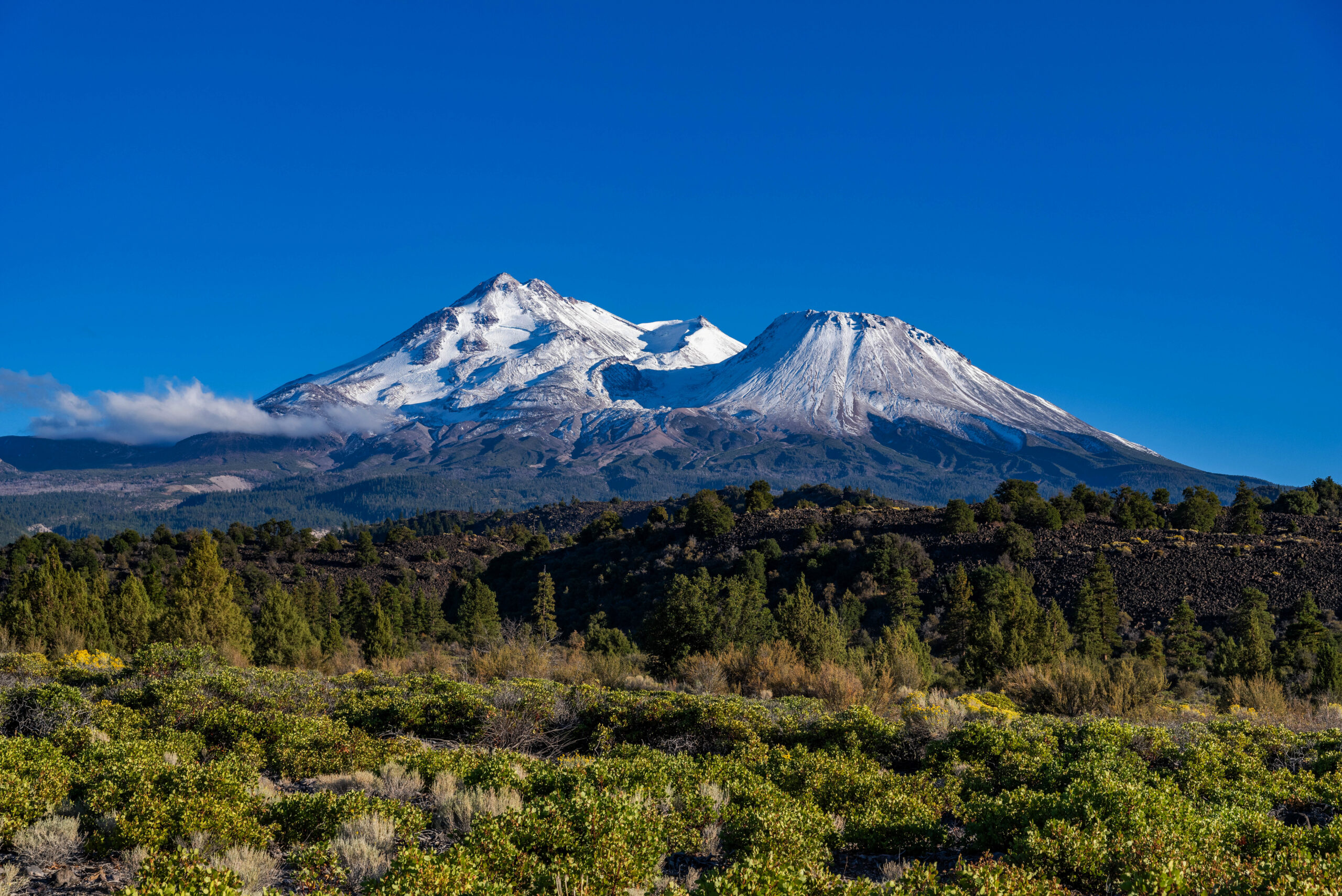
Mount Shasta (14,179 ft / 4,322 m), the great glaciated stratovolcano of California’s Cascades, runs on an unusual model: only three guide services hold USFS Special Use Permits to guide commercially to the summit — Shasta Mountain Guides, SWS Mountain Guides, and International Alpine Guides / Alpine Skills International. Everyone else climbs self-guided under a no-quota, self-issue permit system. This is the honest 2026 comparison of all four options — and why the 2026 heat dome makes timing the whole game this season.
As of early 2026, an unprecedented heat dome has displaced the afternoon freezing level to 11,000-12,500 feet. Avalanche Gulch is in prime condition with well-frozen early-morning chimneys, but the Konwakiton bergschrund has opened prematurely, wet-loose avalanche risk rises sharply after 9:00 AM, and the safe climbing window now requires a 2:00-4:00 AM departure and a hard noon turnaround.
The heat has also driven dehydration rates up: carry 3-4 liters, use bottles rather than hydration bladders (freezing risk at a 2:00 AM start despite warm days), and bring electrolyte tablets. Climbing rangers remain on duty seven days a week, year-round. Check the daily Mount Shasta Avalanche Center advisory before every climb — it, not this page, is the authority on what’s happening the day you go.
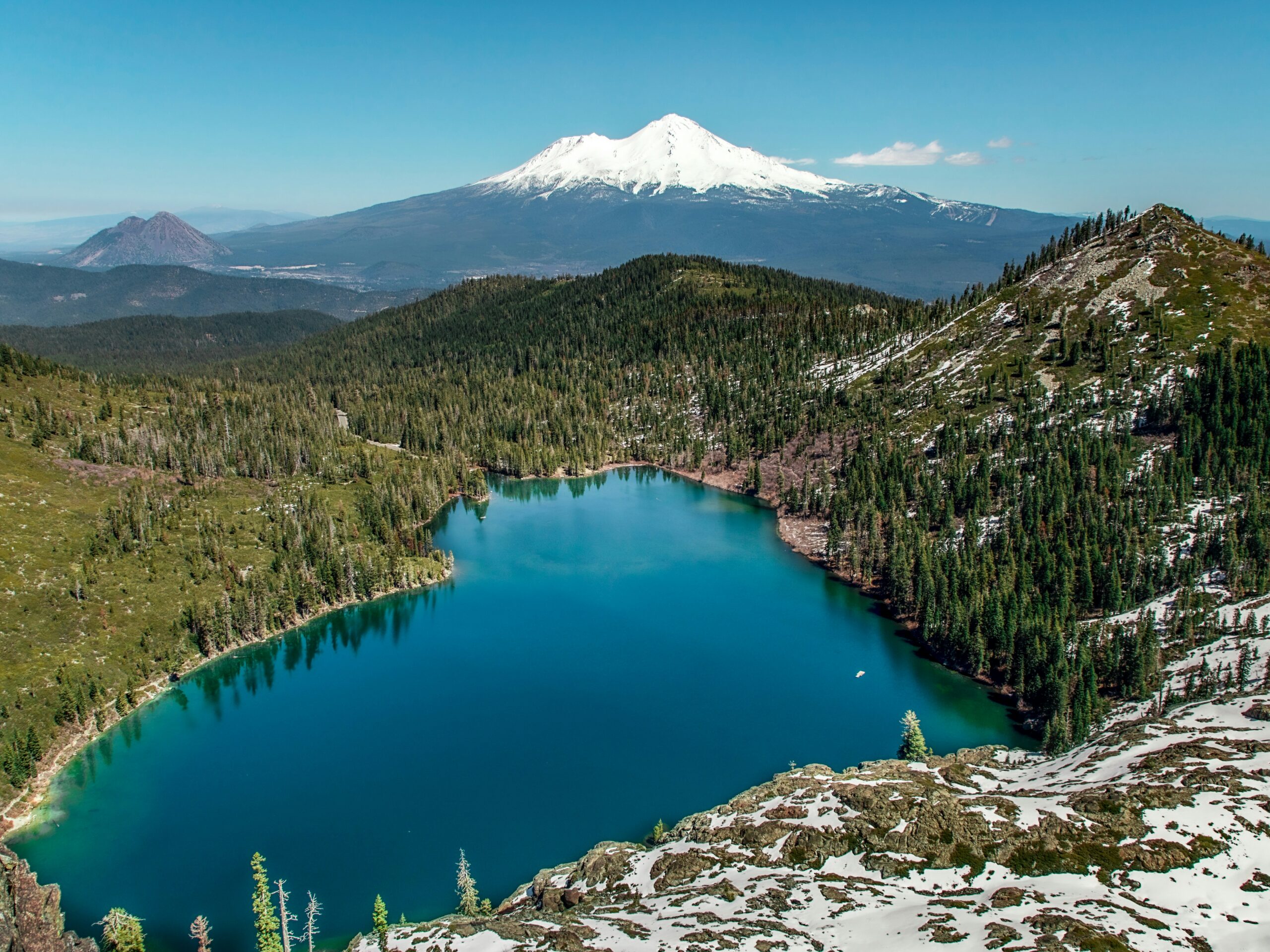
Mount Shasta is sacred to several Indigenous peoples, including the Wintu, Achumawi, Atsugewi, Modoc and Shasta traditions. It is the largest stratovolcano in the Cascade Volcanic Arc — around 85 cubic miles of volume, with the companion cone Shastina on its western flank — and it remains a potentially active volcano. Climbers should approach Shasta with cultural respect and strict leave-no-trace practice; the mandatory human-waste pack-out is part of that, and the Mount Shasta Wilderness is part of the National Wilderness Preservation System.
Which Mount Shasta Option Should You Choose?
Commercial summit guiding on Mount Shasta is limited to three USFS-permitted concessioners, while a strong no-quota self-issue system makes self-guided climbing genuinely viable — for the experienced. For a dedicated Shasta specialist with AMGA-certified senior guides and an avalanche-education focus, Shasta Mountain Guides is the pick. For 1981-established veteran heritage and a multi-discipline California portfolio, SWS Mountain Guides brings 43+ years. For a 40+ year multi-state federal network and a comprehensive gear-included beginner climb, International Alpine Guides / Alpine Skills International stands out on value. The self-guided path is a real option for climbers with AIARE training and self-rescue skills — not for first-timers. All four cost far less than the mountain’s reputation suggests; the real currency here is timing and judgment.
📑 Contents
The Mount Shasta Operator Field: 3 Concessioners + Self-Guided
Mount Shasta is managed by the USDA Forest Service / Shasta-Trinity National Forest, which administers the Mount Shasta Wilderness Area and issues a limited number of Special Use Permits to commercial guide services. As the climbing community puts it bluntly: there are only three guide services allowed to guide commercially to the summit. Climbing rangers stay on the mountain seven days a week, year-round, and the Mount Shasta Avalanche Center issues daily advisories and climbing observations through the season.
That produces a genuinely four-option decision — three concessioners, each suited to a structurally different climber, plus a self-guided path that is viable in a way it simply isn’t on lottery-gated peaks like Mount Whitney. Unlike the open-market operator fields on Aconcagua or Kilimanjaro, this is a closed, federally limited commercial field, which keeps the quality bar uniformly high: there is no budget tier with questionable credentials, because the Forest Service controls who may guide here at all. Every option below is evaluated against our eight-criteria framework.
- Only three guide services are USFS-permitted for the summit: Shasta Mountain Guides (dedicated specialist), SWS Mountain Guides (1981 veteran), and International Alpine Guides / Alpine Skills International (40+ years, multi-state network). There are no others.
- Self-guided is genuinely viable thanks to a no-quota, 24/7 self-issue system — but only for climbers with real alpine skills, AIARE training, and self-rescue capability. Not for first-timers.
- Two mandatory permits: a free Wilderness Permit and a Summit Pass ($25/3-day or $30 annual, above 10,000 ft), plus mandatory human-waste pack-out and a 10-person group limit.
- Avalanche Gulch (John Muir) is the standard route — Bunny Flat (6,950 ft) to Helen Lake (10,400 ft) to Red Banks to Misery Hill to the summit; 11.2 miles round trip, 7,300 ft of gain, 30-50% recreational success.
- Commercial pricing is modest: roughly $900-$1,500 per climber for a 2-3 day Avalanche Gulch climb across the three concessioners.
- The 2026 heat dome changes the math: a 2:00-4:00 AM start and a hard noon turnaround are essential, and the daily Avalanche Center advisory is a must-check.
The Permit System & Group Size
Two permits are required, and both are mandatory: a Wilderness Permit (free, for every individual entering the wilderness) and a Summit Pass ($25 for three days or $30 annual, required above 10,000 ft). Crucially, there is no quota and no advance-booking requirement — you can pick permits up the day of or the day before, which supports both last-minute commercial bookings and self-guided climbs.
Permits are available at the Mt. Shasta Ranger Station (530-926-4511), the McCloud Ranger Station, the Fifth Season outdoor store in Mt. Shasta City, and 24/7 self-issue kiosks at the trailheads (annual passes only from the ranger stations or Fifth Season, not the 3-day self-issue envelopes). Group size is capped at 10 people, human-waste pack-out bags are mandatory and free at trailheads, and federal citations are issued for non-compliance. For the full logistics picture, see our Shasta permits and logistics guide.
The Avalanche Gulch (John Muir) Route
The standard and most popular line — and the second technically easiest on the mountain — runs from the Bunny Flat Trailhead (6,950 ft) past Horse Camp, up Avalanche Gulch to the traditional high camp at Helen Lake (10,400 ft), then through Red Banks (climber’s right of The Heart, left of The Thumb), across Misery Hill, to the 14,179 ft summit. It’s 11.2 miles round trip with 7,300 ft of gain — typically 1-3 days self-guided, 2-4 days guided — with a 30-50% recreational summit rate that is dominated by weather and conditions on the day.
As of spring 2026, the Northgate Trailhead is open, while Brewer Creek is about 1.3 road miles out due to snow and Clear Creek about 2 miles out due to downed trees and snow — access notes that rangers update as the season progresses. For the other lines on the mountain, see our Mount Shasta climbing guide and the honest Shasta success-rate data.
Equipment & Altitude
The 2026 minimum viable kit is non-negotiable: B3 (fully rigid) mountaineering boots, 12-point technical crampons (mandatory above 10,000 ft), a climbing helmet (UIAA 106 / EN 12492 — rime ice sheds off the Red Banks towers from roughly 7:00-8:00 AM), an ice axe with a leash on Avalanche Gulch, and a beacon, shovel and probe in winter and spring, plus genuine self-arrest competency. There are no acceptable substitutes for boots, crampons, and ice axe on any Shasta route — if you don’t have them, you shouldn’t be on the mountain.
On altitude: acclimatize at least 24 hours — 48 is meaningfully better — at Bunny Flat or Horse Camp before a summit bid, because at 14,179 ft effective oxygen is roughly 58% of sea level and climbers arriving from sea level are routinely surprised by it. Carry 3-4 liters of water with electrolytes, and treat the AMS cascade (headache → nausea → ataxia → HACE/HAPE) as a descend-now criterion beyond headache, not something to push through. See our full Shasta gear list and glacier-travel basics for the complete picture.
The 4 Options in Depth
Three USFS-permitted commercial concessioners, plus the self-guided path for experienced climbers. Each suits a structurally different climber — a dedicated Shasta specialist, a veteran multi-discipline operator, a multi-state federal network, and the no-quota self-issue route.
Shasta Mountain Guides
Mount Shasta, CA · 2-3 day Avalanche Gulch · The dedicated specialist
The dedicated Mount Shasta specialist among the three concessioners, and the standout for avalanche-education and wilderness-medicine depth. Senior guide Rich brings 25 years of guiding and roughly 150 Mount Shasta summits, holding an AMGA Certified Ski Guide credential, AIARE Lead Instructor status, AAA Professional membership, WFR and Leave No Trace. Senior guide Katie adds AIARE I-II, National Avalanche School, AAI Pro 1, OEC and EMT plus AMGA Alpine Skills; Patrick is a professional ski patroller, mountain guide and Emergency Medicine PA.
- Dedicated Shasta focus, not a side program
- Exceptional avalanche-education and wilderness-medicine credentials
- Senior guide Rich at ~150 Shasta summits
- AMGA-certified senior guide team
- Particularly valuable given 2026 conditions
- Premium of the three on the top end of pricing
- Specialist focus means a narrower portfolio than IAG/ASI
- 2-3 day format less of a value play than IAG/ASI’s gear-included 2-day
Best fit: Climbers who want a Shasta-focused specialist with AMGA-certified guides and a genuine avalanche-education emphasis.
Read the full Shasta Mountain Guides profile →SWS Mountain Guides
Sierra Wilderness Seminars · Est. 1981 · 2-3 day Avalanche Gulch
Established in 1981 by Timothy S. Keating as a wilderness-education company, SWS now celebrates 43+ years of California wilderness guiding. It operates alongside sister brands California Rock Guides and California Ski Guides under parent Sierra Wilderness Seminars Inc., and its 2017 acquisition of Mountain Adventure Seminars (founded 1996) added another two decades of expertise. SWS also holds the permanent commercial guiding permit for the Inyo National Forest. Senior guide Scott is in his 12th year with the company with 100+ Mount Shasta summits, holding WFR, AAA Avalanche Level II, Leave No Trace Instructor, and the AMGA Rock and Alpine Guide Courses.
- 43+ years of California wilderness heritage (since 1981)
- Multi-discipline portfolio: rock, ski, alpine
- International expedition pathway (Russia, Tanzania, Nepal, Mexico, Ecuador, Peru, Argentina)
- Senior guide Scott at 100+ Shasta summits
- Also holds the Inyo National Forest permit
- Shasta is one of many programs, not the sole focus
- Multi-brand structure can be less Shasta-dedicated than SMG
- Lower top-end price reflects a broader, less specialist model
Best fit: Climbers who value deep veteran heritage, a multi-discipline California portfolio, and an international expedition pathway.
Read the full SWS Mountain Guides profile →International Alpine Guides / ASI
40+ years · 2-day from ~9,600 ft high camp · Gear included
With 40+ years guiding Shasta and across California, IAG/ASI is one of the oldest and most experienced California guide services, operating under the DBA Alpine Skills International and the entity California Alpine Guides LLC, and led by IFMGA guide Dave Miller. Its multi-state federal concessioner network spans Special Use Permits from eight National Forests and Parks — Yosemite, Sequoia/Kings Canyon, Lassen, Inyo, Humboldt-Toiyabe, Shasta-Trinity, Eldorado and Tahoe — and it also guides in the Alps and Latin America. Its 2-day Shasta climb runs Avalanche Gulch from a ~9,600 ft high camp with a midnight wake-up; a more leisurely 3-day is also offered.
- Deep 40+ year track record and IFMGA leadership
- Multi-state federal network across eight National Forests/Parks
- Standout value: camping and technical gear included at no extra cost
- Summit passes included; no previous climbing experience required
- Boot rentals available in town
- Beginner-friendly framing means less specialist avalanche depth than SMG
- 2-day from high camp is compressed for sea-level arrivals
- Broadest portfolio of the three — least Shasta-dedicated
Best fit: Climbers who want a deep multi-state network, AMGA-trained guides, and a comprehensive gear-included, beginner-friendly climb.
Read the full International Alpine Guides / ASI profile →Self-Guided via the Avalanche Center
Mount Shasta Avalanche Center + Climbing Rangers + 24/7 Self-Issue
Because there’s no quota and 24/7 self-issue, self-guided climbing is genuinely viable here — unlike the Mount Whitney lottery. The infrastructure is strong: the Mount Shasta Avalanche Center posts daily advisories and climbing observations; climbing rangers are on duty seven days a week, year-round; and permits, conditions advice and free human-waste bags are available at the ranger stations, the Fifth Season store, and 24/7 trailhead kiosks. But the Avalanche Center is blunt: don’t take Shasta lightly — despite being 15 minutes off the interstate, it’s a real mountain with real hazards that can kill you, even on the easiest route.
- Lowest cost — just the permits ($25-30)
- No quota; book yourself the day before
- Strong free infrastructure (Avalanche Center, rangers, Fifth Season)
- Maximum schedule flexibility around weather windows
- Requires AIARE Level 1+, self-arrest, 12-point crampon competency
- Demands AMS recognition and self-rescue capability
- No guide judgment on the 2026 pre-dawn-start / noon-turnaround discipline
- NOT appropriate for first-time mountaineers
Best fit: Experienced mountaineers with AIARE training, self-arrest and crampon competency, and self-rescue capability.
Mount Shasta Avalanche Center →
Comparison Table: All Four Options
| Criterion | Shasta Mountain Guides | SWS Mountain Guides | IAG / ASI | Self-Guided |
|---|---|---|---|---|
| USFS Special Use Permit | Yes – concessioner #1 | Yes – concessioner #2 | Yes – concessioner #3 | N/A – own permits |
| Established | Long-tenured specialist | 1981 (43+ years) | 40+ years | Federal infrastructure |
| Shasta specialty | Dedicated specialist | CA multi-discipline | Multi-state network | Self-issue |
| Senior guide | Rich – ~150 Shasta summits | Scott – 100+ Shasta summits | AMGA-trained team (Dave Miller, IFMGA) | Climbing rangers |
| Certifications | AMGA Ski Guide + AIARE Lead | AMGA Rock + Alpine + AIARE | AMGA-trained in technical terrain | Climber-supplied |
| 2026 pricing | $1,000-1,500 (2-3 day) | $900-1,400 (2-3 day) | $999-1,300 (2-day) | $25 / $30 permits |
| Gear included | Some | Some | Yes – all camping + technical | Climber-supplied |
| Best fit | Specialist + avalanche education | Veteran heritage + multi-discipline | Multi-state network + gear included | Experienced + AIARE + self-rescue |
The Accessibility Trap
Shasta lulls people. You can stand in the Fifth Season buying a wag bag at noon and be on the summit ridge before sunrise the next day — no lottery, no waiting list. That accessibility is the trap.
It is a 14,000-foot glaciated volcano with rockfall, an open bergschrund, and afternoon avalanche cycles, and in a heat-dome year the only thing keeping you safe is leaving at two in the morning and actually turning around at noon when you said you would. The mountain generates more rescues per capita than almost any peak in the western United States — not because it’s technically hard, but because its convenience invites underestimation. Whether you go guided or self-guided, the discipline of the pre-dawn start and the honest turnaround is what gets you home.
What We Don’t Know
Pricing is estimated. The per-climber figures are 2026 estimates from operator materials and vary by program length, group size and inclusions. Confirm the exact price and what’s covered (gear, summit passes, meals) directly with each concessioner before booking.
The 30-50% success rate is broad and weather-driven. That range is a recreational-climber figure for Avalanche Gulch, dominated by conditions on the day. Operators don’t publish comparable per-operator summit rates, so we don’t quote figures the data can’t support.
The 2026 heat-dome conditions are a moving target. The freezing level, the Konwakiton bergschrund and the safe-window timing reflect an early-2026 snapshot. Conditions change daily — the Mount Shasta Avalanche Center daily advisory, not this page, is the authority the day you climb.
Trailhead status and self-guided suitability are individual. The Brewer Creek and Clear Creek access notes are from spring 2026 and will change as rangers clear them. And whether self-guided climbing is appropriate depends entirely on your own skills, training and judgment — something we can’t assess remotely. When in doubt, go with a concessioner.
How to Choose
- Want a dedicated specialist + avalanche education: Shasta Mountain Guides.
- Want veteran heritage + an international pathway: SWS Mountain Guides.
- Want the best value + gear included + beginner-friendly: International Alpine Guides / ASI.
- Have AIARE training + self-rescue skills + want flexibility: self-guided via the Avalanche Center.
- Whatever you choose, the 2026 essentials hold: free Wilderness Permit + $25/$30 Summit Pass, mandatory human-waste pack-out, 10-person group limit, B3 boots and 12-point crampons above 10,000 ft, a helmet for Red Banks rime, and a 2:00-4:00 AM start with a hard noon turnaround.
New to glaciated peaks? Read how to choose an operator, build fitness with our fitness standards, study avalanche awareness, and see where Shasta fits in the Rainier and Denali progressions — it’s a classic step toward both.
Sources + Methodology
How This Comparison Was Built
Sources
Built from publicly available USDA Forest Service / Shasta-Trinity National Forest documentation, the Mount Shasta Avalanche Center (daily advisories, climbing-ranger program, 2026 heat-dome conditions), the three concessioners’ own materials, and standard Mount Shasta reference sources. Because USFS permitting limits the commercial field to three concessioners, we evaluated all four options — the three operators plus the self-guided path — against our eight-criteria framework.
Honesty on Numbers
Pricing is 2026-estimated and varies by program, group size, and inclusions. The 30-50% success figure is a recreational-climber range for Avalanche Gulch; we don’t quote per-operator summit rates the data can’t support. Conditions detail is a snapshot — verify against the daily Avalanche Center advisory.
Independence
Independent editorial with zero paid placements. Operator links are informational; the Expedia link covers lodging and travel, not the climb. Reviewed quarterly; next review September 2026.
Frequently Asked Questions
Why are there only three commercial guide services authorized for Mount Shasta?
The USDA Forest Service / Shasta-Trinity National Forest manages the Mount Shasta Wilderness Area and issues a limited number of Special Use Permits. Only three hold authorization to guide commercially to the summit: Shasta Mountain Guides, SWS Mountain Guides, and International Alpine Guides / Alpine Skills International. Otherwise you climb self-guided under the no-quota self-issue system (free Wilderness Permit + $25/3-day or $30 annual Summit Pass).
What does climbing Mount Shasta cost in 2026?
Concessioner pricing: Shasta Mountain Guides roughly $1,000-$1,500 for a 2-3 day Avalanche Gulch climb; SWS Mountain Guides $900-$1,400; IAG/ASI $999-$1,300 for the 2-day. Inclusions typically cover an AMGA-trained guide, camping and technical gear, and summit passes; exclusions include transport, boots, clothing, gratuities and lodging. Self-guided cost is just the permits, assuming you own gear and have avalanche training.
When is the best time to climb Mount Shasta in 2026?
Late May through June is optimal; mid-May to mid-July is the broader window. For 2026, a heat dome has pushed the afternoon freezing level to 11,000-12,500 ft, the Konwakiton bergschrund opened early, and wet-loose avalanche risk rises after 9:00 AM – so the safe window needs a 2:00-4:00 AM departure and a hard noon turnaround. Check the daily Avalanche Center advisory.
Do I need permits to climb Mount Shasta?
Yes – two. A free Wilderness Permit (every individual, self-issued) and a Summit Pass ($25/3-day or $30 annual, required above 10,000 ft). There’s no quota and no advance booking. Permits are at the Mt. Shasta and McCloud Ranger Stations, the Fifth Season store, and 24/7 trailhead kiosks. Human-waste pack-out bags are mandatory, group size is capped at 10, and federal citations are issued for non-compliance.
Can I climb Mount Shasta self-guided, and is it safe?
Yes – the no-quota self-issue system makes it viable, but it demands real skill. The Avalanche Center is blunt that Shasta can kill you even on the easiest route. Self-guided climbers should have AIARE Level 1+ training, ice-axe self-arrest and 12-point crampon competency, a helmet, AMS recognition, and self-rescue capability. It’s not for first-timers – they should book a concessioner. The 2026 heat-dome conditions make the pre-dawn start and noon turnaround essential.
Which Mount Shasta operator is right for me?
Shasta Mountain Guides for a dedicated specialist with AMGA-certified senior guides (Rich has ~150 Shasta summits) and avalanche-education focus; SWS Mountain Guides for 1981 veteran heritage, a multi-discipline portfolio and an international pathway (Scott at 100+ summits); IAG/ASI for a 40+ year multi-state network, AMGA-trained guides, and a gear-included, no-experience-required 2-day climb. Self-guided only if you already have alpine technical skills, AIARE Level 1+, self-arrest and crampon competency, and self-rescue capability.
About the Author
Plan Your Shasta Climb
Our 2026 Verdict on Mount Shasta Operators
Mount Shasta is unusual: commercial summit guiding is limited to three USFS-permitted concessioners, while a strong no-quota self-issue system makes self-guided climbing genuinely viable for the experienced. Pick Shasta Mountain Guides for a dedicated specialist, SWS for veteran heritage, IAG/ASI for value and gear included, or go self-guided if you have the skills. Whatever you choose this season — verify current pricing and trailhead status, respect the sacred mountain and pack out your waste, and above all, start at 2 AM and turn around at noon.
The Mount Shasta Guide →Daily Avalanche Advisory →Was this helpful?
🏔Related operators
🧭Explore & compare
Global Summit Guide is an independent mountaineering resource founded in 2026. The team combines first-hand trekking and climbing experience with in-depth research and professional health and nutrition review to help climbers choose objectives, prepare properly, and stay safe.
Health, altitude, and nutrition content is reviewed by Taylor Ludlow (Registered Nurse) and Brigg Hoopes (Nutritionist).
What We Don't Know Yet
Mountain information changes quickly. This box explains the limits of what this page can responsibly promise.
- Permit availability, reservation windows, quotas, and official fee rules may change after this page is updated.
- Guide-company prices, departure dates, guide ratios, included services, and cancellation rules can change without notice.
- Weather, snowpack, avalanche risk, road access, and route conditions can change quickly and may be different on your climbing dates.
- Total trip cost can change with flights, lodging, guide pricing, permits, gear rentals, transportation, and exchange rates.
- Visa, passport, vaccination, border, insurance, and local transportation rules may change before your trip.
Verify current conditions with official land managers, guide services, local forecasts, and current route reports before booking or climbing.
Mountaineering, rock and ice climbing, glacier travel, and high-altitude activity are inherently dangerous and can result in serious injury or death. The information on Global Summit Guide is provided for general informational and educational purposes only and is not a substitute for professional instruction, qualified guiding, proper equipment, or your own judgment and experience.
Route conditions, weather, snowpack, permits, regulations, and hazards change constantly and may differ from what is described here. Details may be incomplete, out of date, or contain errors. Always verify current information with local authorities, certified guides, and official sources before making any decision in the mountains.
Nothing on this site is medical, legal, or financial advice. Our fitness, acclimatization, altitude, and nutrition content is general in nature; consult a qualified physician before beginning any strenuous exercise program or exposing yourself to high altitude.
You are solely responsible for your own safety and decisions. To the fullest extent permitted by law, Global Summit Guide and its team accept no liability for any loss, injury, damage, or expense arising from use of, or reliance on, this information. By using this site you acknowledge these risks and accept these terms.
Some links on this site may be affiliate links. If you buy through them we may earn a small commission at no extra cost to you; this never affects our recommendations.
Global Summit Guide recommendation path
Next Best Mountain to Research
Use these recommendations to continue the right planning path instead of stopping on one page.
Use current permit, weather, route, and operator information before booking or climbing.