
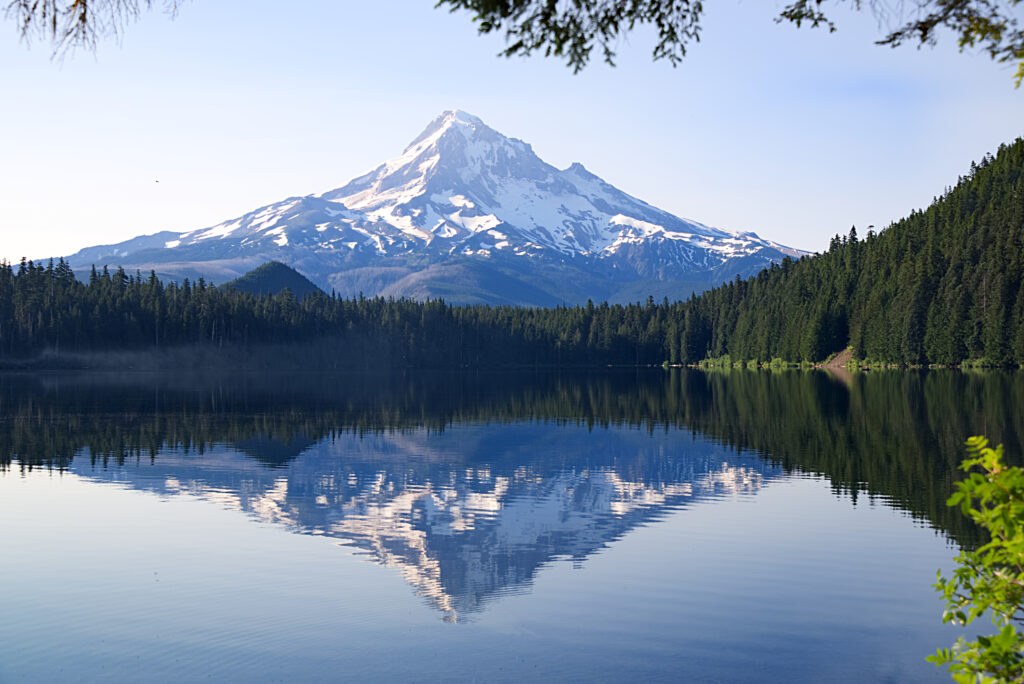
The 4 Best Mount Hood Operators 2026: Pacific Northwest Glaciated Peak Independent Comparison
Mount Hood (11,249 ft / 3,429m) is Oregon’s highest peak and structurally the most climbed glaciated peak in North America (#2 most climbed glaciated peak globally behind Japan’s Mount Fuji). The dormant stratovolcano sits 50 miles east of Portland, attracting more than 10,000 climbers annually via the standard South Side Route through Hogsback ridge to either Pearly Gates or Old Chute summit chutes. Mount Hood’s commercial framework is structurally distinctive — accessible Pacific Northwest glaciated peak proximity to Portland combined with active fumarole hazards (Devil’s Kitchen, Hot Rocks oxygen-depleting zones), required climbing permits above 9,500 ft (started January 1, 2024), and standard Cascades training peak framework parallel to Mount Rainier. The 2026 commercial operator field is dominated by Timberline Mountain Guides (local Mount Hood specialist with AMGA-trained guides explicitly recommended by The Mazamas mountaineering organization), KAF Adventures (Pacific Northwest local single-day Mount Hood Summit Climb framework), Trillium Alpine Guides (small Pacific Northwest specialist with KAF Adventures partnership for 2026 Mount Hood operations), and Mountain Madness (Seattle-based broader Cascades portfolio international operator). Standard 2026 pricing runs $700-$3,500 per person depending on framework type (single-day vs Silcox Hut framework vs comprehensive 4-day skills course).
peak (3,429m)
peak (after Fuji)
framework pricing
season window
Mount Hood occupies a structurally specific position within Pacific Northwest commercial mountaineering: Oregon’s highest peak (11,249 ft / 3,429m), the most climbed glaciated peak in North America (#2 globally behind Mount Fuji), an active stratovolcano with fumarole hazards (Devil’s Kitchen and Hot Rocks oxygen-depleting zones), 50 miles east of Portland with accessible Timberline Lodge basecamp framework at 5,800 ft. The 2026 commercial operator field is structurally constrained by NSDA Mt. Hood National Forest commercial use permit framework (limited operator framework), Mt. Hood Climbing Permit requirement above 9,500 ft (started January 1, 2024 — purchased online at Recreation.gov), and structurally standard Pacific Northwest glaciated peak framework parallel to Mount Rainier (Wave 3 #3) commercial operations. Four operators dominate the structural commercial framework field: Timberline Mountain Guides (local Mount Hood specialist with AMGA-trained guides, explicitly recommended by The Mazamas), KAF Adventures (Pacific Northwest local single-day Mount Hood Summit Climb framework), Trillium Alpine Guides (small Pacific Northwest specialist with KAF Adventures 2026 partnership for Mount Hood operations), and Mountain Madness (Seattle-based broader Cascades portfolio international operator). This independent comparison evaluates each operator against the eight criteria framework — guide certification, operating model, safety record, peak portfolio, pricing transparency, cancellation terms, client fit, and verifiable program details.
Mount Hood requires a climbing permit for all ascents above 9,500 ft — a regulatory framework that started January 1, 2024 and is now structural standard for all 2026 commercial framework operations. The permit framework: Permits available year-round through Recreation.gov (no limit on the number of permits issued). 3-day climbing permit also serves as wilderness permit for the Mount Hood Wilderness. Annual climbing permit holders must also complete additional documentation. The permit framework matters structurally because Mount Hood’s popularity as a climbing destination has resulted in public health and safety issues, including increased technical search and rescue operations and human waste in sensitive ecosystems — the Mt. Hood climbing ranger program needs financial support to help manage and address these issues. Many peaks in the Cascades Range already have required climbing permit fees, including Mount Rainier (Wave 3 #3 — NPS climbing permit $66/year), Mount St. Helens, Mount Adams, and Mount Shasta. Additional considerations: Oregon Sno-Park permits required November 1 through April 30 at all sno-parks (excluding Billy Bob Sno-Park), including all Timberline parking lots and Tilly Jane Sno-Park. The climbing permit does NOT cover parking — separate Sno-Park permit required for winter Timberline Lodge parking. Climbers booking commercial framework operations should verify operator coordination of climbing permit framework — most established Mount Hood commercial operators handle permit framework coordination within commercial framework pricing structure but this should be verified directly during booking inquiry.
Mount Hood has been a revered site for Indigenous tribes for centuries, known traditionally as Wy’east in the Multnomah and broader Chinookan-speaking peoples’ tradition. The Wy’east name is increasingly used by climbers and guide operators — Picket Alpine Guides explicitly describes the climb as “Wy’east (Mount Hood)” within commercial framework communications, reflecting growing recognition of Indigenous cultural heritage framework in Pacific Northwest mountaineering commercial contexts. The cultural framework: Mount Hood’s rich history is reflected in the mountain’s natural and cultural landscapes — Indigenous tribes including Multnomah, Wasco, Klickitat, and others maintained traditional relationships with the mountain spanning many generations before European arrival. The Timberline Lodge framework (constructed 1937 as Works Progress Administration project) is a significant historical and architectural landmark — the lodge’s Cascadian-style timber construction reflects Pacific Northwest regional architecture framework and serves as basecamp framework for nearly all Mount Hood commercial framework operations. Cultural framework consideration: Climbers should approach Mount Hood with awareness of its broader Indigenous cultural heritage framework — the mountain holds significance beyond its recreational use as a Pacific Northwest commercial mountaineering objective.
This comparison was assembled from publicly available operator commercial materials, US Forest Service Mt. Hood National Forest framework documentation, The Mazamas mountaineering organization framework references, and standard Mount Hood commercial reference material. Pricing is 2026-estimated based on operator commercial materials — specific pricing should be verified directly during booking. The Mt. Hood Climbing Permit framework (above 9,500 ft requirement, started January 1, 2024) is current as of April 2026. Fumarole hazard framework (Devil’s Kitchen, Hot Rocks oxygen-depleting zones) and bergschrund framework conditions should be verified through Northwest Avalanche Center daily forecasts during climbing planning. Twice-yearly review cycle: spring update for May-July primary season; autumn update for fall conditions framework. Next scheduled review: September 2026.
Mount Hood at a Glance
| Peak elevation | 11,249 ft (3,429m) — Oregon’s highest peak |
| Location | Cascade Range, Oregon, ~50 miles east of Portland |
| Mountain type | Active stratovolcano (last erupted 1907) with active fumaroles |
| Indigenous name | Wy’east (Multnomah and broader Chinookan-speaking peoples’ tradition) |
| Standard route | South Side Route via Hogsback ridge to Pearly Gates or Old Chute summit chutes |
| Standard route stats | ~6.7 miles round trip, ~5,250 ft elevation gain, 6-10 hours typical commercial framework |
| Alternative routes | Cooper Spur (NE Ridge intermediate), Reid Glacier Headwall, Leuthold Couloir, Devils Kitchen Headwall (advanced) |
| Trailhead access | Timberline Lodge basecamp framework (5,800 ft) via US Highway 26 |
| Climbing permit | REQUIRED above 9,500 ft (started January 1, 2024) — Recreation.gov |
| Sno-Park permit | REQUIRED Nov 1 – Apr 30 at all sno-parks including Timberline parking lots |
| Annual climbers | ~10,000+ commercial and independent climbers annually |
| Optimal season | May to mid-July (after avalanche season, before crevasses/rockfall become serious) |
| Standard guide ratio | 2:1 to 4:1 client-to-guide ratio (varies by operator and route) |
| Standard 2026 pricing range | $700-$3,500 per person depending on framework type |
| Permit framework verification | Most operators handle permit framework coordination within commercial pricing |
The 4 Best Mount Hood Operators for 2026
Each operator below addresses a structurally distinct category of climber need — from local Mount Hood specialist commercial framework to broader Cascades international operator portfolio framework, from accessible single-day Mount Hood Summit Climb framework to comprehensive 4-day Mount Hood Climbing Course framework, and from intermediate-advanced alpine route framework to standard Cascades commercial framework. The Mt. Hood Climbing Permit requirement (above 9,500 ft, started January 1, 2024) and structurally standard Pacific Northwest glaciated peak framework parallel to Mount Rainier shape the operator field — the four operators below represent structural choices that match different climber priorities and commercial framework objectives.
Timberline Mountain Guides (TMG)
Timberline Mountain Guides delivers structurally specific value for climbers prioritizing local Mount Hood specialist commercial framework. Based at Timberline Lodge with explicit framing as “the guides who know it best”, TMG operates as the definitive Mount Hood local specialist commercial framework with comprehensive program portfolio spanning Mt. Hood Summit Program (2-Day standard framework with snowcat transport to 8,000 ft + half-day skills course + alpine start summit framework), Silcox Hut Summit Program (premium framework with overnight Silcox Hut accommodation framework + dinner + pre-dawn summit framework), 4-Day Mt. Hood Climbing Course framework (intensive AMGA-certified guide framework ending with summit ascent), Mt. Hood Ski Based Summit Program framework, “Next Step” Alpine Climbs framework (Cooper Spur, Reid Glacier Headwall, Leuthold’s Couloir, Devils Kitchen Headwall), and One Day Alpine Skills Courses framework. AMGA-trained guide framework demonstrates institutional commercial framework verification — The Mazamas mountaineering organization explicitly recommends Timberline Mountain Guides as “a reputable local guide company” in their official Mount Hood FAQ framework.
TMG’s structurally distinctive value derives from local Mount Hood specialist heritage framework — comprehensive Mount Hood operational expertise across all standard and alpine routes, integrated Timberline Lodge basecamp framework, snowcat transport framework (8,000 ft start point bypasses lower mountain approach), and Silcox Hut accommodation framework (premium commercial framework alternative). Pricing typically runs $1,200-$2,500 per person for the standard 2-Day Summit Program, $1,500-$3,000 per person for Silcox Hut Summit Program, and $2,500-$3,500 per person for the 4-Day Climbing Course framework. The framework is structurally appropriate for first-time mountaineers seeking accessible introduction to glaciated peak commercial framework, Pacific Northwest specialist commercial framework with local Mount Hood operational expertise, climbers prioritizing AMGA-trained guide certification framework, and climbers building broader Cascades commercial framework experience progression.
View Timberline Mountain Guides profile →KAF Adventures
KAF Adventures delivers structurally specific value for climbers prioritizing accessible single-day Mount Hood Summit Climb framework with Pacific Northwest local commercial framework engagement. KAF Adventures operates as a Pacific Northwest local guide service with comprehensive Commercial Use Permits with Washington State Parks, Mount Rainier National Park, Olympic National Park, and North Cascades National Park — providing structural commercial framework verification through US National Park Service institutional framework engagement. The Mt. Hood Summit Climb framework follows a structurally distinctive single-day format: 1am alpine start at Timberline Lodge climbers parking lot with headlamp lower mountain approach, sunrise upper mountain framework, summit push in early morning light, and 1pm typical commercial framework completion timeline. The single-day framework is structurally appropriate for climbers with prior alpine experience seeking compressed Mount Hood commercial framework engagement.
KAF Adventures’ structurally distinctive value derives from Mount Hood Skills Course or equivalent experience prerequisite framework — climbers must demonstrate ability to safely travel on moderate to steep snow slopes with crampons and ice axe before commercial framework engagement. This structural prerequisite framework filters clientele to climbers with foundational alpine commercial framework capability, supporting more efficient single-day commercial framework engagement structure. Pricing typically runs $700-$1,500 per person for the Mt. Hood Summit Climb framework. The Picket Alpine Guides 2:1 partnership framework (third-party guide with KAF Adventures permit framework) provides additional commercial framework alternative for climbers seeking specific guide partnership framework engagement at $800-$1,500 per person typical pricing. The framework is structurally appropriate for climbers with prior Mount Hood Skills Course or equivalent commercial framework experience, climbers prioritizing single-day compressed Mount Hood commercial framework, and climbers seeking Pacific Northwest local commercial framework engagement with broader Cascades operator framework portfolio access.
View KAF Adventures profile →Trillium Alpine Guides
Trillium Alpine Guides delivers structurally specific value for climbers prioritizing small Pacific Northwest specialist commercial framework with personalized guide framework engagement. Trillium Alpine Guides operates as a small Pacific Northwest specialist (Ben and Koby) with structurally distinctive 2026 KAF Adventures partnership framework for Mount Hood operations — climbers engage with Trillium Alpine Guides for commercial framework structure but operations are conducted in collaboration with KAF Adventures permit framework. The Mount Hood commercial framework includes Pearly Gates and Old Chute South Side routes (standard 2-day framework with first-day gear check + half-day alpine climbing course + second-day summit ascent framework), Cooper Spur intermediate framework (2-day intermediate-level climb requiring strong movement skills on steep snow and ice — high camp at Tie-in-Rock + early morning summit push framework + nearly 2,000 feet of steep snow climbing), Reid Glacier Headwall framework, and Leuthold Couloir framework (advanced-level steep snow and ice climbs on the mountain’s west side).
Trillium Alpine Guides’ structurally distinctive value derives from small operator personalized commercial framework engagement — climbers interface only with Ben and Koby at Trillium Alpine Guides who handle all commercial framework details, providing structurally distinctive single-relationship commercial framework engagement that larger operator alternatives cannot match. The Cooper Spur framework provides structurally distinctive intermediate-level alpine commercial framework alternative for climbers seeking next-step commercial framework progression beyond standard South Side Route framework. Pricing typically runs $1,000-$2,000 per person for standard 2-day South Side framework and $1,500-$2,500 per person for Cooper Spur 2-day intermediate framework. The framework is structurally appropriate for climbers prioritizing small operator personalized commercial framework engagement, climbers seeking Cooper Spur intermediate-level alpine commercial framework progression, climbers seeking advanced Mount Hood west side route framework (Reid Glacier Headwall, Leuthold Couloir), and climbers building broader Pacific Northwest commercial framework experience progression to Mount Shuksan Fisher Chimneys or Mount Baker North Ridge framework.
View Trillium Alpine Guides profile →Mountain Madness
Mountain Madness delivers structurally specific value for climbers prioritizing broader Cascades portfolio commercial framework integration with international operator framework continuity. Mountain Madness operates as a Seattle-based broader Cascades commercial framework specialist with international operator framework portfolio extending across Cascades peaks (Mount Baker, Mount Rainier — Wave 3 #3, Mount Shuksan, Glacier Peak), broader Pacific Northwest framework (Mount Hood, Mount Adams), and international peak framework (Aconcagua Wave 1, Denali Wave 1, Mexican volcanoes — Pico de Orizaba Wave 3 #4, broader Seven Summits framework). The Mount Hood commercial framework integrates with Mountain Madness’ broader Cascades commercial framework portfolio — climbers engaging with Mountain Madness for Mount Hood commercial framework can build operator continuity framework across multiple Cascades peaks and international peak progressions.
Mountain Madness’ structurally distinctive value derives from broader Cascades portfolio commercial framework integration with international operator framework continuity — climbers building Cascades commercial framework experience progression (Mount Hood + Mount Baker + Mount Rainier + Mount Shuksan + Glacier Peak frameworks) within consistent operator commercial framework relationship. Pricing typically runs $1,500-$2,800 per person for Mount Hood commercial framework reflecting broader international operator commercial framework structure. The framework is structurally appropriate for climbers prioritizing operator continuity across multiple Cascades peaks, climbers building international peak commercial framework progressions through consistent operator framework, climbers prioritizing Seattle-based gateway operational framework, and climbers seeking broader operator framework portfolio engagement beyond focused single-peak commercial framework alternatives. Less optimal for climbers prioritizing local Mount Hood specialist commercial framework (Timberline Mountain Guides), climbers prioritizing single-day compressed Mount Hood commercial framework (KAF Adventures), or climbers prioritizing small operator personalized commercial framework engagement (Trillium Alpine Guides).
View Mountain Madness profile →Mount Hood Route Framework Considerations
South Side Route — standard commercial framework
The South Side Route is the most popular and shortest route to the summit, starting from Timberline Lodge basecamp framework at 5,800 ft. The route framework:
- Climbers’ trail along east side of ski area — passing landmarks including Silcox Hut at 7,000 ft
- Top of Palmer ski lift at 8,600 ft — crucial waypoint where climbers take a break and assess conditions
- Crater Rock framework — prominent feature marking entry into more technical portions of the climb
- Devil’s Kitchen framework — fumaroles emit gases creating oxygen-depleted zones (lingering can induce vomiting and potentially death)
- Hogsback framework — wind-carved snow ridge leading to bergschrund and summit chutes
- Bergschrund framework — large crevasse at top of Hogsback ridge often requiring careful crossing
- Pearly Gates framework — narrow and frequently icy chute between rock towers (50° angle, alpine ice + thin ice over rock up to AI/WI3 in shoulder season conditions)
- Old Chute framework — alternative route preferred when Pearly Gates congested or conditions deteriorate (now preferred over Pearly Gates per current commercial framework consensus)
Cooper Spur (Northeast Ridge) — intermediate alternative
The Cooper Spur route on Mount Hood’s east ridge provides structurally distinctive intermediate commercial framework alternative. The route framework:
- 2-day intermediate-level climb requiring strong movement skills on steep snow and ice
- Day 1 framework — approach the mountain and establish high camp at Tie-in-Rock
- Day 2 framework — climb nearly 2,000 feet of steep snow with breathtaking views of Mount St. Helens, Mount Adams, Mount Rainier, and Columbia River Gorge
- Summit and descent framework — descend the South Side and return to Timberline Lodge
- Structural appropriateness — climbers with prior Mount Hood experience seeking next-step commercial framework progression beyond standard South Side Route
Advanced alpine routes
Mount Hood’s advanced alpine routes provide structurally distinctive commercial framework alternatives for experienced climbers:
- Reid Glacier Headwall — advanced-level steep snow and ice climb on mountain’s west side; AI 2-3 with steep snow framework
- Leuthold Couloir — advanced-level steep snow couloir on mountain’s west side
- Devils Kitchen Headwall — AI2 advanced steep snow framework
- Newton Clark Glacier framework — alternative glacier framework on east side
- Sunshine Route framework — north side of Mount Hood
- Coe Glacier ice climbing framework — ice climbing commercial framework alternative
Hazard framework
Mount Hood’s structurally distinctive hazard framework requires specific commercial framework attention:
- Fumarole hazard framework — Devil’s Kitchen and Hot Rocks active fumarole zones emit white-hot sulfurous gases creating oxygen-depleted zones (climbers have asphyxiated; climbers have fallen into fumarole holes); typically exposed year round; do not stop to enjoy warmth
- Bergschrund crevasse framework — large crevasse at top of Hogsback ridge in south side crater area; supportable snow bridges often masked with thin snow bridges that easily break under weight
- Glacier crevasse framework — glaciated terrain holds deep crevasses; cracks often open and obvious but larger than they appear
- Cornice hazard framework — hardened snow at edge of mountain precipice or ridge can extend up to 40 feet out over steeper north face; standing on cornice could cause release
- Avalanche hazard framework — avalanche accidents and fatalities occur every year on cascade peaks; while most common in winter, weather can quickly create unstable snowpack conditions and avalanche danger any month of the year
- Rockfall hazard framework — climbers struck by falling ice or rock every year; alpine start (midnight) critical to avoid rockfall as temperatures rise throughout the day
- Severe weather framework — Mount Hood’s volatile weather can move in quickly; combined with climber inexperience accounts for most accidents
Mount Hood within Pacific Northwest Cascades Framework
Mount Hood occupies a structurally specific position within Pacific Northwest Cascades commercial framework progression. Cross-peak framework considerations:
- Standard Cascades training peak framework — Mount Hood serves as standard preparation framework for higher and more technical Cascades objectives (Mount Rainier — Wave 3 #3 — at 14,411 ft, Mount Shuksan, Mount Baker, Glacier Peak)
- Standard Denali preparation peak framework parallel — Mount Hood operates similarly to Mount Rainier within Denali preparation framework, providing accessible glaciated peak commercial framework experience for Denali aspirants (Wave 1)
- Pacific Northwest commercial framework parallels — operator portfolio overlaps with Mount Rainier (Wave 3 #3): Mountain Madness operates both peaks, broader Pacific Northwest commercial framework continuity
- Cooper Spur as next-step commercial framework — graduates of standard 5-day Mountaineering Course or climbers building experience before attempting Mount Hood Cooper Spur, Mount Shuksan Fisher Chimneys, or Mount Baker North Ridge framework
- Skills course framework — Mount Hood Skills Course or equivalent experience required for KAF Adventures Mount Hood Summit Climb framework — establishes commercial framework prerequisite framework for Pacific Northwest commercial framework progression
- South Side ski mountaineering framework — South Side routes prime venue for spring Ski Mountaineering — fantastic opportunities for those looking to ski from the summit
Frequently Asked Questions About Mount Hood Operators
How much does climbing Mount Hood cost in 2026?
Mount Hood’s 2026 commercial framework pricing reflects Pacific Northwest glaciated peak commercial framework structure with multi-tier offerings. Single-day Mount Hood Summit Climb framework (KAF Adventures): $700-$1,500 per person. Standard 2-Day Mt. Hood Summit Program (Timberline Mountain Guides): $1,200-$2,500 per person. Standard 2-day South Side framework (Trillium Alpine Guides via KAF Adventures partnership): $1,000-$2,000 per person. Silcox Hut Summit Program (Timberline Mountain Guides premium framework): $1,500-$3,000 per person. Mount Hood broader Cascades portfolio framework (Mountain Madness): $1,500-$2,800 per person. Cooper Spur 2-day intermediate framework (Trillium Alpine Guides): $1,500-$2,500 per person. 4-Day Mt. Hood Climbing Course framework (Timberline Mountain Guides intensive AMGA-certified guide framework): $2,500-$3,500 per person. 2:1 partnership framework (Picket Alpine Guides via KAF Adventures): $800-$1,500 per person. Total all-in budget typically runs $1,500-$5,000 per person including international travel coordination, Portland or Government Camp accommodation framework, and personal climbing equipment. Specific pricing requires direct inquiry with each operator during booking.
When is the best time to climb Mount Hood?
The best time to climb Mount Hood is May to mid-July — after avalanche season but before crevasses and rockfall become serious. Seasonal framework: Spring (April-May) — variable conditions; firm snowpack supports continuous snow climbing framework; potential avalanche concerns require Northwest Avalanche Center daily forecast monitoring. Late spring to early summer (May to mid-July) — primary commercial framework window; firm and continuous snowpack; reduced rockfall hazard; reduced bergschrund concerns. Mid-summer (mid-July to August) — increasing rockfall hazard as temperatures rise; bergschrund opens significantly; commercial framework operations transition to alternative routes; many operators reduce Mount Hood commercial framework operations after mid-July. Fall (September-November) — limited commercial framework with shoulder-season Pearly Gates variation framework offering pitch of exciting mixture of alpine and water ice and thin ice over rock up to AI/WI3; structurally appropriate for experienced climbers seeking technical commercial framework engagement. Winter (December-March) — significantly reduced commercial framework with avalanche, severe weather, and short daylight framework constraints; Oregon Sno-Park permit required Nov 1 – Apr 30 at all sno-parks. Alpine start critical year-round — midnight start typical to avoid rockfall as temperatures rise throughout the day.
Do I need a permit to climb Mount Hood?
Yes — Mount Hood requires a climbing permit for all ascents above 9,500 ft, a regulatory framework that started January 1, 2024 and is now structural standard for all 2026 commercial framework operations. The permit framework: Permits available year-round through Recreation.gov; no limit on the number of permits issued. 3-day climbing permit also serves as wilderness permit for the Mount Hood Wilderness. Annual climbing permit holders must also complete additional documentation framework. Sno-Park permit additional requirement — Oregon Sno-Park permits required November 1 through April 30 at all sno-parks (excluding Billy Bob Sno-Park), including all Timberline parking lots and the Tilly Jane Sno-Park. The climbing permit does NOT cover parking — separate Sno-Park permit required for winter Timberline Lodge parking framework. Operator coordination framework — most established Mount Hood commercial operators handle permit framework coordination within commercial framework pricing structure but climbers should verify directly during booking inquiry. The permit framework parallels other Cascades peaks framework — Mount Rainier (Wave 3 #3, NPS climbing permit $66/year), Mount St. Helens, Mount Adams, and Mount Shasta all have required climbing permit framework.
What is the most popular Mount Hood commercial route?
The South Side Route via Hogsback ridge is by far the most popular commercial route — most accessible, shortest (~6.7 miles round trip / ~5,250 ft elevation gain), and commercially supported by all major Mount Hood operators. The route framework: starts at Timberline Lodge basecamp framework (5,800 ft); follows climbers’ trail along east side of ski area passing Silcox Hut at 7,000 ft and top of Palmer ski lift at 8,600 ft; navigates between Devil’s Kitchen fumaroles and Steel Cliff to reach Hogsback ridge; crosses bergschrund at top of Hogsback; ascends through Pearly Gates (narrow icy chute) or Old Chute (alternative route now preferred when Pearly Gates congested) to summit. The Pearly Gates vs Old Chute decision — conditions above the bergschrund have deteriorated in recent years to the point that the Hogsback/Pearly Gates route is significantly less viable; the Old Chute route is now preferred per current commercial framework consensus. Alternative routes for advanced climbers include Cooper Spur (Northeast Ridge intermediate framework), Reid Glacier Headwall and Leuthold Couloir (advanced-level steep snow and ice climbs on mountain’s west side), Devils Kitchen Headwall (AI2 advanced framework), Newton Clark Glacier framework (east side), and Sunshine Route framework (north side).
How does Mount Hood compare to Mount Rainier?
Mount Hood and Mount Rainier (Wave 3 #3) are both Pacific Northwest glaciated peaks with structurally distinct commercial framework positions. Mount Hood: 11,249 ft (3,429m), Oregon’s highest peak, ~6.7 miles round trip / ~5,250 ft elevation gain (compressed accessible commercial framework), 6-10 hour typical commercial framework completion timeline, single-day commercial framework framework available (KAF Adventures), Mt. Hood Climbing Permit required above 9,500 ft, 50 miles from Portland. Mount Rainier: 14,411 ft (4,392m), Washington’s highest peak, ~9 miles round trip / ~9,000 ft elevation gain (more demanding commercial framework), 2-3 day typical commercial framework completion timeline, no single-day commercial framework framework (multi-day required), NPS climbing permit $66/year + climbing fee framework, ~95 miles from Seattle. For climbers building Pacific Northwest commercial framework progression: Mount Hood serves as standard preparation framework for Mount Rainier (smaller, more accessible glaciated peak commercial framework experience). For climbers building Denali preparation framework: both peaks operate within Denali preparation framework but Mount Rainier provides closer altitude tolerance preparation framework (Denali at 20,310 ft vs Mount Hood at 11,249 ft). For climbers prioritizing accessibility: Mount Hood’s compressed commercial framework structure and proximity to Portland (50 miles) provide more accessible commercial framework engagement.
What hazards should I know about Mount Hood?
Mount Hood’s structurally distinctive hazard framework requires specific commercial framework attention. Fumarole hazard framework — Devil’s Kitchen and Hot Rocks active fumarole zones emit white-hot sulfurous gases creating oxygen-depleted zones; lingering can induce vomiting and potentially death due to suffocation; climbers have asphyxiated; climbers have fallen into fumarole holes; do not stop to enjoy warmth; move steadily through these areas. Bergschrund crevasse framework — large crevasse at top of Hogsback ridge in south side crater area; supportable snow bridges often masked with thin snow bridges that easily break under weight. Cornice hazard framework — hardened snow at edge of mountain precipice or ridge can extend up to 40 feet out over steeper north face; standing on cornice could cause release sending it and you plummeting down thousands of feet; check and be wary of summit cornice especially during winter and early spring. Avalanche hazard framework — avalanche accidents and fatalities occur every year on cascade peaks; while most common in winter, weather can quickly create unstable snowpack conditions and avalanche danger any month of the year; all summit routes include travel in avalanche terrain. Rockfall hazard framework — climbers struck by falling ice or rock every year; alpine start (midnight) critical to avoid rockfall as temperatures rise throughout the day. Severe weather framework — Mount Hood’s volatile weather can move in quickly; combined with climber inexperience accounts for most accidents.
Should I book a guided Mount Hood climb or attempt independently?
The Mazamas mountaineering organization provides explicit framework guidance: “For those who really want to stand on the summit, but at this point are not sure if they want to continue with mountaineering, we suggest going with either a guiding company or finding a trusted friend who knows how to climb. Timberline Mountain Guides is a reputable local guide company.” Book guided commercial framework if you prioritize: first-time glaciated peak alpine framework engagement; lacking glacier travel and self-arrest training; lacking Mount Hood-specific route knowledge; prioritizing institutional safety framework with AMGA-certified guide framework; first-time Pacific Northwest alpine framework engagement; or building Pacific Northwest commercial framework experience progression toward Mount Rainier or international peak commercial framework alternatives. Independent climb framework alternative requires: ice axe and crampons mandatory; climbing helmet popular addition (especially higher up); glacier travel techniques and/or careful route-finding to avoid glacial features; midnight alpine start to avoid rockfall; awareness of summit cornice especially during winter and early spring; understanding of fumarole hazards (do not linger around fumaroles which create oxygen voids); Mt. Hood Climbing Permit (above 9,500 ft, started January 2024); Northwest Avalanche Center daily forecast monitoring; Portland Mountain Rescue safety education resources framework familiarity. For Mount Hood specifically: combined with severe weather, climber inexperience accounts for most accidents — guided commercial framework provides structural risk mitigation framework appropriate for first-time alpine framework engagement.
Mount Hood is structurally one of the most accessible glaciated peak commercial framework experiences globally — Oregon’s highest peak (11,249 ft / 3,429m) and the most climbed glaciated peak in North America (#2 globally behind Mount Fuji), 50 miles east of Portland with accessible Timberline Lodge basecamp framework at 5,800 ft. For climbers prioritizing local Mount Hood specialist commercial framework, Timberline Mountain Guides delivers structurally specific value as “the guides who know it best” — explicitly recommended by The Mazamas mountaineering organization, comprehensive program portfolio (Mt. Hood Summit Program, Silcox Hut Summit Program, 4-Day Climbing Course, Ski Based Summit Program, Next Step Alpine Climbs, One Day Alpine Skills Courses), AMGA-trained guide framework, and integrated Timberline Lodge basecamp framework with snowcat transport framework. For climbers prioritizing accessible single-day Mount Hood Summit Climb framework, KAF Adventures provides Pacific Northwest local commercial framework with structurally distinctive single-day format (1am alpine start, 1pm completion) and Mount Hood Skills Course or equivalent experience prerequisite framework filtering clientele to climbers with foundational alpine commercial framework capability. For climbers prioritizing small operator personalized commercial framework, Trillium Alpine Guides provides single-relationship commercial framework engagement (Ben and Koby) with 2026 KAF Adventures partnership framework for Mount Hood operations and Cooper Spur intermediate-level alpine commercial framework alternative. For climbers prioritizing broader Cascades portfolio commercial framework integration, Mountain Madness provides Seattle-based broader Cascades commercial framework specialist with international operator framework continuity across multiple Cascades peaks and international peak progressions. The Mt. Hood Climbing Permit requirement (above 9,500 ft, started January 1, 2024 via Recreation.gov) is structural commercial framework consideration for all 2026 operations — most operators handle permit framework coordination within commercial framework pricing structure. The fumarole hazard framework (Devil’s Kitchen and Hot Rocks oxygen-depleting zones) and bergschrund framework conditions require specific commercial framework attention — alpine start (midnight) critical to avoid rockfall and ensure descent before weather conditions worsen in afternoon. Best season is May to mid-July — after avalanche season but before crevasses and rockfall become serious. Verify current 2026 pricing, permit framework coordination, and specific commercial framework inclusions directly with each operator during booking inquiry.
Sources and Verification
This comparison was assembled from publicly available operator commercial materials (timberlinemtguides.com, kafadventures.com, trilliumalpineguides.com, mountainmadness.com), US Forest Service Mt. Hood National Forest framework documentation (Climbing Mt. Hood permit framework reference), The Mazamas mountaineering organization Mount Hood FAQ framework, Portland Mountain Rescue safety education framework, SummitPost Mount Hood reference framework, US Highpoint Guide Mount Hood framework, and standard Mount Hood commercial reference material. Pricing is 2026-estimated based on operator commercial materials — specific pricing should be verified directly during booking. Mt. Hood Climbing Permit framework (above 9,500 ft requirement, started January 1, 2024) is current as of April 2026. Twice-yearly review cycle: spring update for May-July primary season; autumn update for fall conditions framework. Next scheduled review: September 2026.
- US Forest Service Mt. Hood Climbing Permit Framework — Official US Forest Service permit framework documentation.
- The Mazamas Mount Hood FAQ — Mountaineering organization institutional reference framework.
Fact-checked April 29, 2026 · Next scheduled review: September 2026
Mount Hood and Pacific Northwest Cascades Operator Resources
Compare Mount Hood Across Operators
Mount Hood is structurally accessible Pacific Northwest glaciated peak commercial framework experience — Oregon’s highest peak and the most climbed glaciated peak in North America. Compare Timberline Mountain Guides (local Mount Hood specialist), KAF Adventures (single-day framework), Trillium Alpine Guides (small Pacific Northwest specialist), and Mountain Madness (broader Cascades portfolio) to find the best structural fit for your climbing goals.