
Last updated July 12, 2026
When a Guide Is Worth It — and When It Isn’t
The guide decision is not primarily about budget. It is about competence and objective complexity. Here is how to make it honestly.
The guided-versus-independent question is not primarily a budget question. It is a safety, competence, and objective-complexity question. A guide is worth it when the mountain demands skills or knowledge you don’t have. A guide is not worth it when the mountain is within your demonstrated competence and the independent logistics are manageable.
Assess against your demonstrated competence, not your aspirational competence. This page helps you draw that line clearly.
On this page
The real question behind the guide decision
Not confidence, not ambition — specific, demonstrated competence.
Hiring a guide is not about lacking confidence or ambition. The most skilled mountaineers in the world hire guides for objectives outside their specific competence: a world-class alpinist unfamiliar with Kilimanjaro’s logistics might reasonably hire a local guide the first time out. The question is always the same: what specific skills, knowledge, or safety systems does this mountain demand that I can’t provide myself?
The answer to that, assessed honestly against your actual demonstrated competence rather than your aspirational competence, is what determines whether a guide adds real value or is an expensive optional extra. Our parent guided vs independent climbing hub covers the full framework; this page focuses on drawing the worth-it line.
When a guide is worth it
Four situations where a guide adds safety, not just comfort.
Your first glacier or technical objective
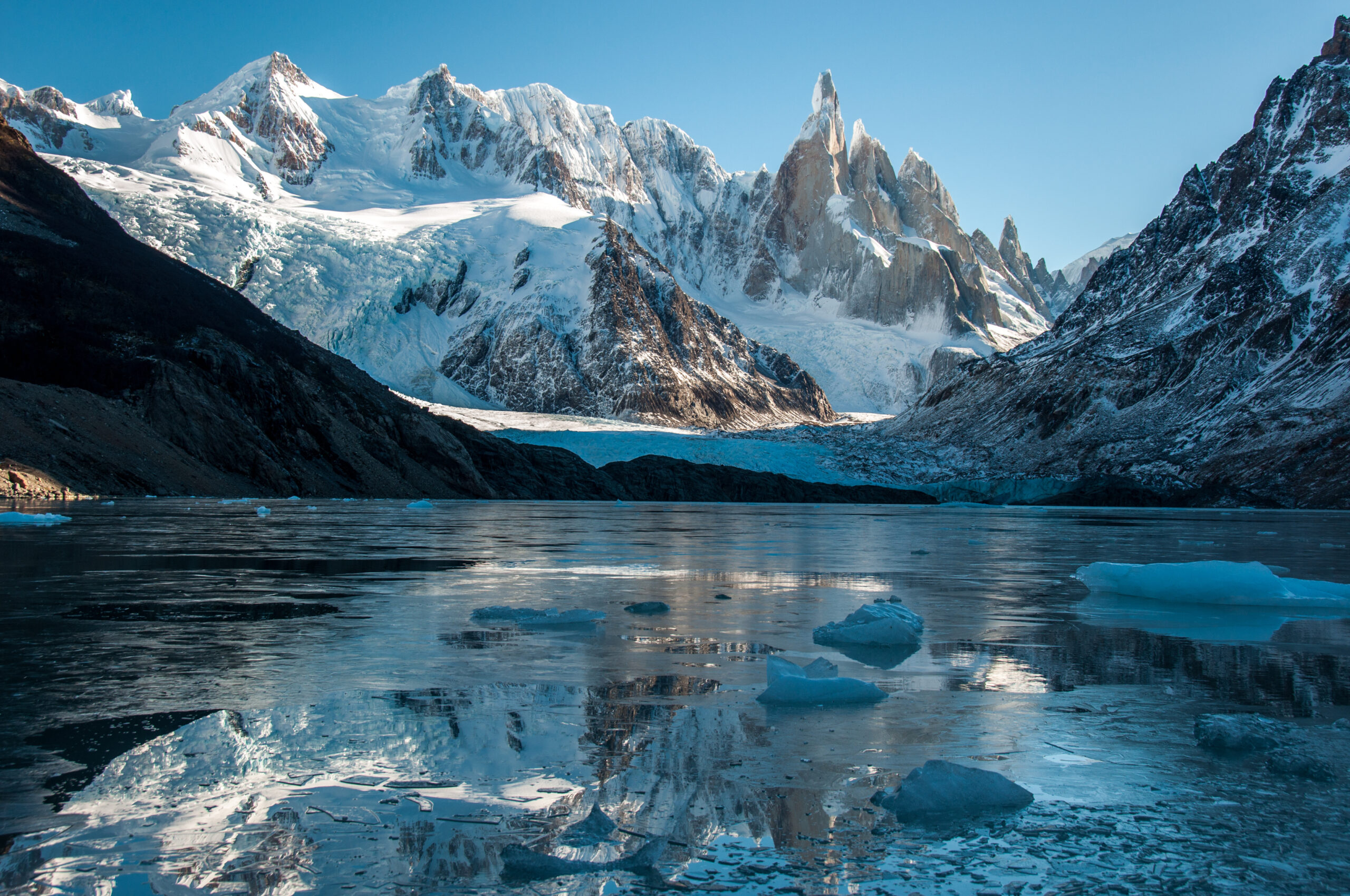
Glacier travel, crevasse rescue, crampon technique on steep terrain, and rope-team systems cannot be safely learned on the mountain where they first matter. On a first glacier objective a guide is the safe way to build these skills in a real environment. Learn them properly first with our advanced glacier safety and crevasse rescue guide.
Complex or unfamiliar route-finding
Where navigation in poor visibility, condition-driven route changes, or complex glacier terrain create real uncertainty, a guide with specific mountain experience adds value that map study cannot replicate. The Khumbu Icefall, the Argentine approach to Aconcagua, and the Elbrus upper plateau in a whiteout are not places to learn as you go.
Altitude above your prior experience
Your first time above 5,000 m, or 6,000 m, is not the moment to make turnaround calls without experienced support. A guide who has watched dozens of clients at these altitudes has pattern recognition a first-timer simply cannot have.
Serious objective hazard
Where serac fall, avalanche, rockfall, or weather creates real objective hazard, a guide with current knowledge of that mountain’s conditions adds safety that research from home cannot match — the Khumbu Icefall, Aconcagua’s Canaleta in unstable snow, the upper Elbrus in high wind.
When a guide may not be worth it
Four situations where a guide adds comfort, but not safety.
Well-documented non-technical routes within your competence
Mount Whitney’s Main Trail, Half Dome with the cables, Mount St. Helens in summer, and similar well-marked non-technical objectives are within reach of any fit, experienced hiker with sound navigation. A guide adds comfort, not safety, on terrain you can navigate yourself.
A peak you have completed before
A second or third Kilimanjaro, a return to Rainier on the same route, or a repeat of any peak you have already navigated may not need guide support. Your specific route experience has real value.
A strong independent team with demonstrated skills
A team of three with glacier training, crevasse-rescue competence, and prior high-altitude experience on comparable terrain may not need a guide on an objective that matches their skills. The team’s collective competence is the benchmark, not individual experience alone.
Well-managed independent routes
Denali‘s West Buttress has a long independent ascent history: the NPS provides thorough information, skills training is available, and the route is well documented. Prepared teams summit unguided regularly. A step like Baker as a guided glacier classroom, then Rainier builds exactly the competence that makes this possible.
The honest self-assessment framework
Five questions — answer them against what you’ve actually done.
| Ask yourself | Guide likely worth it | Independent may be viable |
|---|---|---|
| Have I climbed this type of terrain before? | No — first glacier, first technical, first high altitude | Yes — demonstrated competence on comparable terrain |
| Can I navigate this route in poor visibility? | No prior experience with this route | Yes — route familiar, or navigation skills strong |
| Can I manage the crux safely? | Glacier, crevasse, or high-altitude crux is new to me | Skills tested directly on comparable terrain |
| Would I know when to turn around, and do it? | No prior high-altitude or technical turnaround experience | Clear criteria set in advance, and a record of following them |
| Is my team complete on its own? | Solo, or a team missing key competencies | Full team with the required skills distributed across it |
Once you’ve decided
Whichever way the assessment points, the next step is the same: prepare properly.
If you’re leaning independent, be as deliberate about it as you would be about hiring: confirm every required skill is covered across your team, set turnaround criteria in advance, and build the progression that earns the objective. Our best mountains for your first unguided snow climb is the place to start, and a guided glacier-skills course remains one of the fastest ways to build the competence that makes independent climbing safe later.
Frequently asked questions
Is hiring a mountain guide worth it?
It depends on the gap between what the mountain demands and what you can safely provide yourself. Worth it on your first glacier, your first time at a new altitude, serious objective hazard, or complex route-finding; less essential on well-documented, non-technical routes within your proven competence. It’s about competence and complexity, not confidence or budget.
Do experienced climbers ever hire guides?
Yes, routinely — even world-class alpinists hire local guides for objectives outside their specific experience. Hiring a guide is a judgment about a specific mountain’s demands, not an admission of weakness.
When is a guide not necessary?
On well-marked, non-technical routes within your proven ability; on a peak you’ve already completed; when your team collectively holds the required skills; and on well-documented independent routes with a viable self-rescue plan. On terrain you can manage yourself, a guide adds comfort rather than safety.
How do I honestly assess whether I need one?
Against your demonstrated competence, not your aspirational competence. Have I done this terrain? Can I navigate it in poor visibility? Can I manage the crux? Would I turn around, and do it? Is my team complete? Any “no” is where a guide adds real value.
Is a guide about safety or just cost?
Safety and competence. A cheap independent attempt beyond your skills is far more expensive than a guided climb if it ends in a rescue. Decide on the competence gap first; treat cost as a secondary constraint.
How we approach this
This is a decision framework, drawn from established mountaineering practice, guide-service program structures, and our team’s mixed first-hand experience across guided and independent glaciated peaks. It is not a recommendation to attempt any specific objective, and it can’t assess your individual readiness — only you can do that, honestly.
Conditions, permits, operator quality, and your own competence all change what is safe. Verify current information with land managers, certified guides, and local sources, and reassess your own experience against each new objective before booking or climbing.
Make the call honestly
Run your objective through the five questions above. If any answer is “no,” a guide is earning their fee. If they’re all “yes,” you have a choice to make — and either way, the next step is to prepare properly.
The full framework → Choose an operator →Was this helpful?
Global Summit Guide is an independent mountaineering resource founded in 2026. The team combines first-hand trekking and climbing experience with in-depth research and professional health and nutrition review to help climbers choose objectives, prepare properly, and stay safe.
Health, altitude, and nutrition content is reviewed by Taylor Ludlow (Registered Nurse) and Brigg Hoopes (Nutritionist).
What We Don't Know Yet
Mountain information changes quickly. This box explains the limits of what this page can responsibly promise.
- Guide-company prices, departure dates, guide ratios, included services, and cancellation rules can change without notice.
- Weather, snowpack, avalanche risk, road access, and route conditions can change quickly and may be different on your climbing dates.
- Route conditions, trailhead access, crevasse exposure, stream crossings, and rescue access may vary from published planning guidance.
- Total trip cost can change with flights, lodging, guide pricing, permits, gear rentals, transportation, and exchange rates.
- Fitness and altitude response vary by person; no guide, itinerary, or training plan can guarantee acclimatization or summit success.
Verify current conditions with official land managers, guide services, local forecasts, and current route reports before booking or climbing.
Mountaineering, rock and ice climbing, glacier travel, and high-altitude activity are inherently dangerous and can result in serious injury or death. The information on Global Summit Guide is provided for general informational and educational purposes only and is not a substitute for professional instruction, qualified guiding, proper equipment, or your own judgment and experience.
Route conditions, weather, snowpack, permits, regulations, and hazards change constantly and may differ from what is described here. Details may be incomplete, out of date, or contain errors. Always verify current information with local authorities, certified guides, and official sources before making any decision in the mountains.
Nothing on this site is medical, legal, or financial advice. Our fitness, acclimatization, altitude, and nutrition content is general in nature; consult a qualified physician before beginning any strenuous exercise program or exposing yourself to high altitude.
You are solely responsible for your own safety and decisions. To the fullest extent permitted by law, Global Summit Guide and its team accept no liability for any loss, injury, damage, or expense arising from use of, or reliance on, this information. By using this site you acknowledge these risks and accept these terms.
Some links on this site may be affiliate links. If you buy through them we may earn a small commission at no extra cost to you; this never affects our recommendations.
Global Summit Guide recommendation path
Next Best Mountain to Research
Use these recommendations to continue the right planning path instead of stopping on one page.
Use current permit, weather, route, and operator information before booking or climbing.