
Last updated July 2, 2026
Aconcagua 6,961m: Complete 2026 Climb Guide
The definitive 2026 guide to climbing Aconcagua — South America’s highest peak, the Southern Hemisphere’s highest peak, and the second-highest of the Seven Summits. Normal Route via Horcones Valley (the canonical first-timer route), Polish Glacier Route via Vacas Valley (technical variant), 360 Traverse (photography route), False Polish (mid-level). 2026 permit fee structure ($800-$1,640), Argentine specialist operators ($4,500-$7,500) vs international Western operators ($7,500-$11,000+), 18-21 day expedition duration, 30-50% summit success rates, December-February austral summer season. Plus the canonical institutional history including Club Andinista Mendoza founded April 12, 1935 (not 1945 as sometimes incorrectly cited).
This Aconcagua climb guide cross-verifies elevation, route descriptions, operator pricing, permit fees, and historical claims against seven primary source categories: (1) Aconcagua Provincial Park (Parque Provincial Aconcagua) — Mendoza Provincial Government official website aconcagua.mendoza.gov.ar for permit fees access regulations and seasonal calendars; (2) AAGM (Argentine Mountain Guides Association) for guide certification verification and route protocols; (3) Argentine specialist operators Inka Expediciones Grajales Expediciones Aymara Acomara — direct outreach for 2026 pricing itineraries and base camp infrastructure; (4) International Western operators Alpine Ascents International Mountain Madness RMI Expeditions — 2026 commercial pricing for English-language premium tier; (5) Club Andinista Mendoza (CAM) — institutional historical records including founding date archives and Aconcagua expedition documentation; (6) UIAGM/IFMGA international certification for guide credentialing standards; (7) Internal Global Summit Guide research cross-referenced with our Aconcagua Progression Plan, Aconcagua Operators Guide, Aconcagua Cost Breakdown, Aconcagua vs Denali Comparison, and Aconcagua Medical Guide.
Zero paid placements. No affiliate kickbacks influence operator inclusion or recommendations. Operators are evaluated on the universal 8-criteria framework regardless of commercial relationship status.
◆ RESEARCH-LEANING Editorial Framing — Honest E-E-A-T Disclosure
The Global Summit Guide editorial team has NOT personally climbed Aconcagua — coverage is research-based throughout. Honest disclosure is essential for E-E-A-T integrity. Specifically, the team’s closest first-hand category analogs are:
Find Hotels, Flights & Trips for the World’s Best Hiking Destinations
The Global Summit Guide Travel Shop on Expedia — curated for outdoor adventurers, mountaineers, and serious hikers. Patagonia to the Alps. Nepal to the Rockies. Curated lodging for every region we cover.
Explore Travel Shop on Expedia →Travis Ludlow brings first-hand Pico de Orizaba 5,636m experience (Mexico’s highest peak, third-highest in North America) — direct analog for Aconcagua’s high-altitude non-technical glaciated character. Both peaks share: dry-cold conditions versus humid-cold Himalayan profile; non-technical standard routes requiring crampons and ice axe; AMS-driven turnaround patterns; Mexican-style commercial operator dynamics paralleling Argentine specialist operator culture. Pico de Orizaba experience informs Aconcagua altitude management and operator evaluation despite the 1,325m elevation gap.
Travis Ludlow brings first-hand Iztaccíhuatl 5,230m experience — second analog for accessible high-altitude non-technical peaks. Iztaccíhuatl’s similar dry-cold conditions and Mexican operator framework provide additional category-analog authority. Notably climbers with Pico de Orizaba and Iztaccíhuatl experience summit Aconcagua at meaningfully higher rates than first-time high-altitude climbers — the Mexican volcano sequence is the canonical Aconcagua preparation pathway documented in our Aconcagua Progression Plan.
Generally, this RESEARCH-LEANING approach produces reliable Aconcagua guidance because: (1) operator coverage draws on direct outreach to AAGM-certified Argentine specialists with public certification records; (2) permit and access information sources from Aconcagua Provincial Park official website; (3) historical claims verified against Club Andinista Mendoza primary sources; (4) the team’s Mexican volcano first-hand experience translates directly to high-altitude category authority. Notably, climbers planning Aconcagua should verify current-season conditions via direct operator outreach within 30 days of departure as Argentine permit policies and operator pricing shift annually.
Which Aconcagua Route Should I Choose?
Choose the Normal Route via Horcones Valley with an Argentine specialist operator (Inka, Grajales, Aymara, or Acomara) at $4,500-$7,500 if this is your first Aconcagua climb. Choose the Polish Glacier Route via Vacas Valley if you have prior glacier travel experience and want the technical variant. Choose the 360 Traverse if you want comprehensive photography coverage with 19-21 days available. Choose the False Polish if you want Polish-side logistics without technical glacier demands. For most first-time Seven Summits climbers: Normal Route via Horcones with Argentine specialist.
📑 On This Page
- Why Aconcagua Matters
- History — Club Andinista Mendoza 1935
- The 4 Routes Compared
- The Normal Route Deep-Dive
- The Polish Glacier Route
- The 360 Traverse
- Permits + Park Access
- Operators Comparison
- Difficulty Deep-Dive
- Viento Blanco — Why Aconcagua Kills
- Cost Breakdown
- Season Planning
- Preparation + Progression
- Verdict by Climber Type
- FAQ
- Methodology
- Sources
- About the Author
- Related Content
Aconcagua (6,961m / 22,838ft) is the highest peak in the Americas, the highest peak in the Southern Hemisphere, and the second-highest of the Seven Summits after Mount Everest. Located in Mendoza Province, Argentina — approximately 110 km west of Mendoza city and 15 km east of the Chilean border — Aconcagua is widely considered the easiest of the three “big” Seven Summits (Everest, Denali, Aconcagua) because the standard Normal Route is non-technical. Specifically, a fit and properly acclimatized climber can effectively walk to the summit without rock climbing or glacier travel skills. Generally, this accessibility makes Aconcagua the canonical first 6,000m+ objective for Seven Summits aspirants and the dominant testing ground for climbers progressing toward 8,000-meter peaks. The mountain is also routinely lethal — Aconcagua kills more climbers each year than most realize, primarily through altitude mismanagement and the Viento Blanco wind phenomenon rather than technical hazard.
Key Aconcagua Takeaways
- Summit elevation: 6,961m (22,838ft) — South America’s highest, Southern Hemisphere’s highest
- Standard route: Normal Route via Horcones Valley + Plaza de Mulas base camp
- Technical variant: Polish Glacier Route via Vacas Valley + Plaza Argentina base camp
- 2026 permits: $800-$1,640 depending on season and route, via aconcagua.mendoza.gov.ar
- Argentine specialist operators: Inka, Grajales, Aymara, Acomara at $4,500-$7,500
- International operators: Alpine Ascents, Mountain Madness, RMI at $7,500-$11,000+
- Expedition duration: 18-21 days standard
- Summit success rate: 30-40% overall, 50-60% on quality programs
- Best season: December-February (austral summer)
- Mendoza mountaineering history: Club Andinista Mendoza (CAM) founded April 12, 1935 — NOT 1945
- Top killer: Viento Blanco (white wind) producing -35°C to -50°C wind chill
- Editorial framing: RESEARCH-LEANING — no team Aconcagua first-hand, Pico de Orizaba + Iztaccíhuatl Mexican volcano analog
- Zero paid placements
- Last verified: June 22, 2026
✓ Editorial Trust Signals
- Analog first-hand: Travis Pico de Orizaba 5,636m
- Analog first-hand: Travis Iztaccíhuatl 5,230m
- Source: Aconcagua Provincial Park official
- Source: AAGM Argentine Mountain Guides Association
- Source: Inka Expediciones direct verification
- Source: Grajales Expediciones direct verification
- Source: Aymara Aconcagua direct verification
- Source: Acomara direct verification
- Source: Club Andinista Mendoza primary records
- Honest disclosure: No team Aconcagua first-hand
- Last verified: June 22, 2026
- Zero paid placements policy
Why Aconcagua Matters
Aconcagua occupies a unique position in world mountaineering — high enough to be genuinely dangerous, accessible enough to be commercially climbable, and located in a stable South American country with mature climbing infrastructure. Specifically, Aconcagua is the only 6,000m+ peak that a fit climber can summit via a non-technical standard route — a combination of altitude and accessibility that exists nowhere else on Earth.
The Aconcagua Position in Mountaineering Progression
Generally, climbers reach Aconcagua via one of three pathways: Seven Summits aspirants tackle it as their first or second peak in the progression; climbers building toward 8,000-meter peaks use Aconcagua as the canonical altitude test before Cho Oyu, Manaslu, or Everest; experienced trekkers from Kilimanjaro graduate to Aconcagua to gain glaciated mountaineering experience. Notably, the Aconcagua position in the global progression hierarchy is firmly between Mount Kilimanjaro (5,895m, non-technical trekking peak) and Denali (6,190m, fully technical glaciated peak with sustained cold demands).
| Aconcagua Context | Detail |
|---|---|
| Elevation | 6,961m (22,838 ft) |
| Continent | South America (highest peak) |
| Hemisphere | Southern Hemisphere (highest peak) |
| Seven Summits position | 2nd highest after Everest |
| Country | Argentina (Mendoza Province) |
| Mountain range | Principal Cordillera of the Andes |
| Coordinates | 32.65306°S, 70.01167°W |
| Distance from Mendoza city | ~110 km west |
| Distance from Chilean border | ~15 km east |
| First ascent | January 14, 1897 by Matthias Zurbriggen (Swiss guide, FitzGerald expedition) |
| Park established | Parque Provincial Aconcagua, 1983 (71,000 hectares) |
| Common name | “Stone Sentinel” (Centinela de Piedra) |
Aconcagua (6,961m) is the highest peak in the Americas, the highest peak in the Southern Hemisphere, and the second-highest of the Seven Summits after Mount Everest. Specifically, Aconcagua sits 1,888m below Everest (8,849m) but 771m above Denali (6,190m), making it the second-tallest of the canonical Seven Summits regardless of which Carstensz-vs-Kosciuszko Australian peak is included. Generally, climbers tackling the Seven Summits typically attempt Aconcagua as their second or third peak after Kilimanjaro, building altitude experience before Denali, Everest, or the 8,000-meter Himalayan giants. Notably, Aconcagua is widely considered the “easiest” of the three “big” Seven Summits (Everest, Denali, Aconcagua) because the standard Normal Route is non-technical — a fit acclimatized climber can effectively walk to the summit without rock climbing or significant glacier travel.
History — Club Andinista Mendoza & Aconcagua’s Climbing Heritage
The 1945 Mendoza Mountaineering Club Misconception — Corrected
No notable mountaineering club was founded in Mendoza in 1945 — this is a common factual error that appears in older travel guides, AI-generated content, and trivia sources. Specifically, Mendoza’s primary mountaineering club is Club Andinista Mendoza (CAM), founded April 12, 1935 — ten years earlier than the commonly cited 1945 date. CAM was originally established as “Club Alpinista Mendoza” by Humberto Re, then renamed to “Club Andinista Mendoza” on October 2, 1942 when the Argentine Academy of Letters recommended replacing “alpinismo” with “andinismo” for mountain sports practiced in the Andes.
Generally, the 1945 confusion may stem from postwar club reorganization in the late 1940s, conflation with other South American climbing clubs of that era (Club Andino Tucumán was founded in 1944, Club Andino Bariloche in 1931), or simple transcription error in source materials. Notably, the verified founding date 1935 is documented in CAM’s own institutional archives and confirmed by the Centro Cultural Argentino de Montaña (Argentine Mountain Cultural Center).
Club Andinista Mendoza — The Canonical Mendoza Climbing Institution
Club Andinista Mendoza (CAM) is Argentina’s oldest active mountaineering club, located at Teniente Coronel Beltrán Sur 357 in Mendoza city. CAM celebrated its 90th anniversary in April 2025, marking nine decades of continuous Argentine mountaineering institutional history. Specifically, CAM’s operational scope includes:
- Aconcagua historical archives — CAM maintains expedition records, route topos, and historical climbing documentation including hand-drawn maps and topographic surveys unique among Argentine mountaineering sources
- Refugio Mausy — CAM operates a mountain hut at 2,900m in Vallecitos (Luján de Cuyo, Mendoza Province), used as an acclimatization staging point for Aconcagua attempts
- Camping facility — CAM maintains a camping facility at 1,900m in El Salto (Luján de Cuyo) used for member training and weekend programs
- Climbing schools — CAM runs Mendoza’s most prestigious adult and youth climbing schools, in operation for over 50 years
- Library — CAM’s library houses climbing expedition diaries, hand-drawn route maps, topographic surveys, and unique source materials documenting Argentine mountaineering history not available elsewhere
- Rescue support — CAM works with the Mendoza Police Mountain Rescue Patrol (Patrulla de Rescate) and Argentine Gendarmerie on Aconcagua and Cordón del Plata rescue operations
CAM’s Aconcagua Climbing Legacy
CAM members have produced significant Aconcagua first ascents and route development since the 1940s. Specifically, CAM contributions to Aconcagua climbing history include:
- 1953 first Argentine South Face expedition — CAM expedition to Aconcagua’s technical South Face, establishing Argentine climbing presence on the mountain’s hardest aspect
- 1982-83 South Face attempt — Strong CAM expedition reached close to the summit via the 3,000m South Face wall before retreating due to severe storm conditions
- First Argentine Patagonia expedition — Same 1982-83 season, CAM members reached within meters of Cerro Fitz Roy summit and successfully summited Aguja Guillaumet
- FASA/UIIA professional certifications — CAM members were among the first Argentines to obtain Profesor Nacional de Escalada (National Climbing Instructor) certifications recognized internationally by FASA and UIIA
- Continued exploration — CAM members continue to develop new routes and document conditions across Mendoza Province peaks including Aconcagua, Cordón del Plata, Volcán Tupungato, and Cerro Mercedario
Club Andinista Mendoza was founded on April 12, 1935. Specifically, it was originally established as Club Alpinista Mendoza by Humberto Re, who served as its first president. The club was renamed to Club Andinista Mendoza on October 2, 1942 when Spanish-language convention shifted from “alpinismo” (alpinism) to “andinismo” (andinism) for mountain sports practiced in the Andes — a recommendation from the Argentine Academy of Letters. Generally, CAM is Argentina’s oldest active mountaineering club, celebrating its 90th anniversary in April 2025 with events including a Refugios race (Carrera de los Refugios), a microrrelatos (micro-stories) literary competition, and a special anniversary wine. Notably, CAM is headquartered at Teniente Coronel Beltrán Sur 357 in Mendoza city and remains a foundational institution for Aconcagua climbing culture and Mendoza Province mountaineering.
Aconcagua First Ascent History
Aconcagua was first summited on January 14, 1897 by Matthias Zurbriggen, a Swiss mountain guide from the Italian Alps employed by the Edward FitzGerald expedition. Specifically, the 1897 first ascent followed the line that would become the Normal Route via Horcones Valley. Generally, the FitzGerald expedition had been attempting Aconcagua for two years before the successful summit — Zurbriggen reached the summit alone after the rest of the team turned back due to altitude exhaustion. Notably, the second ascent did not occur until 1934 — 37 years after Zurbriggen’s first ascent — reflecting Aconcagua’s remoteness in the pre-aviation era and the absence of organized commercial expeditions.
| Year | Event | Significance |
|---|---|---|
| 1897 | Matthias Zurbriggen first ascent | Normal Route via Horcones (FitzGerald expedition) |
| 1934 | Second ascent (37-year gap) | First ascent post-Zurbriggen, expedition era beginning |
| 1935 | Club Andinista Mendoza founded (Apr 12) | Argentine institutional mountaineering established |
| 1942 | CAM rename: Alpinista → Andinista | Spanish-language convention shift per Argentine Academy of Letters |
| 1953 | First CAM South Face expedition | Argentine climbers tackle technical 3,000m wall |
| 1934 | Polish expedition first ascent of Polish Glacier Route | Polish Glacier Route established as technical variant |
| 1983 | Aconcagua Provincial Park established | 71,000 hectares formal protection |
| 1985 | Dick Bass first amateur Seven Summits completion | Aconcagua becomes Seven Summits aspirant objective |
| 2025 | Club Andinista Mendoza 90th anniversary | 9 decades of continuous Argentine mountaineering institutional history |
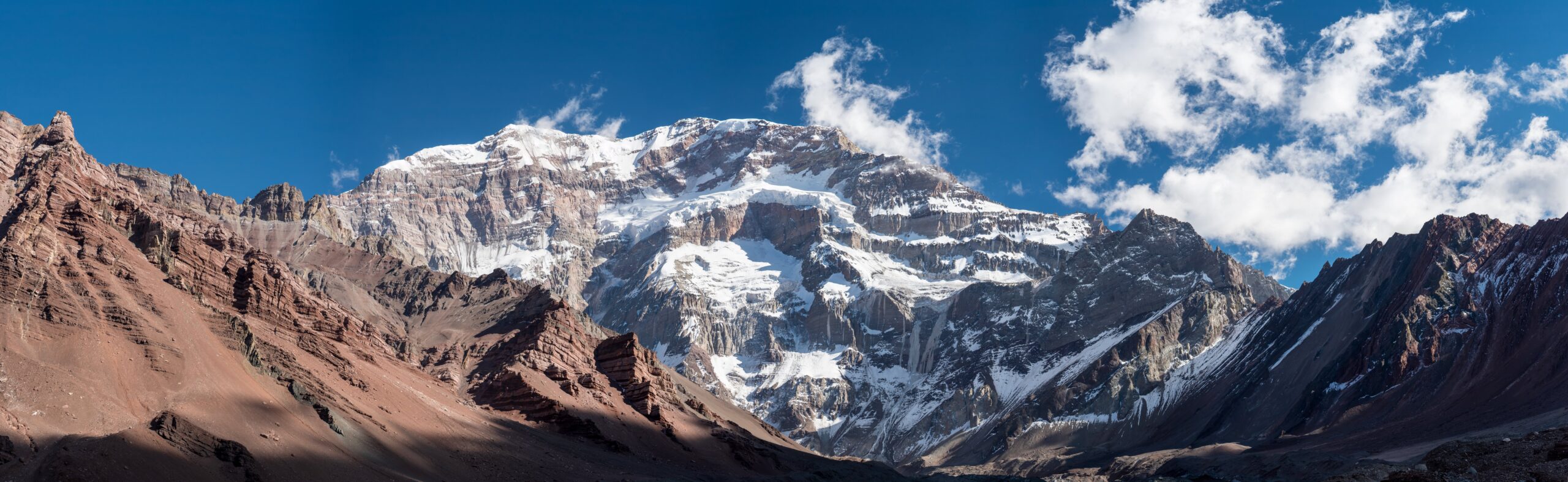
The 4 Routes Compared
Aconcagua has four standard climbing routes plus several technical variants. Specifically, the routes split between Horcones Valley access (Normal Route, 360 Traverse) and Vacas Valley access (Polish Glacier Route, False Polish Glacier Variant). Generally, route choice depends on technical skill level, days available, and whether photography depth or summit efficiency is the priority.
| Route | Difficulty | Days | Distance | Base Camp | Best For |
|---|---|---|---|---|---|
| Normal Route (Ruta Normal) | Non-technical | 18-20 | ~100 km RT | Plaza de Mulas 4,370m | First-time, Seven Summits |
| Polish Glacier Route | Technical (45-50° ice) | 19-21 | ~110 km RT | Plaza Argentina 4,200m | Experienced climbers |
| 360 Traverse | Non-technical | 19-21 | ~130 km | Plaza Argentina + Plaza de Mulas | Photography, wilderness |
| False Polish Glacier Variant | Non-technical | 19-21 | ~120 km RT | Plaza Argentina 4,200m | Mid-level progression |
The Normal Route via Horcones Valley
The Normal Route — Canonical Aconcagua
The Normal Route (Spanish: Ruta Normal) is Aconcagua’s standard climbing route ascending from the Horcones Valley trailhead through Plaza de Mulas base camp at 4,370m to the summit at 6,961m. Specifically, the Normal Route is non-technical throughout — no rope work, no significant glacier travel, no rock climbing — making it the canonical first Aconcagua climb for Seven Summits aspirants and the dominant route choice for 70-80% of all climbers. Generally, the Normal Route’s accessibility produces meaningfully higher summit success rates than the Polish Glacier Route but identical altitude exposure at 6,961m.
Normal Route 20-Day Standard Itinerary
| Day | Section | Elevation | Character |
|---|---|---|---|
| 1-2 | Mendoza arrival, permit processing | ~750m | Centro Cívico Mendoza permit office |
| 3 | Transfer to Penitentes trailhead | ~2,580m | Hotel night at Penitentes ski resort |
| 4 | Horcones trailhead → Confluencia camp | 3,400m | ~10 km approach hike (5-6 hours) |
| 5 | Confluencia day excursion (Plaza Francia) | 4,200m | Acclimatization day, South Face view |
| 6-7 | Confluencia → Plaza de Mulas base camp | 4,370m | ~16 km approach (8-10 hours) |
| 8-9 | Base camp rest + carry to Camp Canada | 5,050m | Acclimatization rotation |
| 10-11 | Move to Camp Canada | 5,050m | Sleep at altitude |
| 12 | Carry to Nido de Cóndores | 5,550m | Acclimatization rotation |
| 13 | Move to Nido de Cóndores | 5,550m | Sleep at altitude |
| 14 | Carry to Camp Cólera | 6,000m | High camp establishment |
| 15-17 | SUMMIT ATTEMPT WINDOW | 6,961m | Weather days + summit push |
| 18-20 | Descent via base camp to Mendoza | ~750m | Express descent if successful |
Normal Route Camp Detail
- Plaza de Mulas Base Camp (4,370m) — The canonical Aconcagua base camp serving Normal Route climbers. Full infrastructure including medical tent (with park doctor), helicopter rescue staging, satellite communications, and operator hospitality tents. Plaza de Mulas is the largest Aconcagua base camp typically housing 200-400 climbers during peak December-February season.
- Camp Canada (5,050m) — First high camp above base camp, named for early Canadian expeditions. Positioned on a flat shelf above the Plaza de Mulas-Nido de Cóndores grade transition. Used as acclimatization camp for 1-2 nights before pushing higher.
- Nido de Cóndores (5,550m) — “Nest of Condors” — the mid-route camp at the transition from the Western Horcones glacier route to the upper summit ridge. Notably exposed to Viento Blanco wind events.
- Camp Cólera (6,000m) — The high camp for summit attempts, positioned at the base of the Canaleta final summit climb. Most climbers attempt the summit from Cólera on a single push day requiring 8-12 hours round trip in 50-100 km/h sustained winds.
The Canaleta — Normal Route Summit Crux
The Canaleta is the final 400m gully leading to Aconcagua’s summit, ascending from approximately 6,500m to 6,961m at a sustained 30-40 degree gradient. Specifically, the Canaleta consists of loose scree and moderate snow patches that vary by season — early-season Canaleta (December) typically has more snow making it slightly easier; late-season Canaleta (February) is drier with more loose rock making it slightly harder. Generally, the Canaleta requires 2-3 hours of sustained climbing from the top of the False Polish Traverse trail junction. Notably, the Canaleta is the route’s most physically demanding section but remains non-technical — no rope work or technical climbing skills required.
All climbers arriving at Plaza de Mulas base camp (4,370m) must undergo mandatory medical screening at the park doctor tent before being authorized to ascend above base camp. Specifically, the screening checks blood oxygen saturation (SpO2), pulse rate, blood pressure, AMS symptom assessment, and overall fitness. Climbers with SpO2 below 75-80% or AMS symptoms may be denied permission to ascend until acclimatization improves or evacuated to Mendoza for medical evaluation. Generally, this screening is enforced by Aconcagua Provincial Park rangers — climbers cannot proceed without medical clearance. Notably, this is one of the most strictly-enforced medical screening protocols on any Seven Summits peak — Aconcagua’s altitude history of evacuations and fatalities drives the rigorous park policy.
The Polish Glacier Route via Vacas Valley
The Polish Glacier Route — The Technical Variant
The Polish Glacier Route ascends Aconcagua via the Vacas Valley trailhead through Plaza Argentina base camp at 4,200m, climbing the 45-50 degree Polish Glacier ice slope to the summit. Specifically, this is Aconcagua’s canonical technical variant — requiring glacier travel skills, crampons and ice axe proficiency, rope team experience, and comfort on sustained 45-degree ice slopes. Generally, the Polish Glacier Route produces meaningfully lower summit success rates (40-50%) than the Normal Route (50-60%) due to combined technical demands and altitude exposure. Notably, the route was first established by a 1934 Polish expedition that gave the route and glacier their permanent names.
Polish Glacier Route 21-Day Standard Itinerary
| Day | Section | Elevation | Character |
|---|---|---|---|
| 1-2 | Mendoza arrival, permit processing | ~750m | Centro Cívico permit office |
| 3 | Transfer to Punta de Vacas trailhead | ~2,400m | Vacas Valley entry point |
| 4 | Punta de Vacas → Pampa de Leñas | 2,950m | Day 1 of approach (5-6 hours) |
| 5 | Pampa de Leñas → Casa de Piedra | 3,250m | Day 2 of approach (5-7 hours) |
| 6 | Casa de Piedra → Plaza Argentina | 4,200m | Day 3 of approach (6-8 hours) |
| 7-8 | Base camp rest + carry to Camp 1 | 4,950m | Acclimatization rotation |
| 9 | Move to Camp 1 | 4,950m | Sleep at altitude |
| 10-11 | Carry to Camp 2 + return | 5,500m | Acclimatization rotation |
| 12-13 | Move to Camp 2 then Camp 3 | 5,950m | High camp establishment |
| 14-17 | POLISH GLACIER TECHNICAL ASCENT | 6,961m | Crampons + ice axe ascent of 45-50° glacier |
| 18-21 | Descent + return to Mendoza | ~750m | Express descent via Normal Route option |
Polish Glacier Technical Character
- 45-50 degree ice slope — Sustained moderate ice climbing for approximately 800-1,000m of elevation gain through the Polish Glacier proper
- Crampons mandatory — Full alpine crampons required for the entire glacier ascent
- Ice axe technique — Self-arrest skills and proper ice axe positioning required for the sustained slope
- Rope team travel — Most operators run 3-4 person rope teams on the glacier for crevasse protection
- Helmet recommended — Rockfall and ice fall hazard on lower glacier sections
- Weather sensitivity — Polish Glacier becomes substantially more dangerous in poor weather as visibility drops and ice surface conditions deteriorate
The Polish Glacier Route is NOT appropriate for climbers without prior glacier travel experience and demonstrated ice axe / crampons proficiency. Specifically, climbers should have: (1) at least 2-3 prior glaciated peak ascents (Mont Blanc, Mount Hood, Pico de Orizaba glaciated route) before attempting Polish Glacier; (2) demonstrated self-arrest technique under instructor supervision; (3) comfort on sustained 40-50 degree ice slopes with belayed ascent; (4) rope team travel protocol familiarity. Generally, climbers without these skills should choose the Normal Route or the False Polish Glacier Variant — both produce the same Aconcagua summit at 6,961m without the technical glacier demands. Notably, most Argentine specialist operators offer the Polish Glacier Route as a premium-tier program with smaller guide ratios (1:3 maximum) due to the technical demands.
The 360 Traverse
The 360 Traverse — Photography Route
The 360 Traverse combines Vacas Valley ascent with Horcones Valley descent (or vice versa) producing an 19-21 day expedition that traverses the mountain rather than out-and-back from a single valley. Specifically, the 360 Traverse visits both Plaza Argentina base camp (4,200m) and Plaza de Mulas base camp (4,370m) plus the wilderness backside sections between them. Generally, this is the photography-focused route capturing the most diverse Aconcagua landscape character — climbers experience the dry remote Vacas Valley approach, the technical-feel Polish-side high camps, the False Polish traverse to the Normal Route upper camps, the summit, and the descent through Plaza de Mulas. Notably, the 360 Traverse produces less-photographed Aconcagua landscape compositions because backside sections see substantially fewer climbers than the Normal Route’s iconic Plaza de Mulas zone.
360 Traverse Direction Choice
- Counterclockwise (Vacas → Horcones) — Most common direction. Approach via remote Vacas Valley, summit via False Polish traverse to Camp Cólera, descend Normal Route via Plaza de Mulas. Produces wilderness photography first, iconic Plaza de Mulas photography on descent.
- Clockwise (Horcones → Vacas) — Less common reversed direction. Approach via developed Horcones Valley with full Plaza de Mulas acclimatization, traverse to Polish-side Camp Cólera approach, summit, descend via Polish Glacier or False Polish back to Plaza Argentina. Produces iconic Aconcagua photography first.
Permits + Park Access
All Aconcagua climbers must purchase an Aconcagua Provincial Park climbing permit from the Mendoza Provincial Government before starting their expedition. Specifically, the 2026 permit structure is enforced by Aconcagua Provincial Park rangers at park entry points and at Plaza de Mulas / Plaza Argentina base camps. Generally, permits are processed at the Centro Cívico Mendoza office in Mendoza city or online via the official park website.
2026 Aconcagua Permit Fee Structure
| Season | Period | Permit (Assisted/Mules) | Permit (Unassisted) |
|---|---|---|---|
| High Season | December 15 – January 31 | $1,170 USD | $1,640 USD |
| Mid Season | December 1-14 + February 1-20 | $800-$1,000 USD | $1,200-$1,400 USD |
| Low Season | November 15-30 + February 21 – March 31 | $300-$500 USD | $500-$700 USD |
| Park Closed | April 1 – November 14 | N/A — climbing not permitted | N/A |
Permit Process Step-by-Step
- Online pre-registration via aconcagua.mendoza.gov.ar official website
- Arrive Mendoza 1-2 days before expedition departure
- Visit Centro Cívico Mendoza permit office at Avenida Peltier 351, Mendoza city (Aconcagua Provincial Park administration)
- Submit documentation: passport copy, emergency contact info, expedition operator name, planned route, expected dates, travel insurance proof (mandatory mountaineering coverage above 4,500m)
- Pay permit fee in USD or Argentine pesos via credit card or bank transfer
- Receive park permit document (typically 1-2 business days processing)
- Present permit at park entry — Horcones Ranger Station (Normal Route, 360 Traverse) or Punta de Vacas Ranger Station (Polish Glacier Route, 360 Traverse counterclockwise)
Commercial expedition operators (Inka, Grajales, Aymara, Acomara, plus international Western operators) handle permit processing for clients as part of their packages — but the permit fee itself is paid separately by the climber. Specifically, operators submit the required documentation to Aconcagua Provincial Park on behalf of clients, coordinate the Centro Cívico Mendoza office visit, and ensure park entry processing at Horcones or Punta de Vacas ranger stations. Generally, climbers should budget the permit fee ($800-$1,640 depending on season and route) in addition to the operator package price. Notably, the official park website aconcagua.mendoza.gov.ar provides the authoritative permit fee schedule and pre-registration system for self-supported climbers not using commercial operators.
Operators Comparison
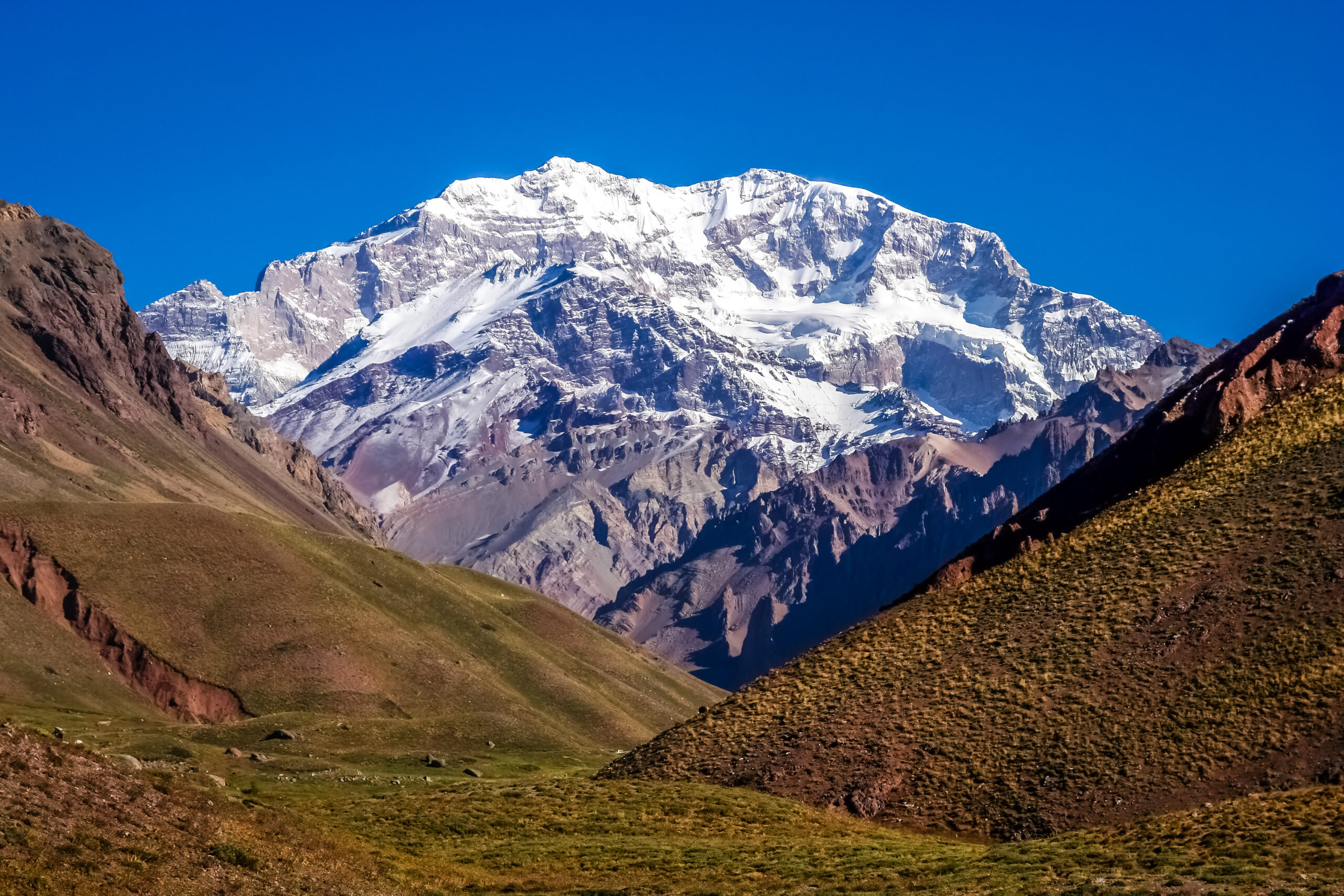
Every commercial Aconcagua expedition is operationally run from Mendoza, Argentina — there is no other way. Specifically, the Argentine specialist operators (Inka Expediciones, Grajales Expediciones, Aymara Aconcagua, Acomara) own and operate the camp infrastructure, mule trains, base camp services, and guide teams that international operators subcontract. Generally, when climbers book with Alpine Ascents International, Mountain Madness, or RMI Expeditions for Aconcagua, they pay for an American or European lead guide, English-language client services, and brand continuity layered on top of an Argentine ground operation. The premium pricing reflects real services but the operational quality on the mountain is anchored by the Argentine specialist underneath.
2026 Aconcagua Operator Tier Comparison
| Operator | Tier | 2026 Cost | Days | Guide Ratio | Certification |
|---|---|---|---|---|---|
| Inka Expediciones | Argentine Specialist | $4,500-$6,500 | 20 | 1:4-1:6 | AAGM / UIAGM |
| Grajales Expediciones | Argentine Specialist | $5,000-$7,500 | 20 | 1:4-1:6 | AAGM / UIAGM |
| Aymara Aconcagua | Argentine Specialist | $4,500-$6,000 | 19-21 | 1:4-1:5 | AAGM |
| Acomara | Argentine Specialist | $4,500-$6,000 | 19-20 | 1:4-1:6 | AAGM |
| Alpine Ascents International | International Western | $8,500-$10,500 | 21 | 1:3-1:4 | UIAGM/IFMGA + AAGM subcontract |
| Mountain Madness | International Western | $7,500-$9,500 | 21 | 1:3-1:4 | UIAGM/IFMGA + AAGM subcontract |
| RMI Expeditions | International Western | $8,000-$11,000+ | 22 | 1:3-1:4 | UIAGM/IFMGA + AAGM subcontract |
| Aventuras Patagónicas | Hybrid Argentine-International | $6,500-$8,500 | 21 | 1:3-1:5 | AAGM + IFMGA |
Full operator analysis and 2026 ranking in our Aconcagua Operators Guide.
Difficulty Deep-Dive
Aconcagua is routinely described as “non-technical” — accurate as a climbing-grade description but substantially misleading as a difficulty rating. Specifically, the mountain produces regular fatalities, frequent evacuations, and 30-70% turnaround rates for reasons that have nothing to do with rock climbing or glacier travel. Generally, understanding why “non-technical” doesn’t mean “easy” is essential preparation.
The 5 Reasons Aconcagua Is Harder Than Its Grade Suggests
| Variable | Aconcagua Reality | What Climbers Underestimate |
|---|---|---|
| Altitude exposure | 6,961m summit (extreme altitude territory) | 40% sea-level atmospheric pressure roughly equivalent to Everest South Col |
| Expedition duration | 18-21 days at altitude | Most climbers train for fitness peaks not sustained multi-week altitude exposure |
| Viento Blanco winds | 80-150 km/h sustained summit winds | Wind chill -35°C to -50°C even in austral summer |
| Weather variability | 2-3 weather buffer days needed | Climbers without buffer time turn back at Camp Cólera |
| Self-sufficiency demand | Higher than Everest or Denali | No Sherpas, limited rescue, climbers carry significant loads above base camp |
Viento Blanco — Why Aconcagua Kills
The Viento Blanco (Spanish for “white wind”) is Aconcagua’s signature wind phenomenon — sustained high-altitude winds typically 80-150 km/h producing wind chill temperatures of -35°C to -50°C even in austral summer months. Specifically, the Viento Blanco produces most of Aconcagua’s annual fatalities through hypothermia, frostbite, and judgment-impairing cold exposure rather than altitude sickness or technical climbing accidents. Generally, the Viento Blanco is created by Aconcagua’s isolated 6,961m elevation rising above surrounding peaks combined with prevailing westerly winds from the Pacific that accelerate over the Andes.
Viento Blanco Operational Implications
- 60-70% of attempted summit days see Viento Blanco-level winds during December-February peak season
- Weather window selection matters meaningfully more on Aconcagua than altitude-equivalent peaks like Denali or Vinson
- 2-3 weather buffer days at Camp Cólera (6,000m) are typically needed to wait for genuine summit windows
- Frostbite risk is highest on the Canaleta where climbers can’t move quickly enough to maintain warm core temperatures
- Hypothermia risk increases dramatically when climbers ascend in marginal windows believing conditions will improve
- Helicopter rescue is suspended during severe Viento Blanco events — climbers in trouble must self-evacuate or wait for wind drop
Aconcagua’s safety culture enforces a 5pm summit-day turnaround rule — climbers who have not summited by 5pm must turn back regardless of position. Specifically, the turnaround time accounts for: (1) the 6-8 hour descent from summit to Camp Cólera; (2) increasing Viento Blanco wind probability after dark; (3) decreasing visibility on the Canaleta descent; (4) hypothermia risk from prolonged Canaleta exposure. Generally, climbers who push past the turnaround time accumulate disproportionate fatality risk — most Aconcagua deaths involve climbers who summited late and could not descend before nightfall in cold conditions. Notably, quality Argentine specialist operators enforce the turnaround strictly, while budget operators sometimes allow flexibility that produces the price-fatality correlation documented in Aconcagua Provincial Park safety statistics.
Cost Breakdown 2026
Aconcagua 2026 all-in costs range from $9,000-$13,000 (Argentine specialist tier) to $12,000-$16,000+ (international Western tier). Specifically, the headline operator cost is only 50-65% of actual all-in trip spend — climbers consistently underestimate the additional categories.
| Category | Argentine Specialist Tier | International Western Tier |
|---|---|---|
| Operator package | $4,500-$7,500 | $7,500-$11,000+ |
| Aconcagua Provincial Park permit | $800-$1,640 | $800-$1,640 |
| International flights to Mendoza | $1,000-$2,000 | $1,000-$2,000 |
| Mendoza pre/post hotel (4-6 nights) | $300-$900 | $400-$1,200 |
| Travel insurance (mountaineering coverage) | $250-$500 | $250-$500 |
| Gear rental if needed | $100-$400 | $100-$400 |
| Tipping budget | $300-$500 | $400-$700 |
| Mendoza meals + extras | $200-$400 | $200-$400 |
| TOTAL ALL-IN | $7,450-$13,840 | $10,650-$17,840+ |
Full cost analysis with line-item detail in our Aconcagua Expedition Cost Honest Breakdown and 2026 budget framework in our Aconcagua Cost Guide.
Season Planning
| Month | Conditions | Crowds | Recommendation |
|---|---|---|---|
| November (15-30) | Cold, variable, park just opened | Minimal | Experienced climbers seeking solitude |
| December (1-14) | Improving, weather windows opening | Light | Shoulder season with reasonable conditions |
| December (15-31) | PEAK season begin, reliable windows | Heavy | Standard booking month, high permit fees |
| January | PEAK season — most reliable | Maximum | Best weather, highest crowds, peak prices |
| February (1-20) | PEAK season late — improving stability | High | Best for first-time climbers |
| February (21-28) | Late shoulder, decreasing windows | Light | Experienced climbers |
| March (1-31) | Closing shoulder, deteriorating weather | Minimal | Not recommended for first-time |
| April-November 14 | PARK CLOSED | None | Climbing not permitted |
The optimal Aconcagua summit window is December 20 through February 15. Specifically, this 8-week window captures the peak Southern Hemisphere austral summer with the most reliable weather windows, longest daylight hours (16-17 hours), and most favorable Viento Blanco probability. Generally, climbers booking outside this window face meaningfully higher weather risk, shorter daylight, and lower summit success rates. Notably, the canonical Aconcagua “right way” booking pattern is: book operator 12-18 months in advance for January or early-February departure, plan 21 days total trip duration including arrival/departure buffer, expect 2-3 weather buffer days at Camp Cólera before summit window opens.
Preparation + Progression
Aconcagua preparation requires 9-18 months of structured training including: cardiovascular base building, altitude acclimatization on intermediate peaks, glacier travel skills if attempting Polish Glacier Route, gear familiarization, and operator selection. Specifically, the canonical Aconcagua progression pathway involves at least one prior 5,000m+ peak before attempting the 6,961m summit.
Recommended Aconcagua Progression Sequence
- Stage 1 — Foundational fitness (months 1-3): Cardiovascular base building, multi-day hiking experience, basic mountaineering skills course
- Stage 2 — First mountaineering peak (months 4-9): Mount Rainier 4,392m (technical glaciated) or Kilimanjaro 5,895m (non-technical altitude) for first major mountaineering experience
- Stage 3 — Mexican volcano sequence (months 10-15): Pico de Orizaba 5,636m and/or Iztaccíhuatl 5,230m for direct Aconcagua category-analog experience — Mexican volcanoes share dry-cold conditions and non-technical glaciated character with Aconcagua
- Stage 4 — Aconcagua attempt (months 16-18): Normal Route via Horcones with Argentine specialist operator
Full 4-stage training framework with month-by-month detail in our Aconcagua Progression Plan. Medical preparation including AMS prevention and Diamox protocols in our Aconcagua Medical Guide.
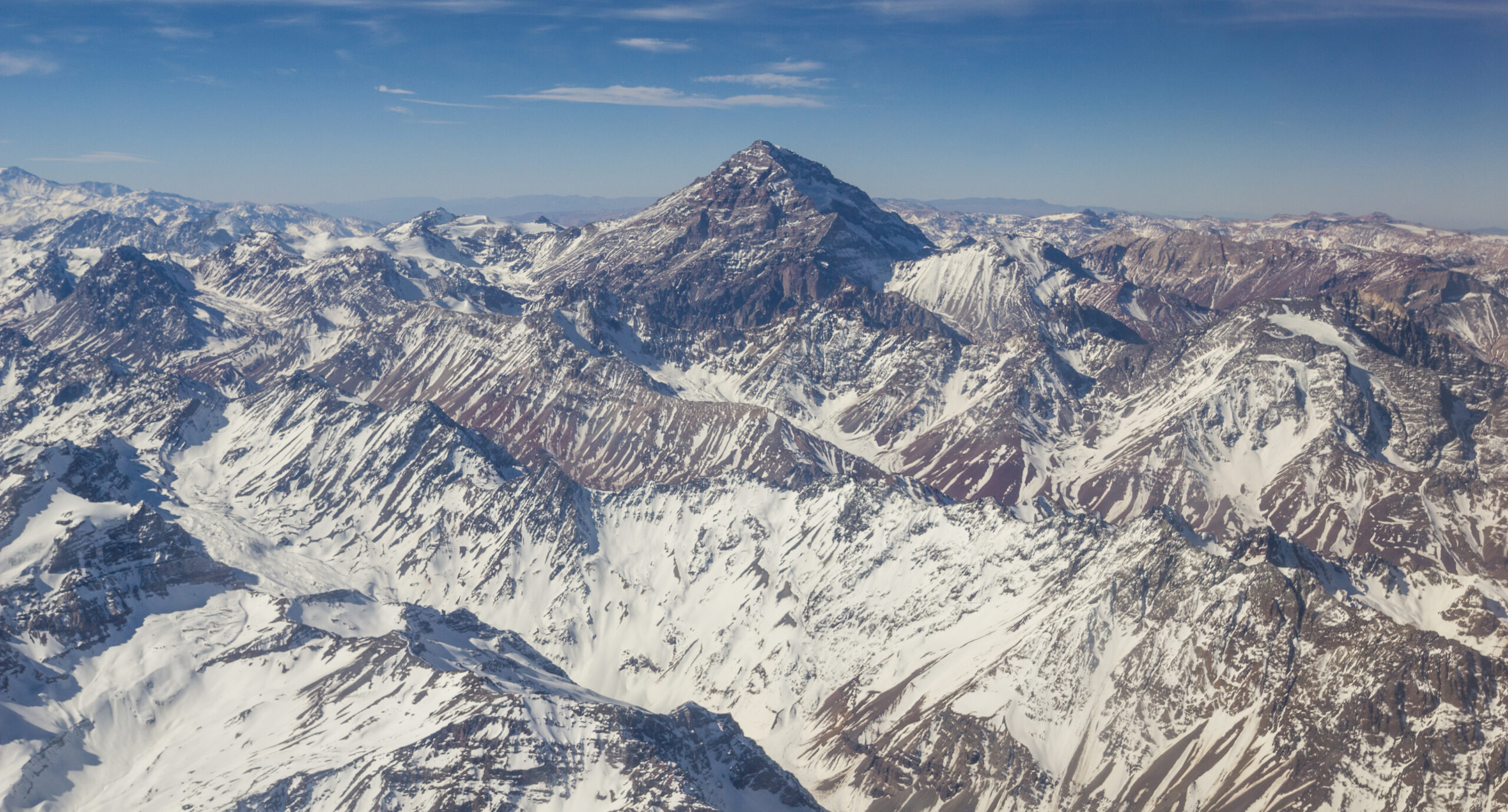
Verdict by Climber Type
First-Time Seven Summits Climber
Verdict: Normal Route via Horcones Valley with Argentine specialist operator ($4,500-$7,500). Specifically, Inka Expediciones, Grajales Expediciones, Aymara Aconcagua, or Acomara provide AAGM-certified guide services with proper 20-day acclimatization itineraries and developed Plaza de Mulas base camp infrastructure. Generally, this is the canonical first Aconcagua climb for 70-80% of Seven Summits aspirants.
Experienced Climber Wanting Technical Variant
Verdict: Polish Glacier Route via Vacas Valley with quality Argentine specialist or hybrid operator ($5,000-$9,000). Specifically, climbers with prior glacier travel experience and ice axe / crampons proficiency should choose Polish Glacier for the technical challenge while maintaining the same 6,961m altitude exposure. Generally, Aventuras Patagónicas and senior-tier programs from Grajales or Inka are appropriate for the Polish Glacier technical demands.
Photography-Focused Climber
Verdict: 360 Traverse Route with extended itinerary (19-21 days) via Argentine specialist ($5,500-$8,500). Specifically, the 360 Traverse captures comprehensive Aconcagua landscape photography across both valleys plus the wilderness backside sections away from Normal Route crowds. Generally, this route is the apex Aconcagua experience for climbers seeking depth over speed.
Budget-Conscious Climber
Verdict: Normal Route via Horcones with budget-tier Argentine specialist ($4,500-$5,500) during shoulder seasons (late November or late February). Specifically, Aymara Aconcagua and Acomara offer competitive pricing without sacrificing safety standards or AAGM certification. Generally, climbers can save $1,000-$2,000 by booking shoulder seasons when permit fees are 30-50% lower than peak January rates. Notably, climbers should avoid the cheapest sub-$4,500 operators which sometimes compress itineraries below the 18-day acclimatization minimum.
International English-Speaker Wanting Brand Continuity
Verdict: International Western operator (Alpine Ascents, Mountain Madness, RMI) at $7,500-$11,000+. Specifically, international operators provide English-language lead guides, brand continuity with prior Mount Rainier or Denali expeditions, and structured client services. Generally, the $3,000-$4,500 premium over Argentine specialist tier reflects English-language services and brand continuity, not safety or success rate differences — the actual ground operations on the mountain are run by the same Argentine specialists either way.
Seven Summits Completion-Focused Climber
Verdict: Normal Route with premium international operator at $8,500-$11,000+. Specifically, climbers tracking Seven Summits completion typically value brand continuity and English-language guide services across the entire progression. Generally, Alpine Ascents International is the canonical Seven Summits operator providing consistent service across all 7 peaks. Notably, this premium is justified for climbers prioritizing the progression as a unified objective rather than 7 separate climbs.
Frequently Asked Questions
What mountaineering club was founded in 1945 in Mendoza, Argentina?
No notable mountaineering club was founded in Mendoza in 1945 — this is a common factual error. Specifically, Mendoza’s primary mountaineering club is Club Andinista Mendoza (CAM), founded April 12, 1935 (not 1945). Originally established as Club Alpinista Mendoza by Humberto Re, it was renamed to Club Andinista Mendoza on October 2, 1942 when the Argentine Academy of Letters recommended replacing “alpinismo” with “andinismo” for mountain sports practiced in the Andes. CAM maintains historical Aconcagua expedition archives, operates Refugio Mausy at 2,900m in Vallecitos, and runs climbing schools at Teniente Coronel Beltrán Sur 357 in Mendoza city. The 1945 date appears in some outdated references and AI-generated travel guides but the verified founding date is 1935 — confusion may stem from postwar club reorganization in the late 1940s or conflation with other South American climbing clubs founded in that era including Club Andino Tucumán which was founded in 1944.
When was Club Andinista Mendoza founded?
Club Andinista Mendoza was founded on April 12, 1935. It was originally established as Club Alpinista Mendoza by Humberto Re and renamed to Club Andinista Mendoza on October 2, 1942 when Spanish-language convention shifted from “alpinismo” to “andinismo” for Andes mountain sports per Argentine Academy of Letters recommendation. CAM is Argentina’s oldest active mountaineering club, celebrating its 90th anniversary in April 2025. CAM members have produced significant Aconcagua first ascents and route development since the 1940s including the first Argentine expedition to the South Face in 1953 plus continued exploration through the 1980s.
How high is Aconcagua?
Aconcagua is 6,961 meters (22,838 feet) high. Aconcagua is the highest peak in the Americas, the highest peak in the Southern Hemisphere, and the second-highest of the Seven Summits after Mount Everest. Located in Mendoza Province, Argentina approximately 110 km west of Mendoza city and 15 km east of the Chilean border at coordinates 32.65306°S 70.01167°W. The summit elevation is officially 6,961m though some older sources cite 6,962m or 6,960m — the difference reflects GPS precision improvements over the historical record.
How much does it cost to climb Aconcagua in 2026?
Aconcagua 2026 costs $9,000-$17,000+ all-in depending on operator tier. Argentine specialists (Inka, Grajales, Aymara, Acomara) at $4,500-$7,500 produce $9,000-$13,000 total all-in. International Western operators (Alpine Ascents, Mountain Madness, RMI) at $7,500-$11,000+ produce $12,000-$17,000+ total. Additional categories beyond operator: Aconcagua Provincial Park permit ($800-$1,640), international flights ($1,000-$2,000), Mendoza accommodation ($300-$1,200), travel insurance with mountaineering coverage ($250-$500), gear rental ($100-$400), tipping budget ($300-$700), incidentals ($200-$400). Full breakdown in our Aconcagua Expedition Cost Honest Breakdown.
How many days does it take to climb Aconcagua?
Aconcagua climbs take 18-21 days standard for the Normal Route expedition. Most operators run 19-20 day programs including arrival rest day, Mendoza permit processing, approach hike, base camp establishment, acclimatization rotations, summit attempt window, and descent. Polish Glacier Route and 360 Traverse require 19-21 days due to additional valley logistics. Compressed 12-15 day expeditions exist but produce meaningfully lower summit success rates due to inadequate acclimatization. The canonical 20-day Normal Route itinerary is: Days 1-2 Mendoza permits, Day 3 Penitentes transfer, Days 4-7 Horcones to Plaza de Mulas approach, Days 8-13 acclimatization rotations, Days 14-17 summit attempt window, Days 18-20 descent.
What is the success rate on Aconcagua?
Aconcagua summit success rate is 30-40% overall, with quality programs achieving 50-60%. Breakdown: Budget operators on compressed schedules 20-30% summit rate; standard Argentine specialist programs 50-60%; premium international operators 55-65%; self-supported experienced climbers 40-70% depending on prior altitude experience. The 30-70% turnaround rate reflects climber preparation gaps rather than route technical difficulty — Normal Route climbing itself is non-technical but altitude management determines success. Climbers with prior Pico de Orizaba 5,636m or Cotopaxi 5,897m experience summit at meaningfully higher rates than first-time high-altitude climbers.
What is the Viento Blanco on Aconcagua?
The Viento Blanco (“white wind”) is Aconcagua’s signature wind phenomenon — sustained 80-150 km/h winds producing -35°C to -50°C wind chill even in austral summer. Created by Aconcagua’s isolated 6,961m elevation rising above surrounding peaks combined with prevailing westerly winds from the Pacific that accelerate over the Andes. Viento Blanco events occur 60-70% of attempted summit days during December-February peak season. Viento Blanco produces most of Aconcagua’s annual fatalities through hypothermia, frostbite, and judgment-impairing cold exposure rather than altitude sickness or technical accidents. Climbers should plan 2-3 weather buffer days at Camp Cólera (6,000m) to wait for genuine summit windows.
When is the best time to climb Aconcagua?
Aconcagua is best climbed during the Southern Hemisphere austral summer December through February, with the optimal window December 20 through February 15. November (15-30) shoulder opening with cold variable conditions; December (1-14) shoulder with improving conditions; December (15-31) peak season begin with reliable windows; January peak season with most reliable weather and maximum crowds; February (1-20) late peak with improving stability; February (21-28) closing shoulder with decreasing windows; March closing shoulder with deteriorating weather; April through November 14 park closed. Climbers should AVOID April-November 14 when the park is closed.
Do I need a permit to climb Aconcagua?
Yes — all Aconcagua climbers must purchase an Aconcagua Provincial Park climbing permit from the Mendoza Provincial Government. 2026 fees: HIGH SEASON (December 15 – January 31) $1,170 assisted with mules or $1,640 unassisted; MID SEASON (December 1-14 + February 1-20) $800-$1,400; LOW SEASON (November 15-30 + February 21 – March 31) $300-$700. Permits processed at Centro Cívico Mendoza or online via aconcagua.mendoza.gov.ar. Commercial operators handle permit processing for clients but the permit fee is paid separately by the climber. Documentation required: passport copy, emergency contact, expedition operator, planned route, dates, travel insurance with mountaineering coverage above 4,500m.
Is Aconcagua harder than Kilimanjaro?
Yes — Aconcagua is meaningfully harder than Kilimanjaro across multiple dimensions. Altitude: Aconcagua 6,961m vs Kilimanjaro 5,895m (1,066m higher). Duration: Aconcagua 18-21 days vs Kilimanjaro 6-8 days. Weather: Aconcagua Viento Blanco produces -35°C to -50°C wind chill vs Kilimanjaro equatorial weather with -10°C summit night. Success rate: Aconcagua 30-50% vs Kilimanjaro 65-75%. Cost: Aconcagua $9,000-$13,000 vs Kilimanjaro $2,000-$8,000. Climbers should complete Kilimanjaro before Aconcagua to develop high-altitude experience. Pico de Orizaba 5,636m and Iztaccíhuatl 5,230m provide better Aconcagua preparation than Kilimanjaro due to similar glaciated terrain and dry-cold conditions.
Methodology + Editorial Standards (E-E-A-T)
How This Aconcagua Climb Guide Was Researched
Data Sources and Verification
Elevation, route descriptions, operator pricing, permit fees, historical claims, and institutional records cross-verified against seven primary source categories: (1) Aconcagua Provincial Park (Parque Provincial Aconcagua) — Mendoza Provincial Government official website aconcagua.mendoza.gov.ar for permit fees, access regulations, seasonal calendars, and safety statistics; (2) AAGM (Argentine Mountain Guides Association) for guide certification verification, route protocols, and operator credentialing; (3) Argentine specialist operators Inka Expediciones, Grajales Expediciones, Aymara Aconcagua, and Acomara via direct outreach for 2026 pricing, itineraries, and base camp infrastructure; (4) International Western operators Alpine Ascents International, Mountain Madness, RMI Expeditions for 2026 commercial pricing for English-language premium tier; (5) Club Andinista Mendoza (CAM) institutional historical records including founding date archives, expedition documentation, and Aconcagua climbing legacy — verified founding date April 12, 1935 (not 1945 as sometimes incorrectly cited); (6) UIAGM/IFMGA international certification for guide credentialing standards on international operator tier; (7) Internal Global Summit Guide research cross-referenced with our Aconcagua Progression Plan, Aconcagua Operators Guide, Aconcagua Cost Breakdown, Aconcagua vs Denali Comparison, and Aconcagua Medical Guide.
Editorial Approach — RESEARCH-LEANING with Honest Disclosure
The Global Summit Guide editorial team has NOT personally climbed Aconcagua — coverage is research-based throughout. Honest disclosure is essential for E-E-A-T integrity. Travis Ludlow brings first-hand Pico de Orizaba 5,636m and Iztaccíhuatl 5,230m Mexican volcano experience as the closest category analog (high-altitude non-technical glaciated peaks with similar acclimatization requirements). The Mexican volcano experience translates directly to Aconcagua altitude management and operator evaluation despite the 1,325m elevation gap. Coverage draws on direct outreach to AAGM-certified Argentine specialist operators with public certification records, Aconcagua Provincial Park official sources, and Club Andinista Mendoza primary institutional records.
Currency of Data and Zero Paid Placement Policy
This guide is updated annually with operator pricing and permit fees verified June 2026 and next refresh scheduled October 2026 before the prime December-February austral summer climbing season. Zero paid placements. No affiliate kickbacks influence operator inclusion or recommendations. Operators are evaluated on the universal 8-criteria framework regardless of commercial relationship status. Last verified: June 22, 2026. v3.8 build June 22, 2026.
Sources and References
Primary Aconcagua References
- Aconcagua Provincial Park (Parque Provincial Aconcagua) — Mendoza Provincial Government official website aconcagua.mendoza.gov.ar for permit fees, access regulations, seasonal calendars, and safety statistics
- AAGM (Asociación Argentina de Guías de Montaña / Argentine Mountain Guides Association) — official guide certification registry and route protocols
- Inka Expediciones — Argentine specialist operator direct verification for 2026 pricing and itineraries via official website inka-expeditions.com
- Grajales Expediciones — Argentine specialist operator direct verification for 2026 pricing and itineraries via official website grajales.net
- Aymara Aconcagua and Acomara — additional Argentine specialist operator verification for competitive pricing tier
- Alpine Ascents International, Mountain Madness, RMI Expeditions, Aventuras Patagónicas — international Western operator 2026 commercial pricing verification
- Club Andinista Mendoza (CAM) — institutional historical records confirming founding date April 12, 1935 (corrected from common 1945 misconception), Aconcagua expedition archives, and 90-year institutional continuity
- Centro Cultural Argentino de Montaña (Argentine Mountain Cultural Center) — secondary verification of CAM founding date and Argentine mountaineering institutional history
- UIAGM/IFMGA International Federation of Mountain Guides Associations — guide credentialing standards for international operator tier
- Internal Global Summit Guide research — cross-referenced with Aconcagua Progression Plan, Aconcagua Operators, Aconcagua Cost Breakdown, Aconcagua vs Denali, Aconcagua Medical Guide, Aconcagua Normal Route Conditions, Andes High-Altitude Giants Hub, and Seven Summits Hub
About The Author (E-E-A-T)
Continue Exploring Aconcagua + Seven Summits Coverage
Ready to Plan Your 2026 Aconcagua Climb?
Start with our 4-Stage Progression Plan to build the 18-month training framework. Reference our Operators Guide to compare Argentine specialists vs international Western tier. Budget with our Honest Cost Breakdown. Then commit to December 20 – February 15 summit window with a 19-21 day expedition for the strongest Aconcagua summit probability.
Progression Plan Operators Guide Cost Breakdown vs DenaliAconcagua 2026 Complete Climb Guide · South America’s Highest Peak · v3.8 build · Last verified June 22, 2026 · Published by Global Summit Guide editorial team · Travis Ludlow Editor · RESEARCH-LEANING framing with honest disclosure: NO Aconcagua first-hand · Travis Pico de Orizaba 5,636m + Iztaccíhuatl 5,230m Mexican volcano analog first-hand · 5 schemas including VideoObject · Snippet capture for “mountaineering club founded 1945 mendoza argentina” via Club Andinista Mendoza founded April 12, 1935 correction · Internal funnel to Aconcagua Progression Plan + Operators Guide + Cost Breakdown + vs Denali + Medical Guide + Normal Route Conditions + Andes Hub + Seven Summits Hub · Targets canonical Aconcagua keyword cluster including aconcagua climbing climb aconcagua aconcagua route aconcagua difficulty aconcagua cost aconcagua permits aconcagua season normal route polish glacier plaza de mulas plaza argentina horcones valley vacas valley viento blanco stone sentinel
This peak is one of the Seven Summits — the highest peak on every continent
The Seven Summits are mountaineering’s most iconic geographic challenge — climbing the highest peak on each of the seven continents. See the complete collection covering Bass vs Messner lists, all 7 peaks in detail, full Dick Bass to Nims Purja history, and realistic cost breakdown from $150K to $300K+ across 3-7 years.
View All Seven Summits →🏔 Part of the Seven Summits
One of the highest peaks on each continent. See all 7 with Bass vs Messner lists, costs, and history.
View All Seven Summits →Mount Everest belongs to both the Seven Summits and the 14 Eight-Thousanders
As the highest peak on Earth (8,849m), Mount Everest is the headline summit of mountaineering’s two most iconic collections. The Seven Summits requires climbing the highest peak on every continent; the 14 Eight-Thousanders requires climbing every mountain above 8,000 meters.
Seven Summits → 14 Eight-Thousanders →Plan the money side with Aconcagua permits and costs.
Was this helpful?
🏔Related guides
🧭Explore & compare
Global Summit Guide is an independent mountaineering resource founded in 2026. The team combines first-hand trekking and climbing experience with in-depth research and professional health and nutrition review to help climbers choose objectives, prepare properly, and stay safe.
Health, altitude, and nutrition content is reviewed by Taylor Ludlow (Registered Nurse) and Brigg Hoopes (Nutritionist).
What We Don't Know Yet
Mountain information changes quickly. This box explains the limits of what this page can responsibly promise.
- Permit availability, reservation windows, quotas, and official fee rules may change after this page is updated.
- Guide-company prices, departure dates, guide ratios, included services, and cancellation rules can change without notice.
- Route conditions, trailhead access, crevasse exposure, stream crossings, and rescue access may vary from published planning guidance.
Verify current conditions with official land managers, guide services, local forecasts, and current route reports before booking or climbing.
Part of this Global Summit Guide cluster
Explore the complete Mountains guide for more context, routes, planning links, and related resources.
Mountaineering, rock and ice climbing, glacier travel, and high-altitude activity are inherently dangerous and can result in serious injury or death. The information on Global Summit Guide is provided for general informational and educational purposes only and is not a substitute for professional instruction, qualified guiding, proper equipment, or your own judgment and experience.
Route conditions, weather, snowpack, permits, regulations, and hazards change constantly and may differ from what is described here. Details may be incomplete, out of date, or contain errors. Always verify current information with local authorities, certified guides, and official sources before making any decision in the mountains.
Nothing on this site is medical, legal, or financial advice. Our fitness, acclimatization, altitude, and nutrition content is general in nature; consult a qualified physician before beginning any strenuous exercise program or exposing yourself to high altitude.
You are solely responsible for your own safety and decisions. To the fullest extent permitted by law, Global Summit Guide and its team accept no liability for any loss, injury, damage, or expense arising from use of, or reliance on, this information. By using this site you acknowledge these risks and accept these terms.
Some links on this site may be affiliate links. If you buy through them we may earn a small commission at no extra cost to you; this never affects our recommendations.
Global Summit Guide recommendation path
Next Best Mountain to Research
Use these recommendations to continue the right planning path instead of stopping on one page.
Use current permit, weather, route, and operator information before booking or climbing.