
Last updated September 18, 2026
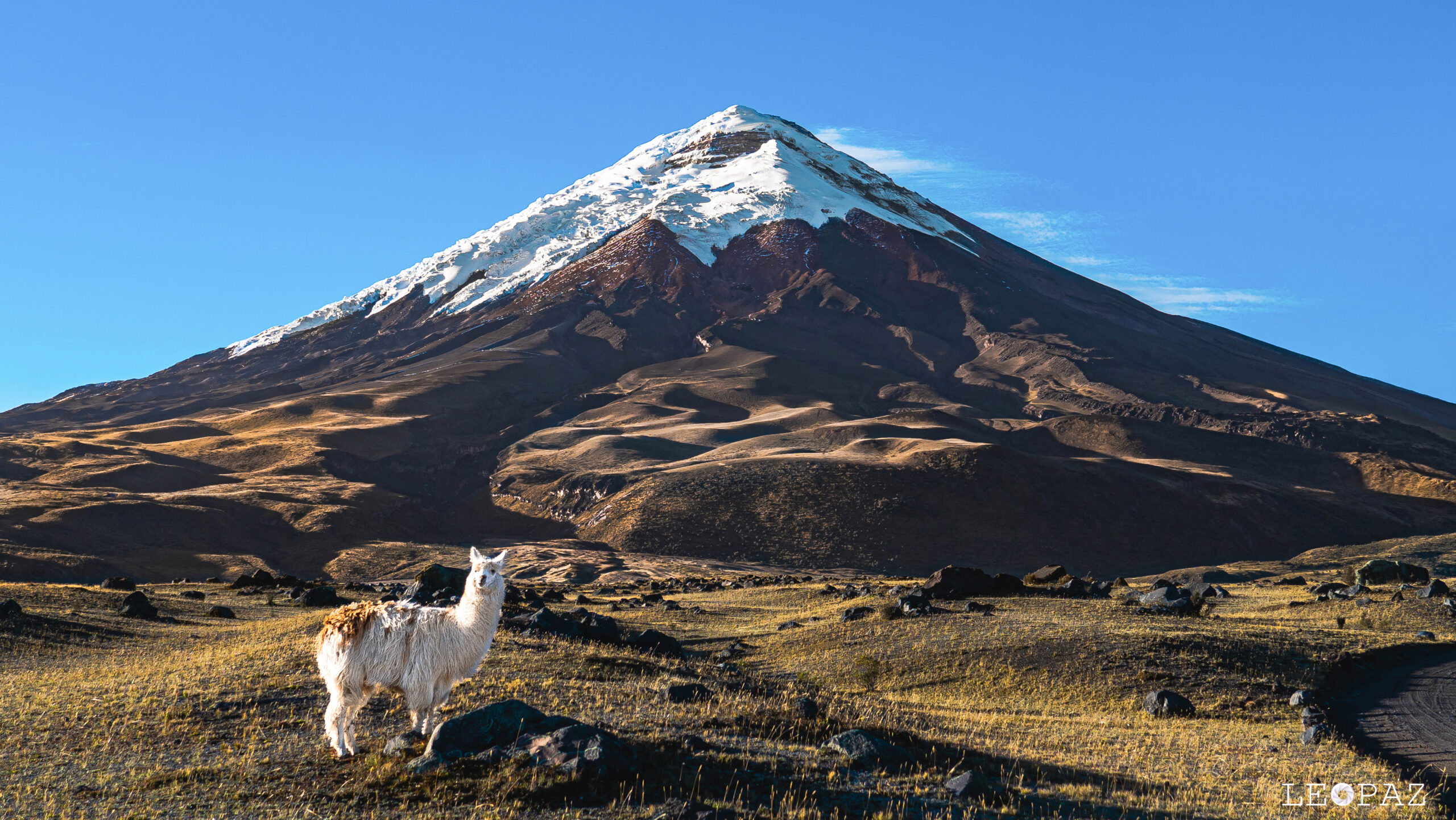
Cotopaxi Gear List: Boots, Crampons & Summit Kit
Cotopaxi is a glacier climb, not a high-altitude hike. Your system must work for a dark pre-dawn start, crevassed glacier travel, crampon movement, wind, intense equatorial UV and an actively monitored volcanic summit. The key planning question is what must fit you personally, what the operator supplies, and what must be rechecked for current volcanic conditions.
Bring the Personal Fit System. Confirm the Guide-Managed System.
Your boots, socks, layers, gloves, eyewear, pack and personal comfort items should be dialed before you arrive. These are hard to fix at midnight if fit, warmth or compatibility fails.
Technical items such as rope, rescue hardware, helmet, harness, crampons and ice axe are often supplied or rented by Ecuador operators. Inclusions differ, so the operator’s written equipment list—not a generic internet checklist—controls the final pack.
Why Cotopaxi Needs More Than Hiking Equipment
The normal climb moves from road and refuge access onto a glacier and then to the summit rim of an active volcano. Each terrain change adds a different equipment problem.
The Cotopaxi Gear List That Matters Most
These are the recurring categories across current Ecuador volcano programs. Exact models and quantities should follow the operator’s written list.
Movement & Protection
- Steel mountaineering crampons with anti-balling plates
- General mountaineering ice axe
- Climbing harness
- Climbing helmet
- Guide-specified carabiners
- Rope/rescue hardware per team system
Cold + Wind + Moisture
- Moisture-managing base layers
- Warm midlayer
- Insulated jacket
- Waterproof/windproof shell jacket
- Climbing pants + shell pants
- Warm hat + face protection
Fit-Critical Items
- Crampon-compatible mountaineering boots
- Warm mountaineering socks
- Warm gloves or mitts + dexterity layer
- Glacier sunglasses
- Goggles when conditions warrant them
- Gaiters if required by the boot/guide system
Carry System
- 30–45 L climbing pack
- Headlamp + spare power
- Freeze-resistant water containers
- Food you can eat at altitude
- Sun protection
- Personal medication / basic first-aid
Before Summit Day
- Light approach footwear
- Trekking poles
- Dry bags / organization sacks
- Sleep system only if operator requires it
- Earplugs and toiletries
- Protected documents and small cash
2026 Cotopaxi Additions
- Helmet — already in technical kit
- Gas mask / respiratory protection per current guidance
- Current IG-EPN status check
- Guide-confirmed access status
- Refuge evacuation instructions
- No entry into restricted zones
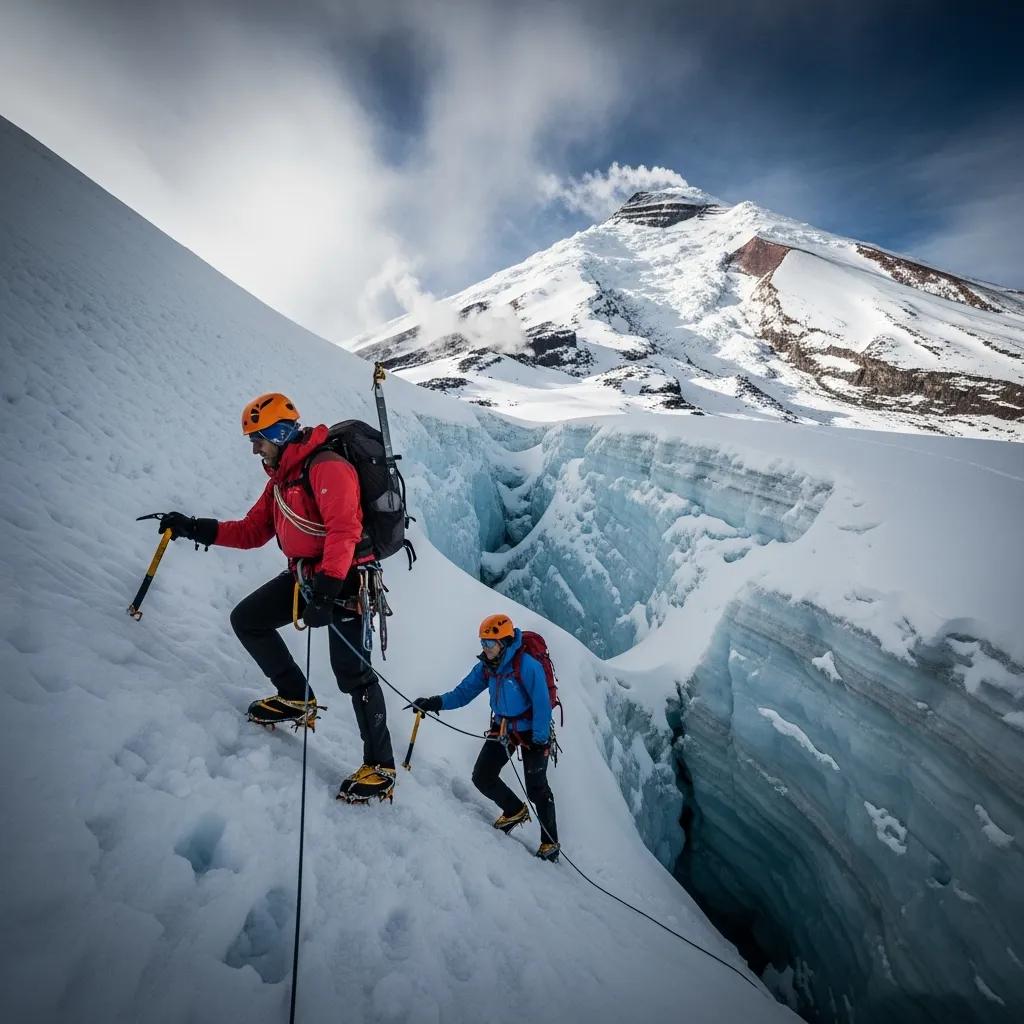
Compatibility Matters More Than Owning More Equipment.
Boots must work with the crampon binding. The harness must fit over summit layers. The helmet must work with your headlamp and warm hat. Gloves must let you manage hardware and an axe. Test the system together before the expedition.
Boots & Crampons: Build the Pair Together
One of the best reasons to bring your own footwear is knowing the boot, crampon, sock system and your feet already work together.
Warm + Crampon-Compatible
Current Ecuador programs use warm single mountaineering boots as well as rental plastic/double boots. There is no universal Cotopaxi boot model. Choose for fit, warmth, binding compatibility and operator requirements.
- Break them in before Ecuador.
- Leave toe room for warmth and descent.
- Test with summit socks.
- Do not assume rentals will fit perfectly.
Steel Mountaineering Crampons
Alpine Ascents’ Ecuador volcano list specifies modern steel 12-point crampons with anti-balling plates. Other suitable technical systems may be issued by local guides.
- Match binding to the boot.
- Fit them before summit night.
- Use anti-balling plates.
- Practice walking before 5,000 m.
Cotopaxi Clothing: Vent While Moving, Insulate When Stopped
The old page locked readers into a universal “-20°C” specification. A layered system is more defensible because weather, wind and individual cold tolerance vary.
| Layer | Purpose | Typical item | Fit check |
|---|---|---|---|
| Base | Move moisture | Synthetic or merino top/bottom | Should not bind under harness or boots. |
| Active midlayer | Warmth while moving | Fleece or light synthetic | Must vent easily. |
| Insulation | Rest stops / upper mountain | Down or synthetic jacket | Fits over climbing layers. |
| Shell | Wind / precipitation | Waterproof jacket and pants | Allows full crampon stride. |
| Hands | Dexterity + warmth | Light glove + warm glove/mitt | You can still clip hardware. |
| Head/face | Cold + helmet interface | Warm hat, buff/balaclava | Helmet remains correctly fitted. |
| Eyes | Glacier UV / wind | Glacier sunglasses; goggles as needed | Secure high-protection fit. |
What Cotopaxi Guides Commonly Provide
Many local packages bundle most technical items. Operator confirmation is part of packing.
| Item | Often provided? | Bring your own? | Why |
|---|---|---|---|
| Rope | Usually guide-managed | Normally no | Must match team system and rescue plan. |
| Ice axe | Commonly provided/rented | Optional | Technique matters more than ownership. |
| Crampons | Commonly provided/rented | Useful if fit-tested | Compatibility failure can end summit night. |
| Harness | Commonly provided/rented | Useful if comfortable | Fit over layers matters. |
| Helmet | Commonly provided | Personal one improves fit | Must work with headlamp and hat. |
| Boots | Often rentable / sometimes included | Strongly consider personal | Foot fit is individual. |
| Shell/gaiters/gloves | Some local packages | Personal often better | Inclusions vary widely. |
| Gas mask | Varies | Follow current guide standard | 2026 volcanic guidance makes this specific to Cotopaxi. |
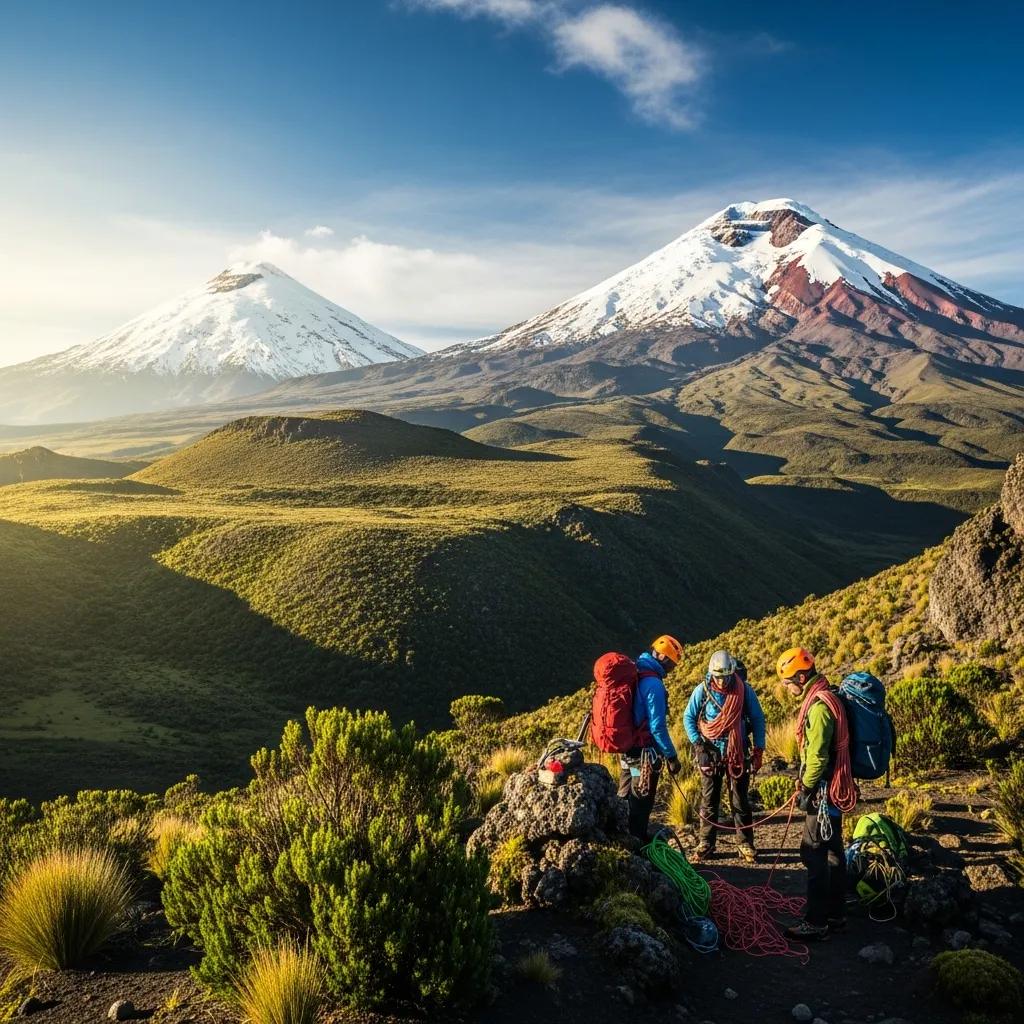
Your Gear Should Work on Acclimatization Peaks Too.
Many Cotopaxi itineraries include easier volcanoes or high hikes first. Build one flexible clothing and footwear system that works through the whole acclimatization sequence.
Carry Enough Without Hauling an Expedition Load
A roughly 30–45 litre climbing pack is common for guided Ecuador volcano programs. Your guide’s list controls the final size.
Navigation & Power
Headlamp, spare power and guide-required communication equipment.
Water & Food
Use guide-specified quantities and containers that resist freezing or leaks.
Sun & Cold
Glacier glasses, sunscreen, lip protection, warm gloves, insulation and shell stay accessible.
Crampon/Axe Carry
Use proper attachment points and protect the pack and people around you from sharp points.
Personal Medication
Bring prescribed medication and basic blister/pain supplies. Serious altitude illness requires descent, not a gear fix.
Emergency Margin
Carry guide-required emergency insulation and communication without duplicating the entire team rescue kit.
Cotopaxi’s Volcanic Safety Layer
The glacier kit is only half the story. Cotopaxi is actively monitored and official guidance can change independently of snow conditions.
IG-EPN described relative calm with low, unchanged activity.
Mainly gas and ash emissions according to IG-EPN.
Highlighted in 2026 official community guidance.
Volcanic activity can change after the trip is booked.
Test the Full Kit Before You Fly
A systems test catches more failures than buying one more item.
Full Summit-Dress Test
- Base, insulation, shell and harness together.
- Helmet, hat/buff and headlamp together.
- Crampons on the actual summit boots.
- Clip hardware while wearing gloves.
- Attach axe and crampons to the pack.
- Walk stairs or incline long enough to expose hot spots.
Five Questions
- Which technical items are included?
- Which are rental versus must-bring?
- What boot/crampon combinations do you issue?
- Are gas mask and helmet currently supplied?
- What pack size and water/food quantity do you want?
Use Each Gear List for the Program It Describes
This guide preserves the overlap across current Ecuador programs and labels operator-specific details as operator-specific.
Current gear sources
Volcanic-safety source
Editorial rule: when operators disagree on axe length, carabiner count, rope diameter, water amount, boot model or insulation rating, this page does not invent a universal number. The current guide list controls the final pack.
Cotopaxi Gear FAQ
The questions most likely to cause a fit, compatibility or safety mistake.
What gear do you need to climb Cotopaxi?
Expect crampon-compatible boots, steel crampons, ice axe, helmet, harness, headlamp, glacier eyewear, shells, insulation, warm gloves and a climbing pack. Rope and rescue hardware usually follow the guide’s team system.
Do you need crampons?
Yes. Full mountaineering crampons are standard for the glacier route. Microspikes are not a substitute.
What boots work?
Warm, crampon-compatible mountaineering boots. Programs use both warm single boots and rental double/plastic boots.
Do you need an ice axe?
Yes. A general mountaineering axe is part of the standard technical system, although many guides provide one.
Do you need a helmet and gas mask?
A helmet is standard. In July 2026 IG-EPN specifically advised helmets and gas masks near the summit route. Reconfirm before the climb.
Does the guide provide equipment?
Often yes. Many local programs provide crampons, axe, harness, helmet and rope, with some also providing boots, gaiters, shell clothing or gloves.
How large should the summit pack be?
About 30–45 litres works for many guided programs, but follow your operator’s list.
What is Cotopaxi’s current volcanic status?
In the September 4, 2026 IG-EPN update reviewed here, Cotopaxi was relatively calm with low, unchanged activity. Recheck before travel and summit day.
Continue the Cotopaxi Planning System
Gear only works when it matches the route, acclimatization, operator system and current conditions.
Fit Your Personal System. Confirm the Guide System. Recheck the Volcano.
Those three steps eliminate most preventable gear mistakes without pretending every climber needs the same rope length, boot model, carabiner count or insulation rating.
Cotopaxi: Gear & the Avenue of Volcanoes
Gear is one piece of a Cotopaxi climb. See the full guide, the Ecuador collection and the nearby peaks below.
Was this helpful?
🏔Related gear guides
🧭Explore & compare
Global Summit Guide is an independent mountaineering resource founded in 2026. The team combines first-hand trekking and climbing experience with in-depth research and professional health and nutrition review to help climbers choose objectives, prepare properly, and stay safe.
Health, altitude, and nutrition content is reviewed by Taylor Ludlow (Registered Nurse) and Brigg Hoopes (Nutritionist).
What We Don't Know Yet
Mountain information changes quickly. This box explains the limits of what this page can responsibly promise.
- Gear requirements can change by season, route variation, weather window, personal cold tolerance, and guide-service requirements.
- Visa, passport, vaccination, border, insurance, and local transportation rules may change before your trip.
- Route conditions, snowpack, closures, and weather can change quickly after this page is updated.
- Permit rules, fees, quotas, and reservation windows may change between review cycles.
- Operator availability, pricing, guide ratios, and cancellation terms can change by season.
Verify current conditions with official land managers, guide services, local forecasts, and current route reports before booking or climbing.
Mountaineering, rock and ice climbing, glacier travel, and high-altitude activity are inherently dangerous and can result in serious injury or death. The information on Global Summit Guide is provided for general informational and educational purposes only and is not a substitute for professional instruction, qualified guiding, proper equipment, or your own judgment and experience.
Route conditions, weather, snowpack, permits, regulations, and hazards change constantly and may differ from what is described here. Details may be incomplete, out of date, or contain errors. Always verify current information with local authorities, certified guides, and official sources before making any decision in the mountains.
Nothing on this site is medical, legal, or financial advice. Our fitness, acclimatization, altitude, and nutrition content is general in nature; consult a qualified physician before beginning any strenuous exercise program or exposing yourself to high altitude.
You are solely responsible for your own safety and decisions. To the fullest extent permitted by law, Global Summit Guide and its team accept no liability for any loss, injury, damage, or expense arising from use of, or reliance on, this information. By using this site you acknowledge these risks and accept these terms.
Some links on this site may be affiliate links. If you buy through them we may earn a small commission at no extra cost to you; this never affects our recommendations.
Global Summit Guide recommendation path
Next Best Mountain to Research
Use these recommendations to continue the right planning path instead of stopping on one page.
Use current permit, weather, route, and operator information before booking or climbing.