
Last updated September 1, 2026
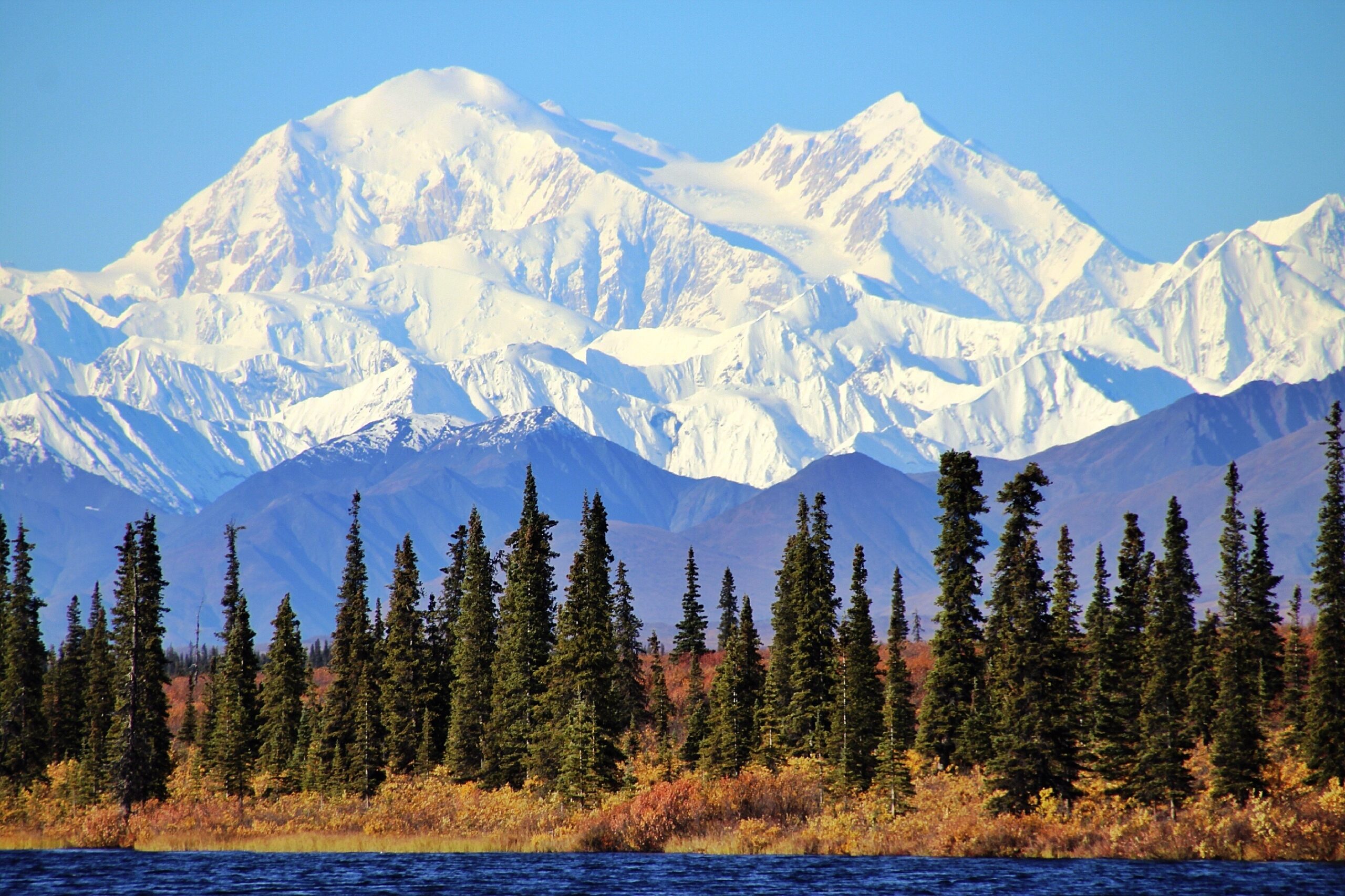
Denali Route Comparison: West Buttress vs West Rib vs Cassin Ridge
For most Denali climbers, choose the West Buttress. It is the least technical commonly climbed route, carries by far the most expedition traffic and gives climbers the most established route infrastructure. The West Rib is a major technical step up. The Cassin Ridge is an elite alpine objective where the technical ascent itself—not simply maximizing summit probability—is the reason to choose the route.
Which Denali Route Should You Climb?
Choose the West Buttress if reaching Denali’s summit through the standard expedition route is your primary objective. It is the route NPS describes as the least technical and it is used by more than 90% of Denali climbers in recent decades.
Choose the West Rib only when you already have substantial technical alpine experience and specifically want a steeper, more committing Denali route. Choose the Cassin Ridge only as an elite technical objective when sustained alpine climbing and self-sufficiency are the point of the expedition.
The route choice is therefore not three equal options. It is one standard Denali expedition route and two serious technical objectives.
West Buttress vs West Rib vs Cassin Ridge
The core decision in one table: difficulty, hazards, expedition style, support and the climber each route best fits.
| Route | Technical level | Main challenge | Typical expedition style | Infrastructure / support | 2025 registrations | Best-fit climber | Verdict |
|---|---|---|---|---|---|---|---|
| West Buttress Standard route | Least technical of the three | Glacier travel, cold, altitude, pack + sled hauling, weather | Multi-week expedition with established camp progression | Highest: common route, fixed lines in season, NPS patrol presence at key camps | 922 | Prepared first-time Denali climber; guided or competent independent team | Best for most climbers |
| West Rib Advanced technical | Substantially more technical | Steeper snow/ice, technical movement, objective hazard, commitment | Experienced self-sufficient technical team | Far less established route traffic and support than West Buttress | 12 | Experienced Alaska / technical alpine climber specifically seeking a harder Denali route | Technical progression |
| Cassin Ridge Elite alpine objective | Most technically demanding of this comparison | Sustained technical terrain, route commitment, retreat difficulty, speed | Highly experienced lightweight or alpine-style technical team | Minimal route infrastructure; self-reliance is central | 20 | Elite technical team whose main objective is the route itself | Not a summit-probability choice |
Bottom line: West Buttress is the Denali route decision for almost everyone. West Rib and Cassin should only enter the conversation after the climber has already crossed the threshold from expedition mountaineer to highly experienced technical alpinist.
What the NPS Route Data Actually Shows
The most useful recent route statistic is participation. It shows how dramatically the standard route dominates without pretending the tiny technical-route samples produce stable success probabilities.
Registered climbers. About 96% of all Denali registrations that year.
Registered climbers. A small sample where one team can move annual percentages sharply.
Registered climbers. NPS describes the route as substantially more difficult and objectively dangerous than West Buttress.
Registered climbers across all routes; mountain-wide summit rate was 36%.
For the complete annual record, use the Denali Summit Success Rate page. That page owns the statistics; this page owns the route decision.
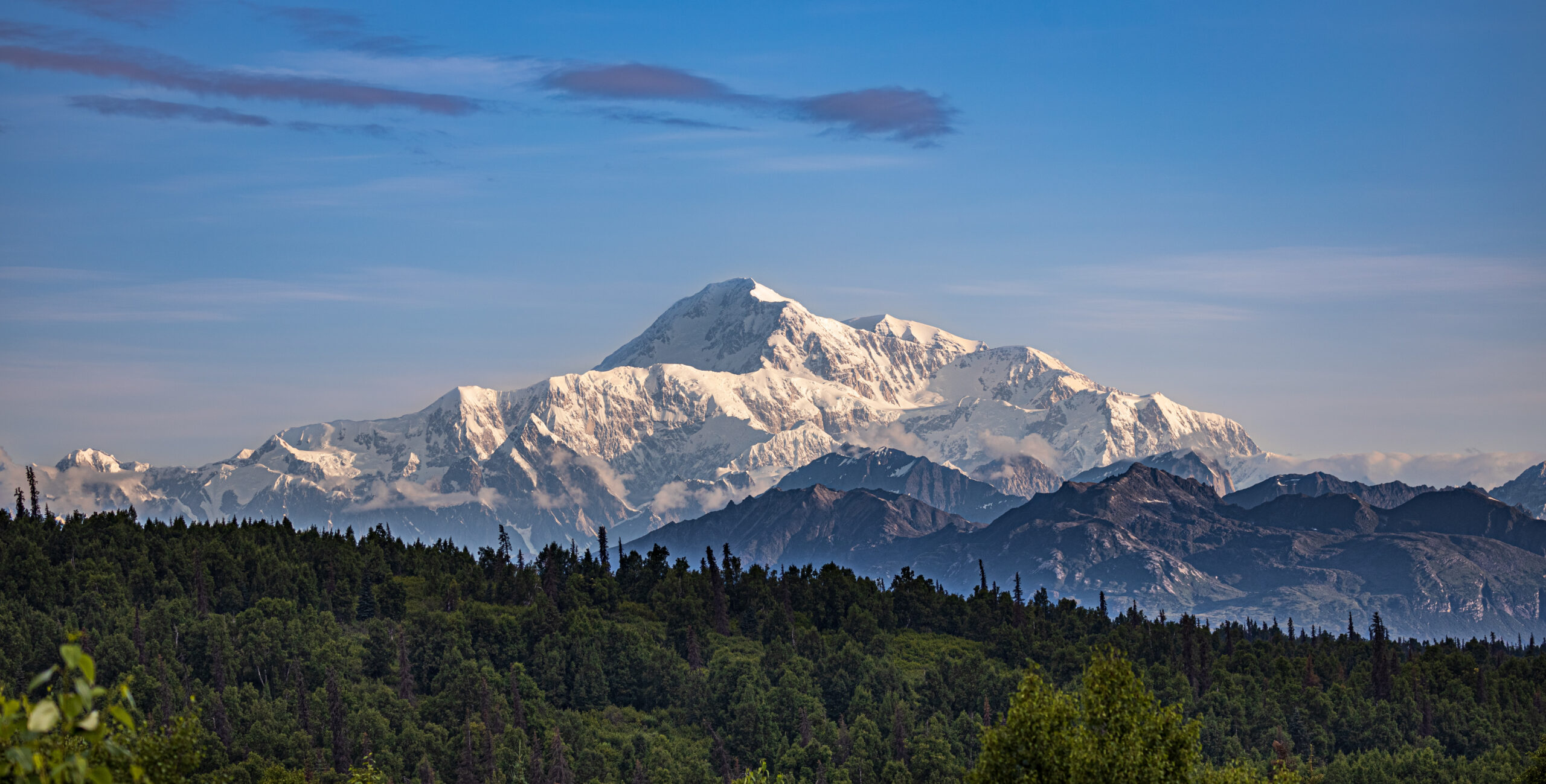
The Route Changes the Nature of the Expedition.
On West Buttress, the defining challenge is integrating glacier travel, cold, altitude, load hauling and weather for weeks. On West Rib and Cassin, technical terrain and self-sufficiency become much larger parts of the equation.
How the Denali Routes Differ in Practice
The descriptions below intentionally focus on decision-relevant character rather than providing a pitch-by-pitch technical topo.
West Buttress
The West Buttress is Denali’s standard route because it gives a prepared team the clearest expedition system on the mountain. Climbers fly from Talkeetna to the Kahiltna Glacier, establish a sequence of camps, carry and cache loads, acclimatize, climb the headwall fixed-line section and move to 17,000-foot High Camp before the summit push.
NPS still describes it as a serious route: crevasses, steep ice, exposed ice-covered ridges and the Alaska Range environment are the main technical and objective challenges. “Least technical” does not mean easy.
- Choose it for: first Denali, Seven Summits progression, expedition skill building.
- Do not underestimate: glacier rescue, severe cold, cumulative hauling and weather delays.
- Support advantage: the greatest concentration of route traffic, guide programs and ranger presence.
West Rib
The West Rib occupies the middle ground only in a relative sense. It is not a small upgrade from the West Buttress. NPS explicitly describes it as substantially more technically difficult and more objectively dangerous.
That matters because the expedition asks for a stronger rope team before the altitude and weather are added. The route is better understood as a major Alaska Range technical objective than as an alternate “way to avoid West Buttress crowds.”
- Choose it for: a harder Denali technical route after substantial alpine experience.
- Need before booking: efficient steep snow/ice systems, glacier independence and strong route judgment.
- Do not choose it for: a higher summit probability or a first introduction to technical Alaska climbing.
Cassin Ridge
The Cassin Ridge belongs in a different category from “standard Denali route.” Climbers choose it because of the quality and seriousness of the line itself. The route demands sustained technical competence, speed, judgment and a self-sufficient team capable of solving problems without relying on the expedition architecture that defines the West Buttress.
Its 2025 registration total—20 climbers—illustrates how specialized the objective is. Annual route percentages built from such a small denominator should be treated cautiously.
- Choose it for: the technical ascent, not simply the summit.
- Need before booking: elite alpine route experience, strong partnership and proven self-rescue judgment.
- Planning mindset: route quality and acceptable conditions matter more than “completion” statistics.
Which Route Fits Your Experience?
Choose West Buttress
If Denali itself is the goal, the standard route lets you focus on the mountain’s true expedition demands: glacier travel, pack-and-sled hauling, severe cold, altitude, camp systems and weather patience.
Choose West Buttress
Nothing about the Seven Summits goal requires a technical-route upgrade. A technically stronger climber can still make the West Buttress decision because it aligns with the geographic summit objective.
Research West Rib
If you already possess the expedition systems and want a substantially more technical Denali line, the West Rib becomes a meaningful progression rather than a premature jump.
Research Cassin Ridge
If the route itself is the objective and your team has the technical depth, speed, partnership and self-sufficiency to operate on a committing Alaska Range line, Cassin becomes relevant.
Hazards & Commitment Compared
The key difference is not whether hazards exist; all three routes are serious. It is how much technical climbing and self-reliance are layered onto Denali’s baseline environment.
| Decision factor | West Buttress | West Rib | Cassin Ridge |
|---|---|---|---|
| Glacier / crevasse exposure | Core expedition hazard on lower route | Core hazard plus technical route demands | Core hazard plus sustained technical climbing |
| Steep snow / ice | Moderate sections; fixed-line headwall in season | Major route component | Major sustained route component |
| Mixed / technical climbing | Limited compared with technical Denali routes | Significant | Central to the objective |
| Cold + altitude | Severe | Severe, with more technical work | Severe, with sustained technical work |
| Established expedition infrastructure | Highest | Much lower | Minimal |
| Retreat / self-rescue consequence | Serious | Higher technical consequence | Highest commitment in this comparison |
| Traffic | Very high by Denali standards | Very low | Very low |
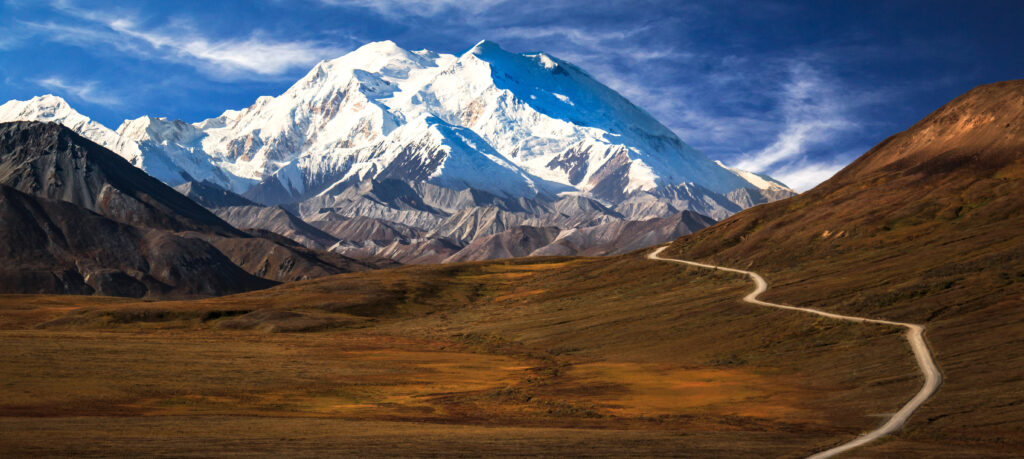
The Technical Routes Have Tiny Annual Samples.
In 2025, 922 climbers registered for West Buttress, but only 12 for West Rib and 20 for Cassin Ridge. A technical-route “success percentage” built from one small season can swing dramatically with only one or two teams.
Route Support & Commercial Guiding
The NPS currently lists seven authorized Mount McKinley guide services. Most commercial Denali programs are built around the West Buttress; confirm exact route authorization and offerings directly before assuming a technical route can be commercially guided.
The commercial standard
This is the route where the established NPS-authorized Denali guide programs concentrate. Guided teams still participate in hauling, camp building and expedition systems; the guide does not turn Denali into a supported trekking peak.
Compare all 7 authorized Denali guide services →Verify before assuming support exists
West Rib and Cassin attract very small numbers of experienced climbers. If commercial guiding is part of the plan, ask an NPS-authorized concessionaire exactly what route it is permitted and willing to guide for your dates and experience level.
Check the current NPS guide list →2026 Denali Permit & Registration Basics
| Requirement | 2026 rule | Route implication |
|---|---|---|
| Mountaineering special-use fee | $450 adult; $350 age 24 or younger | Applies to Denali / Mount McKinley registration regardless of the route compared here |
| Park entrance fee | $15 unless covered by an accepted pass | Separate from the mountaineering fee |
| Advance registration | Normally at least 60 days before start | Technical-route teams should use the lead time for ranger discussion as well as paperwork |
| Orientation | In-person climber orientation required | All teams receive current route / park information before departure |
| Current conditions | Verify with NPS before flying in | The calendar does not guarantee route condition or acceptable hazard |
What About the Muldrow Glacier Route?
Muldrow is not a fourth equal column in this page because the search decision and present route status are different.
West Buttress vs Muldrow belongs on its own page.
Historically, the Muldrow Glacier was the north-side counterpart to the West Buttress and was considered similar in broad technical difficulty. That changed after the 2021 glacier surge. NPS currently says a large section of the traditional lower route appears impassable and its mountaineering FAQ advises climbers to wait before attempting it.
The useful comparison is therefore not “Which of four Denali routes should I pick?” It is a dedicated south-side West Buttress vs historic north-side Muldrow logistics and viability decision.
Use the Route Page for the Route Decision—Then Move to the Next Layer.
This URL should not become the Denali parent, weather page, success-rate analysis or operator comparison. Keeping those jobs separate strengthens the whole Denali cluster and makes each internal link useful.
Continue the Denali Route Plan
Denali Climbing Guide
Routes, cost, permits, camps, season, workload and complete expedition planning.
Open Denali guide → Cluster hubMountain Route Comparisons
Compare standard and alternative routes across major expedition mountains.
Browse route comparisons → Current route layerWest Buttress Conditions
Use this after choosing the standard route to plan camps, season and current conditions.
Check West Buttress → Separate route intentWest Buttress vs Muldrow
Compare the standard south-side expedition with the historic north-side Muldrow approach.
Compare Muldrow → Evidence layerDenali Summit Success
See annual NPS attempts, summits and long-term variation without mixing statistics into the route decision.
Open success data → BookingDenali Operators
Compare all seven currently authorized Denali guide services and their program structures.
Compare guides → Deep recovery 1Denali Progression Plan
Build prerequisite glacier, winter-camp, altitude and heavy-load capabilities before Alaska.
Build progression → Deep recovery 2Crevasse Rescue Basics
Review one of the foundational competencies behind every Denali route in this comparison.
Review rescue systems → Deep recovery 3Mountain Weather for Climbers
Understand forecast uncertainty, wind and storm timing before applying it to the Alaska Range.
Read weather framework → JourneySave Denali to My Climb
Track route choice, registration, guide, progression, training and final-prep decisions.
Open My Climb →How This Denali Route Comparison Was Built
What we use as evidence
- NPS route descriptions and planning guidance.
- NPS statement that West Buttress is the least technical ascent route.
- NPS description of West Rib as substantially more difficult and objectively dangerous.
- 2025 NPS route registration counts.
- 2026 NPS fee, registration and guide-service information.
- 2026 preliminary mountain-wide season totals only where clearly labeled preliminary.
What we deliberately removed
- Unsupported fixed success percentages for West Rib and Cassin.
- Outdated $400 permit pricing.
- Outdated “six guide companies” statement.
- Unverified rescue-cost claims.
- Claims that every technical route has the same commercial-guiding status.
- Any suggestion that Muldrow is currently a normal fourth route choice.
Editorial rule: a route statistic belongs here only when the source provides a defensible denominator and the number helps answer the route decision.
Denali Route Comparison FAQ
What is the best route on Denali?
For most climbers, the West Buttress is the correct route. NPS describes it as the least technical ascent route, and more than 90% of Denali climbers use it in recent decades. West Rib and Cassin Ridge are specialized technical objectives.
What is the easiest route up Denali?
The West Buttress is the least technical commonly climbed route, but it remains a serious glacier expedition. Climbers need crevasse rescue competence, crampon and ice-axe skill, cold-camp systems, altitude experience and the fitness to haul heavy pack-and-sled loads.
How much harder is West Rib than West Buttress?
NPS describes West Rib as substantially more technically difficult and more objectively dangerous than West Buttress. It should be approached as a major technical alpine route rather than a small variation on the standard climb.
Who should climb Cassin Ridge?
Cassin Ridge is for highly experienced technical alpine teams that specifically want the route itself. It requires a much higher level of technical climbing, speed, self-sufficiency and commitment than the West Buttress.
What percentage of climbers use West Buttress?
NPS says more than 90% of Denali climbers use West Buttress in recent decades. In 2025, 922 of 960 registered Denali climbers—about 96%—registered for West Buttress.
Why doesn’t this page show a success rate for each route?
Because the technical-route annual samples are very small. In 2025 only 12 climbers registered for West Rib and 20 for Cassin Ridge. A fixed percentage built from one small season can imply far more certainty than the data supports. Use the Denali summit-success page for auditable annual statistics.
How much does the Denali permit cost in 2026?
The NPS mountaineering special-use fee is $450 for adults and $350 for climbers age 24 or younger. A $15 park entrance fee also applies unless covered by an accepted pass.
How many guide services are authorized on Denali?
NPS currently lists seven authorized Mount McKinley guide services. Always verify that a company is on the current NPS list before booking.
What about the Muldrow Glacier route?
Muldrow is kept on a separate comparison page. The 2021 glacier surge dramatically changed the traditional route, and NPS currently says a large lower section appears impassable and advises climbers to wait before attempting it.
Choose the West Buttress Unless the Technical Route Is the Objective.
For most climbers, Denali is already a large enough expedition challenge on its standard route. West Rib and Cassin Ridge make sense when technical alpine climbing—not simply reaching North America’s highest summit—is the reason you are going.
Was this helpful?
🏔Related peaks nearby
🧭Explore & compare
Global Summit Guide is an independent mountaineering resource founded in 2026. The team combines first-hand trekking and climbing experience with in-depth research and professional health and nutrition review to help climbers choose objectives, prepare properly, and stay safe.
Health, altitude, and nutrition content is reviewed by Taylor Ludlow (Registered Nurse) and Brigg Hoopes (Nutritionist).
What We Don't Know Yet
Mountain information changes quickly. This box explains the limits of what this page can responsibly promise.
- Permit availability, reservation windows, quotas, and official fee rules may change after this page is updated.
- Weather, snowpack, avalanche risk, road access, and route conditions can change quickly and may be different on your climbing dates.
- Route conditions, trailhead access, crevasse exposure, stream crossings, and rescue access may vary from published planning guidance.
- Fitness and altitude response vary by person; no guide, itinerary, or training plan can guarantee acclimatization or summit success.
- Comparisons simplify complex decisions; the better mountain depends on current conditions, skills, timing, budget, and risk tolerance.
Verify current conditions with official land managers, guide services, local forecasts, and current route reports before booking or climbing.
Mountaineering, rock and ice climbing, glacier travel, and high-altitude activity are inherently dangerous and can result in serious injury or death. The information on Global Summit Guide is provided for general informational and educational purposes only and is not a substitute for professional instruction, qualified guiding, proper equipment, or your own judgment and experience.
Route conditions, weather, snowpack, permits, regulations, and hazards change constantly and may differ from what is described here. Details may be incomplete, out of date, or contain errors. Always verify current information with local authorities, certified guides, and official sources before making any decision in the mountains.
Nothing on this site is medical, legal, or financial advice. Our fitness, acclimatization, altitude, and nutrition content is general in nature; consult a qualified physician before beginning any strenuous exercise program or exposing yourself to high altitude.
You are solely responsible for your own safety and decisions. To the fullest extent permitted by law, Global Summit Guide and its team accept no liability for any loss, injury, damage, or expense arising from use of, or reliance on, this information. By using this site you acknowledge these risks and accept these terms.
Some links on this site may be affiliate links. If you buy through them we may earn a small commission at no extra cost to you; this never affects our recommendations.
Global Summit Guide recommendation path
Next Best Mountain to Research
Use these recommendations to continue the right planning path instead of stopping on one page.
Use current permit, weather, route, and operator information before booking or climbing.