
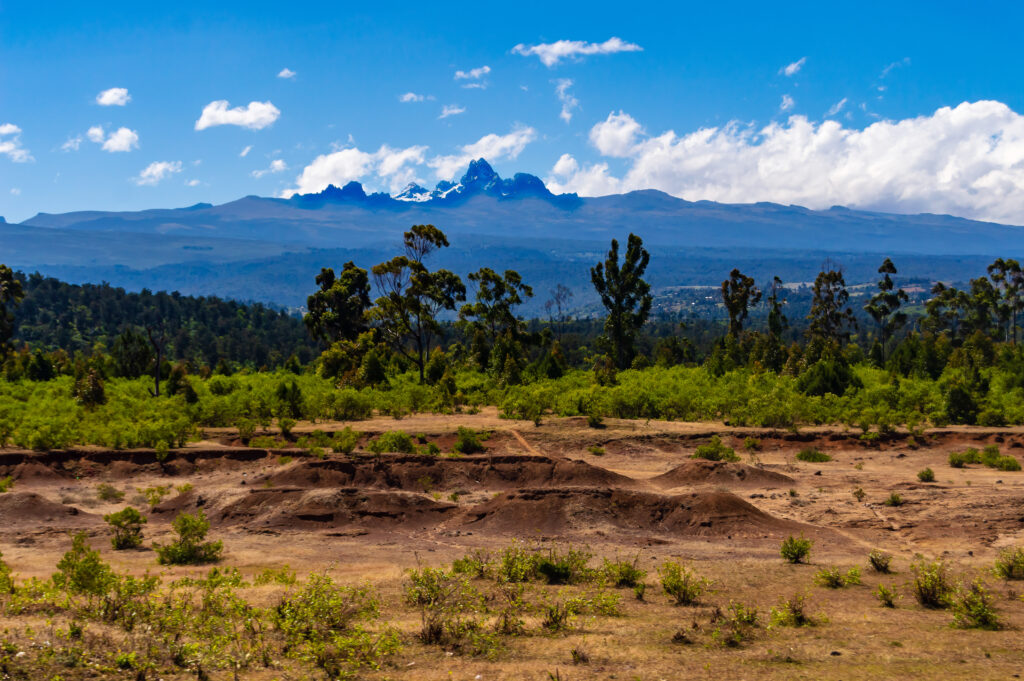
Best Mount Kenya Operators: 4 Commercial Operators Compared for 2026
Mount Kenya (5,199m / 17,057 ft) is Africa’s second-highest peak after Kilimanjaro and the continent’s premier technical alpine objective. Unlike Kilimanjaro’s non-technical trekking framework, Mount Kenya’s true summits Batian (5,199m) and Nelion (5,188m) are reserved for technical rock climbers — Grade IV / 5.7-5.9 American Standard multipitch routes on pristine gneiss with up to 700-meter walls. The third summit, Point Lenana (4,985m), is accessible to strong hill walkers via three approach routes (Sirimon, Naro Moru, Chogoria). The mountain is often described as “a mountaineer’s mountain” — only ~50 climbers per year summit Batian and ~200 summit Nelion, while thousands trek to Point Lenana annually. The commercial operator field includes Adventure Consultants (NZ IFMGA technical Batian/Nelion with accompanying Lenana trek for non-climbing partners), Adventure Alternative (UK-Kenya hybrid via Adventure Alternative Kenya subsidiary with Embu guesthouse base), Mountain Madness (American boutique with Arusha luxury camp pre-climb framework), and Go To Mount Kenya (Kenyan-direct local NOLS Africa-trained guides).
17,057 ft / Africa #2
price range
grade required
summit count
Mount Kenya occupies a structurally specific position in African commercial mountaineering: Africa’s premier technical alpine objective and the continent’s most demanding multipitch rock climbing peak — described as a “mountaineer’s mountain” because the true summits Batian and Nelion require specialist mountaineering equipment and technical rock climbing capability that Kilimanjaro’s non-technical trekking framework explicitly does not develop. The mountain’s three summits framework structurally segregates the commercial operator field: Batian (5,199m) and Nelion (5,188m) require technical rock climbers competent at 5.7-5.9 American Standard with experience of long multipitch climbs at least 10 pitches in length; Point Lenana (4,985m) is accessible to strong hill walkers without technical climbing equipment via three approach routes. Approximately 50 climbers per year summit Batian, 200 climbers summit Nelion, while thousands trek to Point Lenana annually — the structural rarity of technical Mount Kenya summits reflects the mountain’s commercial framework. This comparison evaluates 4 commercial Mount Kenya operators against the eight criteria framework.
Mount Kenya occupies a structurally distinctive role in African commercial mountaineering as the technical alpine alternative to Kilimanjaro’s non-technical trekking framework. Kilimanjaro is Africa’s highest peak (5,895m) but its standard commercial routes (Marangu, Machame, Lemosho) involve non-technical trekking with no rock climbing capability required. Mount Kenya’s Batian and Nelion summits are technically demanding rock climbing objectives — Grade IV / 5.7-5.9 multipitch on pristine gneiss with up to 700-meter walls, structurally distinctive from Kilimanjaro’s commercial framework. For climbers building African technical alpine portfolio or seeking an East African technical climbing objective alongside Kilimanjaro Seven Summits ascents, Mount Kenya delivers structurally specific value. Many climbers combine Mount Kenya technical climb (December-March) with Kilimanjaro non-technical ascent (year-round) in single East African expedition framework.
Mount Kenya’s glaciers are experiencing accelerating climate-driven retreat — only 11 small glaciers remain on the peak today, down from 18 documented in the early 20th century. The Lewis Glacier (the standard approach to Nelion South-East Face from Austrian Hut) is the largest remaining glacier and is undergoing rapid deterioration. The glacier deterioration affects technical climbing framework: route conditions becoming progressively more variable, ice/snow conditions on the Gate of Mists between Nelion and Batian increasingly unreliable, and approach times changing as glacier coverage diminishes. Mount Kenya’s glaciers are projected to disappear within 25-30 years per current climate trajectory. Climbers should evaluate operator route condition reporting, verify current glacier status during booking inquiry, and accept that the climate-driven season compression may increasingly affect commercial framework availability.
4 operators evaluated against the eight criteria framework. Pricing is 2026-estimated and should be verified directly with operators. The structural diversity between operators reflects different commercial models — international IFMGA operators (Adventure Consultants, Mountain Madness) deliver comprehensive 8-12 day commercial frameworks with structured acclimatization plus often safari/luxury camp integration; UK-Kenya hybrid operators (Adventure Alternative) deliver integrated booking through Embu guesthouse subsidiary base; Kenyan-direct operators (Go To Mount Kenya) deliver local commercial framework with NOLS Africa-trained guides at meaningfully lower pricing. Twice-yearly review cycle. Next scheduled review: September 2026.
Why Mount Kenya? Africa’s Technical Alpine Alternative to Kilimanjaro
Mount Kenya occupies a structurally distinctive position in African commercial mountaineering:
Africa’s second-highest peak with technical commercial framework. Mount Kenya (5,199m / 17,057 ft) is Africa’s second-highest peak after Kilimanjaro (5,895m). The mountain is an extinct stratovolcano with jagged peaks rising from the central Kenya equatorial highlands approximately 150km north-northeast of Nairobi. The peak’s prominence and pristine gneiss rock framework produces structurally distinctive technical alpine commercial framework that Kilimanjaro’s non-technical trekking framework explicitly does not deliver.
The three summits framework — structurally distinctive commercial framework. Mount Kenya has three named summits with structurally distinctive commercial framework:
- Batian (5,199m, true summit) — Grade IV / 5.9 American Standard / Hard Severe (UK), accessible only via technical rock climbing. North Face Standard Route in summer (June-September), Nelion traverse in winter (December-March)
- Nelion (5,188m, second summit) — Grade IV / 5.7 maximum, slightly easier than Batian. MacKinder Route via South-East Face in winter season (December-March)
- Point Lenana (4,985m, trekkers’ summit) — accessible via three approach routes (Sirimon, Naro Moru, Chogoria) without technical climbing equipment, strong hill walker capability sufficient
Approximately 50 climbers per year summit Batian, 200 summit Nelion, thousands trek Point Lenana annually — the structural rarity of technical Mount Kenya summits reflects the mountain’s specialized commercial framework relative to Kilimanjaro’s high-volume trekking commercial scale.
Pristine gneiss rock climbing framework. Mount Kenya’s technical summits feature up to 700-meter walls of pristine gneiss creating a rock climbing paradise with strong sense of adventure. Routes start at Grade 5.6 (YDS) / UIAA IV and lead to the summits through long multipitch frameworks (typically 17+ pitches belayed for Nelion MacKinder Route, 20+ pitches for Batian). The rock quality and route variety produces structurally distinctive technical alpine commercial framework — climbers experience genuine multipitch alpine rock climbing in equatorial high-altitude setting.
Seasonal route preference structure. Mount Kenya’s technical commercial framework is structurally seasonal:
- June through September (summer dry season) — optimal for Batian via the North Face Standard Route. North Face is relatively snow-free in summer, providing optimal multipitch rock climbing conditions on the route to the true summit
- December through March (winter dry season) — optimal for Nelion via the MacKinders Route on the South-East Face. South-facing route is in best condition during winter dry season
- April-May, November — rainy seasons making technical climbing inadvisable. Climate change has made rainy season timing increasingly difficult to predict
The Gate of Mists traverse between Nelion and Batian summits (270m apart with 35m descent and 70m re-ascent) involves Grade IV mixed climbing on snow/ice up to 45 degrees — typically requires crampons, ice axe, and bivouac on Nelion summit at Howell Hut for climbers attempting both summits in single expedition.
The Mount Kenya National Park infrastructure framework. Mount Kenya is managed by the Kenya Wildlife Service (KWS) within Mount Kenya National Park. KWS regulations require all visitors to register upon entrance and sign out on departure; hiking alone is prohibited (climbers must have a buddy or guide). Park entry fees are paid at park gates or pre-booked through KWS. The park infrastructure includes mountain huts at standard altitude points: Old Moses Camp (3,300m), Shipton’s Camp (4,200m), Austrian Hut (4,790m, base for South-East Face climbs), Howell Hut (5,100m, on Nelion summit for bivouac).
Cultural heritage framework. Mount Kenya holds deep cultural significance for the Kenyan people — local tribes have used the peak as a meeting place and the mountain is seen as the throne of the gods. The mountain gave Kenya its name. The summits Batian, Nelion, and Lenana were named by the English geographer Halford Mackinder (first recorded ascensionist in 1899) after Maasai laibons — spiritual tribe leaders at the top of the social hierarchy. Climbers should approach the mountain with appropriate cultural awareness of its institutional significance to Kenyan heritage.
2026 Mount Kenya Operator Awards
Four operators selected to represent the structural diversity of the Mount Kenya commercial operator field — international IFMGA premium technical operator, UK-Kenya hybrid with subsidiary base, American boutique with luxury camp framework, and Kenyan-direct local operator. Each delivers structurally distinct value for different client priorities.
Adventure Consultants
Adventure Consultants delivers premium international IFMGA-certified commercial Mount Kenya operations through structurally distinctive technical Batian/Nelion ascent framework with accompanying Point Lenana trek for non-climbing partners. The dual-track commercial framework matters structurally — climbing groups attempt the technical Batian or Nelion summits with IFMGA guide leadership while non-climbing partners join the accompanying Lenana Peak trek with operator support, resolving the structural challenge of mixed-capability expedition groups.
Adventure Consultants employs only IFMGA-UIAGM qualified mountain guides with rigorous technical rock climbing capability — appropriate for the Grade IV / 5.9 Batian and Grade IV / 5.7 Nelion routes. The operator’s seasonal departure framework aligns with Mount Kenya’s structural seasonal route preference: Batian in June-September via North Face Standard Route, Nelion in December-March via South-East Face. The operator’s prerequisite framework explicitly requires climbers competent following at Grade 5.9 with experience of long technical climbs at least 10 pitches in length, plus benefit from prior trekking/climbing experience above 5,000m. Pricing typically runs $5,500-$6,500 reflecting premium IFMGA framework with technical Batian/Nelion ascent, comprehensive logistics, and accompanying Lenana trek option. For climbers prioritizing premium international IFMGA framework with technical Mount Kenya summit and operator continuity to subsequent international expedition objectives (Everest, Aoraki, Vinson, broader Adventure Consultants portfolio), AC delivers structurally specific value.
Read Adventure Consultants profile →Adventure Alternative
Adventure Alternative operates structurally distinctive UK-Kenya hybrid commercial Mount Kenya framework through Adventure Alternative Kenya subsidiary with Embu guesthouse base — paralleling the operator’s UK-Nepal hybrid model for Island Peak and Mera Peak. The Kenyan operations are managed by trip leader Gilbert Njeru (current Chairperson of Moving Mountains in Kenya) who lives in Embu at the Adventure Alternative guesthouse and manages programs alongside volunteers and medical elective students. The operator promotes proper acclimatization with extra days and hikes built into itineraries to ensure climbers do not ascend too quickly.
Adventure Alternative offers comprehensive Mount Kenya program portfolio: Mount Kenya trek to Point Lenana (4,985m), Mount Kenya Summit Circuit (adventurous six day trek circling Nelion and Batian then summitting Point Lenana), private guided ascents of Batian Peak (true summit), Nelion Peak South East Face standard route ascents (5,188m), and “No Picnic on Mount Kenya” route (made famous by the Felice Benuzzi book about Italian POW escapees). Pricing typically runs $2,800-$4,500 reflecting integrated UK booking infrastructure with Kenyan operational subsidiary expertise. For climbers prioritizing UK-Kenya hybrid commercial framework with Embu guesthouse base and integrated cultural/community development context (Moving Mountains charitable framework), Adventure Alternative delivers structurally specific value.
Read Adventure Alternative profile →Mountain Madness
Seattle-based Mountain Madness delivers structurally distinctive American boutique commercial Mount Kenya operations through 11-12 day program combining the technical Mount Kenya climb with Arusha National Park luxury camp pre-climb framework. The structurally distinctive Arusha luxury camp + game viewing framework provides East African safari experience integrated with the Mount Kenya climb objective — two nights private luxury camp in Arusha National Park before the climb with game viewing and hiking activities, plus dayroom lodge accommodation post-climb.
Mountain Madness’s Mount Kenya commercial framework includes Shipton’s Route to Nelion (5.4-5.6 majority climbing with short 5.7-5.8 sections) as the standard objective, with optional Batian extension involving Nelion summit bivouac. The acclimatization framework includes non-technical Point Lenana option or technical Point John (16,020 ft / 4,883m, 5-pitch southeast gully up to 5.5) acclimatization climb. Built-in extra summit day for weather flexibility. Pricing typically runs $4,500-$5,500 reflecting American boutique commercial framework with integrated Tanzania safari pre-climb component, scheduled accommodation, all land transportation and airport transfers, and broader international expedition portfolio continuity. For climbers prioritizing American boutique framework with integrated East African safari experience and broader international portfolio continuity (Aconcagua, Ecuador, Bolivia, Nepal, Ama Dablam), Mountain Madness delivers structurally appropriate fit.
Read Mountain Madness profile →Go To Mount Kenya
Go To Mount Kenya is the Kenyan-direct local commercial operator delivering structurally distinctive value through NOLS Africa-trained certified guides with extensive Mount Kenya commercial experience and Kenya Wildlife Service (KWS) operational integration. The operator’s commercial framework includes 7-8 day Mount Kenya rock climbing programs via the North Face Standard Route on Batian (summer June-September) or MacKinder Route on Nelion (winter December-March), plus broader Mount Kenya trekking programs to Point Lenana via three approach routes.
The Kenyan-direct operator framework matters structurally — NOLS Africa training provides internationally recognized professional guide certification standards while the local operator commercial framework delivers meaningfully lower pricing than international operator alternatives. Pricing for 7-8 day technical climb typically runs $1,500-$2,800 — meaningfully below international operator alternatives ($4,500-$6,500) for what is structurally similar on-mountain operations. Standard service inclusions: Mount Kenya National Park fees and mountaineering fees, Kenya Wildlife Service guide and porter coordination, accommodation in mountain huts/camping, full board (breakfast, lunch, dinner) during the trek and climb, technical climbing equipment provision (ropes, climbing protection — climbers bring own harness, boots, crampons, ice axe). For value-conscious climbers prioritizing Kenyan-direct commercial framework with NOLS Africa-trained local guides at accessible pricing, Go To Mount Kenya delivers structurally specific value.
Read Go To Mount Kenya profile →2026 Mount Kenya Cost Breakdown
Kenyan-direct local operators ($1,500-$2,800)
Kenyan-direct local operators (Go To Mount Kenya, Ice Rock Trekking, CKC Safaris) typically range $1,500-$2,800 for 7-8 day technical Mount Kenya climb programs. The framework includes Mount Kenya National Park fees and mountaineering fees, KWS guide and porter coordination, accommodation in mountain huts/camping, full board during the trek and climb, technical climbing equipment provision (group equipment), Nairobi airport transfers and 4WD transport to park gate. Climbers bring own personal climbing equipment (harness, boots, crampons, ice axe). Total all-in budget after international travel and ancillary costs typically runs $3,500-$5,000.
UK-Kenya hybrid operators ($2,800-$4,500)
UK-Kenya hybrid operators (Adventure Alternative Kenya) typically range $2,800-$4,500 for fully integrated 9-12 day Mount Kenya programs. The framework includes UK booking infrastructure with Kenyan operational subsidiary expertise (Embu guesthouse base), comprehensive Mount Kenya trekking and technical climbing programs (Mount Kenya trek to Point Lenana, Mount Kenya Summit Circuit, private Batian Peak ascents, Nelion Peak ascents), integrated acclimatization framework with extra days built in, English-language pre-trip preparation, and integrated Moving Mountains charitable framework alignment. Total all-in budget typically runs $4,500-$6,500.
American boutique operators with safari integration ($4,500-$5,500)
American boutique operators with safari integration (Mountain Madness) typically range $4,500-$5,500 for 11-12 day Mount Kenya commercial programs. The framework includes Shipton’s Route to Nelion technical climbing, Arusha National Park luxury camp pre-climb framework with game viewing, scheduled accommodation, all land transportation and airport transfers, dayroom lodge accommodation post-climb, and broader international expedition portfolio continuity. Total all-in budget typically runs $6,500-$8,000.
Premium international IFMGA operators ($5,500-$6,500)
Premium international IFMGA operators (Adventure Consultants) typically range $5,500-$6,500 for fully supported technical Batian or Nelion ascents. The framework includes IFMGA-UIAGM certified guide leadership, comprehensive logistics, accompanying Lenana trek option for non-climbing partners, premium accommodation framework, and operator continuity to broader international expedition portfolio (Everest, Aoraki, Vinson, Aconcagua). Total all-in budget typically runs $7,500-$9,500.
Pricing context within African commercial
Mount Kenya pricing positioning within African commercial mountaineering framework:
- Mount Kilimanjaro: $2,000-$8,000 (Tanzania, 5,895m, non-technical trekking)
- Mount Kenya (Lenana trek): $1,200-$2,500 (Kenya, 4,985m, non-technical trekking)
- Mount Kenya (Batian/Nelion technical): $1,500-$6,500 (this comparison; 5,199m, technical multipitch)
- Mount Toubkal: $300-$1,500 (Morocco, 4,167m, non-technical trekking)
- Mount Stanley/Margherita: $1,800-$4,500 (Uganda/DRC Rwenzori, 5,109m, glaciated technical)
For climbers building African technical alpine portfolio, Mount Kenya delivers structurally specific value as the continent’s premier technical multipitch objective at meaningfully lower pricing than European Alpine technical alternatives (Eiger CHF 2,500-CHF 8,500, Matterhorn CHF 1,800-CHF 7,500).
Mount Kenya National Park fees framework
Mount Kenya National Park fees structure (verify current 2026 rates with KWS):
- Daily park entry fee — varies based on duration and activity, typically $52 USD per non-resident adult per day
- Mountaineering fee — additional fee for technical climbing on Batian/Nelion routes
- Hut accommodation fees — Old Moses Camp, Shipton’s Camp, Austrian Hut at standard altitudes; can be reserved or paid at park gates
- Guide and porter fees — KWS-coordinated mandatory framework; included in commercial program pricing
- KWS registration framework — all visitors must register upon entrance and sign out on departure; hiking alone is prohibited
Who Should Climb Mount Kenya in 2026?
Strong fit — experienced technical alpine climbers building African technical portfolio
For experienced technical alpine climbers building African technical alpine portfolio with prior multipitch rock climbing capability, Mount Kenya delivers structurally specific value as the continent’s premier technical multipitch objective. The Grade IV / 5.7-5.9 routes on Batian and Nelion deliver genuine multipitch alpine rock climbing in equatorial high-altitude setting — structurally distinctive from non-technical African trekking alternatives (Kilimanjaro, Toubkal, Mount Meru). Climbers must arrive with confident multipitch technical capability at 5.7-5.9 American Standard with experience of long climbs at least 10 pitches in length.
Strong fit — climbers seeking East African dual-objective expedition with safari
For climbers seeking East African dual-objective expedition combining technical Mount Kenya climb with safari experience, Mountain Madness’s Arusha luxury camp pre-climb framework or Adventure Alternative’s broader East African program structure delivers structurally specific value. The combined framework integrates Mount Kenya technical climb with East African wildlife/cultural experience in single international expedition framework.
Strong fit — value-conscious climbers prioritizing Kenyan-direct framework
For value-conscious climbers prioritizing Kenyan-direct commercial framework, Go To Mount Kenya and similar local operators (Ice Rock Trekking, CKC Safaris) deliver structurally specific value at $1,500-$2,800 for 7-8 day technical climb programs — meaningfully below international operator alternatives ($4,500-$6,500). NOLS Africa-trained local guides provide internationally recognized professional certification standards while local commercial framework delivers accessible pricing. The Kenyan-direct framework suits climbers comfortable with direct booking with Kenyan operators, local commercial operator culture, and English-language commercial framework (Kenya is a primarily English-speaking country).
Strong fit — mixed-capability expedition groups (climbers + non-climbing partners)
For mixed-capability expedition groups including technical climbers and non-climbing partners, Adventure Consultants’s structurally distinctive accompanying Lenana trek framework delivers appropriate group dynamics. Climbing groups attempt technical Batian or Nelion summits with IFMGA guide leadership while non-climbing partners join the accompanying Lenana Peak trek with operator support — both groups travel together for approach and base camp framework before splitting for summit objectives. The dual-track framework resolves the structural challenge of mixed-capability international expedition groups.
Strong fit — climbers seeking authentic African community development context
For climbers seeking authentic African community development context alongside their commercial expedition, Adventure Alternative’s Moving Mountains charitable framework alignment delivers structurally distinctive value. The integration with Moving Mountains in Kenya (chaired by trip leader Gilbert Njeru) supports broader Kenyan community development framework alongside commercial mountaineering expedition objectives — climbers can extend their Kenya engagement through volunteer activities or Moving Mountains program awareness.
Less optimal — first-time alpine climbers without technical multipitch experience
The Mount Kenya technical summits (Batian, Nelion) are not appropriate for first-time alpine climbers without technical multipitch experience. The technical demands include Grade IV / 5.7-5.9 multipitch climbing on long routes (17+ pitches for Nelion, 20+ for Batian), exposed rock climbing at 5,000m+ altitude, glacier crossing on the Lewis Glacier and Gate of Mists traverse, and bivouac capability requirements for combined Nelion-Batian attempts. First-time climbers should attempt Point Lenana (4,985m, non-technical trek) instead or develop technical capability through structured rock climbing courses and AD-grade Alpine objectives before attempting Mount Kenya technical summits.
Less optimal — climbers prioritizing Kilimanjaro for African Seven Summits
For climbers prioritizing African Seven Summits through Kilimanjaro (Africa’s highest peak at 5,895m), Mount Kenya is structurally separate objective rather than alternative. Many climbers combine Mount Kenya technical climb (December-March) with Kilimanjaro non-technical ascent (year-round) in single East African expedition framework — but Mount Kenya does not substitute for Kilimanjaro in the Seven Summits framework. Climbers seeking African Seven Summits should plan Kilimanjaro separately or as combined East African expedition.
Less optimal — climbers requiring fixed-departure scheduling certainty
Mount Kenya’s seasonal route preference (Batian summer, Nelion winter) and weather variability significantly affects commercial program scheduling. Even comprehensive 8-12 day commercial programs with built-in summit day buffer cannot guarantee summit attempt success on technical routes — climbers booking international flights around Mount Kenya commercial programs should plan flexibility for weather-related extension. Operators typically allow extra summit day at additional cost (~$190-$200 per person per additional day).
Frequently Asked Questions About Mount Kenya Operators
How much does Mount Kenya cost in 2026?
Mount Kenya commercial expeditions in 2026 range $1,500-$6,500 depending on operator structure and program scope. Kenyan-direct local operators (Go To Mount Kenya, Ice Rock Trekking) typically run $1,500-$2,800 for 7-8 day technical climb programs to Nelion/Batian. UK-Kenya hybrid operators (Adventure Alternative Kenya) typically run $2,800-$4,500 for fully integrated 9-12 day programs. American boutique operators (Mountain Madness) typically run $4,500-$5,500 for 11-12 day programs with Arusha luxury camp framework. Premium international IFMGA operators (Adventure Consultants) typically run $5,500-$6,500 for fully supported technical Batian or Nelion ascents with accompanying Lenana trek option for non-climbing partners. Total all-in budget after international travel and ancillary costs typically runs $3,500-$9,500 depending on operator framework.
What is the difference between Batian, Nelion, and Point Lenana?
Mount Kenya has three named summits with structurally distinctive commercial framework. Batian (5,199m) is the true summit, accessible only via technical rock climbing — Grade IV / 5.9 American Standard, North Face Standard Route in summer (June-September) or via Nelion traverse in winter (December-March). Nelion (5,188m) is the second highest summit, slightly easier than Batian — Grade IV / 5.7 maximum, MacKinder Route in winter season. Point Lenana (4,985m) is the trekkers’ summit accessible via three approach routes (Sirimon, Naro Moru, Chogoria) without technical climbing equipment — strong hill walker capability sufficient. Approximately 50 climbers per year summit Batian, 200 per year summit Nelion, while thousands trek to Point Lenana annually.
When is the best time to climb Mount Kenya?
Mount Kenya’s primary climbing season runs December through March (winter dry season) and June through September (summer dry season). The seasonal route preference matters structurally: June-September is optimal for Batian via the North Face Standard Route (snow-free rock conditions); December-March is optimal for Nelion via the MacKinders Route or South-East Face on the south-facing side. Rainy seasons typically occur in April, May, and November making technical climbing inadvisable. Climate change has made rainy season timing increasingly difficult to predict in recent years. For Point Lenana trekking, January-March and June-October are recommended but the peak can be climbed year-round with appropriate weather buffer planning.
What technical climbing capability is required for Batian and Nelion?
Mount Kenya’s technical summits require structurally distinctive technical climbing capability. Batian climbers need to be competent following at Grade 5.9 (American Standard) / Hard Severe (UK) / UIAA IV with experience of long technical climbs at least 10 pitches in length. Nelion is slightly easier with maximum grade 5.7 but is still long and technical (typically 17+ pitches belayed). The Gate of Mists traverse between Nelion and Batian involves Grade IV mixed climbing on snow/ice up to 45 degrees with one 5.3 section — typically requires crampons, ice axe, and bivouac on Nelion summit at Howell Hut. Climbers should arrive with prior altitude experience above 5,000m and recent multi-pitch technical alpine climbing capability — Mount Kenya is not appropriate for first-time alpine climbers.
What is the climate-driven Lewis Glacier deterioration situation?
Mount Kenya’s glaciers are experiencing accelerating climate-driven retreat — only 11 small glaciers remain on the peak today, down from 18 documented in the early 20th century. The Lewis Glacier (the standard approach to Nelion South-East Face from Austrian Hut) is the largest remaining glacier and is undergoing rapid deterioration. The glacier deterioration affects technical climbing framework: route conditions becoming progressively more variable, ice/snow conditions on the Gate of Mists between Nelion and Batian increasingly unreliable, and approach times changing as glacier coverage diminishes. Mount Kenya’s glaciers are projected to disappear within 25-30 years per current climate trajectory — climbers should evaluate operator route condition reporting and verify current glacier status during booking inquiry.
Should I climb Mount Kenya or Kilimanjaro?
Mount Kenya and Kilimanjaro serve structurally different commercial framework objectives. Mount Kilimanjaro (5,895m, Tanzania) is Africa’s highest peak with non-technical trekking commercial framework — appropriate for climbers seeking African Seven Summits or African altitude tolerance experience without technical climbing capability. Mount Kenya (5,199m Batian/Nelion technical, 4,985m Lenana trek) is Africa’s premier technical alpine objective for climbers with multipitch rock climbing capability. Many climbers combine both in East African dual-objective expedition framework — Mount Kenya technical climb (December-March) plus Kilimanjaro non-technical ascent (year-round). For climbers prioritizing African Seven Summits, Kilimanjaro is required; for climbers prioritizing African technical alpine experience, Mount Kenya delivers structurally specific value.
Should I book a Kenyan-direct operator or an international operator?
The choice depends on client priorities. Kenyan-direct operators (Go To Mount Kenya, Ice Rock Trekking) deliver Kenyan commercial framework at meaningfully lower pricing ($1,500-$2,800 vs $4,500-$6,500 international operators) with NOLS Africa-trained certified guides. The framework suits climbers comfortable with direct booking with Kenyan operators and local commercial operator culture. International operators (Adventure Consultants, Mountain Madness, Adventure Alternative) deliver familiar booking infrastructure, integrated international travel coordination, English-language pre-trip preparation, IFMGA-certified guide leadership (Adventure Consultants), and broader international expedition portfolio continuity. For value-conscious climbers, Kenyan-direct delivers meaningful savings; for climbers prioritizing international operator continuity to subsequent expedition objectives, the pricing premium reflects structural value-add.
Mount Kenya (5,199m / 17,057 ft) is Africa’s second-highest peak after Kilimanjaro and the continent’s premier technical alpine objective — Africa’s “mountaineer’s mountain” delivering Grade IV / 5.7-5.9 multipitch rock climbing on pristine gneiss with structurally distinctive seasonal route preference framework. For climbers prioritizing premium international IFMGA framework with technical Batian/Nelion ascent, Adventure Consultants delivers structurally specific value through IFMGA-UIAGM guide leadership, structurally distinctive accompanying Lenana trek for non-climbing partners (resolving mixed-capability expedition group dynamics), and operator continuity to broader international expedition portfolio at $5,500-$6,500. For climbers prioritizing UK-Kenya hybrid framework with Embu guesthouse base, Adventure Alternative delivers structurally distinctive UK-Kenya hybrid commercial model through Adventure Alternative Kenya subsidiary with comprehensive program portfolio (Mount Kenya trek, Summit Circuit, Batian, Nelion, “No Picnic on Mount Kenya” route) and Moving Mountains charitable framework alignment at $2,800-$4,500. For climbers prioritizing American boutique framework with East African safari integration, Mountain Madness delivers Arusha National Park luxury camp pre-climb framework with game viewing alongside Shipton’s Route to Nelion technical climb and broader international expedition portfolio continuity at $4,500-$5,500. For value-conscious climbers prioritizing Kenyan-direct local commercial framework, Go To Mount Kenya delivers NOLS Africa-trained local guides with Mount Kenya National Park / KWS operational integration at meaningfully lower pricing ($1,500-$2,800) than international operator alternatives. Climate-driven Lewis Glacier deterioration is increasing operational concern — only 11 small glaciers remain (down from 18 in early 20th century) with projected disappearance within 25-30 years. Mount Kenya delivers structurally specific value as African technical alpine alternative to Kilimanjaro‘s non-technical trekking framework — many climbers combine both peaks in East African dual-objective expedition framework. Verify current 2026 pricing, seasonal route preference, KWS park fee framework, and specific program inclusions directly with operators.
Sources and Verification
This comparison was built from publicly available information about commercial Mount Kenya operators, Kenya Wildlife Service (KWS) regulatory framework, Mountain Club of Kenya reference material, and standard Mount Kenya alpine climbing reference material. Pricing should be verified directly with operators before booking. Mount Kenya National Park fees are subject to KWS revision — verify current rates with KWS or operators close to departure dates. Next scheduled review: September 2026.
- Adventure Consultants Mt Kenya — Premium international IFMGA technical Batian/Nelion program documentation.
- Adventure Alternative Kenya — UK-Kenya hybrid commercial framework with Embu guesthouse base.
- Mountain Club of Kenya — Mount Kenya climbing infrastructure and KWS coordination reference.
Fact-checked April 29, 2026 · Next scheduled review: September 2026
Mount Kenya and African Operator Resources
Mount Kenya: Africa’s Premier Technical Alpine Objective
Mount Kenya delivers structurally specific value as Africa’s premier technical multipitch objective — Grade IV / 5.7-5.9 routes on pristine gneiss alongside the continent’s accessible Point Lenana trekking summit. Combine with Kilimanjaro for comprehensive East African dual-objective expedition framework.