
Last updated September 8, 2026
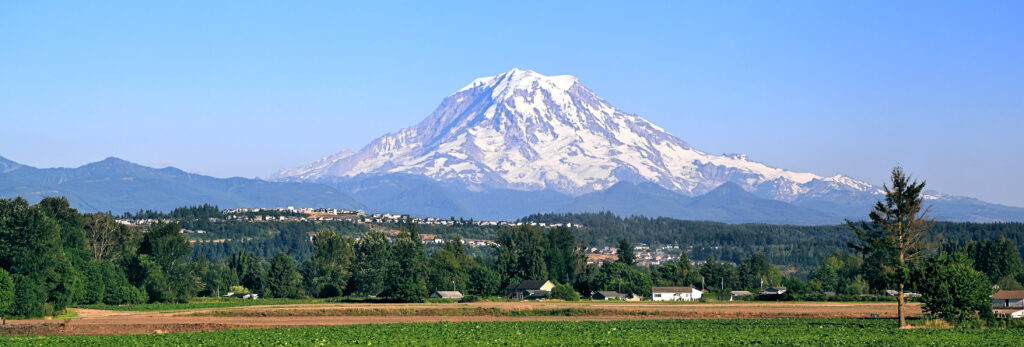
Rainier Late-Season 2026 Climbing Brief: Glacier Change, Guide Schedules & September Reality
Rainier is still being climbed in September 2026, but the mountain has moved out of its midsummer operating rhythm. The latest ranger and guide reports show fresh snow, weather turnarounds, a heavily evolved Disappointment Cleaver line and guide calendars closing on different dates. For evergreen route, permit, cost and preparation planning, use the Mount Rainier Climbing Guide. This page is the dated late-season snapshot.
September Is Still Climbable. It Is No Longer Midsummer Rainier.
The late-season shift is not one dramatic closure. It is the accumulation of smaller changes that remove margin: more exposed ice, older and abandoned boot packs, more complicated crevasse crossings, fresh snow on top of late-summer glacier terrain, fewer guide teams, shorter operating calendars and a higher premium on current route information.
The latest NPS Disappointment Cleaver update, dated August 26, still described favorable climbing and successful summit teams. But that same update documented small crevasses and blue ice on the upper Muir Snowfield, a ladder at High Crack, a double-ladder crossing around 13,000 feet, deep penitentes, a reroute near 12,800 feet and multiple reports of climbers following old boot packs by mistake.
Since then, September weather has changed the feel again. RMI reported on September 3 that one team could not travel above Camp Muir because of stormy weather and low visibility after a few inches of new snow. On September 7, RMI said its final Rainier program of the season had wrapped after another summit attempt turned around because of route conditions.
The DC Is Still There. The Summer Simplicity Is Not.
Late season turns a familiar route into a sequence of specific glacier problems. The important question is not whether the DC exists, but what the current line now requires.
| Late-season feature | Latest 2026 signal | Why it matters now |
|---|---|---|
| Muir Snowfield | Small crevasses beginning to show on the upper snowfield, with sections of blue ice. | Surface conditions are no longer the uniform summer snowfield many climbers picture. |
| High Crack | Ladder crossing around 11,200 ft remained in place in the August 26 update. | Fixed features can save time, but their condition and security must be reassessed rather than assumed. |
| Bowling Alley | Rangers emphasized significant rockfall exposure and minimizing time in the hazard zone. | Later melt exposes more loose rock and increases the importance of efficient movement through overhead hazard. |
| Upper DC | Deep penitentes developed alongside the boot pack and were reported awkward under crampons, especially descending. | The descent can be more technically tiring even when the ascent line remains obvious. |
| ~12,800-13,000 ft | Reroute climber’s left, then a double-ladder crossing with fixed handlines and pickets. | One current track can differ materially from the route a climber remembers from July. |
| Navigation | Multiple parties reportedly followed old boot packs after the route moved. | Late-season tracks can be misleading; the most visible line is not automatically the active line. |
| Snow bridges | Rangers warned that bridges may weaken, collapse or force rerouting with little notice. | Anything crossed on ascent must still be defensible on descent hours later. |
For the evergreen route layout rather than this dated condition snapshot, use the Mount Rainier Routes Guide.

A Route Can Still Be Open and Still Demand More Judgment.
September does not turn the Disappointment Cleaver into a different mountain. It removes some of the predictable snow coverage and operational density that make midsummer feel more standardized.
Guide Schedules Are Winding Down on Different Dates.
That is a better description of September than saying the guide season is either fully open or fully closed.
Final 2026 Program Wrapped September 7
RMI’s September 7 dispatch called its Expedition Skills Seminar – Muir the final program of its Rainier season. The team encountered fresh snow, practiced glacier systems and turned around on its summit attempt because of route conditions.
Read the RMI dispatch →Scheduled DC Programs Extend to September 16
IMG’s current 2026 schedule still lists Disappointment Cleaver programs ending September 10, 12, 14 and 16. That shows why there is no single date when commercial Rainier climbing simply stops.
Check IMG schedule →A Guide Date Is an Operating Window, Not a Summit Promise
The same week can contain a successful summit, a weather turnaround at Camp Muir and a route turnaround higher on the mountain. The operator decides what the current mountain allows.
Use the Operator Page for the Evergreen Decision
If you are still choosing among RMI, IMG and Alpine Ascents, move to the Mount Rainier guide-company comparison. This dated brief only explains what September 2026 looks like.
White River Access Improved. The Emmons Did Not Become a Summer Route Again.
Road access and glacier conditions are separate questions.
The Emmons Was Already Becoming Broken and Circuitous
Climbing rangers reported that teams were turning around around 12,000-12,500 feet where the upper glacier had become difficult to navigate. They also described problems getting from Camp Curtis onto the Emmons, fewer guided parties, little reliable boot pack and late-season exposed ice.
White River Road Reopened
NPS reopened White River Road and campground on September 5 after the Grand Park 2 and Wonderland Complex fire closures. Sunrise Road remains closed to vehicles, and Grand Park-area trail closures remain in effect.
Late Emmons Means More Route-Finding Responsibility
The August ranger guidance was explicit about reduced guide presence and the possibility of being the only team on that side of the mountain. That is a different operating environment from a crowded June or July glacier track.
An Open Road Is Not a Green Light
White River reopening removes one logistical obstacle. It does not close crevasses, restore a boot pack or reverse late-summer glacier breakup. Confirm the route itself before interpreting the road status as a climbing signal.
Should You Still Climb Rainier This September?
The answer depends much more on support model and current capability than on the fact that a date remains on the calendar.
| Your situation | September 2026 read | Best next move |
|---|---|---|
| Booked guided climber with a confirmed September program | Still plausible | Stay with the operator’s current instructions. Expect objective or route changes if the weather or glacier forces them. |
| Independent DC team using current ranger beta and strong glacier systems | Condition-dependent | Recheck the climbing blog, current route at registration and same-day forecast. Old GPX tracks and old boot packs need skepticism. |
| Independent Emmons team expecting a June-style route | Poor assumption | Reassess the objective. The late-season Emmons report describes a materially more complex, less-supported glacier problem. |
| First-time glacier climber trying to squeeze in a late booking | Do not force the calendar | A confirmed guided program can still make sense, but September is not the time to improvise an independent first glacier climb because summer dates are gone. |
| Climber with route skill but weak altitude preparation | Solve the real gap | Late season does not remove Rainier’s 14,410-foot altitude. Use the Rainier acclimatization guide to address that separate problem. |
For the permanent hazard profile rather than this week’s route state, use the Rainier Difficulty & Safety Guide. Historical mortality belongs on the separate Rainier Death Rate analysis; it should not be used as a shortcut for deciding whether a specific September day is safe.

Late Season Rewards Teams That Can Solve a Glacier, Not Just Follow One.
Fewer tracks, more exposed ice and a broken upper glacier change the standard for independent movement. White River reopening is useful logistics; it is not a route-quality report.
Park Access and Registration Are Also Changing.
This is another reason not to reuse a July checklist unchanged.
September Sits Across a Seasonal Transition
The NPS climbing page currently lists winter self-registration beginning September 15, while also listing summer walk-up registration through September 30. Because those published date ranges overlap, verify the current ranger-station process for your exact arrival rather than relying on a remembered summer workflow.
September 15 Is a Key Administrative Date
NPS describes May 1 through September 15 as the high-use wilderness-permit period for climbing. The permanent paperwork details belong on the Rainier Permits & Logistics Guide.
White River Is Open; Sunrise Vehicle Access Is Not
White River Road and campground reopened September 5. Sunrise Road remains closed to vehicles, although pedestrian and bicycle access resumed. Grand Park-area trail closures remain in place because of wildfire impacts.
The DC Uses a Different Access Problem
The Grand Park fire closures do not mean the standard Paradise/Camp Muir approach is closed. Keep route access and regional park closures separate when reading a broad park alert.
What to Recheck in the Final 72 Hours
September rewards current information more than a perfect planning document written months ago.
Read the latest climbing-ranger post and ask what changed since it was published.
Use the current mountain forecast and watch wind, precipitation and freezing-level trend, not a city forecast.
If guided, use the guide service’s final briefing as the operational decision point.
Recheck NPS alerts, road status, fire closures and the ranger station you actually need.
Confirm the current late-season registration and wilderness-permit workflow for your date.
Do not assume an old boot pack or old GPX line represents the active glacier route.
Plan for penitentes, hard ice, tired crampon work and glacier crossings to matter again on the way down.
Decide before leaving camp what conditions would make the summit no longer worth pursuing.
If Rainier Is Already Booked, Move This Brief Into Your Climb Plan.
Save Mount Rainier as your current objective, then use the final-prep stage to keep the route, guide contact, permit status, weather check and access alerts together. A dated conditions post is most useful when it changes a real departure decision.
Where This Snapshot Comes From
Late-season claims are tied to dated ranger reports, current park alerts and published guide operations rather than generic seasonal averages.
Mount Rainier Climbing Blog
Primary route-condition source. The latest DC post available when this brief was checked is August 26, 2026.
Open ranger blog →Climbing Regulations & Seasonal Registration
Used for the current $82 climbing fee, seasonal registration date ranges and wilderness-permit framework.
Open NPS climbing page →Alerts & Conditions
Used for the September 5 White River reopening, Sunrise vehicle closure and continuing Grand Park-area restrictions.
Open park conditions →RMI September Dispatches
Used for the September 3 fresh-snow/weather turnaround and September 7 final-program report.
Open RMI Rainier reports →International Mountain Guides
Used to confirm that IMG still lists 2026 DC programs through a September 13-16 departure.
Open IMG schedule →Expedition Updates
Use the broader current-season dashboard when Rainier is only one part of a Cascade or expedition-planning question.
Open all expedition updates →Rainier September 2026 FAQ
Can you still climb Mount Rainier in September 2026?
Yes, but September is no longer behaving like peak summer. Some guide programs remain scheduled, while other guide services have already closed their Rainier season. Current reports show fresh snow, storm turnarounds and a highly evolved late-season glacier route.
Is the Disappointment Cleaver still climbable?
The latest NPS DC report on August 26 described favorable climbing and recent successful summits, but also blue ice, crevasses, ladders, penitentes, rockfall exposure, rerouting and weak snow bridges. September guide reports then added fresh snow and route/weather turnarounds. Use current route information at the time of your climb.
Are guides still climbing Rainier in September?
Some are. RMI reported its final Rainier program ending September 7. IMG still lists 2026 DC departures through September 16. Guide calendars close on different dates and a scheduled program can still turn around because of weather or route conditions.
Is the Emmons Glacier a good late-season alternative?
Not simply because White River Road has reopened. The August 8 ranger report described the Emmons as increasingly broken and difficult to navigate, with fewer guide teams and less reliable route infrastructure. Late-season Emmons is a more independent glacier problem, not an automatic backup for the DC.
What changed at White River?
White River Road and campground reopened September 5 after wildfire closures. Sunrise Road remains closed to vehicles, and Grand Park-area trail closures continue. Check current NPS alerts because fire conditions can change again.
What should I check before leaving for Rainier?
Check the latest climbing-ranger route report, current mountain forecast, park access alerts, your guide service if applicable, and the late-season registration/permit instructions. Independent teams should assume route details can change faster than an old trip report or downloaded GPX track.
Rainier: The Full Guide & the Planning Pages
This September brief is temporary context. Use the full Rainier guide and the permanent planning pages below for the climb itself.
September Rainier Requires a Current Route, Not a Summer Assumption.
The DC remained viable in the latest ranger report, but it had already become a late-season glacier line with ladders, blue ice, penitentes, rockfall exposure and reroutes. Fresh September snow and recent guide turnarounds add another layer. If your climb is still on the calendar, use the current route, current forecast and current guide/ranger decision rather than treating September as a cooler version of July.
Was this helpful?
🏔Related peaks nearby
🧭Explore & compare
Global Summit Guide is an independent mountaineering resource founded in 2026. The team combines first-hand trekking and climbing experience with in-depth research and professional health and nutrition review to help climbers choose objectives, prepare properly, and stay safe.
Health, altitude, and nutrition content is reviewed by Taylor Ludlow (Registered Nurse) and Brigg Hoopes (Nutritionist).
What We Don't Know Yet
Mountain information changes quickly. This box explains the limits of what this page can responsibly promise.
- Weather, snowpack, avalanche risk, road access, and route conditions can change quickly and may be different on your climbing dates.
- Route conditions, trailhead access, crevasse exposure, stream crossings, and rescue access may vary from published planning guidance.
- Visa, passport, vaccination, border, insurance, and local transportation rules may change before your trip.
Verify current conditions with official land managers, guide services, local forecasts, and current route reports before booking or climbing.
Mountaineering, rock and ice climbing, glacier travel, and high-altitude activity are inherently dangerous and can result in serious injury or death. The information on Global Summit Guide is provided for general informational and educational purposes only and is not a substitute for professional instruction, qualified guiding, proper equipment, or your own judgment and experience.
Route conditions, weather, snowpack, permits, regulations, and hazards change constantly and may differ from what is described here. Details may be incomplete, out of date, or contain errors. Always verify current information with local authorities, certified guides, and official sources before making any decision in the mountains.
Nothing on this site is medical, legal, or financial advice. Our fitness, acclimatization, altitude, and nutrition content is general in nature; consult a qualified physician before beginning any strenuous exercise program or exposing yourself to high altitude.
You are solely responsible for your own safety and decisions. To the fullest extent permitted by law, Global Summit Guide and its team accept no liability for any loss, injury, damage, or expense arising from use of, or reliance on, this information. By using this site you acknowledge these risks and accept these terms.
Some links on this site may be affiliate links. If you buy through them we may earn a small commission at no extra cost to you; this never affects our recommendations.
Global Summit Guide recommendation path
Next Best Mountain to Research
Use these recommendations to continue the right planning path instead of stopping on one page.
Use current permit, weather, route, and operator information before booking or climbing.
Leave a Reply