web analytics

Tag: 8000ers

  • Nanga Parbat 2026 Season Wrap: Summits, Records & Ski Descent

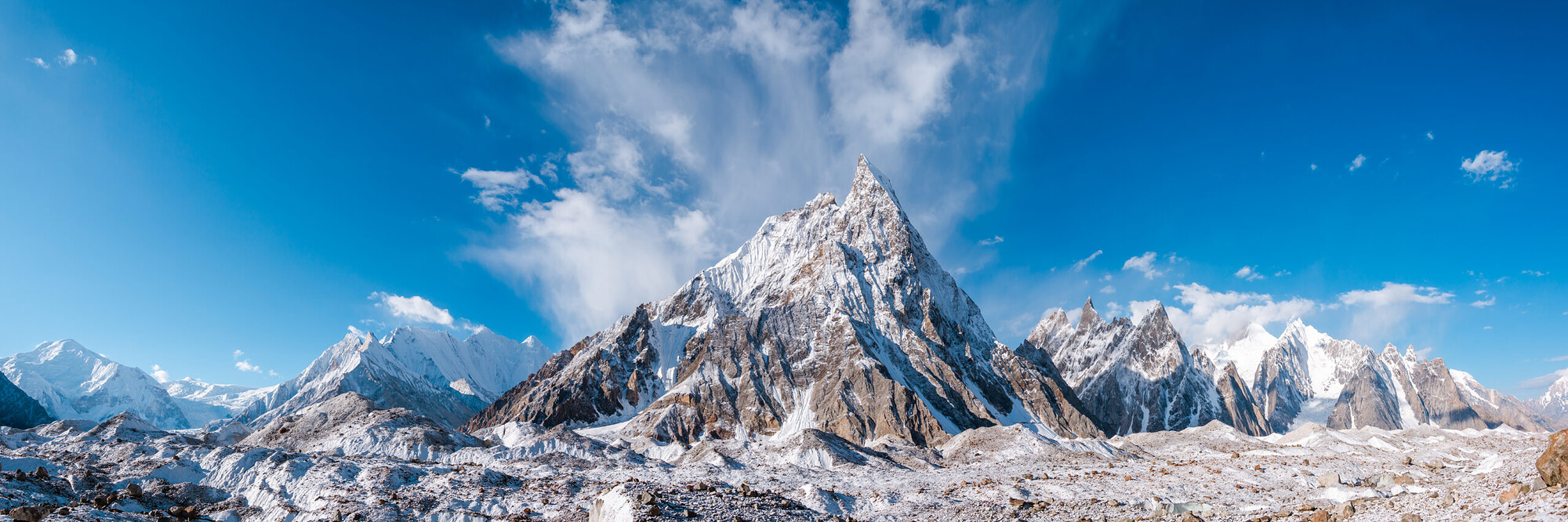
    Nanga Parbat in Pakistan, focus of the 2026 climbing season wrap
    Home › Climbing News › Nanga Parbat 2026
    Pakistan · western Himalaya · Diamir summit wave · Rupal finale

    Nanga Parbat 2026 Season Wrap: Who Summited & What Happened

    Nanga Parbat opened Pakistan’s 2026 summer 8,000-meter season with a crowded late-June summit window, then produced one of the year’s biggest ski-mountaineering stories. Andrzej Bargiel climbed and skied the mountain without supplemental oxygen, Liliya Ianovskaia set a women’s age record, Kili Pemba Sherpa completed all fourteen 8,000ers, and the season stayed alive into August through a serious new-route attempt on the Rupal Face.

    major summit parties cross-checked record claims sourced separately late Rupal activity included
    8,126 mSummit
    June 30Opening Wave
    3,700+ mBargiel Ski Vertical
    July 3Kili Pemba 14×8000
    Aug. 7Rupal Project Ends
    The season in one minute

    What defined Nanga Parbat’s 2026 season?

    The season was short, concentrated and unusually rich in distinct climbing stories. The supported Diamir Face / Kinshofer system carried the main commercial summit traffic. Contemporary reporting tied to Seven Summit Treks and 14 Peaks Expedition described more than 20 summiters on June 30, including the rope-fixing party and separate operator teams. Andrzej Bargiel summited the same day and completed a first full ski descent without supplemental oxygen.

    On July 1, 8K Expeditions reported two more summit groups. Liliya Ianovskaia, age 66 according to her own expedition record, became the oldest woman reported to have summited Nanga Parbat. On July 3, Imagine Nepal’s Kili Pemba Sherpa reached the top with Lakpa Chhiri Sherpa and Wang Zhong, completing all fourteen 8,000-meter peaks.

    The commercial season then faded quickly, but Nanga Parbat was not finished. Marek Holeček and Tomáš Petreček spent July acclimatizing for a new alpine-style line on the Rupal Face. Their August attempt encountered dangerous avalanche, rockfall and melt conditions, and both ultimately abandoned the project.

    Main supported sideDiamir Face
    Main route systemKinshofer
    Ski routeMessner Route
    Late alpine projectRupal Face
    Summit windowJune 30–July 3
    Final major activityEarly August
    Geography check: Nanga Parbat stands in the western Himalaya, not the Karakoram. It is routinely covered alongside K2, Broad Peak and the Gasherbrums because all five are Pakistan’s 8,000-meter peaks, but the mountain belongs to a different range.
    Why the summit total is presented as a ledger, not one headline number: operator dispatches document the major parties well, but public lists can overlap in high-altitude support roles, spell names differently and report different cutoffs. The table below preserves the strongest named evidence without inventing an audited national registry.
    June through August

    Nanga Parbat 2026 Timeline

    Use the filters to isolate summit activity, ski history, records or the late alpine-style Rupal project.

    June 30
    SummitOpening window

    Route fixers reach the summit and the main Diamir window opens

    Reporting based on Seven Summit Treks’ expedition update named Mingtemba Sherpa, Pasang Dukpa Sherpa, Dawa Rinji Sherpa and two climbers named Pasang Nurbu Sherpa among the rope-fixing team that reached the summit before the larger supported groups followed.

    Evidence: organizer-linked reporting published June 30.
    June 30
    Summit20+ reported

    Seven Summit Treks and 14 Peaks put large groups on top

    The Tourism Times, citing Chhang Dawa Sherpa and Tashi Lakpa Sherpa, reported more than 20 climbers reaching Nanga Parbat during the opening wave. The named parties included Seven Summit Treks clients and guides plus an 11-person 14 Peaks group. This is the largest omission in the earlier version of this season wrap.

    Evidence: contemporaneous operator-linked report; named groups reproduced in the ledger below.
    June 30
    Ski firstNo O₂

    Andrzej Bargiel summits and skis the Messner Route

    Bargiel reached the summit with Janusz Gołąb after starting the final push from around 6,850 meters. He then skied more than 3,700 vertical meters down the Messner Route on the Diamir side without supplemental oxygen, completing the first continuous full ski descent attributed to Nanga Parbat.

    Evidence: Bargiel/Red Bull reporting and ExplorersWeb.
    July 1
    SummitAge record

    8K teams add a second major summit day

    8K Expeditions published separate summit updates for an international summer team and a Japanese-led group. Liliya Ianovskaia’s own record lists a 6:50 a.m. summit at age 66, making her the oldest woman reported to have reached Nanga Parbat’s summit. Naoko Watanabe led a separate six-person 8K summit party.

    Evidence: 8K Expeditions plus Ianovskaia’s own expedition record.
    July 3
    Summit14×8000

    Kili Pemba Sherpa completes all fourteen 8,000ers

    Imagine Nepal reported Kili Pemba Sherpa on the summit at 10:42 a.m. Pakistan time with Lakpa Chhiri Sherpa and Chinese climber Wang Zhong. Nanga Parbat became the final mountain in Kili Pemba’s fourteen-peak set.

    Evidence: Imagine Nepal; corroborated by Nepalese reporting.
    July
    Alpine style

    Holeček and Petreček acclimatize for the Rupal Face

    The Czech pair moved to the south side with a new-route objective. They acclimatized on neighboring Rakhiot Peak and prepared for an alpine-style attempt with no routine commercial fixed-rope system or high-camp infrastructure.

    Evidence: climber dispatches and ExplorersWeb.
    Aug. 1–5
    Retreat

    The new Rupal line proves too unstable

    The pair entered the face via a snow gully and rocky terrain, but continuing avalanche activity, wet conditions and rock movement made the chosen line untenable. They retreated and briefly discussed another attempt on a different line.

    Evidence: ExplorersWeb, August 5.
    Aug. 6–7
    Project ends

    Petreček stops; Holeček also decides against a solo continuation

    Petreček announced he would not return to the face in 2026. Holeček considered continuing alone, but later accounts say he also concluded that he lacked the margin and internal commitment needed for a solo attempt. The expedition ended without a new route.

    Evidence: ExplorersWeb August 6; later Czech/European reporting August 7–17.
    Named public evidence

    Who Summited Nanga Parbat in 2026?

    This ledger separates operator reports instead of collapsing them into one unverified total. Search by climber, operator or date.

    DateTeam / projectNamed summiters in public reportWhy it mattersEvidence status
    June 30Seven Summit Treks · fixing teamMingtemba Sherpa (Mote); Pasang Dukpa Sherpa; Dawa Rinji Sherpa; Pasang Nurbu Sherpa (Makpa); Pasang Nurbu SherpaOpened the supported route to the summit for the season.Organizer-linked
    June 30Seven Summit Treks · expedition groupTao Hu; Antonina Samoilova; Mindaugas Satkauskas; Dawa Sherpa (Italian Dawa); Dendi Sherpa; Lakpa Temba Sherpa; Abbas Ali MehdiPart of Pakistan’s first reported 8,000 m summit wave of summer 2026.Named report
    June 3014 Peaks ExpeditionAnni Katri Penttila; Ian Fraser; Rebecca Long; Alexander Joseph Hansen; Benjamin Edward Lieber; Phurbu Kusang Sherpa; Pasang Nurbu Sherpa; Dorchi Sherpa; Kusang Sherpa; Serjangbu Sherpa; Mehboob AliSeparate 11-person group missing from the earlier season-wrap ledger.Operator-linked
    June 30Bargiel ski projectAndrzej Bargiel; Janusz GołąbBargiel’s summit led directly into the historic ski descent.First-party + specialist
    July 18K Expeditions · international summer teamLiliya Ianovskaia; Iryna Karagan; Pavlo Sydrenko; Danylo Yasnyuk; Dawa Ongju Sherpa; Dawa Nupu Sherpa; Muhammad Ali; IlyasIncluded Ianovskaia’s oldest-woman record.Team / climber record
    July 18K Expeditions · Japanese-led groupNaoko Watanabe; Pechhumbe Sherpa; Keizo Konishi; Pasdawa Sherpa; Saori Eragaki; Mingma Dorchi SherpaSeparate six-person summit update published by 8K Expeditions.Operator report
    July 3Imagine NepalKili Pemba Sherpa; Lakpa Chhiri Sherpa; Wang ZhongKili Pemba completed all fourteen 8,000 m peaks.Operator report
    No summit-party row matches that search.
    Do not add the rows together as an audited unique-person season total. A support climber can appear in more than one operator-linked context, and names transliterated from Nepali or Pakistani sources are not always rendered consistently. The most defensible statement is that the public record documents a large June 30 wave followed by additional July 1 and July 3 summits.
    Nanga Parbat high mountain terrain on the Diamir side
    June 30 · the season’s defining individual achievement

    Bargiel’s ski descent was more than a summit with skis attached.

    Andrzej Bargiel climbed Nanga Parbat without supplemental oxygen, reached the summit with Janusz Gołąb, clicked into his skis and descended the Messner Route on the Diamir side. His own account put the ski line at more than 3,700 vertical meters. Red Bull described it as the first continuous summit-to-snowline descent; Bargiel described skiing all the way to Base Camp. The language differs slightly, but the core event is consistent across the primary and specialist reporting: the first full continuous ski descent credited to Nanga Parbat.

    The ski line in four pieces

    How the Nanga Parbat ski project worked

    The descent should be understood as its own route-and-snow problem, not simply as a faster version of the commercial Kinshofer descent.

    ApproachMessner / Diamir

    Bargiel used the Diamir side and the route associated with Reinhold Messner’s 1978 solo ascent rather than treating the Kinshofer fixed-line corridor as the ski objective.

    High camp strategyCamp 3 · ~6,850 m

    ExplorersWeb reported that Bargiel and Gołąb did not establish a Camp 4 for the final push; they left from Camp 3 for the summit.

    StyleNo supplemental O₂

    The ascent and descent were completed without bottled oxygen, adding a major physiological demand to the skiing and route-reading problem.

    Descent3,700+ vertical m

    Bargiel’s own account states that he skied more than 3,700 vertical meters via the Messner Route, completing his ski project on all five Pakistani 8,000ers.

    Why continuity matters

    A full ski descent has a stricter meaning than “skied on the mountain.”

    High-altitude ski history is full of descents interrupted by rappels, long downclimbs, bare-rock carries or route discontinuities. The 2026 claim is specifically about linking the summit to the lower snow system in one continuous ski descent. That is why sources emphasize “continuous” and “full,” not just “first skier on Nanga Parbat.”

    Pakistan five

    Nanga Parbat completed Bargiel’s Pakistani 8,000er ski set.

    His previous Pakistani ski descents included Broad Peak, K2, Gasherbrum I and Gasherbrum II. Nanga Parbat closed that five-peak project. It is a different achievement from climbing all five: the line has to be suitable for skiing, connected, and timed to snow conditions that may not match the best conditions for climbers on fixed ropes.

    Beyond the summit count

    Records and Milestones from 2026

    The most useful season summary separates genuine 2026 milestones from impressive resumés that pre-dated the Nanga Parbat ascent.

    Ski mountaineering

    Andrzej Bargiel

    First full continuous ski descent of Nanga Parbat, completed June 30 without supplemental oxygen via the Messner Route. The descent also completed his project to ski all five of Pakistan’s 8,000-meter peaks.

    Women’s age record

    Liliya Ianovskaia

    Reached the summit July 1. Her own expedition record states she was 66, making her the oldest woman reported to have summited Nanga Parbat. Some secondary reporting called her 67; the first-party record is the cleaner age source.

    Fourteen peaks

    Kili Pemba Sherpa

    Summited July 3 with Lakpa Chhiri Sherpa and Wang Zhong, making Nanga Parbat the final mountain in his set of all fourteen 8,000ers.

    National milestone

    Mindaugas Satkauskas

    Lithuanian reporting identified Satkauskas’ June 30 summit as the first Lithuanian ascent of Nanga Parbat. This is a national record claim rather than a mountain-wide world record.

    Not a new Nanga record

    Naoko Watanabe

    Watanabe led an 8K Expeditions summit party on July 1. Her larger record résumé—including completing all fourteen 8,000ers and multiple K2 summits—was established independently of this Nanga Parbat season, so it should not be recast as a new 2026 Nanga record.

    Season marker

    Pakistan’s first 8,000 m wave

    Nanga Parbat delivered the first major successful 8,000-meter summit activity reported in Pakistan’s 2026 summer season, before the later campaigns on K2, Broad Peak and the Gasherbrums developed.

    A small but important reporting problem

    Why some reports say June 30 and others imply July 2

    Season-wrap pages get better when conflicting contemporary reports are preserved rather than silently harmonized.

    June 30 evidence

    The organizer-linked reporting is specific.

    The Tourism Times published on June 30 and attributed the summit information directly to Seven Summit Treks expedition director Chhang Dawa Sherpa and 14 Peaks owner Tashi Lakpa Sherpa. Everest Chronicle also dated the SST success to Tuesday, June 30. Bargiel’s own summit and ski descent is independently fixed to June 30.

    For the season chronology, June 30 is therefore the strongest date for the opening commercial wave.

    Later newspaper wording

    Dawn and Pakistan Today described a Thursday summit.

    Articles dated Friday, July 3 described the Seven Summit Treks group as having summited “on Thursday,” which would mean July 2. Those stories name the same seven-person SST party seen in the June 30 reports.

    Rather than invent a second ascent for the same named team, this rebuild treats the later weekday reference as a reporting discrepancy and keeps it visible in the source record.

    Practical editorial rule: where a first-party or organizer-linked timestamp and a later secondary-news weekday disagree for the same named party, keep the stronger dated evidence and disclose the conflict. Do not manufacture two summit events from one group.
    One mountain, two very different 2026 stories

    Diamir and Rupal were different sports in 2026

    The commercial summit wave and the late new-route attempt shared a mountain, but almost nothing else about their operating systems was the same.

    West / northwestDiamir Face

    Home of the supported Kinshofer route system and the concentrated June–July summit traffic. Multiple operators shared seasonal route work, high camps and fixed-rope infrastructure.

    Diamir variationMessner Route

    Bargiel’s ski project used the route associated with Reinhold Messner’s 1978 solo ascent. It belonged to the Diamir side but was not simply a skier following the commercial fixed-line descent.

    South / southeastRupal Face

    A roughly 4,600-meter wall with no routine commercial system. Holeček and Petreček approached it as an alpine-style new-route problem requiring self-contained movement, sustained stability and a very different retreat calculus.

    2026 factorDiamir / supported seasonRupal / Holeček–Petreček project
    Primary objectiveSummit via established Kinshofer route systemOpen a new alpine-style route
    InfrastructureSeasonal fixing, camps, operator supportNo routine commercial fixed-line system
    Window requiredEnough stability for a coordinated summit pushLonger, more committing stability for an unknown line and retreat
    Main 2026 outcomeMultiple successful summit partiesRetreat; no new route
    Useful lessonA shared opening can move many teams quicklyObjective conditions can end a technically possible project before the crux is reached

    For the full face-by-face route analysis, use the Nanga Parbat route comparison. For camp structure and individual route history, see the Nanga Parbat routes guide.

    Climber preparing below Nanga Parbat, illustrating the scale of the 2026 Rupal Face project
    July–August · after the commercial teams were leaving

    The season did not end when the summit traffic stopped.

    Marek Holeček and Tomáš Petreček kept Nanga Parbat active well into August with an alpine-style attempt on the Rupal Face. They had tried the face together before, including a 2018 effort that reached high on the mountain. In 2026 they returned looking for a new line, but the lower face repeatedly showed how quickly a huge mixed wall can become unreasonable when snow, meltwater, avalanches and rock movement interact.

    The Rupal attempt in detail

    What happened to the new-route project?

    The key story was not failure to solve a technical crux. The team decided the objective hazard had removed the margin before the main route could develop.

    Acclimatization

    Rakhiot Peak gave the pair high-altitude preparation.

    Before committing to the Rupal Face, Holeček and Petreček acclimatized on neighboring Rakhiot Peak, including high nights. The goal was to arrive at the wall ready for a single-push alpine-style attempt rather than spend weeks building a commercial camp chain.

    First attempt

    The planned line broke down low on the face.

    ExplorersWeb reported that the pair began through a snow gully and rocky terrain, bivouacked around 4,600 meters and then tried to progress through snow ramps toward a couloir. Avalanche activity and unstable conditions forced them out before they could commit to the upper wall.

    Decision point

    Petreček chose not to return.

    On August 6, Petreček publicly said he would not look at the Rupal Face again that year. His decision was framed around cumulative risk rather than the belief that the mountain was literally unclimbable.

    Final outcome

    Holeček considered soloing, then also stopped.

    Later reporting says Holeček briefly considered a solo continuation but concluded that the project no longer justified the commitment. By August 7, the expedition was effectively over. There was no new route and no summit from the Rupal project.

    Do not convert one hot, unstable expedition into a permanent climate rule for Nanga Parbat. The 2026 Rupal team reported avalanche, rockfall, meltwater and unusually difficult objective conditions during its own operating window. Those observations belong to this season record. Long-term weather and climate planning belong in the Nanga Parbat weather guide.
    What the season actually showed

    Six lessons worth carrying forward

    A season retrospective earns its place when it separates repeatable planning lessons from one-off headlines.

    1 · Window concentration

    Many summits can happen in a very short opening.

    The major documented success was compressed into June 30 through July 3. Teams that had finished rotations and were positioned for the opening could move; a climber who arrived late or recovered slowly had little spare calendar.

    2 · Route infrastructure

    Fixing can shape the entire commercial season.

    The opening summiters included the fixing team itself. On a route like Kinshofer, who fixes, when the upper line is opened and how shared infrastructure is managed are not background logistics—they directly affect who can use the window.

    3 · Style changes the problem

    The same mountain can require completely different systems.

    A supported Kinshofer expedition, Bargiel’s ski project and a Rupal new-route attempt cannot be compared as if they were three versions of one itinerary. Each depended on different skills, weather needs and retreat options.

    4 · Snow is not only a climbing variable

    A ski objective needs continuity as well as stability.

    Bargiel had to solve both the ascent and a connected descent line. Snow that is acceptable for crampon movement can still be wrong for high-consequence skiing, and a route break that a climber can rappel may end a “continuous descent” claim.

    5 · Public counts need caution

    Operator lists are useful, but they are not a single database.

    The 2026 evidence is rich enough to identify the major parties and records, but not clean enough to publish a supposedly exact unique-person total without a formal reconciliation of duplicated support staff, spellings and late confirmations.

    6 · Retreat can define a season too

    The Rupal decision belongs beside the summit records.

    Holeček and Petreček did not add a new line to the mountain, but their retreat documents the other half of expedition alpinism: deciding that a theoretically possible route no longer offers an acceptable margin.

    Planning after the headlines

    What should a 2027 Nanga Parbat climber take from 2026?

    Not a prediction of next year’s conditions—rather, a short list of questions the 2026 season proved were worth asking.

    Operator questions

    Ask who carries the route-opening responsibility.

    • Who is expected to fix the Kinshofer system?
    • Which operator staffs the fixing team?
    • How are rope fees and shared infrastructure handled?
    • What high-camp support is actually included?
    • How many clients share each high-altitude guide?
    Compare Nanga Parbat operators →
    Timing questions

    Build enough margin to use a short opening.

    • When does the team expect to reach Base Camp?
    • What acclimatization will be completed before Pakistan?
    • How many rotation days are built in?
    • How much recovery time remains before the likely window?
    • What triggers a no-go decision if the mountain warms or loads with snow?
    Study Nanga Parbat weather →
    Season wraps are not forecasts. June 30 worked in 2026 because route progress, team readiness and conditions aligned. The useful planning lesson is to preserve schedule flexibility and arrive prepared—not to assume June 30 will be “the summit date” next year.
    Frequently asked questions

    Nanga Parbat 2026 Season FAQ

    Answers reflect the reconciled public record checked through September 4, 2026.

    Who summited Nanga Parbat in 2026?

    Several distinct parties summited between June 30 and July 3. The strongest public lists come from Seven Summit Treks, 14 Peaks Expedition, 8K Expeditions, Imagine Nepal and Andrzej Bargiel’s project. Because operator reports can overlap in support roles and name spellings, the summit ledger above is safer than publishing one supposedly exact final unique-person total.

    Did Andrzej Bargiel ski Nanga Parbat from the summit?

    Yes. Bargiel reached the summit on June 30 without supplemental oxygen and completed what his team and specialist reporting describe as the first full continuous ski descent of Nanga Parbat. He used the Messner Route on the Diamir side and reported more than 3,700 vertical meters of skiing.

    Did Bargiel use supplemental oxygen?

    No. His 2026 Nanga Parbat ascent and ski descent were completed without bottled oxygen.

    What record did Liliya Ianovskaia set?

    Ianovskaia summited on July 1 and was reported as the oldest woman to summit Nanga Parbat. Her own expedition record lists her age as 66. Some secondary reports said 67, so this page uses the first-party figure and notes the discrepancy.

    Did Kili Pemba Sherpa complete all fourteen 8,000ers on Nanga Parbat?

    Yes. Imagine Nepal reported that Kili Pemba Sherpa reached Nanga Parbat’s summit on July 3 with Lakpa Chhiri Sherpa and Wang Zhong, completing his set of all fourteen 8,000-meter mountains.

    Was the main 2026 route the Kinshofer Route?

    Yes for the supported commercial season. The Kinshofer route system on the Diamir Face carried the main fixed-rope and high-camp infrastructure. Bargiel’s ski project used the Messner Route on the same broad face, while Holeček and Petreček’s August project was on the Rupal Face.

    Was a new route completed on the Rupal Face in 2026?

    No. Marek Holeček and Tomáš Petreček attempted a new alpine-style route, but dangerous avalanche, rockfall and melt conditions forced a retreat. Petreček ended his participation on August 6, and Holeček also decided against continuing solo.

    Is Nanga Parbat in the Karakoram?

    No. Nanga Parbat is part of the western Himalaya. It is often grouped with K2, Broad Peak and the Gasherbrums in Pakistan summer-season reporting because those are the country’s five 8,000-meter peaks.

    Why do some reports date the first summit wave differently?

    Organizer-linked reports published June 30 say the Seven Summit Treks and 14 Peaks groups summited that morning. Later newspaper stories dated July 3 describe the same named SST party as summiting “on Thursday,” which would imply July 2. This page keeps June 30 as the stronger timestamp and discloses the later conflict rather than creating a second event for the same team.

    2026 in one sentence

    A short summit window, a major ski first and a long tail of serious alpinism.

    Nanga Parbat’s 2026 story was not simply how many people stood on top. The season compressed large supported teams into a few days, produced a first continuous ski descent, closed one climber’s fourteen-peak quest, set a women’s age record and ended with two elite alpinists deciding that the Rupal Face no longer offered enough margin to continue.

    Open the Nanga Parbat Climb Guide
    The 14 Eight-Thousanders · Karakoram

    Nanga Parbat: The Killer Mountain in Full Context

    The 2026 season wrap is one snapshot. See the full Nanga Parbat guide, its risk profile, and how it sits among the eight-thousanders below.
    Was this helpful?

    Yes
    No
    Thanks for your feedback!
  • Broad Peak & Gasherbrum 2026: First Summits & Final Results

    Broad Peak in Pakistan's Karakoram
    Karakoram · Pakistan · Final 2026 Season Archive

    Broad Peak & Gasherbrum 2026: Final Summit Results

    Broad Peak produced successful summits before a devastating late-July avalanche. Gasherbrum II delivered one of the clearest summit successes of the Karakoram summer. Gasherbrum I finished without a confirmed summit. This is the final record of how the three neighboring 8,000ers moved from early route fixing to a season that ended very differently on each mountain.

    season closed dated summit reporting Broad Peak + G1 + G2 K2 context kept separate historical archive
    The final answer

    What Happened on Broad Peak and the Gasherbrums in 2026?

    Broad Peak was summited on July 19. A Pakistani rope-fixing team climbing with Juan Pablo Toro reached the true summit after a very long summit day.

    Gasherbrum II was summited on July 21. Imagine Nepal reported six climbers reaching the 8,035-meter summit after deep snow and insufficient fixed rope had stopped their first push.

    Gasherbrum I finished the summer without a successful summit. The late-July push never converted into a summit before the season closed.

    The season’s defining event came on July 30, when an avalanche on Broad Peak killed all ten members of an international climbing team. The disaster also redirected climbers and resources across the Baltoro toward search, rescue and recovery.

    Archive status: this is no longer a live summit-push tracker. It is the completed historical record of the 2026 Broad Peak and Gasherbrum season.
    Jul 19 Broad Peak successful summit party
    Jul 21 Gasherbrum II six-person summit team
    0 Gasherbrum I successful summer summits
    Jul 30 Broad Peak avalanche killed ten climbers
    Final season ledger

    Three Neighboring 8,000ers. Three Different Outcomes.

    A single label like “bad Karakoram season” hides too much. Broad Peak, Gasherbrum I and Gasherbrum II shared weather systems and logistics but did not produce the same result.

    PeakElevation2026 outcomeKey dateSeason context
    Broad Peak8,051 mSuccessful summit(s)July 19 Pakistani rope fixers and Juan Pablo Toro reached the summit. A second late push ended in the July 30 avalanche that killed ten climbers.
    Gasherbrum II8,035 mSuccessful summitJuly 21 Imagine Nepal’s six-person summit team succeeded on a second push after the first attempt was stopped by deep snow and insufficient rope.
    Gasherbrum I8,080 mNo successful summitSeason close Teams prepared for a late-July attempt, but the summit window never produced a successful ascent before the season ended.
    K28,611 mNo successful summitSeason close Included only as neighboring context. K2 has its own dedicated 2026 archive.
    Keep the mountain records separate. Broad Peak’s July 30 deaths belong to Broad Peak—not to K2 or Gasherbrum statistics, even though the emergency directly affected neighboring expeditions.
    Map and mountain context for Broad Peak and K2 in the Karakoram
    One mountain cluster

    Broad Peak, K2 and the Gasherbrums Run on the Same Karakoram Clock.

    They are close enough to share the major Baltoro weather story, expedition logistics and a small community of high-altitude climbers. But route readiness, snow conditions and technical demands still make each peak’s outcome independent.

    Season in sequence

    How the 2026 Karakoram Season Changed in Three Weeks.

    The original version of this page stopped on July 11. The meaningful story came afterward.

    Early July

    Teams Establish on Broad Peak and the Gasherbrums

    Commercial and independent climbers completed the Baltoro approach, began rotations and pushed fixed-line systems higher.

    July 18

    Gasherbrum II’s First Major Push Stops Short

    Deep snow and insufficient fixed rope prevented safe progress high on GII. The team descended, reorganized and prepared to try again.

    July 19

    Broad Peak Produces Its First Major 2026 Summit Success

    Karakorum Expeditions’ rope-fixing team and Juan Pablo Toro climbed to the true summit after roughly twenty hours from Camp 3.

    July 21

    Gasherbrum II Summit Team Reaches 8,035 m

    Phur Galjen Sherpa, Aangdu Sherpa, Lhakpa Nuru Sherpa, Wang Zhong, Sim Phei Sunn and Valentyn Sypavin reached the summit.

    July 27

    A Late Window Sends Teams Back Up

    Climbers on K2, Broad Peak and Gasherbrum I began moving with hopes of using a narrow late-July weather break.

    July 30

    Broad Peak Avalanche Changes the Season

    An avalanche struck a ten-person summit-bound team. All ten climbers ultimately died. Search, rescue and recovery became the priority across the Baltoro.

    August

    Gasherbrum I and K2 Close Without Summits

    Final reporting recorded no successful summer summit on either mountain. The Karakoram season ended with a sharply uneven result across the neighboring peaks.

    Gasherbrum massif in Pakistan's Karakoram
    Gasherbrum massif

    Shared Base Camp Does Not Mean Shared Difficulty—or Shared Results.

    Gasherbrum I and II rise from the same mountain group and can be combined logistically, but G1’s steeper technical demands and GII’s more approachable southwest ridge create very different summit probabilities.

    Broad Peak · 8,051 m

    Broad Peak Went From Summit Success to the Season’s Defining Tragedy.

    Both facts belong in the record. The successful July 19 climb should not be erased by what happened eleven days later, and the later avalanche should not be sensationalized as if the entire season consisted of one event.

    July 19

    The Summit

    A Pakistani rope-fixing group climbing with Juan Pablo Toro reached Broad Peak’s Main Summit late in the day after a long push from Camp 3.

    Late July

    Fresh Snow Returns

    Heavy snowfall and unstable conditions complicated the next summit cycle. Some climbers who had been on the mountain earlier chose not to make another attempt.

    July 30

    Avalanche

    Ten climbers on a later summit push were caught by a large avalanche. Subsequent reporting confirmed that all ten died.

    Broad Peak above the Baltoro region
    Broad Peak’s deceptive reputation

    “One of the Easier 8,000ers” Never Meant Low Risk.

    Broad Peak’s normal route is less technically sustained than K2, but the 2026 season showed how avalanche exposure, extreme altitude, unstable snow and weather can dominate a route regardless of its comparative grade.

    Gasherbrum I & II

    GII Converted the Window. GI Did Not.

    This is perhaps the clearest comparison of the season: two 8,000ers sharing the same massif and much of the same weather, yet only one produced a successful 2026 summit.

    Gasherbrum II · 8,035 m

    Successful on the Second Push

    The July 18 attempt stopped when deep snow and insufficient rope blocked safe progress. The team descended, reorganized and returned. On July 21, six climbers reached the summit.

    Gasherbrum I · 8,080 m

    No Successful Summit

    G1 remained the more difficult Gasherbrum objective. A late-July push developed alongside activity on K2 and Broad Peak, but final season reporting recorded no successful summit.

    Gasherbrum peaks and Baltoro terrain
    Gasherbrum II

    The July 21 Success Came After the Team Had Already Turned Back Once.

    The first attempt failing was not the failure of the expedition. Retreat, recovery and a second attempt inside a better tactical window produced one of the clearest summit results of the 2026 Karakoram season.

    July 30 · Broad Peak

    The Avalanche Must Be Recorded With Accuracy and Restraint.

    Ten climbers were caught by a major avalanche while ascending Broad Peak. Subsequent reporting confirmed that all ten died. The scale of the event made Summer 2026 Broad Peak’s deadliest recorded climbing season.

    This page does not attempt to assign individual fault or reconstruct decisions beyond what established reporting supports. Its purpose is to preserve the season record and explain how the event affected the wider Baltoro climbing community.

    10 climbers All members of the affected climbing team died.
    Broad Peak The deaths belong to Broad Peak’s mountain record.
    Search & recovery Teams elsewhere in the Baltoro redirected people and resources.
    Season impact The remaining K2 and neighboring summit plans were disrupted or abandoned.
    Baltoro and K2 base camp region near Broad Peak
    A connected climbing community

    An Emergency on One Baltoro Mountain Can Change Plans on Another.

    K2, Broad Peak and the Gasherbrums are separate mountains, but their expeditions share a remote logistics corridor and a relatively small high-altitude community. In late July 2026, that connection became operationally important.

    Why the outcomes differed

    Weather Was Shared. Route Readiness Was Not.

    Neighboring mountains can receive the same regional forecast but still have very different summit outcomes.

    01

    Fixed-Line Progress

    Teams can only exploit a short window if enough of the route is established before the window arrives.

    02

    Snow Loading

    Fresh snow affects trail-breaking, avalanche exposure and the time needed to secure the route.

    03

    Technical Character

    GII’s normal route and G1’s more demanding terrain do not convert the same weather break into the same summit opportunity.

    04

    Remaining Calendar

    Every failed window consumes acclimatization, supplies, recovery time and the number of realistic attempts left in the season.

    K2 rising above the central Karakoram near Broad Peak and the Gasherbrums
    The wider 2026 context

    K2 and Gasherbrum I Both Finished Without a Summit.

    That contrast matters. GII and Broad Peak showed that summit windows did exist, but those windows did not align with route readiness and acceptable conditions across every mountain in the central Karakoram.

    Orientation

    Why Broad Peak, K2 and the Gasherbrums Share One Seasonal Story.

    Concordia and the upper Baltoro form the geographic center of the climbing season. Broad Peak and K2 lie up the Godwin-Austen corridor, while the Gasherbrums sit farther east around the South Gasherbrum Glacier.

    Concordia Baltoro junction and geographic center of the major central Karakoram expeditions.
    Broad Peak · 8,051 m Near K2 on the Godwin-Austen Glacier corridor.
    K2 · 8,611 m Neighboring peak with its own separate 2026 zero-summit season record.
    Gasherbrum I · 8,080 m The harder Gasherbrum twin; no successful summit in summer 2026.
    Gasherbrum II · 8,035 m Six climbers reached the summit on July 21.
    Direct search answers

    Broad Peak & Gasherbrum 2026 FAQ.

    Final answers now that the Karakoram summer season is complete.

    Was Broad Peak summited in 2026?

    Yes. A Karakorum Expeditions rope-fixing team climbing with Juan Pablo Toro reached Broad Peak’s Main Summit on July 19, 2026.

    Was Gasherbrum II summited in 2026?

    Yes. Six members and guides from Imagine Nepal reached the 8,035-meter summit on July 21 after an earlier attempt had been stopped by deep snow and insufficient fixed rope.

    Was Gasherbrum I summited in 2026?

    No successful Gasherbrum I summer summit was recorded in final 2026 season reporting. G1 and K2 both ended the Karakoram summer without a successful summit.

    What happened on Broad Peak on July 30, 2026?

    An avalanche struck a ten-person international climbing team during a summit push. Subsequent reporting confirmed that all ten climbers died.

    How many people died on Broad Peak in 2026?

    Ten climbers died in the July 30 avalanche. Under Global Summit Guide’s season-by-season dataset, Summer 2026 became Broad Peak’s deadliest recorded climbing season.

    Did the Broad Peak avalanche affect K2?

    Yes operationally, but the fatalities remain Broad Peak fatalities. K2 teams abandoned remaining summit plans and assisted with the response.

    Which of Broad Peak, Gasherbrum I and Gasherbrum II is easiest?

    Gasherbrum II is generally considered the most approachable standard-route objective of the three. Broad Peak follows, while Gasherbrum I is more technical and demanding. All three remain extreme-altitude expeditions.

    When is the Broad Peak and Gasherbrum climbing season?

    The normal Karakoram expedition season runs from roughly June through August, with the main summit activity usually concentrated in July and early August.

    Source record

    How the 2026 Record Was Closed.

    Contemporary expedition reporting can be incomplete while climbers are still on the mountain. This archive therefore separates dated first reports from later final-season confirmation.

    Archive boundary: future climbing conditions should not be inferred from the 2026 season. This page remains indexed as the historical owner of the Broad Peak–Gasherbrum 2026 season record and should only be revised if stronger reporting materially changes the established result.

    Final 2026 record

    Broad Peak and Gasherbrum II Summited. Gasherbrum I Did Not.

    The 2026 central Karakoram season cannot be reduced to either success or failure. It contained successful 8,000-meter summits, repeated weather setbacks, a zero-summit result on Gasherbrum I and K2, and a Broad Peak avalanche that took ten lives and changed the closing weeks of the season.

    The 14 Eight-Thousanders · Karakoram

    Broad Peak & Gasherbrum: The 2026 Karakoram Season

    This season update is one snapshot. See the full guides and how the Karakoram 8000ers fit the wider set below.

    Was this helpful?

    Yes
    No
    Thanks for your feedback!
  • K2 2026 Season Tracker: No Summits as Season Ends

    K2 rising above the Karakoram in Pakistan
    Season final · Karakoram summer 2026 · historical archive

    K2 2026 Season Tracker: No Summits as Karakoram Season Ends

    K2’s 2026 summer season closed without a successful summit. High winds, fresh snow, unstable conditions, rockfall and slow upper-route progress repeatedly narrowed the usable window. A final late-July push was underway when the July 30 Broad Peak avalanche killed 10 climbers; K2 teams abandoned their summit plans and redirected people and resources toward the response.

    Final season outcome confirmedRoute progress dated by sourceBroad Peak deaths kept separate from K2Historical archive, not a live forecast

    Published July 11, 2026 · Final record reviewed September 4, 2026

    0Successful K2 summer summits
    ~50Attempt estimate*
    ~7,000 mRopes reported Jul 24
    Jul 30Broad Peak turning point
    Closed2026 summer season
    By Travis Ludlow · Global Summit Guide Research
    *~50 climbers is Alan Arnette’s season estimate, not an official permit count
    The final answer

    K2 went unsummited in summer 2026.

    By August 16, Gilgit-Baltistan reporting said the Karakoram summer climbing season had closed and that no climber had summited K2 or Gasherbrum I. Alan Arnette’s August 22 season wrap reached the same conclusion and estimated roughly 50 K2 attempts during an unusually quiet commercial season.

    The zero does not describe one failed day. K2’s summit chance was progressively compressed by upper-mountain wind, repeated weather delays, fresh snow, unstable conditions, rockfall and slow route development. When a late push finally formed near the end of July, the Broad Peak disaster changed the priorities of the climbers still high in the Baltoro.

    • Final outcome: no successful K2 summer summit.
    • Primary line: Abruzzi Spur on the Pakistan side.
    • Late route progress: ropes around 7,000 m by July 24.
    • Summit plan: late-July push, then delayed toward Aug. 1.
    • Decisive human event: July 30 Broad Peak avalanche and rescue/recovery response.
    • Page status: final 2026 season archive.
    Broad Peak context: the July 30 avalanche happened on Broad Peak, not K2. Ten climbers died. Their deaths must not be added to K2 fatality statistics. The event belongs in this K2 season record only because teams on K2 abandoned summit efforts and assisted the response.
    The season in sequence

    How K2 2026 moved from rotations to a closed season

    Filter the timeline to isolate route development, weather delays or the emergency response. Dates reflect contemporary reports rather than reconstructed hindsight.

    Early July

    A small K2 season settles into Base Camp

    Commercial groups and Pakistani guides established themselves on the Abruzzi Spur in a quieter-than-normal season. Specialist reporting described far fewer large international teams than in recent years, with much of the commercial presence led by Nepali and Pakistani operators.

    Route
    Jul 11–16

    Lower rotations continue; fixed lines reach Camp 2

    Teams continued acclimatization while weather held back faster progress. By July 16, reporting placed the fixed line at Camp 2 and described plans to extend toward Camp 3 when conditions allowed.

    Route + weather
    Jul 17

    Fixing moves above Camp 2

    Imagine Nepal reported a rope-fixing team moving from Camp 2 toward the ice section below Camp 3. That was progress, but it still left the upper mountain to be completed before a commercial summit cycle could function.

    Route
    Jul 24

    High winds stall the mountain near 7,000 metres

    Alan Arnette reported ropes fixed to roughly 7,000 m, with another 2,000 m of rope cached at Camp 3. Around 50 climbers were estimated to be waiting for wind to ease. The season was approaching its normal summit period without a finished upper route.

    Weather + route
    Jul 27

    A better forecast triggers the late summit push

    ExplorersWeb reported a surprise move upward after a more optimistic forecast. July 31 was identified as the hoped-for summit date across K2, Broad Peak and Gasherbrum I.

    Weather + route
    Jul 29–30

    The forecast deteriorates again

    Strong wind and poor weather forced another delay. ExplorersWeb shifted the earliest expected K2 summit to August 1, while Everest Chronicle reported the K2 team held at Camp 2 because of wind.

    Weather
    Jul 30

    The Broad Peak avalanche changes the entire Baltoro

    An avalanche struck a 10-person team on neighboring Broad Peak. Search and rescue began, then transitioned toward recovery as the scale of the disaster became clear.

    Response
    Jul 31

    K2 summit pushes are abandoned

    ExplorersWeb reported that most K2 teams had called off their summit efforts to help on Broad Peak. Later reporting said the remaining K2 team had been at Camp 3 when it learned of the avalanche and descended to assist.

    Response + route
    Aug 16

    Gilgit-Baltistan’s summer season is reported closed

    Dawn reported that climbers had returned from the eight-thousanders and that no one had summited K2 or Gasherbrum I during the summer.

    Final status
    Aug 22

    The season wrap confirms the zero-summit result

    Alan Arnette’s final Karakoram review recorded K2 as unsummited, described the season as unusually quiet and again highlighted rockfall, high winds and heavy snow.

    Final status
    Final season ledger

    The numbers that can be stated cleanly

    The best season archive separates confirmed results from estimates and avoids turning incomplete expedition reporting into fake precision.

    0

    Successful summits

    Confirmed final summer result for K2 in 2026.

    ~50

    People attempting

    Specialist estimate from Alan Arnette’s reporting, not an official government permit count.

    ~7,000 m

    Rope progress

    Reported July 24, with additional rope cached at Camp 3 for the upper route.

    10

    Broad Peak deaths

    Separate neighboring-mountain tragedy that directly ended remaining K2 summit plans; not K2 fatalities.

    K2 and the surrounding Karakoram terrain
    K2 can have teams on the mountain, fixed ropes moving upward and a forecast window forming—and still finish without a summit. The 2026 season is a useful example of how many conditions must align at once.
    Why no K2 summit?

    There was no single failure point

    The more accurate explanation is cumulative. Each delay reduced the remaining margin until the final summit push was overtaken by a larger emergency.

    1

    Upper-mountain wind

    High winds repeatedly stalled progress in July. A tolerable Base Camp day can still be unusable on the Black Pyramid, Shoulder, Bottleneck and summit ridge.

    2

    Fresh and unstable snow

    Heavy snowfall and unstable snow were part of the wider Karakoram story. New loading does more than slow trail-breaking; it can change the acceptable hazard level on steep terrain.

    3

    Rockfall

    Season reporting repeatedly mentioned rockfall. On K2, a prolonged wait can expose teams to objective hazards even before a summit push is underway.

    4

    Slow upper-route development

    With ropes only around 7,000 m on July 24, the upper route still needed work as the calendar moved into K2’s central summit period.

    5

    A late summit commitment

    The serious summit push did not begin until July 27. When the forecast deteriorated again, the hoped-for July 31 summit was pushed toward August 1.

    6

    The Broad Peak emergency

    The July 30 avalanche changed the purpose of the climbers still in the area. K2 teams abandoned summit efforts and shifted toward the response on Broad Peak.

    Zero summits does not mean zero climbing

    The mountain was active for weeks before the result became final

    A season result compresses dozens of days into one number. K2 had real route work, rotations, high-camp movement and a late summit push even though no one reached 8,611 metres.

    Rotations

    Teams spent July building acclimatization

    Climbers moved between Base Camp and the lower Abruzzi Spur while the fixed-line system developed. That work matters because a summit bid cannot simply begin when a favorable forecast appears; the climber has to be physiologically and logistically ready before the window opens.

    Fixing

    The route kept advancing despite delays

    Camp 2 was established by mid-July, fixing moved toward Camp 3, and by July 24 ropes were reported around 7,000 m. The absence of a summit was therefore not an absence of effort. The problem was that route readiness and weather never aligned with enough remaining calendar.

    Final push

    Teams did commit upward

    The July 27 forecast change triggered a genuine summit push. When the weather worsened, the target shifted from July 31 toward August 1. The push then ended for a different reason: the Broad Peak emergency required the same small high-altitude community to turn its attention elsewhere.

    About “attempts”: the roughly 50-person figure used in season reporting is an estimate of people attempting K2, not a standardized government denominator. Some climbers may have been on different rotations or may never have reached the same high point. That is why this archive does not calculate a 2026 “success rate” as though the denominator were exact.
    The summit-window chain

    Seven things had to align. In 2026, they never all aligned at once.

    K2 is often discussed as though the forecast alone decides the season. The actual summit system is a chain: a failure in any one link can consume the window.

    1 · Route

    Fixed lines

    The upper route has to be established far enough for teams to move efficiently and descend on the same system.

    2 · People

    Acclimatization

    Climbers need enough prior rotations and recovery to use a short forecast break rather than beginning their preparation after it appears.

    3 · Atmosphere

    Wind

    Upper-mountain wind can block progress even when lower camps are sunny and the forecast looks superficially favorable.

    4 · Surface

    Snow stability

    Fresh loading, deep snow and avalanche conditions can make a nominal weather window unusable or slow movement enough to erase it.

    5 · Camps

    High-camp system

    Tents, caches, oxygen and staff positions have to be intact and placed for the summit cycle being attempted.

    6 · Time

    Descent margin

    A summit-day forecast is not enough. Teams need a complete ascent-and-descent window with enough reserve for delays above 8,000 m.

    7 · Human priorities

    Emergency response

    Mountaineering plans can be superseded by a rescue or recovery need. That is exactly what happened after the Broad Peak avalanche.

    2026 result

    The chain never closed

    By the time route, acclimatization and a possible forecast began to converge, weather remained marginal and the season was late. Then the Broad Peak disaster ended the remaining summit logic.

    What modern support can—and cannot—solve

    Commercial infrastructure helped K2 teams operate. It could not manufacture the missing margin.

    The 2026 season is particularly useful because it shows the limits of systems that are sometimes mistaken for guarantees.

    Expedition systemWhat it can improveWhat it cannot guarantee
    Fixed ropesMovement efficiency, route standardization and protection on known sections.Stable snow, acceptable rockfall exposure or a complete upper route before the weather window closes.
    Supplemental oxygenPhysiological margin for climbers using it and potentially faster movement at extreme altitude.A safe route, low wind, viable snow or an acceptable descent window.
    ForecastingBetter timing and recognition of broad atmospheric patterns.Exact summit conditions, local snow stability or perfect agreement between forecast models and the mountain.
    High-altitude staffRoute work, load carries, camp establishment and critical experience.Removal of objective hazards or unlimited capacity when the same staff are needed for rescue elsewhere.
    Satellite communicationsWeather updates, team coordination and emergency contact when systems work.Continuous connectivity. Pakistan’s mountain communications are less consistent than on Everest, and field updates can arrive late.
    Long expedition scheduleMore acclimatization and more chances to wait for a usable period.An unlimited season. Route work, permits, staff commitments, weather and the calendar eventually create a hard end.

    The point is not that commercial support “failed” in 2026. The point is that support reduces some problems while leaving the mountain’s atmosphere, snowpack, rockfall and human emergencies outside anyone’s control.

    K2 in Pakistan's Karakoram
    The 2026 lesson

    A weather window is not automatically a summit window.

    A usable K2 summit window exists only when forecast, fixed lines, snow stability, team acclimatization, high camps, support, descent margin and human priorities all line up at once. In 2026, that complete combination never arrived.

    Route progress

    How far did the 2026 K2 route develop?

    This is route chronology, not a climbing tutorial. Elevations are approximate season reports and should not be treated as permanent route coordinates.

    Season pointReported progressWhy it mattered
    Early JulyTeams established Base Camp and began Abruzzi Spur rotations.The season was still in normal lower-mountain acclimatization.
    July 11–16Fixed line reported around Camp 2.Upper-route preparation remained behind the eventual summit phase.
    July 17Fixing teams moved from Camp 2 toward the ice section below Camp 3.Progress continued, but the upper mountain was not yet ready for a full commercial summit cycle.
    July 24Ropes reported around 7,000 m; roughly 2,000 m of rope cached at Camp 3.Teams had the material to continue once wind eased, but substantial upper work remained.
    July 27–30Summit push began; weather forced delays. Some teams reached high camps.The season finally entered its decisive summit cycle.
    July 31 onwardK2 summit efforts abandoned as climbers assisted the Broad Peak response.No second complete summit cycle followed before the summer season closed.
    Need the actual route? Use the Abruzzi Spur vs Cesen comparison for route choice and the complete K2 guide for the full expedition system.
    The decisive human event

    How the Broad Peak tragedy affected K2

    Broad Peak and K2 are separate mountains, but the expedition communities share the Baltoro, guides, workers, communications, rescue capacity and personal relationships.

    July 30

    The avalanche

    An avalanche struck a 10-person international team on Broad Peak during its summit push. Later reporting confirmed that all 10 climbers died. Searchers faced difficult terrain, weather and recovery logistics.

    This article does not reconstruct the avalanche or assign fault. That would require a separate evidence base and is not necessary to explain K2’s season.

    July 31

    The K2 response

    ExplorersWeb reported that most K2 teams aborted summit pushes to help. Later accounts from climbers and season summaries described K2 guides descending and joining the Broad Peak search and recovery effort.

    At that point, the K2 story changed from “Will the forecast produce a summit?” to “How can the climbing community respond to the disaster next door?”

    High mountain terrain in the Karakoram
    The Broad Peak disaster belongs in the K2 season timeline because it changed the actions of K2 teams—not because the mountains or their fatality records should be combined.
    Beyond K2

    2026 was a difficult Karakoram season, but not every 8,000er had the same outcome

    Placing K2 beside the other Pakistan eight-thousanders helps show why “bad Karakoram year” is too vague. Some peaks did see successful summits.

    Peak2026 summer resultContext
    Nanga ParbatSuccessful summitsTeams reached the summit earlier in the summer before the Baltoro season reached its late-July crisis.
    Broad PeakSuccessful summits before the later tragedyThe July 30 avalanche then killed 10 climbers and reshaped the closing weeks of the Karakoram season.
    Gasherbrum IISuccessful summitsTeams succeeded despite deep snow and repeated route work.
    Gasherbrum INo successful summit in final season reportingDawn and later season summaries grouped GI with K2 among the unsummited eight-thousanders.
    K2No successful summitWind, snow, rockfall, slow route progress and the Broad Peak response closed the remaining opportunity.

    This table records whether successful summits were reported; it does not attempt to provide complete summit counts for every peak.

    Interpreting the zero

    What K2 2026 shows—and what it does not

    A zero-summit year is striking, but it should not be stretched into conclusions the season cannot support.

    What 2026 does show

    • Commercial infrastructure cannot manufacture a summit window.
    • Slow rope fixing can compress the calendar even when teams are acclimatized.
    • Wind, snow and rockfall can remain decisive despite modern forecasting and equipment.
    • A late summit cycle leaves little room for a second complete attempt.
    • Emergency response can correctly take priority over a summit objective.
    • K2 season planning needs margin for descent, not merely a forecasted summit day.

    What 2026 does not prove

    • It does not prove K2 has become permanently unsummitable.
    • It does not establish a new personal summit-success probability.
    • It does not justify a new fatality rate using zero summits as a denominator.
    • It does not mean every future late-July season will behave similarly.
    • It does not make the 2026 snow or wind pattern a forecast for 2027.
    • It does not turn Broad Peak fatalities into K2 fatalities.
    Current sources

    Sources used to close the 2026 record

    The final outcome is anchored to dated reporting published during and immediately after the Karakoram season.

    Record boundary: the page reports the completed 2026 season. It does not use 2026 conditions as a forecast for a future K2 expedition, and it does not merge the Broad Peak avalanche into K2’s fatality record.
    Direct answers

    K2 2026 Season FAQ

    Did anyone summit K2 in 2026?

    No. The 2026 Karakoram summer climbing season closed without a successful K2 summit. Dawn reported the season closed with no K2 summit, and later season summaries recorded the same final outcome.

    Why was K2 not summited in 2026?

    There was no single cause. High winds repeatedly delayed upper-mountain progress, fresh and unstable snow reduced the usable margin, rockfall remained a concern, and the late summit push was abandoned after the July 30 Broad Peak avalanche as K2 climbers redirected effort toward the response.

    How far did climbers get on K2 in 2026?

    By July 24, contemporary reporting placed fixed ropes around 7,000 metres with additional rope cached around Camp 3. During the final push, climbers reached high camps, including Camp 3, before the summit effort was abandoned.

    How many people attempted K2 in 2026?

    There is no single official public attempt count used here. Alan Arnette estimated roughly 50 people attempted K2 during the 2026 season. Treat that as a specialist estimate, not an official permit total.

    What happened on Broad Peak and why did it affect K2?

    On July 30, an avalanche on neighboring Broad Peak killed 10 climbers. K2 teams abandoned their summit pushes and joined or supported search and recovery efforts. The Broad Peak deaths are not K2 fatalities, but the disaster directly changed the final K2 summit push.

    Was bad weather the only reason K2 had no summits?

    No. Weather and mountain conditions compressed the season, but the decisive end to the remaining summit push came after the Broad Peak avalanche. The final result reflects a sequence of delays, route development, wind, snow, rockfall and the emergency response.

    What route were teams climbing?

    The supported commercial effort centered on the Abruzzi Spur on the Pakistan side. This archive summarizes route progress only; use the separate K2 route pages for climbing geography and alternatives.

    Is this still a live K2 tracker?

    No. The summer climbing season is closed, so this page is now a final historical archive of the 2026 K2 season rather than a live forecast or current conditions page.

    Does zero summits mean K2 is becoming impossible?

    No. One unsummited season is important evidence about how weather, route progress and timing can align badly, but it does not establish a permanent trend or predict the outcome of a future K2 season.

    Where should I look for current K2 planning information?

    Use the current K2 climbing guide for broad expedition planning, the K2 climbing-season page for the normal calendar and access, and the K2 weather guide for climatology. Keep this page as the dated record of 2026.

    The 2026 verdict

    No summit. A season still worth studying.

    K2’s 2026 summer ended without a successful summit. The useful lesson is not simply the zero: route progress, weather, snow, time, emergency response and judgment all have to line up on a mountain where weeks of investment can still end in a correct descent.

    Was this helpful?

    Yes
    No
    Thanks for your feedback!
Language »