web analytics

Tag: annapurna

  • The most dangerous mountains in the world: ranked by fatality rate, death toll, and difficulty

    The Most Dangerous Mountains in the World: Ranked by Fatality Rate, Death Toll, and Difficulty | Global Summit Guide
    Mountain Lists / Safety

    The most dangerous mountains in the world: ranked by fatality rate, death toll, and difficulty

    ~32%
    Annapurna fatality rate
    ~25%
    K2 fatality rate
    ~1%
    Everest fatality rate
    6,000+
    Mont Blanc deaths (total)
    ★ Part of the dangerous mountains series This empirical ranking supports our 10 hardest mountains guide and our death rates by mountain analysis. 10 hardest mountains →

    When climbers ask “what is the most dangerous mountain in the world,” the honest answer depends on how you measure danger. By per-climber fatality rate, Annapurna I in Nepal has killed roughly 1 in 3 climbers who attempted to summit. By absolute death toll, Mont Blanc in the Alps has taken thousands of lives over the past two centuries due to its massive annual climbing volume. By technical difficulty combined with altitude exposure, K2 stands alone. This guide ranks the world’s most dangerous mountains using empirical fatality data — death rates, historical death tolls, and the structural reasons each peak is so lethal. The goal is not morbid spectacle but understanding why these peaks demand the respect climbers give them. For the full hardest-mountains framework see our 10 hardest mountains guide and our death rates by mountain analysis.

    How “dangerous” is actually measured

    The phrase “most dangerous mountain” hides at least four different definitions, and the answer changes depending on which one you use:

    • Per-climber fatality rate — what percentage of climbers attempting the mountain die on it. This is the most precise metric for risk-per-attempt. Annapurna and K2 lead this measure.
    • Total historical death toll — the absolute number of climbers who have died on the mountain since records began. Mont Blanc leads this by a wide margin due to enormous climbing volume.
    • Deaths per successful summit — the ratio of deaths to summits. This corrects for the fact that some mountains attract many attempts but few summits. K2 and Nanga Parbat score highest here.
    • Subjective difficulty — expert mountaineer assessments of technical and objective hazard. This is harder to quantify but produces consistent rankings of K2, Annapurna, and certain technical peaks like Latok I or Gasherbrum IV.
    A note on data sources

    Mountaineering fatality statistics come from the Himalayan Database (the authoritative source for Nepalese peaks), national alpine clubs, and aggregated climbing records. The numbers vary year to year, reflect different counting conventions (do you count Sherpas, helicopter pilots, climbers who died from descent illness?), and are not always perfectly comparable across mountains. The figures in this guide use widely-accepted long-term averages from reputable sources, with the understanding that specific decade-by-decade rates have shifted. The full methodology context is in our death rates by mountain analysis.

    Ranked by fatality rate the per-climber risk metric

    By the most precise risk metric — what percentage of climbers attempting the mountain die on it — these are the world’s most dangerous mountains:

    1

    Annapurna I — the deadliest per attempt

    8,091 m · Nepal · First climbed 1950 · Historical fatality rate ~32%
    ~32%
    Fatality rate

    Annapurna I was the first 8,000-meter peak ever climbed (in 1950 by Maurice Herzog and Louis Lachenal) and has remained the most dangerous of the eight-thousanders by fatality rate ever since. Approximately 1 in 3 climbers who attempts the summit dies on the mountain. The primary danger is avalanche-prone serac fall on the south face routes — massive hanging ice features that collapse unpredictably and produce avalanches that no climbing skill can prevent. The north face routes are less avalanche-exposed but involve sustained technical climbing at extreme altitude with serious objective hazards throughout.

    Why Annapurna is so deadly: the routes themselves carry inherent risk that cannot be fully mitigated by climber skill or judgment. Unlike K2 or Everest where deaths often happen during summit-day decisions, Annapurna deaths happen because climbers were in the wrong place at the wrong moment when a serac collapsed. The full eight-thousander context is in our 14 Eight-Thousanders collection.

    2

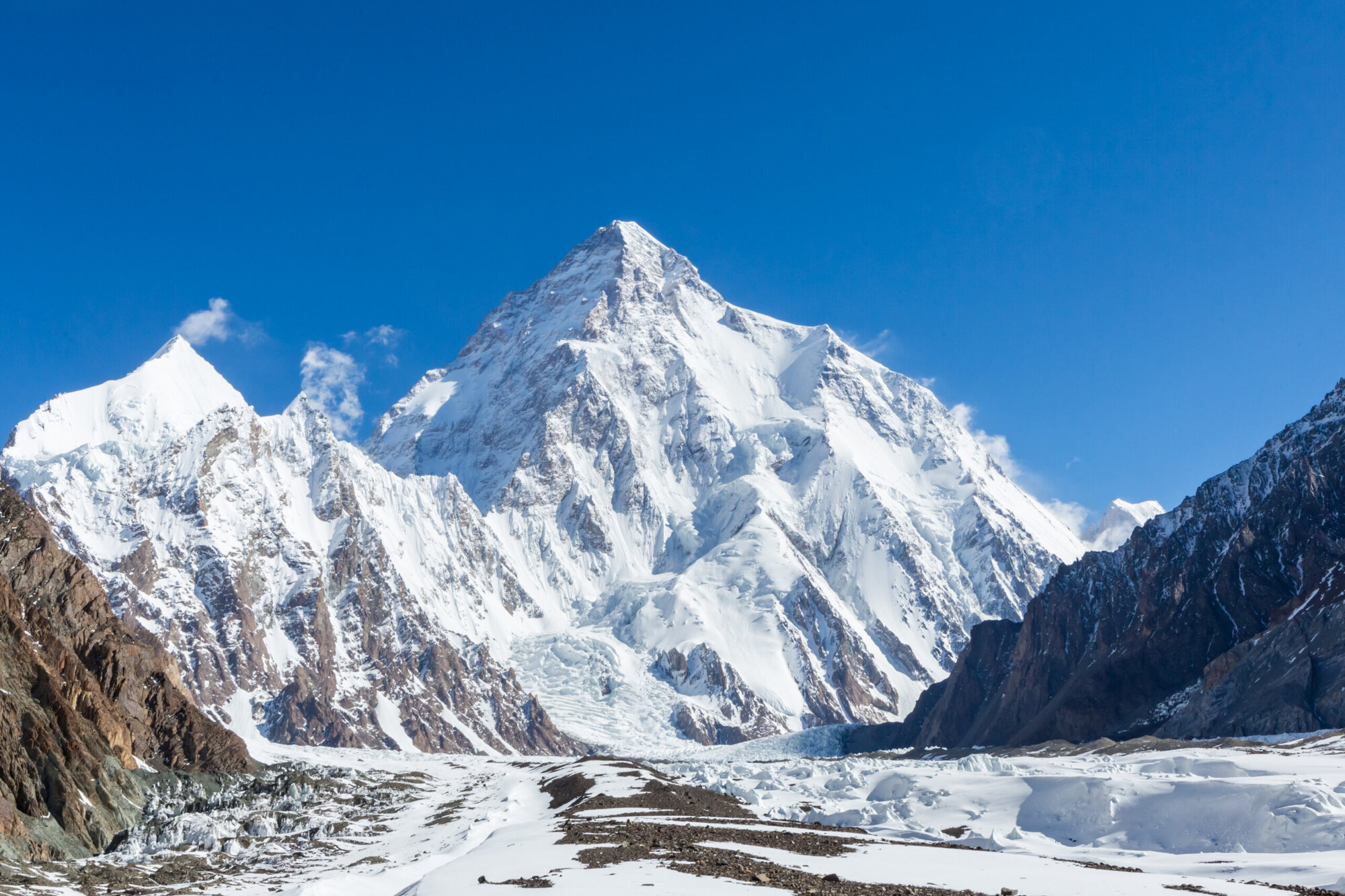
    K2 — the Savage Mountain

    8,611 m · Pakistan / China · First climbed 1954 · Historical fatality rate ~25%
    ~25%
    Fatality rate

    K2 is the second-highest mountain on Earth and the second-deadliest by per-climber fatality rate. Approximately 1 in 4 climbers who summits dies on the mountain (counting descent fatalities). The combination of sustained technical climbing on the standard Abruzzi Spur, the deadly Bottleneck serac at 8,200-8,400 m on summit day, variable Karakoram weather, and limited rescue infrastructure makes K2 the apex of high-altitude danger. The 2008 K2 disaster alone killed 11 climbers in a single day. The full route framework is in our K2 climb guide.

    What separates K2 from other dangerous mountains: every section requires expert technical climbing, and the dangers stack across the entire route rather than being concentrated in one hazardous zone. Even strong climbers with multiple prior 8,000-meter ascents face roughly 1-in-4 odds of not coming home.

    3

    Nanga Parbat — the Killer Mountain

    8,126 m · Pakistan · First climbed 1953 · Historical fatality rate ~20%
    ~20%
    Fatality rate

    Nanga Parbat earned its nickname “the Killer Mountain” during early 20th-century German expeditions when over 30 climbers died attempting the peak before the first successful ascent in 1953 by Hermann Buhl (solo from the high camp). The westernmost of the 8,000-meter peaks, Nanga Parbat features long, technical routes with severe objective hazards including avalanche, rockfall, and unpredictable Karakoram weather. The standard Diamir Face route, while less deadly than early Rupal Face attempts, remains one of the most committed of any 8,000-meter normal route. The full route detail is in our Nanga Parbat route comparison.

    4

    Kangchenjunga — the Five Treasures

    8,586 m · Nepal / India · First climbed 1955 · Historical fatality rate ~15%
    ~15%
    Fatality rate

    Kangchenjunga is the third-highest peak on Earth and the third-highest fatality rate among the major eight-thousanders. The mountain’s remoteness, technical complexity on all standard routes, and the long-traditional respect-the-deity custom of stopping just short of the true summit combine to produce a peak that has killed roughly 1 in 7 climbers historically. Most modern guided expeditions complete the summit, but the per-climber risk remains substantially higher than the more commercial peaks like Everest, Cho Oyu, or Manaslu.

    Ranked by absolute death toll total fatalities

    By raw number of climbers who have died over time, the rankings shift dramatically. Mountains with high traffic accumulate more deaths even when per-climber risk is low. This view shows where the “average” climbing fatality actually happens:

    1

    Mont Blanc — the deadliest by raw count

    4,810 m · France / Italy · First climbed 1786 · Estimated total deaths 6,000-8,000+
    6,000+
    Total deaths

    Mont Blanc has killed more climbers than any other mountain in the world, with estimated cumulative fatalities ranging from 6,000 to over 8,000 over the past two centuries. The high total reflects the mountain’s enormous annual climbing traffic — roughly 30,000 attempts per year on the standard Goûter route alone, with thousands more on adjacent routes. The per-climber fatality rate is very low (well under 0.1%), but the absolute numbers are enormous. The single most-cited hazard is the Goûter Couloir stonefall zone, which French authorities have considered restricting access to. The full route detail is in our Mont Blanc Gouter route expedition breakdown.

    Mont Blanc’s status as “deadliest by total deaths” highlights why per-climber fatality rate is the more useful metric for individual climbers — your personal risk on Mont Blanc is far lower than on Annapurna or K2, despite the higher absolute death count.

    2

    Mount Everest — high traffic, accumulated deaths

    8,849 m · Nepal / Tibet · First climbed 1953 · Total deaths ~340
    ~340
    Total deaths

    Mount Everest has accumulated approximately 340 total deaths since the first attempts in 1921. The per-climber rate is roughly 1 percent — far lower than K2 or Annapurna — but the volume of climbers (over 12,000 successful summits and many more attempts) drives the high absolute total. Most Everest deaths happen in the Death Zone above 8,000 m from altitude-related causes, exhaustion, weather, and the cumulative effects of multi-week expedition fatigue. The 1996 disaster (8 deaths), 2014 Khumbu Icefall avalanche (16 deaths), and 2015 earthquake avalanche (22 deaths) account for clustered high-fatality events. The Everest route framework is in our Everest route comparison.

    3

    The Matterhorn — Alps’ second deadliest

    4,478 m · Switzerland / Italy · First climbed 1865 · Total deaths ~500+
    ~500+
    Total deaths

    The Matterhorn has killed approximately 500 climbers since the first ascent in 1865 (which itself ended in tragedy with four of the seven first-ascensionists dying on the descent). Like Mont Blanc, the Matterhorn’s high absolute death count reflects substantial annual climbing traffic on the Hörnli Ridge — perhaps 3,000-4,000 attempts per year. The technical commitment of the Hörnli Ridge (sustained class 3-4 on loose rock) means falls are typically fatal, accounting for the meaningful per-climber risk on what is otherwise a relatively short single-day climb. The full Matterhorn framework is in our Matterhorn training plan.

    Ranked by technical difficulty the experts’ choice

    Beyond the headline eight-thousanders, several lower-altitude mountains are considered the most difficult climbing objectives in the world by experienced alpinists. These mountains are climbed by far fewer people but represent the absolute apex of mountaineering difficulty:

    1

    K2 — also the hardest by technical difficulty

    8,611 m · Pakistan / China · Combines sustained technical climbing with extreme altitude
    ED1+
    Standard grade

    K2 is unique in being both the most dangerous and the most technically difficult of the eight-thousanders. No other 8,000-meter peak combines sustained ED-grade technical climbing with the altitude and objective hazards K2 presents. The full route framework is in our K2 climbing routes explained guide.

    2

    Cerro Torre — the Patagonian needle

    3,128 m · Argentina · Granite spire with extreme storm exposure · Standard grade ED2
    ~6%
    Fatality rate

    Cerro Torre in Patagonia is one of the most technically demanding mountains in the world. The peak rises from the Patagonian icefields as a near-vertical granite spire, covered in rime ice that climbers must climb through, and exposed to the worst weather in the inhabited world. Despite being only 3,128 m tall — less than half the elevation of major Himalayan peaks — Cerro Torre requires elite technical climbing skills, exceptional weather windows, and acceptance that most attempts will be turned back by storms. The mountain has a roughly 6% per-climber fatality rate among serious attempts. The Patagonia context is in our Patagonia icons collection.

    3

    Gasherbrum IV — the most committed Karakoram climb

    7,925 m · Pakistan · Just below 8,000 m but harder than most 8000ers
    ~15%
    Fatality rate

    Gasherbrum IV is the dramatic granite peak adjacent to the four Gasherbrum eight-thousanders. At 7,925 m it falls just short of the 8,000-meter threshold but is widely considered harder than any of the standard eight-thousander routes. The mountain has been climbed only a handful of times since the first ascent in 1958, with most attempts turning back at the technical sections. The famous Walter Bonatti and Carlo Mauri first ascent has remained one of the great mountaineering achievements of the 20th century.

    4

    The Eiger North Face — the historic killer

    3,967 m · Switzerland · Famous concave north face · Grade ED2
    ~70+
    Total deaths

    The Eiger North Face has killed approximately 70 climbers since attempts began in the 1930s. The famous concave face — visible from Grindelwald village below — combines steep ice climbing, mixed climbing on loose rock, and severe rockfall exposure. The North Face was first climbed in 1938, and despite modern equipment and route knowledge, remains one of the most psychologically demanding climbs in the Alps. The “Murder Wall” nickname earned in the 1930s and 1940s persists in mountaineering culture. The Eiger context is in our greatest Alps mountains compared guide.

    Full comparison how the metrics shift

    MountainElevationPer-climber fatality rateTotal deathsWhy dangerous
    Annapurna I8,091 m~32%~75Avalanche-prone seracs
    K28,611 m~25%~96Technical + altitude + Bottleneck
    Nanga Parbat8,126 m~20%~85Long routes, severe weather
    Kangchenjunga8,586 m~15%~60Remote, technical, complex
    Dhaulagiri I8,167 m~13%~75Avalanche exposure
    Makalu8,485 m~7%~32Technical pyramid summit
    Manaslu8,163 m~6%~85Commercial volume + avalanches
    Cerro Torre3,128 m~6%~18Extreme technical + storms
    Cho Oyu8,188 m~3%~52Easiest 8000er, still serious
    Mount Everest8,849 m~1%~340Volume + Death Zone
    The Matterhorn4,478 m~0.5%~500+Falls on loose rock
    Mont Blanc4,810 m~0.04%6,000-8,000+Volume + Goûter Couloir
    The data inversion worth understanding

    The mountains with the highest per-climber risk (Annapurna, K2) have relatively modest total death counts because so few people attempt them. The mountains with the lowest per-climber risk (Mont Blanc, Matterhorn) have the highest total death counts because so many people attempt them. Neither view tells the whole story alone.

    Why these mountains are particularly dangerous

    The mountains on these lists share several recurring danger patterns that explain why they kill more climbers than other peaks of similar elevation:

    Objective hazards that cannot be avoided

    The most dangerous mountains feature hazards that climber skill cannot fully mitigate. K2’s Bottleneck serac, Annapurna’s south face hanging glaciers, Mont Blanc’s Goûter Couloir stonefall — these are all locations where being there at the wrong moment is fatal regardless of climbing ability. A perfectly skilled climber on Annapurna still faces the same serac collapse risk as a less-experienced one. This category of risk is fundamentally different from “merely difficult” climbing.

    Sustained technical climbing at altitude

    Several mountains combine extreme altitude (above 8,000 m, where climbers operate at 50% or less of sea-level oxygen) with sustained technical climbing throughout the route. K2’s Abruzzi Spur involves class 4-5 climbing for thousands of vertical meters at altitude. A single fall on this terrain is typically fatal. Compare this to Everest’s standard routes, which are mostly walking on snow with limited technical sections — climbers can survive most mistakes on Everest in ways they cannot on K2.

    Variable weather with limited forecasting

    The Karakoram and Patagonian peaks share unpredictable weather patterns that limit climbers’ ability to plan summit windows. K2 and Cerro Torre regularly produce sudden weather shifts that catch climbers high on the mountain with no safe retreat. The Himalayan peaks generally have more predictable weather windows because of better forecasting infrastructure and more consistent monsoon patterns.

    Limited rescue infrastructure

    Even when climbers can be reached, rescue capability varies enormously between mountains. Everest now has helicopter rescue capability to roughly 7,000 m. K2 has no helicopter rescue capability above the lower glaciers. Mont Blanc has world-class PGHM helicopter rescue with rapid response times. Annapurna has limited rescue infrastructure compared to Everest. Where rescue is impossible, an injury or illness that would be survivable elsewhere becomes fatal.

    Cumulative expedition fatigue

    The 8,000-meter peaks require 4-8 week expeditions during which climbers gradually deplete physical reserves. Most fatalities happen on summit day or descent when cumulative fatigue compounds decision-making errors. This is why “the second time up the mountain” (descents) is statistically more dangerous than the ascents on most major peaks.

    How fatality rates have changed over time

    Modern climbing fatality rates are generally lower than historical rates due to better equipment, weather forecasting, and route knowledge. The trends matter for understanding current vs historical risk:

    • Everest: historical rate of roughly 4-5% has dropped to about 1% in modern guided era due to improved oxygen systems, fixed ropes, and Sherpa-supported logistics.
    • K2: historical rate stayed near 25% for decades; modern era has reduced it modestly to around 20-22% but remains catastrophically high.
    • Annapurna: the fatality rate has actually decreased significantly in the modern era, though the avalanche risk that defines the mountain has not changed.
    • Mont Blanc: per-climber rate has been declining steadily but total deaths increase each year due to growing climbing volume.
    • Cerro Torre: modern rate is dramatically lower than 1960s-1980s rate, reflecting improved technical equipment and route knowledge.

    The data should be read carefully: modern fatality rates reflect modern climbing, which includes far more commercial expeditions with high-end logistics. The “average” climber on Everest today is using oxygen, climbing with multiple support staff, on fixed ropes installed by professional rope-fixing teams. The “average” climber on K2 has similar but less extensive support. These are not equivalent comparisons to historical alpine-style attempts. The full death-rate methodology is in our death rates by mountain analysis.

    Who climbs these mountains despite the risk

    An honest question worth addressing: why do climbers attempt mountains with 20-30% fatality rates? The answer is complex and varies by climber:

    • Self-assessment of risk: elite climbers often believe (sometimes correctly) that their skill reduces their per-climber risk below the historical average. A climber who has summited multiple 8,000-meter peaks without incident may have a personal risk closer to 5-10% rather than the population average.
    • The 14 eight-thousanders pursuit: climbers attempting to summit all 14 peaks above 8,000 m must climb Annapurna and K2 regardless of risk. The achievement requires accepting the mountains’ inherent danger.
    • Career-defining objectives: for professional climbers, the most dangerous mountains often produce the most career-defining achievements. The risk is calculated against a different reward structure than recreational climbers face.
    • Experience accumulation: each successful expedition builds judgment that incrementally reduces risk on subsequent climbs. Climbers don’t usually attempt Annapurna as their first 8,000-meter peak.
    A frame for thinking about mountaineering risk

    Most experienced mountaineers do not accept the population-average fatality rate when they climb. They assess their personal skill, experience, conditions, and decision-making against the historical baseline. The honest reality is that climbers do die at rates that would be unacceptable in most other activities, and the climbing community has produced ongoing discussion about whether the risk-to-reward ratio on the most dangerous peaks is justifiable. The framework for evaluating this risk individually sits in our mountaineering for beginners guide and the broader hardest-mountains context in our 10 hardest mountains guide.

    What this means for everyday climbers

    Most readers of this guide are not attempting K2 or Annapurna. The practical takeaways for climbers building toward their own objectives:

    • Per-climber risk drops dramatically as you move down the difficulty list. Mount Rainier (~0.04% fatality rate), Mont Blanc, the Matterhorn, and even Everest are all in a fundamentally different risk category than Annapurna or K2.
    • Acclimatization and altitude management drive most preventable deaths. The mountains kill far more climbers through altitude sickness, hypothermia, and exhaustion than through dramatic falls or avalanches. The altitude framework is in our altitude sickness guide.
    • The progression matters. Climbers who build skills on smaller peaks before attempting harder objectives have meaningfully lower fatality rates than climbers who skip the progression. Each tier of mountains teaches skills the next tier requires.
    • Conditions and timing are bigger drivers than skill. Many fatalities on every mountain reflect climbers in the wrong conditions at the wrong time. Building patience for good weather windows is one of the highest-impact safety habits any climber can develop.
    • Insurance and rescue planning are non-negotiable on the bigger peaks. The framework for high-altitude mountaineering insurance is in our mountaineering insurance comparison.
    ★ Hardest Mountains Master Resources

    The full hardest-mountains framework

    Technical difficulty rankings, climbing logistics, and the broader framework for understanding the world’s hardest mountain objectives.

    10 hardest mountains →

    The bottom line on dangerous mountains

    The most dangerous mountain in the world depends on how you measure danger. By per-climber fatality rate, Annapurna I leads at approximately 32% — nearly 1 in 3 climbers who attempts the summit dies on the mountain. K2 is second at approximately 25%. By absolute death toll, Mont Blanc leads with 6,000 to 8,000+ total fatalities accumulated over two centuries of massive climbing volume. The mountains differ not just in elevation and technical difficulty but in the type of risk they present — Annapurna’s avalanche-prone seracs, K2’s combination of technical climbing and the Bottleneck, Mont Blanc’s high-volume Goûter Couloir, the Eiger’s psychological exposure. Modern climbers have generally lower fatality rates than historical climbers due to improved equipment, forecasting, and rescue infrastructure, but Annapurna and K2 remain catastrophically dangerous regardless of era. The empirical death-rate framework is in our death rates by mountain analysis, with the full hardest-mountains context in our 10 hardest mountains guide.

    Frequently asked questions

    What is the most dangerous mountain in the world?

    Annapurna I in Nepal is widely considered the most dangerous major mountain in the world by fatality rate. Historically, approximately 1 in 3 climbers who attempt Annapurna I dies on the mountain, making it the most lethal of the 14 eight-thousanders. K2 in Pakistan is a close second with a historical death rate of approximately 1 in 4. Nanga Parbat earned the nickname “Killer Mountain” for its high historical fatality rate. The most dangerous mountain by absolute number of deaths is Mont Blanc, which has killed many more total climbers due to massive annual visitor numbers, even though its per-climber risk is far lower.

    What is the deadliest mountain by fatality rate?

    Annapurna I has the highest fatality rate of any major mountain, with roughly 32 percent of climbers who summit dying on the mountain (counting both ascent and descent deaths). K2 is second at approximately 25 percent. These rates are calculated by comparing total deaths to total successful summits. By contrast, Everest’s fatality rate is approximately 1 percent. The fatality rate has decreased over time on most major peaks as climbing technology, weather forecasting, and route knowledge have improved, but Annapurna and K2 remain dramatically more lethal than other 8000-meter peaks.

    How many people have died on Mount Everest?

    Approximately 340 climbers have died on Mount Everest since the first attempts in 1921, making it the mountain with the highest absolute death toll among major peaks. The deaths span over 100 years and roughly 12,000 successful summits, giving a per-climber fatality rate of approximately 1 percent (much lower than K2 or Annapurna). The largest single-day disasters were the 1996 disaster (8 deaths), the 2014 Khumbu Icefall avalanche (16 deaths), and the 2015 earthquake avalanche (22 deaths). Most Everest deaths happen in the Death Zone above 8,000 meters from altitude-related causes, exhaustion, and weather-related accidents.

    What is the hardest mountain to climb?

    K2 is widely considered the hardest of the major 8000-meter peaks to climb due to its combination of sustained technical climbing throughout the route, the deadly Bottleneck serac on the standard Abruzzi Spur, extreme weather in the Karakoram, and limited rescue infrastructure. Beyond the 8000-meter peaks, technical mountains like Cerro Torre in Patagonia, Gasherbrum IV, the Latok ridges, and the unclimbed direct lines on K2 represent the absolute hardest mountaineering objectives. The “hardest” designation depends on whether the metric is altitude, technical difficulty, fatality rate, or some combination.

    Why is Annapurna so dangerous?

    Annapurna I is dangerous primarily because of the avalanche-prone south face that hangs above the standard climbing routes. The mountain has very large hanging seracs that periodically collapse and trigger massive avalanches, with limited ability to predict or avoid them. The north face routes, while less avalanche-exposed, involve steep technical climbing at altitude with serious objective hazards. Unlike many other 8000-meter peaks where the standard route is reasonably safe with proper conditions and timing, Annapurna’s standard routes have inherent serac-fall risk that no climbing skill can fully mitigate.

    Why is K2 more dangerous than Everest?

    K2 is more dangerous than Everest for several reasons: K2 has sustained technical climbing throughout the standard Abruzzi Spur route while Everest’s standard routes are mostly snow travel with limited technical sections; K2 has the deadly Bottleneck serac that has no Everest equivalent; the Karakoram weather is more variable and less forecastable than the Himalaya; and rescue infrastructure on K2 is far less developed with no helicopter rescue capability above the lower glaciers. Per-climber fatality rate on K2 is roughly 25 percent versus 1 percent on Everest, despite both being above 8,000 meters.

    What is the deadliest mountain by total death toll?

    Mont Blanc in the Alps has the highest total death toll of any mountain in the world, with estimated cumulative fatalities ranging from 6,000 to over 8,000 climbers over the past two centuries. The high total reflects the mountain’s massive annual climbing traffic, which exceeds 30,000 attempts per year on the standard route. Mont Blanc’s per-climber fatality rate is very low compared to Himalayan peaks, but the absolute numbers are enormous. Everest is second by total deaths at approximately 340, with K2 having approximately 96 total deaths despite its much higher per-climber rate due to far lower total climber numbers.

    Was this helpful?

    Yes
    No
    Thanks for your feedback!
  • The 14 peaks: complete list of all 8,000-meter mountains

    The 14 Peaks: Complete List of All 8,000-Meter Mountains (with Heights and Locations) | Global Summit Guide
    Mountain Lists / Eight-Thousanders

    The 14 peaks: complete list of all 8,000-meter mountains

    14
    Peaks above 8,000m
    8,849 m
    Everest high point
    8,027 m
    Shishapangma low
    < 50
    Climbers completed all 14
    ★ Part of the Eight-Thousanders series This list summary supports our comprehensive 14 Eight-Thousanders complete guide covering routes, history, difficulty, and climbing logistics for every peak. Full guide →

    The 14 peaks — also called the eight-thousanders, the 14 summits, or simply “the 8000ers” — are the mountains on Earth above 8,000 meters in elevation. All 14 are in Asia, distributed across the Himalaya and Karakoram ranges through Nepal, Tibet (China), Pakistan, and the disputed Kashmir region. Climbing all 14 is one of the rarest achievements in mountaineering, accomplished by fewer than 50 climbers in history. This is the complete list with heights, locations, first ascents, and the relative difficulty climbers use to plan their progression. For detailed route guides on individual peaks, see our complete guide to every eight-thousander.

    The 14 peaks in order of height

    1

    Mount Everest

    Location: Nepal / Tibet · Range: Mahalangur Himalaya · First ascent: May 29, 1953 by Edmund Hillary and Tenzing Norgay
    8,849 m
    29,032 ft

    The highest point on Earth and the most-climbed eight-thousander. Standard routes via the South Col (Nepal) and the North Ridge (Tibet) operate as large commercial expeditions during the spring season. See our Everest route comparison.

    2

    K2

    Location: Pakistan / China (Kashmir disputed) · Range: Karakoram · First ascent: July 31, 1954 by Achille Compagnoni and Lino Lacedelli
    8,611 m
    28,251 ft

    “The Savage Mountain.” Second-highest peak in the world but widely considered the hardest of the eight-thousanders. The Abruzzi Spur is the standard route. See our K2 climb guide and K2 route comparison.

    3

    Kangchenjunga

    Location: Nepal / India (Sikkim) · Range: Himalaya · First ascent: May 25, 1955 by George Band and Joe Brown
    8,586 m
    28,169 ft

    The “Five Treasures of the Snow.” Third-highest peak in the world. The first ascent team stopped just short of the true summit out of respect for local religious beliefs — a tradition climbers have continued for decades.

    4

    Lhotse

    Location: Nepal / Tibet · Range: Mahalangur Himalaya · First ascent: May 18, 1956 by Ernst Reiss and Fritz Luchsinger
    8,516 m
    27,940 ft

    Shares the lower portion of Everest’s South Col route — the two peaks are often climbed back-to-back by guided expeditions. See our Lhotse climb guide.

    5

    Makalu

    Location: Nepal / Tibet · Range: Mahalangur Himalaya · First ascent: May 15, 1955 by Lionel Terray and Jean Couzy
    8,485 m
    27,838 ft

    The distinctive four-sided pyramid east of Everest. Considered one of the more technically demanding eight-thousanders despite its standard route. Lower commercial traffic than the nearby Everest-Lhotse-Cho Oyu peaks. See our Makalu permits and cost guide.

    6

    Cho Oyu

    Location: Nepal / Tibet · Range: Mahalangur Himalaya · First ascent: October 19, 1954 by Herbert Tichy, Joseph Jöchler, Pasang Dawa Lama
    8,188 m
    26,864 ft

    Widely considered the easiest of the eight-thousanders and the standard “first 8000er” for climbers progressing toward Everest. The Tibetan north side is the commercial route, though Chinese-side access has varied with geopolitics. See our Cho Oyu climb guide.

    7

    Dhaulagiri I

    Location: Nepal · Range: Himalaya · First ascent: May 13, 1960 by Kurt Diemberger, Peter Diener, Nawang Dorje, Nima Dorje, Albin Schelbert, Ernst Forrer
    8,167 m
    26,795 ft

    “The White Mountain.” Famous for being the first peak ever supported by aerial deposits during a first ascent. Lower commercial popularity than the eastern Nepalese giants but a regular target for serious climbers. See our Dhaulagiri climb guide.

    8

    Manaslu

    Location: Nepal · Range: Himalaya · First ascent: May 9, 1956 by Toshio Imanishi and Gyalzen Norbu
    8,163 m
    26,781 ft

    “Mountain of the Spirit.” Has become the most popular alternative to Cho Oyu as a first eight-thousander since Chinese-side access tightened. The autumn season sees substantial commercial traffic on the standard northeast route.

    9

    Nanga Parbat

    Location: Pakistan · Range: Western Himalaya · First ascent: July 3, 1953 by Hermann Buhl (solo final push)
    8,126 m
    26,660 ft

    “The Killer Mountain.” Westernmost of the eight-thousanders and historically one of the deadliest. The Diamir face is the standard route. See our Nanga Parbat route comparison.

    10

    Annapurna I

    Location: Nepal · Range: Himalaya · First ascent: June 3, 1950 by Maurice Herzog and Louis Lachenal
    8,091 m
    26,545 ft

    The first eight-thousander ever climbed (in 1950) and the one with the highest death rate of all 14 peaks. The standard north face route is heavily exposed to serac fall. Annapurna remains feared even among elite high-altitude mountaineers.

    11

    Gasherbrum I (Hidden Peak)

    Location: Pakistan / China · Range: Karakoram · First ascent: July 5, 1958 by Andy Kauffman and Pete Schoening
    8,080 m
    26,509 ft

    The 11th eight-thousander and the highest peak in the Gasherbrum massif. Climbed via the Japanese Couloir on the southwest face. Often combined with Gasherbrum II as a Karakoram double-summit expedition.

    12

    Broad Peak

    Location: Pakistan / China · Range: Karakoram · First ascent: June 9, 1957 by Marcus Schmuck, Fritz Wintersteller, Kurt Diemberger, Hermann Buhl
    8,051 m
    26,414 ft

    Named for its expansive summit ridge. The standard west face route shares base camp with K2, allowing acclimatization climbs for K2 expeditions. Considered one of the more accessible Karakoram eight-thousanders.

    13

    Gasherbrum II

    Location: Pakistan / China · Range: Karakoram · First ascent: July 7, 1956 by Fritz Moravec, Hans Willenpart, Sepp Larch
    8,035 m
    26,362 ft

    The most-climbed Karakoram eight-thousander and considered the easiest of the four Pakistani 8000ers. Shares the Gasherbrum base camp with GI, making it a logical companion peak for stronger parties.

    14

    Shishapangma

    Location: Tibet (China) · Range: Himalaya · First ascent: May 2, 1964 by Xu Jing and Chinese team of 10
    8,027 m
    26,335 ft

    The 14th and lowest eight-thousander. The only one located entirely in Tibet (China) with no Nepal or Pakistan border. Was the last 8000m peak first-ascended due to Chinese restrictions on foreign climbers. Has a true summit and a slightly lower central summit, which has caused confusion about valid ascents.

    Key facts about the 14 peaks

    The big-picture stats

    All 14 peaks are in Asia. All 14 are in either the Himalaya or the Karakoram. The tallest is Everest at 8,849 m. The shortest is Shishapangma at 8,027 m. The difference between the tallest and shortest is just 822 m. Fewer than 50 climbers have completed all 14. The first to do so was Reinhold Messner in 1986.

    StatisticDetail
    Total number of 8000m peaks14
    TallestMount Everest (8,849 m)
    ShortestShishapangma (8,027 m)
    First climbedAnnapurna I (1950)
    Last first-ascendedShishapangma (1964)
    Highest death rateAnnapurna I
    Considered easiestCho Oyu (with current access limitations: Manaslu)
    Considered hardestK2, Annapurna I, Nanga Parbat (debated)
    First to climb all 14Reinhold Messner (1986)
    Fastest known time all 14Nirmal Purja (6 months, 6 days, 2019)
    Climbers completed all 14Fewer than 50

    Where the 14 peaks are by country

    CountryNumber of 8000ersWhich ones
    Nepal (entirely or partially)8Everest, Kangchenjunga, Lhotse, Makalu, Cho Oyu, Dhaulagiri I, Manaslu, Annapurna I
    Pakistan (entirely or partially)5K2, Nanga Parbat, Gasherbrum I, Broad Peak, Gasherbrum II
    China / Tibet (entirely or partially)9Everest, K2, Lhotse, Makalu, Cho Oyu, Shishapangma, Gasherbrum I, Broad Peak, Gasherbrum II
    India (Kangchenjunga only)1Kangchenjunga (Sikkim side)
    Entirely in one country5Nepal: Dhaulagiri, Manaslu, Annapurna; Pakistan: Nanga Parbat; Tibet: Shishapangma

    The political geography matters because climbing permits, costs, and logistics depend heavily on which country issues the permit. Nepal hosts the most accessible permit regime for foreign climbers, particularly for Everest, Lhotse, Manaslu, and Annapurna. Pakistan offers lower-cost permits for the Karakoram peaks but more complicated visa logistics. Tibet (China) periodically tightens or loosens access for foreign expeditions, with Cho Oyu and Shishapangma typically requiring more advance planning. The full Everest-region context is in our Everest route comparison, and the K2 cost framework is in our K2 climb guide.

    The 14 peaks by climbing difficulty

    The order of difficulty among the eight-thousanders is debated and depends heavily on the chosen route and season. A widely-accepted general ordering for the standard commercial routes, from most accessible to most difficult:

    TierPeakWhy
    Most accessibleCho OyuGentle glaciated slopes, well-established route
    AccessibleManasluStandard commercial route, autumn season
    AccessibleEverest (commercial)Highly resourced but altitude-driven challenge
    ModerateLhotse, Gasherbrum IISolid commercial routes, manageable technical difficulty
    Moderate to hardBroad Peak, DhaulagiriMore objective hazards, less infrastructure
    HardMakalu, Shishapangma, Gasherbrum IGreater technical and route-finding demands
    Very hardKangchenjunga, Nanga ParbatLong, complex routes; high objective danger
    HardestK2, Annapurna IExtreme technical difficulty + high death rate

    This ordering is a general framework, not a strict ranking. Individual seasons can completely change the relative difficulty — a heavy snow year on Annapurna creates much higher avalanche risk, while an unusually dry year on Cho Oyu can expose ice that adds technical difficulty. The cumulative difficulty across all 14 peaks is what makes the full completion such a rare achievement. The broader hardest-mountains context is in our 10 hardest mountains to climb and the death-rate framework is in our death rates by mountain analysis.

    Notable climbers of the 14 peaks

    The list of climbers who have completed all 14 eight-thousanders is short and historically significant:

    • Reinhold Messner (Italy, 1986) — first to complete all 14, and first to do so without supplemental oxygen.
    • Jerzy Kukuczka (Poland, 1987) — second to complete, multiple new routes and winter ascents.
    • Erhard Loretan (Switzerland, 1995) — third to complete, exclusively without supplemental oxygen.
    • Edurne Pasaban (Spain, 2010) — first woman to complete all 14 (verification debated for some ascents).
    • Gerlinde Kaltenbrunner (Austria, 2011) — first woman to complete all 14 without supplemental oxygen.
    • Nirmal “Nims” Purja (Nepal, 2019) — fastest known time, all 14 in 6 months and 6 days. Featured in the documentary “14 Peaks: Nothing Is Impossible.”
    • Kristin Harila (Norway, 2023) — broke Purja’s speed record, all 14 in 92 days.

    The 14 peaks completion list grows slowly. Of those who have attempted it, most expeditions end on the harder peaks — particularly K2, Annapurna, and Nanga Parbat. The combination of cost (potentially over $500,000 USD for a complete tour), time commitment (most completers take 7-15 years), and survival probability (multiple climbers have died on their last few peaks) keeps the achievement rare even as commercial expedition support has expanded. The framework for understanding this scale of objective is in our top 50 technical mountaineering objectives.

    The peaks that just miss the list

    Several mountains exceed 8,000 m in elevation but are not counted in the standard 14 because they are considered subsidiary summits of larger massifs rather than independent peaks. The most commonly discussed of these “near-misses”:

    • Yalung Kang (8,505 m) — western summit of Kangchenjunga.
    • Lhotse Middle (8,410 m) — middle summit of the Lhotse massif.
    • Lhotse Shar (8,383 m) — eastern summit of the Lhotse massif.
    • Kangchenjunga South (8,494 m) — south summit of Kangchenjunga.
    • Kangchenjunga Central (8,482 m) — central summit of Kangchenjunga.
    • Broad Peak Central (8,011 m) — central summit of Broad Peak.

    The line between “independent peak” and “subsidiary summit” depends on topographic prominence — the elevation a peak rises above the lowest col that connects it to a higher peak. The standard threshold for an independent eight-thousander is roughly 500 m of prominence, which excludes the subsidiary summits above. If you used a stricter prominence threshold, the list could be smaller; with a looser threshold, several subsidiary summits would qualify. The 14 peaks list reflects the most widely accepted convention.

    ★ Eight-Thousanders Master Guide

    Routes, history, and difficulty for every peak

    The complete deep guide to all 14 eight-thousanders: route comparisons, first-ascent history, climbing logistics, and the broader Himalaya and Karakoram context.

    Read the full guide →

    How climbers progress toward the eight-thousanders

    The 14 peaks are not entry-level objectives. The standard progression that climbers follow before attempting any eight-thousander typically takes 5-15 years and includes a sequence of progressively harder mountains. The general framework:

    1. Foundational glaciated peaks: Cascade volcanoes (Hood, Rainier), Mexican volcanoes (Pico de Orizaba, Iztaccíhuatl). Framework in our mountaineering for beginners guide.
    2. First 5,000-meter peak: Mount Elbrus or Cotopaxi as the introduction to high-altitude glaciated climbing.
    3. First 6,000-meter peak: Aconcagua or Denali as the next step. See our Aconcagua season guide.
    4. First 7,000-meter peak: typically Aconcagua followed by a Himalayan 7000m peak like Spantik, Khan Tengri, or Mount Manaslu’s lower trekking peaks.
    5. First 8,000-meter peak: usually Cho Oyu or Manaslu. The introduction to true Himalayan expedition climbing.
    6. Everest and beyond: the standard high-volume commercial objective, followed by individual eight-thousanders pursued one at a time based on personal goals.

    Climbers pursuing the full 14 typically have completed several eight-thousanders before formally committing to the all-14 goal. The cost framework, training timeline, and broader expedition planning context that supports this progression is in our full eight-thousanders guide, with the next-step framework in our intermediate climbing guide.

    The bottom line on the 14 peaks

    The 14 eight-thousanders represent the highest mountains on Earth and the highest tier of mountaineering objectives. All 14 are in Asia, distributed across the Himalaya and Karakoram, with Nepal hosting the largest share. The list has been climbed in its entirety by fewer than 50 people in human history, with the first complete ascent by Reinhost Messner in 1986 and the current speed record held by Kristin Harila at 92 days. For climbers building toward 8,000-meter objectives, the standard progression starts with smaller glaciated peaks, builds through 5,000 to 7,000 meter mountains, and graduates to Cho Oyu or Manaslu as the first true eight-thousander. The full route framework, expedition logistics, and historical context for each peak is in our complete eight-thousanders guide.

    Frequently asked questions

    What are the 14 peaks?

    The 14 peaks, also called the eight-thousanders or 14 summits, are the mountains on Earth above 8,000 meters (26,247 feet) in elevation. All 14 are located in the Himalaya and Karakoram ranges of Asia, distributed across Nepal, China (Tibet), Pakistan, and the disputed Kashmir region. The 14 peaks in order of height are: Mount Everest, K2, Kangchenjunga, Lhotse, Makalu, Cho Oyu, Dhaulagiri I, Manaslu, Nanga Parbat, Annapurna I, Gasherbrum I, Broad Peak, Gasherbrum II, and Shishapangma.

    How many 8000m peaks are there?

    There are exactly 14 mountains on Earth above 8,000 meters in elevation. The number is fixed because it depends on the definition of what counts as an independent peak, which is generally measured by topographic prominence. Mountains like Lhotse Middle (8,410 m) or Yalung Kang (8,505 m) exceed 8,000 m in height but are considered subsidiary summits of larger massifs (Lhotse and Kangchenjunga respectively) and are not counted in the standard list of 14.

    Who climbed all 14 eight-thousanders first?

    Reinhold Messner of Italy became the first person to climb all 14 eight-thousanders in 1986 when he summited Lhotse on October 16. Messner climbed all 14 peaks without supplemental oxygen, which remains a defining accomplishment in mountaineering history. The second person to complete the list was Jerzy Kukuczka of Poland in 1987. As of the most recent counts, fewer than 50 climbers have completed the 14 eight-thousanders. The fastest known time for completing all 14 is held by Nirmal Purja, who climbed all 14 in 6 months and 6 days in 2019.

    What is the 14th peak?

    Shishapangma at 8,027 meters (26,335 feet) is the 14th and lowest of the eight-thousanders. Located entirely in Tibet (China), Shishapangma is the only 8000-meter peak not partially in Nepal or Pakistan. It was the last 8000-meter peak to be first ascended, summited by a Chinese team led by Xu Jing in 1964. The mountain has a true main summit and a slightly lower central summit, which has caused historical confusion in determining true ascents of the peak.

    How hard are the 14 peaks to climb?

    The 14 peaks range from technically moderate to extreme depending on route and conditions. The easier eight-thousanders for guided commercial ascents include Cho Oyu, Manaslu, and the trade routes on Everest, Lhotse, and Dhaulagiri. The harder ones for technical difficulty and death rate include K2, Annapurna I, Nanga Parbat, and Kangchenjunga. Annapurna I has the highest death rate of any 8000m peak, while Everest has the largest number of total deaths due to the volume of climbers. All 14 are serious objectives that require multi-week expeditions, significant prior altitude experience, and substantial financial investment.

    Where are the 14 eight-thousanders located?

    All 14 eight-thousanders are located in two adjacent mountain systems in Asia: the Himalaya and the Karakoram. The Himalayan eight-thousanders include Everest, Kangchenjunga, Lhotse, Makalu, Cho Oyu, Dhaulagiri I, Manaslu, Nanga Parbat, Annapurna I, and Shishapangma, distributed across Nepal, Tibet (China), and the western Himalaya in Pakistan. The Karakoram eight-thousanders are K2, Gasherbrum I, Broad Peak, and Gasherbrum II, all located in northern Pakistan and the disputed Kashmir region. No 8000m peaks exist outside this region of Asia.

    How much does it cost to climb an 8000-meter peak?

    Costs for climbing 8000-meter peaks vary dramatically by mountain, country, and service level. Mount Everest from Nepal currently ranges from roughly $45,000 to $130,000 per climber depending on operator and oxygen plan. Less popular peaks like Cho Oyu, Manaslu, and the Pakistani eight-thousanders typically range from $15,000 to $40,000. Permit fees alone range from $250 (Pakistan summer season) to over $11,000 (Everest South Side). Add international flights, equipment, training, and insurance for a full expedition budget.

    Was this helpful?

    Yes
    No
    Thanks for your feedback!
Language »