Global Summit Guide logo featuring mountain imagery, symbolizing hiking and mountaineering resources for trip planning and safety.
Quick facts
Elevation8,188 m
LocationNepal
RangeHimalaya
Coordinates28.0942, 86.6608
Type8000er

Last updated July 20, 2026

{ “@context”:”https://schema.org”, “@type”:”Article”, “headline”:”Cho Oyu Difficulty & Death Rate 2026: How Hard Is It Really?”, “description”:”The real difficulty of Cho Oyu, the easiest and safest of the fourteen 8000ers, its ~1.4% fatality rate, why it is still a serious death-zone climb, and who is ready for it.”, “author”:{“@type”:”Person”,”name”:”Travis Ludlow”,”jobTitle”:”Founder & Head of Research, Global Summit Guide”,”url”:”https://globalsummitguide.com/about/”}, “publisher”:{“@type”:”Organization”,”name”:”Global Summit Guide”,”url”:”https://globalsummitguide.com/”,”logo”:{“@type”:”ImageObject”,”url”:”https://globalsummitguide.com/wp-content/uploads/2026/02/global-logo-new-2.png”}}, “datePublished”:”2026-07-15″, “dateModified”: “2026-07-20T20:28:11+00:00”, “mainEntityOfPage”:”https://globalsummitguide.com/mountains//-cho-oyu-climb-guide-nepal-tibet/cho-oyu-difficulty-safety/”, “articleSection”:”Difficulty & Safety”, “image”:[“https://globalsummitguide.com/wp-content/uploads/2026/04/AdobeStock_1938053091-scaled.jpeg”], “keywords”:[“Cho Oyu death rate”,”Cho Oyu difficulty”,”how hard is Cho Oyu”,”easiest 8000er”,”Cho Oyu fatality rate”] } { “@context”:”https://schema.org”, “@type”:”BreadcrumbList”, “itemListElement”:[ {“@type”:”ListItem”,”position”:1,”name”:”Home”,”item”:”https://globalsummitguide.com/”}, {“@type”:”ListItem”,”position”:2,”name”:”Mountains”,”item”:”https://globalsummitguide.com/mountains///”}, {“@type”:”ListItem”,”position”:3,”name”:”Cho Oyu”,”item”:”https://globalsummitguide.com/mountains//-cho-oyu-climb-guide-nepal-tibet/”}, {“@type”:”ListItem”,”position”:4,”name”:”Difficulty & Death Rate”} ] } { “@context”:”https://schema.org”, “@type”:”FAQPage”, “mainEntity”:[ {“@type”:”Question”,”name”:”How hard is Cho Oyu to climb?”,”acceptedAnswer”:{“@type”:”Answer”,”text”:”Cho Oyu is the least technical of the fourteen 8000ers, often described as a guided walk-up with one steep step. The standard Northwest Ridge from Tibet holds slope angles around 30 degrees with no vertical rock or ice, and the only real technical section is the Yellow Band, a rock-and-ice step near 7,000 m that is climbed on fixed ropes. The difficulty is the altitude, not the terrain: it is still 8,188 m, in the death zone, on a 30-40 day expedition that demands prior 7,000 m experience. Easiest of the 8000ers is not the same as easy.”}}, {“@type”:”Question”,”name”:”How many people have died on Cho Oyu?”,”acceptedAnswer”:{“@type”:”Answer”,”text”:”Around 50 climbers have died on Cho Oyu against roughly 3,600 summits, a death-to-summit ratio of about 1.4% – the lowest of any 8000 m peak. For comparison, K2 runs near 23% and Annapurna near 27% on an all-time basis. Cho Oyu’s deaths come mostly from altitude illness, falls on the descent, avalanche and serac collapse near Camp 2, and weather, rather than from hard climbing.”}}, {“@type”:”Question”,”name”:”Why is Cho Oyu the safest and easiest 8000er?”,”acceptedAnswer”:{“@type”:”Answer”,”text”:”Several things line up: the standard route has moderate gradients and few objective hazards, the approach from Tibet gives an unusually good acclimatisation profile with a high Advanced Base Camp and only three camps to the summit, the post-monsoon weather is relatively stable, and the mountain has decades of commercial infrastructure with strong Sherpa support and fixed ropes. Together these produce both the lowest fatality rate and the highest summit success of the 8000ers.”}}, {“@type”:”Question”,”name”:”Is Cho Oyu actually dangerous?”,”acceptedAnswer”:{“@type”:”Answer”,”text”:”Yes. Safest of the 8000ers still means a real death rate and real deaths every few seasons. Above 8,000 m the body is dying, high-altitude pulmonary and cerebral oedema can strike anyone, the serac barrier below Camp 2 has killed climbers, and most fatalities happen on the tired descent. The low technical grade is itself a hazard because it draws climbers who underestimate a death-zone expedition. Cho Oyu is the most forgiving 8000er, not a safe one.”}}, {“@type”:”Question”,”name”:”Do you need Tibet access to climb Cho Oyu?”,”acceptedAnswer”:{“@type”:”Answer”,”text”:”For the standard route, yes. The commercial Northwest Ridge is climbed from the Tibetan side, which means Chinese permits and overland travel from Kathmandu via the Friendship Highway. China has closed Tibet to foreign climbers during politically sensitive periods and around the pandemic, and when it is shut, climbers switch to Manaslu in Nepal as the substitute first 8000er. In practice, securing access can be the hardest part of a Cho Oyu expedition, so verify current Tibet status before committing to dates.”}}, {“@type”:”Question”,”name”:”What experience do you need before Cho Oyu?”,”acceptedAnswer”:{“@type”:”Answer”,”text”:”Cho Oyu is a first 8000er, not a first big mountain. Climbers should arrive with a prior 7,000 m summit – Chinese permitting formally requires proof of one – plus solid crampon, fixed-line, and glacier skills built on peaks like Aconcagua, Denali, or Himalayan 6,000ers. The right progression matters more than raw fitness: climbers who reach Cho Oyu through a proper ladder of altitude experience summit safely, while those who skip steps make up much of its accident record.”}} ] } @import url(‘https://fonts.googleapis.com/css2?family=Outfit:wght@300;400;500;600;700&family=DM+Serif+Display:ital@0;1&display=swap’); .cod-page{font-family:’Outfit’,sans-serif;color:#122a44;line-height:1.68;margin:0 auto;padding:0} .cod-page *{box-sizing:border-box} .cod-page h1,.cod-page h2,.cod-page h3{font-family:’DM Serif Display’,serif;font-weight:400;color:#091a2d;line-height:1.16} .cod-page p{font-size:1.02rem;margin:0 0 1.08em} .cod-page a{color:#245c8e;text-decoration:none;border-bottom:1px solid #b9cad9} .cod-page a:hover{color:#c8812d;border-bottom-color:#c8812d} .cod-hero{overflow:hidden;border-radius:14px;background:#081826;color:#fff;margin-bottom:18px} .cod-hero img{width:100%;height:465px;object-fit:cover;display:block} .cod-hero-copy{padding:36px 39px;background:linear-gradient(135deg,rgba(5,20,33,.97),rgba(28,74,110,.9))} .cod-kicker{font-size:.82rem;color:#e3a249;text-transform:uppercase;letter-spacing:1.8px;font-weight:700;margin-bottom:10px} .cod-hero h1{color:#fff!important;font-size:2.02rem;margin:0 0 14px} .cod-hero h1 em{color:#e3a249;font-style:italic} .cod-hero p{color:#edf5fb;font-size:1.06rem;max-width:960px;margin:0} .cod-byline{background:#f7f3e9;border:1px solid #e4d5af;border-radius:9px;padding:15px 20px;margin:18px 0} .cod-byline-top{display:flex;justify-content:space-between;gap:12px;flex-wrap:wrap} .cod-author{font-weight:700;color:#0a1c30} .cod-author a{border-bottom:none} .cod-meta{font-size:.82rem;color:#74684e} .cod-credentials{border-top:1px solid #e4d5af;margin-top:8px;padding-top:8px;font-size:.84rem;color:#5e543e;font-style:italic} .cod-credentials strong{color:#0a1c30;font-style:normal} .cod-verdict{background:linear-gradient(135deg,#102e49,#1c4a6e);color:#fff;border:4px solid #d58a32;border-radius:14px;padding:29px 34px;margin:24px 0;box-shadow:0 8px 24px rgba(10,34,55,.28)} .cod-verdict h2{color:#fff!important;margin:0 0 12px!important;font-size:1.42rem!important} .cod-verdict p{color:#fff;margin-bottom:10px} .cod-verdict strong{color:#ffd683} .cod-tag{display:inline-block;background:#d58a32;color:#071a2c;padding:4px 11px;border-radius:5px;text-transform:uppercase;letter-spacing:.6px;font-size:.76rem;font-weight:700;margin-bottom:11px} .cod-stats{display:grid;grid-template-columns:repeat(5,1fr);gap:11px;background:#091a2d;padding:20px;border-radius:11px;margin:22px 0} .cod-stat{background:#143453;border:1px solid #d58a32;border-radius:8px;padding:14px 10px;text-align:center} .cod-stat strong{display:block;font-family:’DM Serif Display’,serif;color:#e6a750;font-size:1.18rem;line-height:1.05} .cod-stat span{display:block;color:#ecf4fa;font-size:.68rem;text-transform:uppercase;letter-spacing:.45px;margin-top:5px} .cod-toc{background:#f7f3e9;border:1px solid #e4d5af;border-radius:10px;padding:19px 24px;margin:23px 0} .cod-toc strong{font-family:’DM Serif Display’,serif;font-size:1.1rem;color:#091a2d} .cod-toc ol{columns:2;column-gap:30px;padding-left:22px;margin:10px 0 0} .cod-toc li{font-size:.9rem;margin-bottom:5px} .cod-section{background:linear-gradient(135deg,#102e49,#1c4a6e);border-left:8px solid #d58a32;color:#fff;border-radius:12px;padding:27px 31px;margin:42px 0 23px;box-shadow:0 6px 18px rgba(18,42,68,.24)} .cod-section h2{color:#e6a750!important;font-size:1.72rem!important;margin:0 0 6px!important} .cod-section h2 em{color:#ffd683;font-style:italic} .cod-section p{color:#edf5fb;margin:0;font-size:.95rem} .cod-content h3{font-size:1.26rem;margin:26px 0 9px} .cod-info,.cod-warning,.cod-danger{padding:16px 20px;border-radius:7px;margin:20px 0;font-size:.94rem} .cod-info{background:#e7f0f8;border-left:5px solid #245c8e} .cod-warning{background:#fdf2e3;border-left:5px solid #b96a18} .cod-danger{background:#f9e5e1;border-left:5px solid #a63e32} .cod-info strong,.cod-warning strong,.cod-danger strong{display:block;margin-bottom:5px;color:#091a2d} .cod-grid{display:grid;grid-template-columns:1fr 1fr;gap:15px;margin:18px 0} .cod-box{background:#fff;border:1px solid #e3d8bd;border-radius:10px;padding:18px 20px;box-shadow:0 2px 10px rgba(34,64,92,.07)} .cod-box h3{font-size:1.1rem;margin:0 0 8px} .cod-box p{font-size:.91rem;margin:0} .cod-photo{margin:24px 0 28px;background:#091a2d;border-radius:12px;overflow:hidden;border:1px solid #d58a32;box-shadow:0 7px 22px rgba(18,42,68,.18)} .cod-photo img{display:block;width:100%;height:430px;object-fit:cover} .cod-photo figcaption{padding:12px 16px;color:#eaf2f8;font-size:.82rem;line-height:1.45} .cod-table-wrap{overflow-x:auto;margin:18px 0} .cod-table{width:100%;border-collapse:collapse;min-width:600px;font-size:.88rem;border:1px solid #e3d8bd} .cod-table th{background:#091a2d;color:#fff;text-align:left;padding:10px 12px;font-size:.76rem} .cod-table td{padding:10px 12px;border-top:1px solid #eee5d2;vertical-align:top;color:#394c5e} .cod-table tr:nth-child(even) td{background:#faf7ef} .cod-table td:first-child{font-weight:700;color:#091a2d} .cod-table .safe td{background:#eef7ee!important} .cod-table .safe td:first-child{color:#2e7d32} .cod-map{border:1px solid #e3d8bd;border-radius:12px;overflow:hidden;margin:20px 0;box-shadow:0 3px 12px rgba(34,64,92,.08)} .cod-map iframe{display:block;width:100%;height:420px;border:0} .cod-map-legend{background:#091a2d;color:#eaf2f8;padding:11px 16px;font-size:.8rem;display:flex;flex-wrap:wrap;gap:16px} .cod-map-legend span{display:inline-flex;align-items:center;gap:6px} .cod-dot{width:11px;height:11px;border-radius:50%;display:inline-block} .cod-weather{background:#0d2136;border:1px solid #d58a32;border-radius:12px;padding:20px 22px;margin:20px 0;color:#eaf2f8} .cod-weather h3{color:#e6a750;margin:0 0 4px;font-size:1.2rem} .cod-weather .cod-wx-sub{font-size:.82rem;color:#b9cad9;margin-bottom:14px} .cod-wx-grid{display:grid;grid-template-columns:repeat(7,1fr);gap:8px} .cod-wx-day{background:#143453;border:1px solid #24507c;border-radius:8px;padding:10px 6px;text-align:center} .cod-wx-day .d{font-size:.7rem;text-transform:uppercase;letter-spacing:.4px;color:#b9cad9} .cod-wx-day .ic{font-size:1.5rem;margin:5px 0;line-height:1} .cod-wx-day .hi{font-family:’DM Serif Display’,serif;color:#e6a750;font-size:1.02rem} .cod-wx-day .lo{color:#9fb4c7;font-size:.82rem} .cod-wx-day .wind{color:#8aa2b6;font-size:.66rem;margin-top:3px} .cod-wx-note{font-size:.78rem;color:#b9cad9;margin-top:12px;line-height:1.5} .cod-wx-loading{padding:20px;text-align:center;color:#b9cad9;font-size:.9rem} .cod-checklist{background:#f7f3e9;border:1px solid #e4d5af;border-radius:10px;padding:20px 23px;margin:20px 0} .cod-checklist ul{list-style:none;margin:0;padding:0;columns:2;column-gap:28px} .cod-checklist li{break-inside:avoid;margin:0 0 8px;padding-left:25px;position:relative;font-size:.9rem} .cod-checklist li:before{content:”2610″;position:absolute;left:0;color:#b96a18;font-size:1.1rem;top:-2px} .cod-faq{background:#f7f3e9;border-radius:8px;margin-bottom:10px;padding:14px 18px} .cod-faq h3{font-size:1.06rem;margin:0 0 7px} .cod-faq p{font-size:.94rem;margin:0} .cod-travel{background:linear-gradient(135deg,#fff8e8,#f7ecce);border:2px solid #d58a32;border-radius:12px;padding:23px 25px;margin:27px 0} .cod-travel h3{margin:0 0 8px;color:#9d5917} .cod-method{background:#f1f5f8;border:1px solid #cbd9e5;border-radius:10px;padding:21px 24px;margin:28px 0} .cod-method h3{margin:0 0 9px} .cod-authorbio{display:flex;gap:21px;align-items:flex-start;background:linear-gradient(135deg,#f7f3e9,#fbf8f0);border:2px solid #d58a32;border-radius:12px;padding:25px 28px;margin:30px 0} .cod-authorpic{width:100px;height:100px;flex:0 0 100px;border-radius:50%;border:3px solid #d58a32;background:url(‘https://globalsummitguide.com/wp-content/uploads/2026/03/561db5f8-15bb-43d8-9eba-251a8c35f89f.jpg’) center/cover} .cod-authorbio h3{margin:0 0 3px} .cod-authorrole{color:#ad641b;font-weight:700;font-style:italic;font-size:.9rem;margin-bottom:8px} .cod-related{background:#f7f3e9;border-radius:11px;padding:22px 24px;margin:26px 0} .cod-related h3{margin:0 0 10px} .cod-related ul{columns:2;padding-left:20px;margin:0} .cod-related li{margin-bottom:8px} .cod-cta{text-align:center;background:linear-gradient(135deg,#102e49,#1c4a6e);border:3px solid #d58a32;color:#fff;border-radius:14px;padding:34px 27px;margin-top:30px} .cod-cta h3{color:#e6a750;font-size:1.55rem;margin:0 0 10px} .cod-cta p{color:#edf5fb;max-width:730px;margin:0 auto 19px} .cod-button{display:inline-block;color:#fff!important;background:#173c5f;border:2px solid #d58a32!important;border-radius:6px;padding:12px 20px;margin:4px;text-decoration:none!important;font-weight:700} .cod-button:hover{background:#d58a32;color:#091a2d!important} @media(max-width:820px){ .cod-hero img{height:290px} .cod-hero-copy{padding:25px 20px} .cod-hero h1{font-size:1.5rem} .cod-stats{grid-template-columns:repeat(2,1fr)} .cod-toc ol,.cod-related ul,.cod-checklist ul{columns:1} .cod-grid{grid-template-columns:1fr} .cod-photo img{height:250px} .cod-wx-grid{grid-template-columns:repeat(3,1fr)} .cod-authorbio{flex-direction:column;align-items:center;text-align:center} .cod-section{padding:23px 21px} }
Cho Oyu, the sixth-highest mountain in the world, on the Nepal-Tibet border, its broad snow slopes rising into the death zone
Cho Oyu · 8,188 m · The Safest 8000er · Difficulty & Death Rate · 2026

Cho Oyu Difficulty & Death Rate: How Hard Is It Really?

Cho Oyu is the easiest and safest of the fourteen eight-thousanders, with the lowest death rate of any 8,000 m peak. It is also 8,188 metres of death-zone climbing that has killed around fifty people. This page holds both truths at once: how hard it really is, how dangerous, and why “easiest” is the word that gets climbers into trouble.

The honest answer

The safest 8000er – which is not the same as safe.

By grade, Cho Oyu is the most forgiving 8,000 m peak on Earth: a guided snow walk-up with one steep step, on moderate slopes with few objective hazards. Its ~1.4% fatality rate is the lowest of the fourteen, and its summit success is the highest.

But it is still 8,188 m in the death zone. Around 50 climbers have died here, mostly from altitude and on the descent. The gentle grade is exactly what lures underprepared climbers onto a real death-zone expedition. Treat it as a serious first 8000er, not an easy one.

📜 Disclosure: This page contains affiliate links to Expedia. If you click through and make a booking, Global Summit Guide may earn a small commission at no additional cost to you. Editorial recommendations are independent of commission rates. See our full affiliate disclosure for details.
✈ ⛰ 🏨
Plan Your Adventure

Find Hotels, Flights & Trips for the World’s Best Hiking Destinations

The Global Summit Guide Travel Shop on Expedia — curated for outdoor adventurers, mountaineers, and serious hikers. Patagonia to the Alps. Nepal to the Rockies. Curated lodging for every region we cover.

Explore Travel Shop on Expedia →
✓ Curated recommendations  ·  ✓ Same price as direct booking  ·  ✓ Supports our editorial
8,188 mSummit (26,864 ft)
~1.4%Fatality (lowest 8000er)
~50Deaths / ~3,600 summits
75-90%Premium-op success
Walk-up + stepTechnical grade
This page is information, not a substitute for judgment or guiding. Cho Oyu is a death-zone expedition that requires prior 7,000 m experience, a competent operator, supplemental oxygen for most climbers, and honest self-assessment. Nothing here replaces a qualified operator, current route reports, and your own experience.

How hard is Cho Oyu, really?

The honest technical answer: not very. The honest overall answer: harder than the grade makes it sound, because the difficulty is the altitude.

The standard Northwest Ridge from Tibet is the least technical line on any 8000er. Slope angles rarely exceed about 30 degrees, there is no vertical rock or ice, and from Advanced Base Camp there are only three camps to the summit, which finishes up a broad snow slope onto a gentle plateau. The one true technical section is the Yellow Band, a rock-and-ice step near 7,000 m that is climbed on fixed ropes. For a fit climber with basic crampon and fixed-line skills, none of that is the crux.

The crux is the height. Cho Oyu is 8,188 m, the sixth-highest mountain on Earth, and everything above 8,000 m happens in the death zone, where the body deteriorates no matter how strong you are. A Cho Oyu expedition runs 30 to 40 days of acclimatisation rotations, and most climbers use supplemental oxygen high on the mountain. The skill it truly tests is the ability to keep moving, make decisions, and turn around at extreme altitude – which is exactly why it is the standard “exam” before Everest.

What the grade saysWhat actually makes it hard
~30° snow, no vertical ground8,188 m of altitude – the death zone begins below the top camp
One technical step (Yellow Band)A 30-40 day expedition testing patience and acclimatisation
Fixed ropes, strong Sherpa supportWeather windows, cold, and the long tired descent
“Easiest 8000er”Still a real 8000er that has killed around 50 people

Where the mountain is

On the Nepal-Tibet border, about 20 km west of Everest, in the Mahalangur Himalaya. The standard route climbs the Tibetan (northern) side.

Cho Oyu summit 8,188 m (28.0944, 86.6603) Northwest Ridge, standard route (Tibet) ~20 km west of Everest Nangpa La, historic trade pass

Cho Oyu means “Turquoise Goddess” in Tibetan. It sits at the head of the Gokyo valley on the Nepal side, but the commercial route is reached from the north through Tibet, with Advanced Base Camp near 5,700 m below the northwest face. That border position is the source of the mountain’s one great complication, covered further down: access runs through China.

Current mountain conditions

A live 7-day outlook modelled for the Cho Oyu summit area. Read it as a planning aid; the summit is far colder than any model shows.

Cho Oyu summit area · 7-day outlook

Auto-updating via Open-Meteo · times Asia/Kathmandu · temperatures in °F
Loading current forecast…
The summit sits in the death zone. These figures are modelled for the mountain’s coordinates; the 8,188 m summit is far colder, windier, and thinner-aired than they suggest, and wind is the factor that opens and shuts summit windows. Cho Oyu’s post-monsoon (autumn) and spring seasons are the stable windows. For timing detail see the best time to climb Cho Oyu page.

The death rate in numbers

Cho Oyu’s safety is not a marketing claim. It is the clearest number on any 8000er.

Against roughly 3,600 summits, Cho Oyu has recorded about 50 deaths – a death-to-summit ratio near 1.4%, the lowest of the fourteen eight-thousanders. That is not close: the “killer” 8000ers run more than ten times higher. The deaths that do occur come mostly from altitude illness, falls on the descent, and the serac and avalanche hazard around Camp 2, rather than from hard climbing.

PeakDeath-to-summit ratioNote
Cho Oyu~1.4%Lowest of the 14 – the safest 8000er
Everest~3% (lower in recent years)Several times Cho Oyu, despite heavy commercial support
Nanga Parbat~21%One of the “killer” peaks
K2~23%Severe technical and objective hazard
Annapurna I~27% all-time (~13% modern)The deadliest 8000er, avalanche-driven
Read the ratio, not the raw count. You will sometimes see much larger death figures quoted for Cho Oyu. Those usually mix in every attempt and every era; the safety measure that counts is deaths divided by summits, and by that measure – the Himalayan Database standard – Cho Oyu is the safest 8000 m peak by a wide margin.
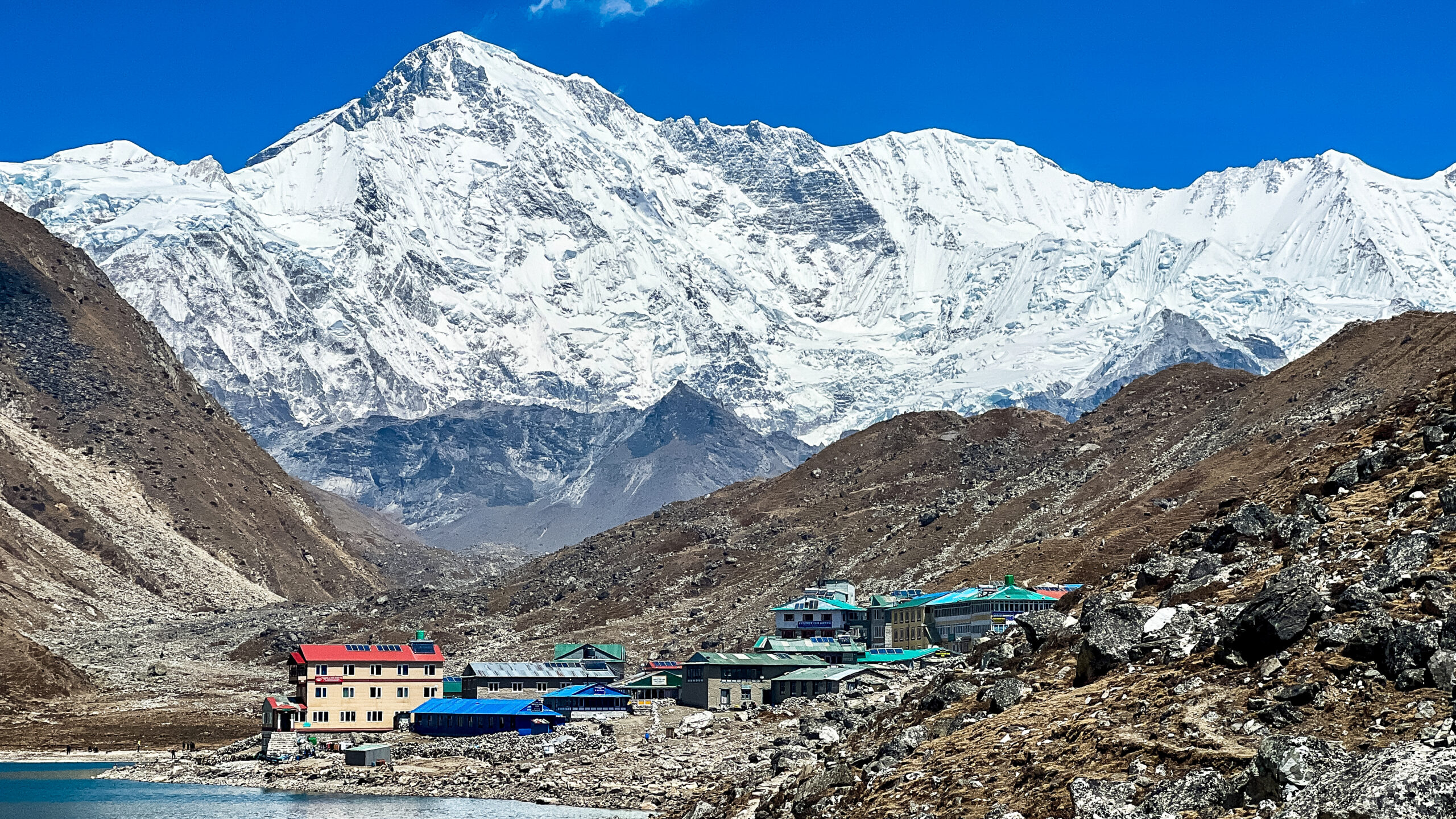
The broad snow slopes and glaciated flanks of Cho Oyu, the least technical of the 8000ers
Gentle-looking, and that is the trap. Cho Oyu’s broad, moderate snow slopes are why it is the least technical 8000er – and why climbers underestimate what 8,188 m of altitude does to the body on a month-long expedition.

Why Cho Oyu is the safest 8000er

Four things line up in the climber’s favour, and no other 8000er has all of them.

Moderate terrain

Slopes around 30 degrees, no vertical rock or ice, and one short technical step. There is far less of the serac and avalanche exposure that defines the harder Himalayan and Karakoram peaks.

A kind acclimatisation profile

The Tibetan approach reaches a high Advanced Base Camp by vehicle and road, and only three camps lead to the summit, giving a gradual, well-spaced altitude gain that most climbers tolerate well.

Relatively stable weather

Cho Oyu sits in the eastern Himalaya, away from the fiercer western-Himalaya and Karakoram weather, and its spring and post-monsoon windows are comparatively reliable.

Deep commercial infrastructure

Decades of operator experience, fixed ropes, strong Sherpa support, and 1:1 guiding on premium teams mean the mountain is as well-supported as any 8000er except Everest.

Together these produce not only the lowest death rate but the highest summit success of the 8000ers – premium operators report 75 to 90%, budget teams 50 to 70%. The full breakdown lives on the Cho Oyu success-rate page.

Why “safest” is not “safe”

The low grade and low death rate are real. So is the fact that Cho Oyu keeps killing careful, competent people.

Above 8,000 m the body is dying by the hour. High-altitude pulmonary and cerebral oedema can strike climbers who did everything right, and at that altitude a rescue is slow and often impossible. The serac barrier below Camp 2 is an objective hazard no amount of skill removes, and, as on most big mountains, the majority of deaths happen on the descent, when climbers are spent, dehydrated, and running out of daylight and oxygen.

The “easiest 8000er” label is itself a hazard. Because Cho Oyu is sold as the gentle introduction to 8,000 m, it draws climbers who underestimate a death-zone expedition – people stepping up too fast, skimping on acclimatisation, or economising on operator support. The mountain is forgiving of terrain, not of altitude or of a rushed progression.

The Tibet access problem

On Cho Oyu, the hardest part of the expedition is often getting to the mountain at all.

The commercial route is climbed from the Tibetan side, which means Chinese permits and overland travel from Kathmandu via the Friendship Highway. China has repeatedly closed Tibet to foreign climbers during politically sensitive periods and around the pandemic, sometimes with little notice. When the Tibetan side is shut, climbers switch to Manaslu in Nepal as the substitute first 8000er. Chinese permitting is also strict on experience: authorities usually require proof of a prior 7,000 m summit before issuing a Cho Oyu permit. The practical lesson is to verify current Tibet access with your operator before committing to dates, and to build in a Manaslu fallback.

Who is ready for it

Cho Oyu is a first 8000er, not a first big mountain. It rewards a proper progression and punishes skipped steps.

  • A prior 7,000 m summit (formally required for the Chinese permit)
  • Solid experience on peaks like Aconcagua, Denali, or Himalayan 6,000ers
  • Confident crampon, ice-axe, and fixed-line technique
  • Experience using supplemental oxygen, or willingness to train with it
  • The endurance for a 30-40 day expedition with repeated rotations
  • Tolerance for extreme altitude, tested lower down first
  • Turnaround discipline when a summit day goes wrong
  • Budget reserves of roughly $35,000-$65,000 all-in
  • A competent operator with real Tibet-access experience
  • Honest self-assessment about all of the above

If several of those are gaps, the fix is not to avoid Cho Oyu but to build toward it. Our first-big-mountain comparison and what to climb before Everest lay out the ladder, and because this is death-zone climbing, review your insurance above 6,000 m before you book.

Planning the trip

Use the Global Summit Guide Expedia shop to compare flights to Kathmandu, the staging point for Cho Oyu. Permits, Tibet logistics, and guiding are arranged through your expedition operator, not through a travel booking.

Affiliate disclosure: Global Summit Guide may earn a commission when you book through this link, at no additional cost to you. It never affects our recommendations.

Shop Nepal Travel on Expedia

Cho Oyu difficulty & death rate FAQ

Direct answers to what climbers search.

How hard is Cho Oyu to climb?

It is the least technical 8000er – a guided snow walk-up on ~30-degree slopes with one steep step, the Yellow Band, near 7,000 m. The difficulty is the altitude, not the terrain: it is still 8,188 m, in the death zone, on a 30-40 day expedition needing prior 7,000 m experience.

How many people have died on Cho Oyu?

About 50 deaths against roughly 3,600 summits – a ~1.4% death-to-summit ratio, the lowest of any 8000er. For comparison, K2 runs near 23% and Annapurna near 27% all-time. Most Cho Oyu deaths come from altitude, descent falls, and the Camp 2 serac hazard.

Why is it the safest and easiest 8000er?

Moderate terrain with few objective hazards, a kind acclimatisation profile from Tibet with only three camps to the top, relatively stable eastern-Himalaya weather, and deep commercial infrastructure. Together they give the lowest fatality rate and highest success of the fourteen.

Is Cho Oyu actually dangerous?

Yes. Safest of the 8000ers still means real deaths every few seasons. The death zone, HAPE and HACE, the serac barrier below Camp 2, and the tired descent are all lethal, and the “easy” label draws underprepared climbers. It is the most forgiving 8000er, not a safe one.

Do you need Tibet access?

For the standard route, yes – it is climbed from the Tibetan side with Chinese permits. China has closed Tibet to foreign climbers at times, and when it is shut climbers switch to Manaslu. Verify current access with your operator before committing.

What experience do you need first?

A prior 7,000 m summit (required for the Chinese permit), solid crampon and fixed-line skills from peaks like Aconcagua, Denali, or Himalayan 6,000ers, and ideally oxygen experience. The progression matters more than raw fitness.

Research & uncertainty

This page is compiled from the Himalayan Database, 8000ers.com (Jurgalski), and commercial-operator records, cross-checked against our own 14 eight-thousanders difficulty ranking and Cho Oyu success-rate research. Death-to-summit ratios are approximate and disputed between sources, and Cho Oyu’s stated elevation has historically varied between 8,188 m and 8,201 m; figures here are the most widely accepted. Tibet access conditions change; confirm current status with your operator. This is not a substitute for professional guiding.

About the author

Travis Ludlow · Founder & Head of Research, Global Summit Guide

Travis researches the difficulty and safety picture of the world’s high peaks, separating the technical grade from the real-world danger that decides who comes home. Safety content on this page was reviewed by Dawson Ludlow, the site’s climbing and mountaineering lead.

Read the editorial mission and author background.

Know the risk, then plan the climb

Difficulty and death rate are only half the picture. Use the full guide for routes, camps, cost, and logistics, and the success-rate page to see how preparation changes your odds.

Open the Cho Oyu Guide See Success Rates
(function(){ var el=document.getElementById(‘cod-wx’); if(!el) return; var codes={0:[‘u2600uFE0F’,’Clear’],1:[‘uD83CuDF24uFE0F’,’Mostly clear’],2:[‘u26C5′,’Partly cloudy’],3:[‘u2601uFE0F’,’Overcast’], 45:[‘uD83CuDF2BuFE0F’,’Fog’],48:[‘uD83CuDF2BuFE0F’,’Rime fog’],51:[‘uD83CuDF26uFE0F’,’Light drizzle’],53:[‘uD83CuDF26uFE0F’,’Drizzle’],55:[‘uD83CuDF26uFE0F’,’Drizzle’], 61:[‘uD83CuDF27uFE0F’,’Light rain’],63:[‘uD83CuDF27uFE0F’,’Rain’],65:[‘uD83CuDF27uFE0F’,’Heavy rain’], 71:[‘uD83CuDF28uFE0F’,’Light snow’],73:[‘uD83CuDF28uFE0F’,’Snow’],75:[‘u2744uFE0F’,’Heavy snow’],77:[‘u2744uFE0F’,’Snow grains’], 80:[‘uD83CuDF26uFE0F’,’Showers’],81:[‘uD83CuDF27uFE0F’,’Showers’],82:[‘u26C8uFE0F’,’Violent showers’], 85:[‘uD83CuDF28uFE0F’,’Snow showers’],86:[‘u2744uFE0F’,’Snow showers’], 95:[‘u26C8uFE0F’,’Thunderstorm’],96:[‘u26C8uFE0F’,’Storm + hail’],99:[‘u26C8uFE0F’,’Storm + hail’]}; var days=[‘Sun’,’Mon’,’Tue’,’Wed’,’Thu’,’Fri’,’Sat’]; var url=’https://api.open-meteo.com/v1/forecast?latitude=28.0944&longitude=86.6603’+ ‘&daily=weather_code,temperature_2m_max,temperature_2m_min,wind_speed_10m_max’+ ‘&temperature_unit=fahrenheit&wind_speed_unit=mph&timezone=Asia%2FKathmandu&forecast_days=7’; fetch(url).then(function(r){return r.json();}).then(function(d){ if(!d||!d.daily||!d.daily.time){throw new Error(‘no data’);} var t=d.daily,html=”; for(var i=0;i‘+c[0]+’
‘+ ‘
‘+Math.round(t.temperature_2m_max[i])+’u00B0
‘+ ‘
‘+Math.round(t.temperature_2m_min[i])+’u00B0
‘+ ‘
‘+Math.round(t.wind_speed_10m_max[i])+’ mph
‘; } el.innerHTML=html; }).catch(function(){ el.innerHTML=’
Live forecast unavailable right now. Check Mountain-Forecast or MeteoBlue for Cho Oyu before climbing.
‘; }); })();
PART OF THE 14 EIGHT-THOUSANDERS

This peak is one of the 14 mountains on Earth above 8,000 meters

The 14 eight-thousanders are the only mountains on Earth that rise above 8,000m — the altitude where the human body enters the Death Zone. See the complete collection ranked by elevation, with death rates, first ascent history, and the Messner/Kukuczka/Nims Purja completion records.

View All 14 Eight-Thousanders →

🏔 Part of the 14 Eight-Thousanders

One of the 14 mountains on Earth above 8,000m. See the complete collection with death rates, first ascents, and the 14 Peaks Challenge history.

View All 14 Eight-Thousanders →
Part of the 14 Eight-Thousanders Collection · the 14 mountains on Earth above 8,000m
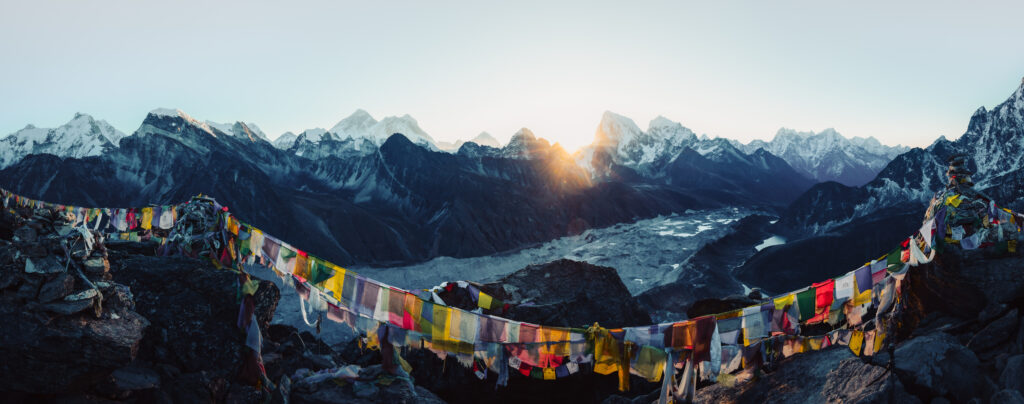
Panoramic view of Himalayan mountains and Ngozumpa glacier with prayer flags, Mount Everest range in the distance.
The largest glacier in Nepal – Ngozumpa glacier, Cholatse, Taboche with the two Gokyo lakes is visible in this stunning panorama from the top of 5350 m. Iconic Mount Everest range

Was this helpful?

Yes
No
Thanks for your feedback!
About Global Summit Guide

Global Summit Guide is an independent mountaineering resource founded in 2026. The team combines first-hand trekking and climbing experience with in-depth research and professional health and nutrition review to help climbers choose objectives, prepare properly, and stay safe.

Travis LudlowFounder & Head of Research · Master's in Business
Dawson LudlowClimbing & Mountaineering Lead
Walker LudlowClimber & Contributor

Health, altitude, and nutrition content is reviewed by Taylor Ludlow (Registered Nurse) and Brigg Hoopes (Nutritionist).

What We Don't Know Yet

Mountain information changes quickly. This box explains the limits of what this page can responsibly promise.

Confidence: Medium

Verify current conditions with official land managers, guide services, local forecasts, and current route reports before booking or climbing.

Safety, medical & liability disclaimer

Mountaineering, rock and ice climbing, glacier travel, and high-altitude activity are inherently dangerous and can result in serious injury or death. The information on Global Summit Guide is provided for general informational and educational purposes only and is not a substitute for professional instruction, qualified guiding, proper equipment, or your own judgment and experience.

Route conditions, weather, snowpack, permits, regulations, and hazards change constantly and may differ from what is described here. Details may be incomplete, out of date, or contain errors. Always verify current information with local authorities, certified guides, and official sources before making any decision in the mountains.

Nothing on this site is medical, legal, or financial advice. Our fitness, acclimatization, altitude, and nutrition content is general in nature; consult a qualified physician before beginning any strenuous exercise program or exposing yourself to high altitude.

You are solely responsible for your own safety and decisions. To the fullest extent permitted by law, Global Summit Guide and its team accept no liability for any loss, injury, damage, or expense arising from use of, or reliance on, this information. By using this site you acknowledge these risks and accept these terms.

Some links on this site may be affiliate links. If you buy through them we may earn a small commission at no extra cost to you; this never affects our recommendations.

Global Summit Guide recommendation path

Next Best Mountain to Research

Use these recommendations to continue the right planning path instead of stopping on one page.

Next mountain Makalu Climb Guide Nepal Tibet Related by Death + Rate. Next mountain Ama Dablam Climb Guide Nepal Difficulty Safety Related by Difficulty + Nepal. Next mountain Cho Oyu Summit Success Rate Related by Death + Rate. Next mountain K2 Summit Success Rate Related by Death + Rate.

Use current permit, weather, route, and operator information before booking or climbing.

Ready to Plan Your Adventure?

Find curated hotels, flights, and vacation packages for your next hiking or mountaineering trip through our Expedia Travel Shop.

Book Your Trip on Expedia →
Affiliate links to Expedia. Same price as direct booking. Disclosure.
Language »