
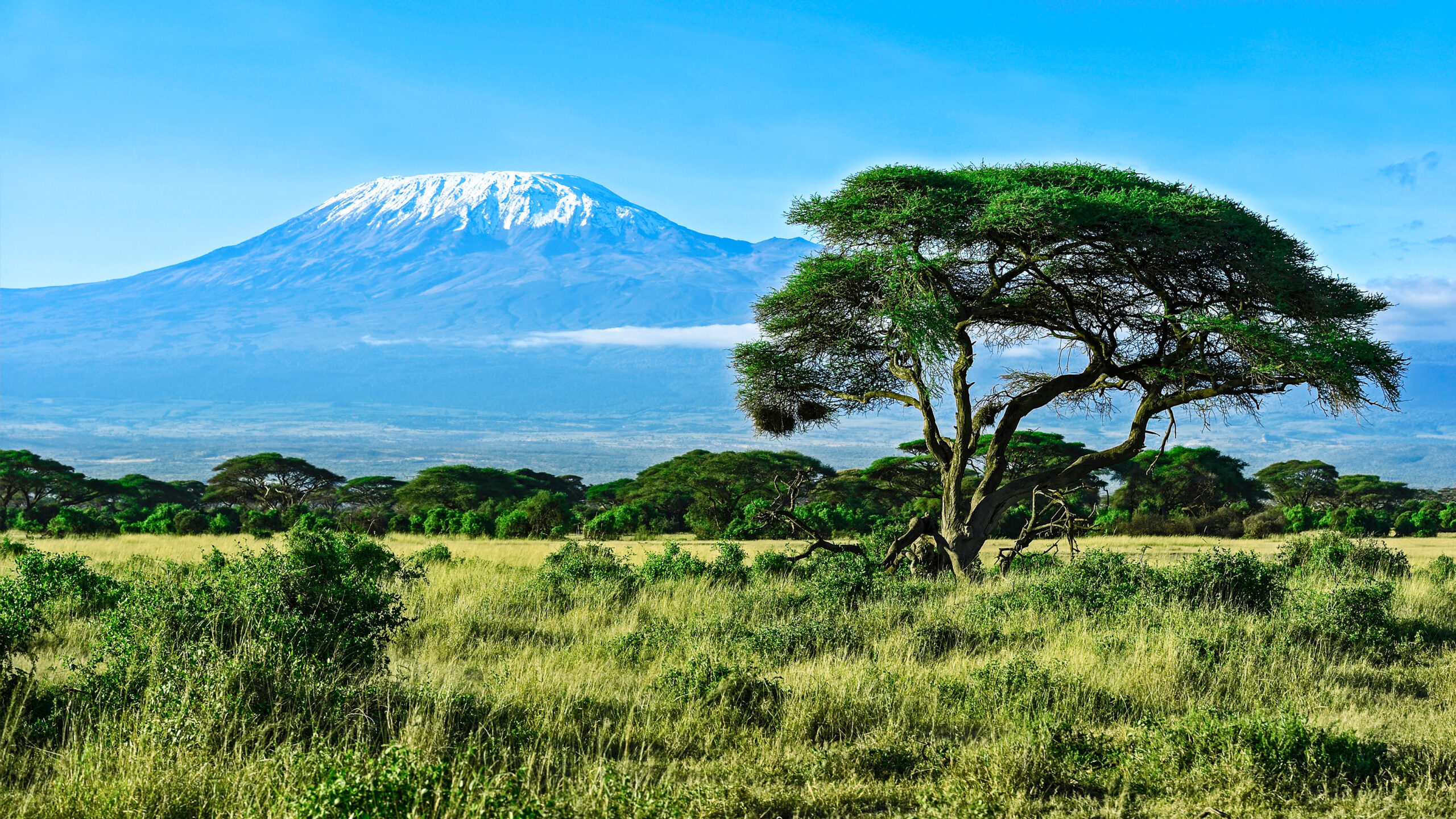
Kilimanjaro expedition update
In season now. Honest summit success rates by route, the full 2026 park fee stack including the VAT most tables leave out, and what actually decides who reaches Uhuru Peak. A single-mountain page in our Expedition Updates directory. Elevations in metres (feet).
In season now, and the route you pick decides the rest.
Kilimanjaro has two dry windows, January to March and June to October. July sits in the second one, so conditions are as settled as they get, and the mountain is busy to match.
The thing worth knowing before you book: route length predicts success better than fitness does. The 9-day Northern Circuit runs around 95 to 98 percent with a good operator. The 5-day Marangu sits near 50 to 65 percent. Same mountain, same climbers, different acclimatization time.
Uhuru Peak (19,341 ft)
The highest free-standing mountain in the world, and Africa’s high point.
Dry-season window
In season now. A second window runs January to March.
Success by route
The spread is almost entirely about how many days you take.
⚑ We have climbed this one
Kilimanjaro is the mountain our team has actually summited. Dawson Ludlow, our Climbing and Mountaineering Lead, summit-trekked it, and the practical detail on this page, summit-night pacing, what the cold really feels like above the crater rim, and how much difference an extra acclimatization day makes, is checked against that experience. Most pages ranking for Kilimanjaro are written by companies selling you a climb. This one is not.
Kilimanjaro is the most accessible of the Seven Summits and the most misunderstood. It needs no ropes, crampons, or technical skill, which leads people to underestimate it and book the cheapest, shortest trip available. Altitude does the rest. This page covers where the mountain is in its season, what the routes really deliver, and what the trip costs before an operator marks it up. For the full route-by-route how-to, see our Kilimanjaro climb guide, and to compare teams, our Kilimanjaro operators guide.
Season status and timing
Where the mountain is today, and which months actually work.
Kilimanjaro sits three degrees south of the equator, so it does not have a summer and winter season the way an alpine peak does. It has dry seasons and wet ones. The two dry windows are January to March and June to October, and July is inside the second. That means settled weather, clear summit mornings, and the highest traffic of the year. The wet periods, roughly April to May and November, bring rain through the forest zone and snow higher up; the mountain stays open, but conditions are harder and the photos are worse.
The trade-off in July is crowds. If you want the dry window with fewer people, the Rongai and Northern Circuit routes carry a fraction of the traffic that Machame and Marangu do. Booking three to six months ahead is normal for the peak months.
Success rates by route
The single most useful table on this page. Route length is the variable that matters.
Operators rarely publish this side by side, because most of them sell the short routes too. But the pattern is consistent and it is not subtle: every extra day on the mountain buys acclimatization, and acclimatization is what gets people to Uhuru Peak. A moderately fit climber on a 9-day route will out-perform a very fit climber on a 5-day route almost every time.
| Route | Days | Typical success |
|---|---|---|
| Northern Circuit | 8 to 9 days | 95 to 98% |
| Lemosho | 7 to 9 days | 85 to 90% |
| Machame | 6 to 7 days | 70 to 85% |
| Rongai | 6 to 7 days | 70 to 80% |
| Marangu | 5 to 6 days | 50 to 65% |
| Umbwe | 6 to 7 days | Varies widely |
Northern Circuit
8 to 9 days · 95 to 98% summit success. The longest route and the newest. Circles the mountain’s northern slopes with the best acclimatization profile and the fewest people. The highest success rate on the mountain, and the one to pick if time and budget allow.
Lemosho
7 to 9 days · 85 to 90% summit success. A remote western trailhead, excellent acclimatization, and outstanding scenery. Widely treated as the best balance of success odds, cost, and experience for first-timers. The 8-day version is the one most reputable operators push.
Machame
6 to 7 days · 70 to 85% summit success. The Whiskey Route, second-most popular, starting in southern rainforest. Scenic and steep, with the Barranco Wall as its signature. Take the 7-day version: the 6-day compresses acclimatization and the numbers show it.
Rongai
6 to 7 days · 70 to 80% summit success. The only northern approach, drier and quieter, with a gentler gradient. A good choice in the wetter months and for climbers who want fewer crowds.
Marangu
5 to 6 days · 50 to 65% summit success. The Coca-Cola Route, the only one with hut accommodation, and the cheapest. It is also the shortest and the one with the weakest acclimatization profile, which is why its success rate is the lowest on the mountain.
Umbwe
6 to 7 days · Varies widely summit success. The steepest and most direct line, and the least trafficked. Poor acclimatization profile for its length. Suited to experienced trekkers who have been high before, not to first-timers.
What park fees really cost in 2026
The full TANAPA stack, including the line most published tables omit.
Kilimanjaro park fees are set by the Tanzania National Parks Authority and are identical across every operator, which makes them the one honest comparison point in a quote. They also make up a large share of the total price. The catch is that most fee tables online are published before tax, and Tanzania adds 18 percent VAT on top. If a quote looks impossibly cheap, this is usually where the gap is hiding.
| Charge | Rate | Notes |
|---|---|---|
| Conservation (park entry) fee | $70 per person, per day | Charged for every 24 hours inside the park. |
| Camping fee | $50 per person, per night | Applies to every route except Marangu. |
| Hut fee (Marangu only) | $60 per person, per night | Marangu is the only hut route. |
| Rescue fee | $20 per person, once per trip | Funds the park rescue team. Not a substitute for insurance. |
| Forest fee (TFS) | Around $10 to $20 per person, once | Applies on routes crossing the forest zone, such as Lemosho, Rongai and Shira. |
| Crew entry fees | A small per-head charge for every guide, porter and cook | Your operator pays these for the whole support team. |
| VAT | 18% on top of most of the above | The line most published fee tables leave out. |
Worked example: a 7-day Lemosho climb
- Conservation fee – $70 x 7 days = $490 per climber.
- Camping fee – $50 x 6 nights = $300 per climber.
- Rescue fee – $20, once.
- Forest fee – around $10 to $20, once, on this route.
- Crew entry fees – a small per-head charge across your guide, porter and cook team.
- Then add 18% VAT – which lands the total near $1,000 per climber in park fees alone.
Total trip cost
What the whole thing costs once flights, visa, insurance, gear and tips are counted.
A reputable guided climb runs roughly $3,000 to $6,000 for the package, and a realistic all-in figure from a North American or European departure lands near $4,500 to $5,500. On top of the package, budget for international flights into Kilimanjaro International Airport, the Tanzania visa, high-altitude travel insurance with evacuation cover, personal gear or rentals, and crew tips, which run a few hundred dollars per climber and are expected rather than optional.
Quotes below roughly $2,000 deserve suspicion rather than excitement. Park fees are fixed, so an operator cutting that far below the market is recovering the difference somewhere, usually from porter wages, food quality, guide ratios, or safety equipment. Our Seven Summits cost breakdown puts Kilimanjaro in context against the other continental high points, and the expedition budget calculator helps size your own.
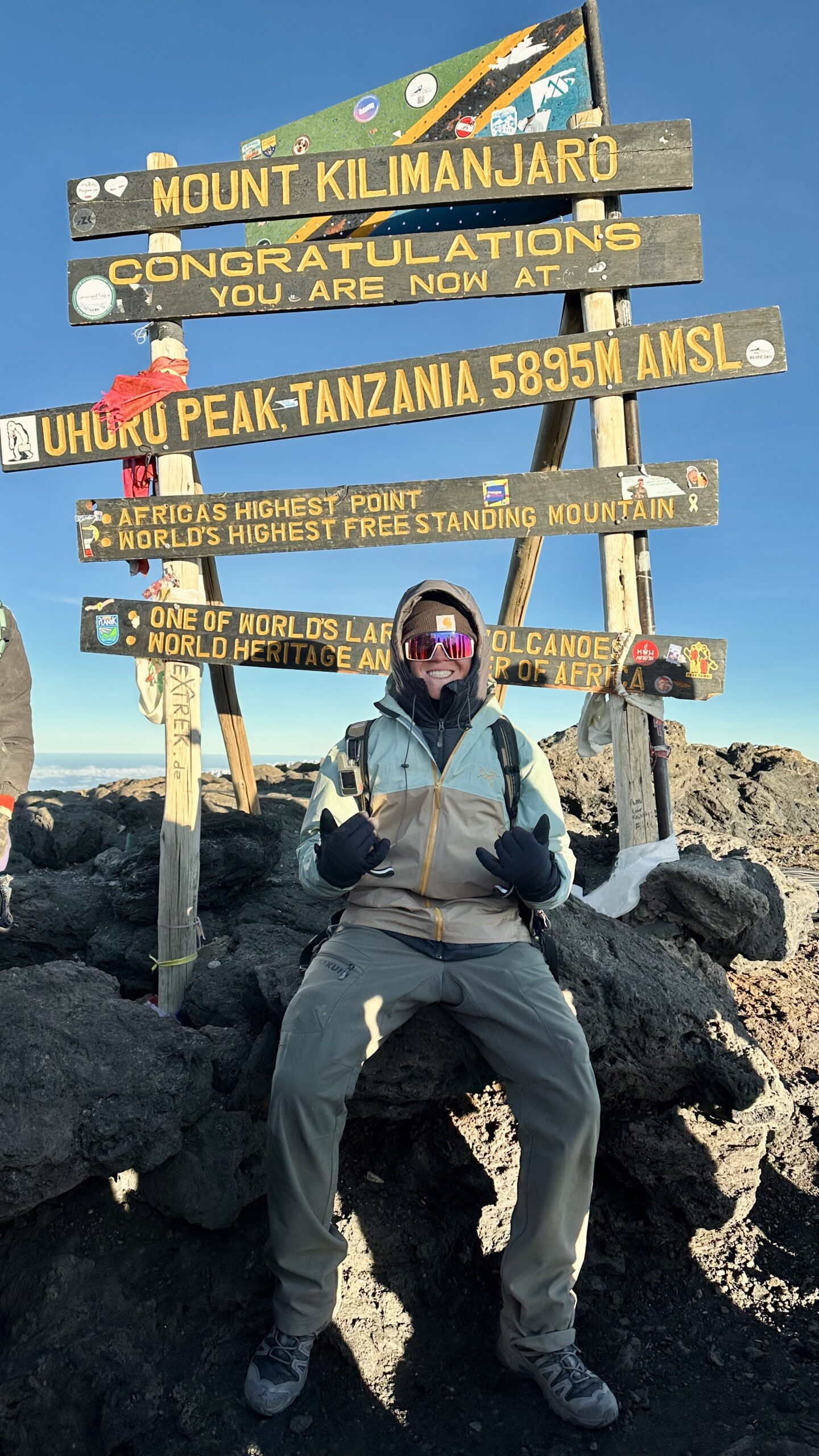
Summit night
The part of the trek that decides most outcomes.
On most routes the final push begins around midnight from a high camp between roughly 4,600 and 4,900 m. You climb in the dark and the cold for six or seven hours to reach the crater rim near sunrise, then continue along the rim to Uhuru Peak. It is the coldest, highest and longest section of the trek, and it is followed the same day by a long descent to a lower camp, which is often the part people remember as hardest on the legs.
The thing that gets people up is pace. Guides set a deliberately slow rhythm, and climbers who override it because they feel strong at midnight are frequently the ones turning back at 5,400 m. Layer for genuine cold, keep water from freezing, eat even when appetite is gone, and let the guide set the speed.
Kilimanjaro requires no technical skill, which is exactly why it catches people out. Acute mountain sickness is common on the mountain, and the serious forms, high-altitude pulmonary and cerebral oedema, do occur and can be fatal. The mountain’s rapid ascent profile is the reason: you go from farmland to nearly 5,900 m in under a week.
Descent is the treatment. Tell your guide about headache, nausea, or unsteadiness early rather than pushing through, and take out insurance that covers high-altitude evacuation. This page is educational and is not medical advice; speak to a physician about altitude medication and your own health.
Porter welfare and operator choice
An ethical question that doubles as the best quality filter available.
Every Kilimanjaro climb runs on a crew of guides, cooks and porters who carry the loads that make the trek possible. Budget operators compete on price by underpaying and under-equipping those crews, and the same instinct shows up everywhere else in the trip: thinner food, fewer guides per climber, older safety equipment, and pressure to run short itineraries that convert poorly.
The Kilimanjaro Porters Assistance Project verifies fair treatment of crews, and partnering with a KPAP-verified operator is the most reliable single filter for overall quality. It is a rare case where the ethical choice and the self-interested choice point the same direction. Our Kilimanjaro operators guide covers who meets that bar, our African Walking Company dossier goes deep on one Tanzanian specialist, and how to choose an expedition operator covers the general method.
Weather and conditions
An equatorial mountain with five climate zones, plus a live read.
Kilimanjaro passes through rainforest, heath, moorland, alpine desert and arctic summit conditions in a few days, which is why packing for it is harder than the difficulty suggests. Daytime temperatures at the lower camps can be pleasant while summit night runs well below freezing with wind on the crater rim. The live map below gives current conditions for the massif; treat it as orientation and rely on your operator’s briefing for the trek itself.
Kilimanjaro update FAQ
The questions climbers ask most about timing, routes, and cost.
Is Kilimanjaro in season right now?
Yes. Kilimanjaro has two dry windows, January to March and June to October, and July sits inside the second one. It is climbable year-round, but the dry seasons give the most settled weather and the best odds. July and August are the busiest months on the mountain as a result.
Which Kilimanjaro route has the best success rate?
The Northern Circuit, at roughly 95 to 98 percent with a good operator, because it is the longest route and gives the body the most time to acclimatize. The 8-day Lemosho is close behind. The 5-day Marangu sits at roughly 50 to 65 percent. Route length is the single biggest predictor of whether you reach Uhuru Peak.
How much are Kilimanjaro park fees in 2026?
The main charges are $70 per person per day conservation fee, $50 per person per night camping ($60 for Marangu huts), a one-time $20 rescue fee, a forest fee on some routes, and entry fees for your crew. Then 18 percent VAT is added, which many published tables omit. A 7-day route lands near $1,000 per climber in park fees alone, and reputable operators include this in the quoted price.
How much does climbing Kilimanjaro cost in total?
A reputable guided climb runs roughly $3,000 to $6,000, with a realistic all-in figure near $4,500 to $5,500 once international flights, the Tanzania visa, insurance, gear, and tips are counted. Park fees alone account for a large share of the package. Quotes under about $2,000 are a warning sign rather than a bargain.
Can you climb Kilimanjaro without a guide?
No. Tanzania requires every climber to go through a licensed operator, and permits are issued to operators rather than individuals. You cannot reach Uhuru Peak without passing ranger checkpoints. The real decision is not whether to use an operator but which one.
How hard is Kilimanjaro?
It is a non-technical trek that needs no climbing skills, ropes, or crampons, but it is a serious high-altitude undertaking. The summit is 5,895 m (19,341 ft), and altitude illness, cold, and the long overnight summit push are what turn people back, not difficult terrain. Moderate fitness plus a long route beats high fitness plus a short one.
What is summit night like?
Most routes start the final push around midnight from a high camp near 4,600 to 4,900 m, climbing through the cold and dark to reach the crater rim at sunrise and Uhuru Peak shortly after. It is the coldest, longest, and highest part of the trek, followed the same day by a long descent. Pacing slowly is the single most useful thing you can do.
Does porter welfare matter when choosing an operator?
Yes, both ethically and practically. Budget operators cut costs by underpaying and under-equipping porters, and the same corner-cutting shows up in food, guide ratios, and safety equipment. The Kilimanjaro Porters Assistance Project (KPAP) verifies fair treatment, and choosing a KPAP-partnered operator is a reliable filter for overall quality.
Africa expedition updates
Kilimanjaro’s neighbours in the region, each with its own update page. Back to the full Expedition Updates dashboard.
📋 How this update is built
Kilimanjaro is the one mountain in this directory our own team has climbed. Dawson Ludlow, our Climbing and Mountaineering Lead (Wilderness First Aid), summit-trekked it, and we use that experience to sanity-check the practical detail here: pacing on summit night, what the cold is actually like above the crater rim, and how much an extra acclimatization day is worth. We say so plainly because most pages competing for these searches are written by companies selling climbs.
The figures are compiled by Travis Ludlow, Founder and Head of Research, from TANAPA park tariffs and operator data cross-checked across several Tanzanian companies, with sources named below. Success rates are published as bands rather than single numbers because operators report them differently. Park fees and tariffs change, so confirm current rates before you budget.
Sources and further reading
- Tanzania National Parks Authority (TANAPA) – Kilimanjaro National Park fees and regulations.
- Kilimanjaro Porters Assistance Project (KPAP) – porter treatment standards and partner operators.
- Published 2026 operator fee breakdowns, cross-checked across several Tanzanian operators.
- Our own Kilimanjaro climb guide and Seven Summits cost analysis.
- First-hand observation from our own team’s Kilimanjaro summit trek.
Planning a Kilimanjaro climb?
Pick the route first and the operator second. Start with our Kilimanjaro climb guide, compare KPAP-verified teams in our Kilimanjaro operators guide, and build the fitness base with our fitness standards. For flights and lodging around Moshi, Arusha and Kilimanjaro International Airport, browse travel on Expedia.
Disclosure: the Expedia link above is a sponsored affiliate link. We may earn a commission at no extra cost to you.