Last updated November 6, 2026
Best Water Filters for Hiking and Backpacking (2026)
Ten real backcountry water-treatment options compared by coverage, convenience, system type and verified affiliate feed price. Our best-overall microfilter is not automatically the best choice for every river, group or international destination. Start with what your water might contain.
Affiliate-supported guide. All prices are dated catalog snapshots, not live checkout quotes. No invented hands-on test claims or star ratings.
Quick Picks: Match the System to the Water Risk
Use a portable microfilter where bacteria and protozoa are the primary concerns; use a suitable purifier or a validated filter-plus-disinfection strategy where viruses may matter. Each award below is a practical use-case judgment rather than an undisclosed rating score.
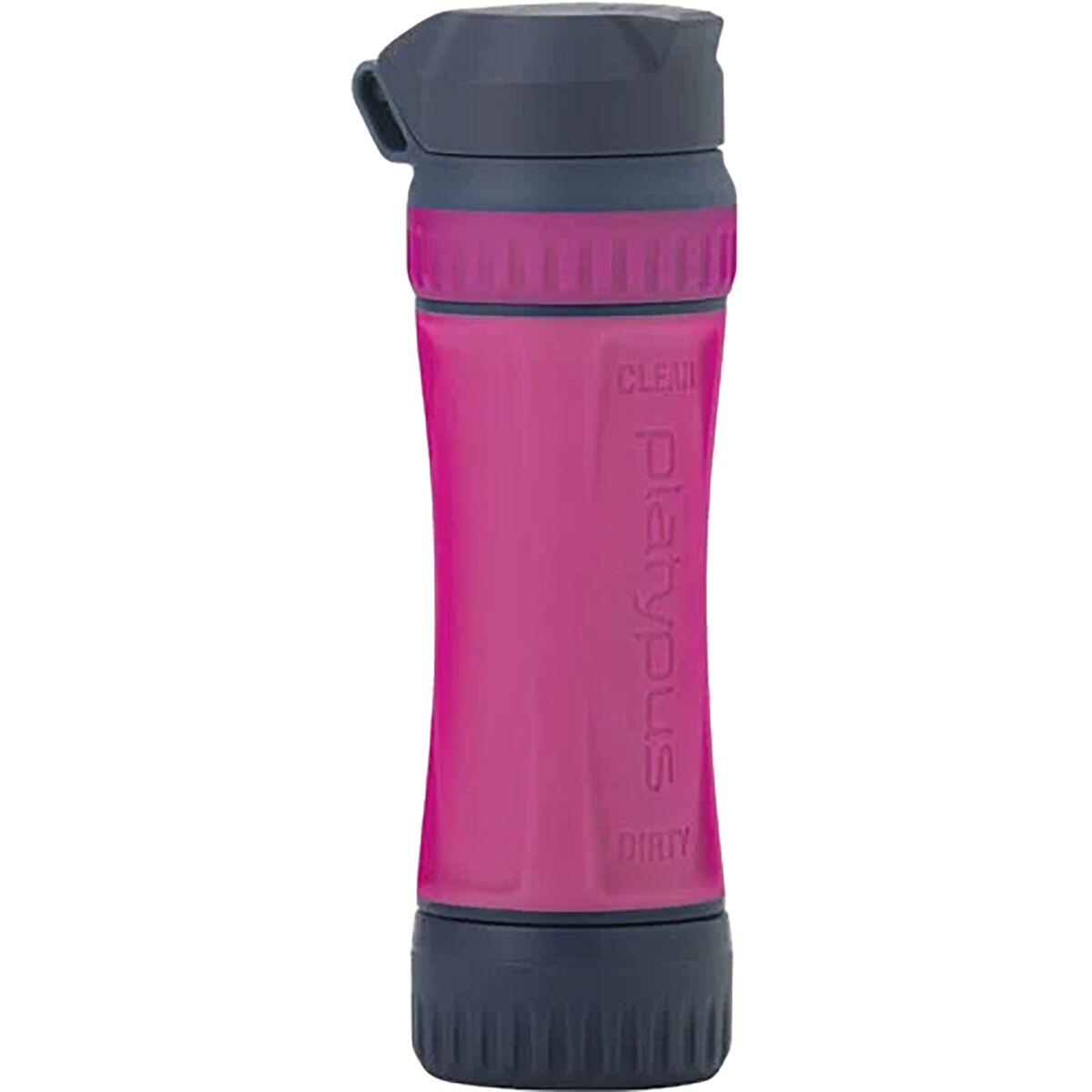
Platypus QuickDraw Microfilter
Solo backpackers who value compact gear and flexible clean-water bottle setups.
$39.95Check price at Backcountry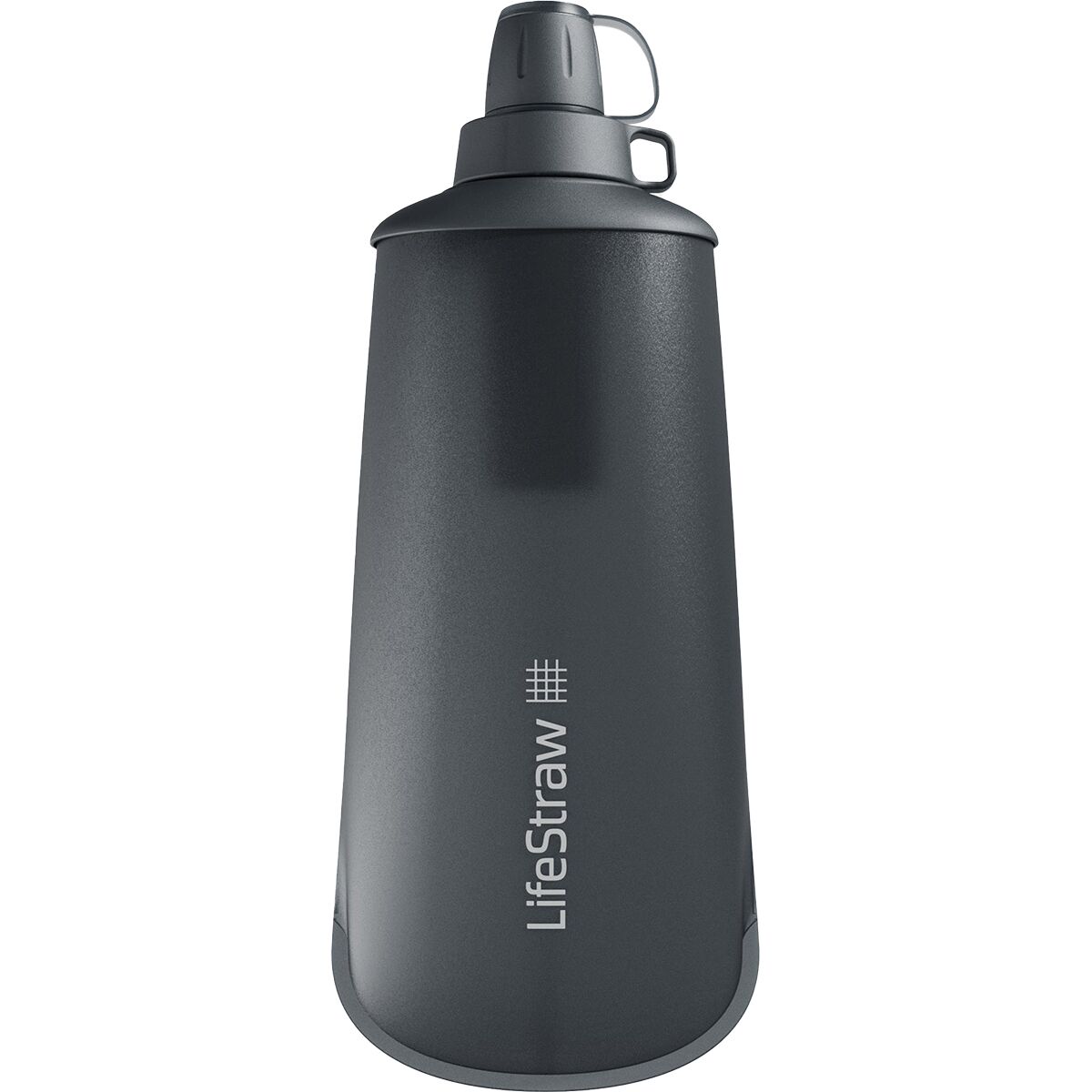
LifeStraw Peak Series Collapsible Squeeze 1L Water Bottle with Filter
Budget-conscious backpackers seeking an integrated portable system.
$43.95Check price at Backcountry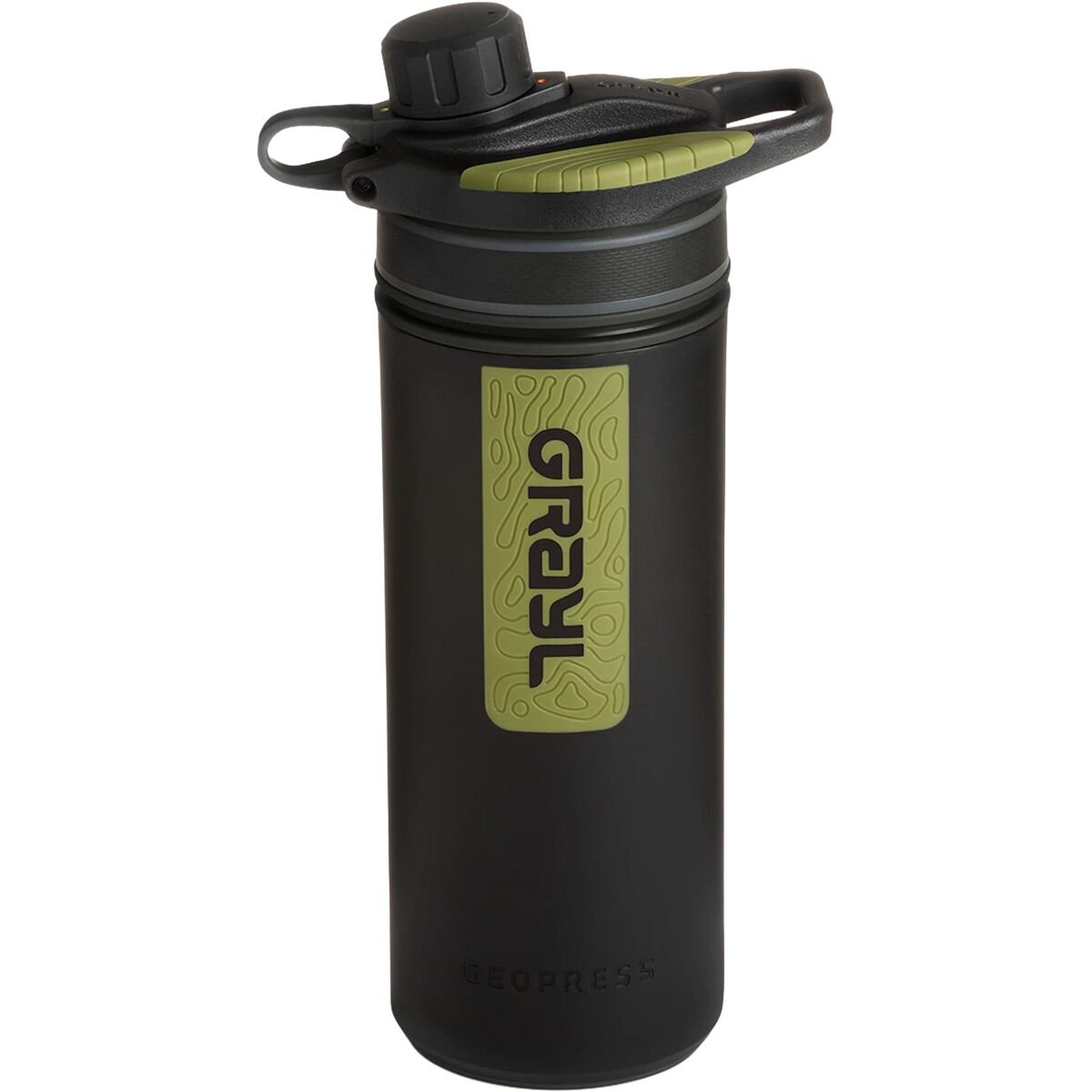
Grayl GEOPRESS Water Purifier
International trekkers who need the broader microorganism coverage of a purifier.
$99.95Check price at Backcountry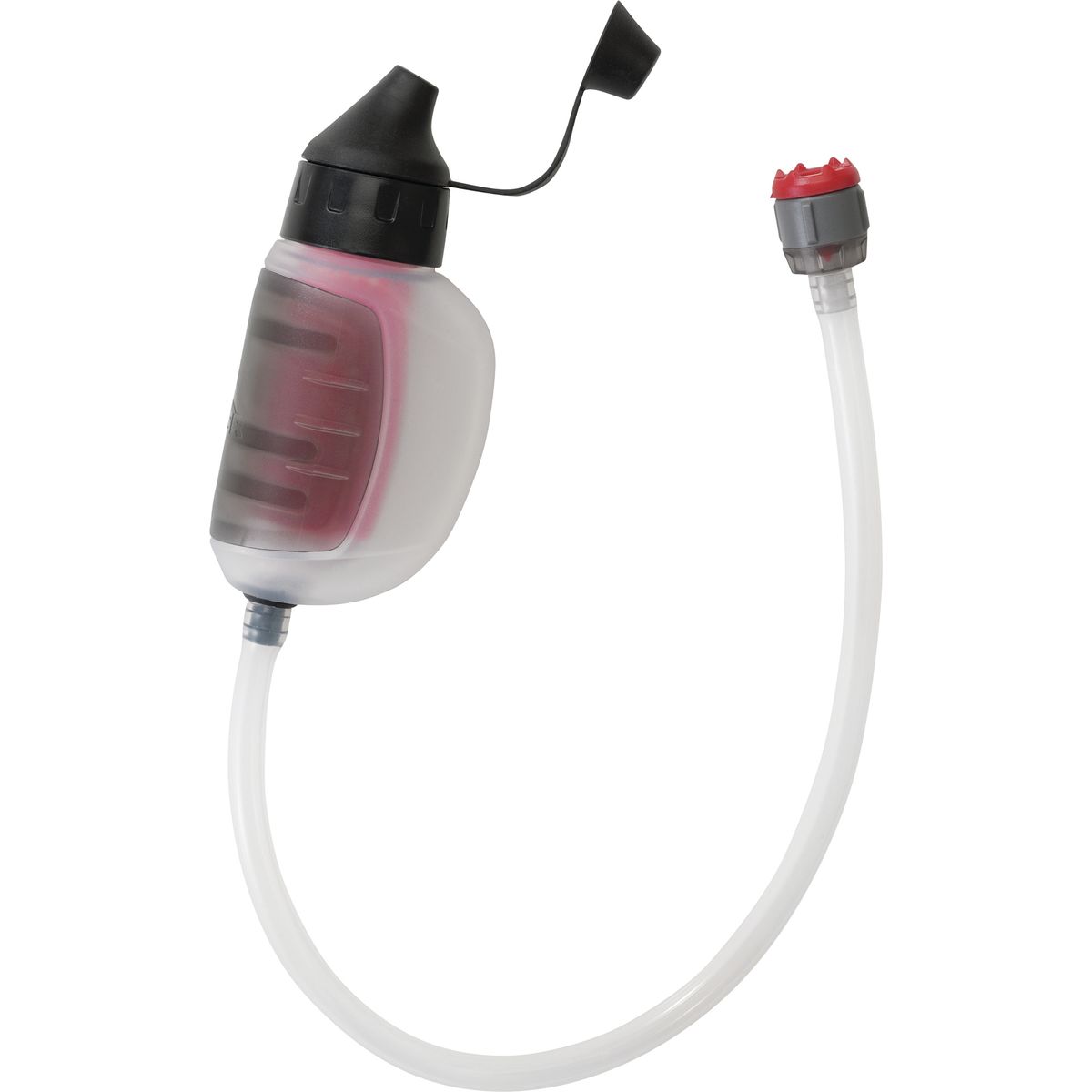
MSR TrailShot Microfilter
Trail runners and hikers drawing from narrow or awkward streams.
$69.95Check price at BackcountrySortable Water Filters and Purifiers Comparison
Price, system design and intended pathogen coverage are better buying criteria than invented ratings. Product weights vary with configurations; where an exact verified whole-system weight is unavailable, the table says so instead of inventing one. Sort by any column header.
| Shop | |||||
|---|---|---|---|---|---|
| Platypus QuickDraw Microfilter Best Overall | $39.95 | Squeeze / bottle-compatible microfilter | Bacteria + protozoa | Confirm selected model and kit contents | Check price |
| Katadyn BeFree AC 1.0L Microfilter Best Fast Flask | $59.95 | Squeeze soft-flask microfilter + carbon stage | Bacteria + protozoa; carbon for taste | Confirm selected model and kit contents | Check price |
| LifeStraw Peak Series Collapsible Squeeze 1L Water Bottle with Filter Best Budget Complete System | $43.95 | Collapsible squeeze bottle + membrane microfilter | Bacteria + protozoa | Confirm selected model and kit contents | Check price |
| Grayl GEOPRESS Water Purifier Best International Travel Purifier | $99.95 | Press purifier with replaceable cartridge | Bacteria + protozoa + viruses, per maker | Confirm selected model and kit contents | Check price |
| Grayl UltraPress Purifier Bottle Best Compact Press Purifier | $89.95 | Smaller press purifier | Bacteria + protozoa + viruses, per maker | Confirm selected model and kit contents | Check price |
| MSR TrailShot Microfilter Best Shallow-Source Pickup | $69.95 | Hand-operated pump-style microfilter | Bacteria + protozoa | Confirm selected model and kit contents | Check price |
| SteriPEN SteriPEN Ultra Best Clear-Water UV | $134.95 | UV disinfection device | Bacteria + protozoa + viruses when used as instructed | Confirm selected model and kit contents | Check price |
| LifeStraw Peak Series Solo Water Filter Best Ultralight Backup | $29.95 | Compact direct-use membrane microfilter | Bacteria + protozoa | Confirm selected model and kit contents | Check price |
| Platypus QuickDraw Microfilter System Best Complete QuickDraw Kit | $79.95 | Microfilter + supplied collection system | Bacteria + protozoa | Confirm selected model and kit contents | Check price |
| Katadyn BeFree AC 0.5L Microfilter Best Fastpacking Small Flask | $47.95 | Compact soft-flask microfilter + carbon | Bacteria + protozoa; carbon taste aid | Confirm selected model and kit contents | Check price |
Weight: no consistent, independently verified whole-system values were available across all these feed listings. We deliberately do not present disparate cartridge and filled-container weights as directly comparable. Advertised flow rates likewise depend on water quality and technique. No editorial star ratings are fabricated.
The Most Important Distinction: Filters Are Not Automatically Purifiers
Many of the most-loved backpacking filters use hollow-fiber microfiltration. They are convenient because water can pass through very small membrane pores without boiling or lengthy chemical contact times. But a filter labeled for bacteria and protozoa does not automatically protect against viruses. Some microbiological risks are highly context dependent, and the advertised pore size or word “filter” is not enough to infer every organism removed.
The CDC explains that standard portable microfilters generally do not reliably remove enteric viruses. A purifier with verified virus-reduction claims, or suitable filtration followed by disinfection, can provide broader protection. If drinking water might be exposed to human sewage, poor sanitation, heavily trafficked settlements or uncertain infrastructure, think through pathogen coverage before buying the lightest product. Chemical contamination is a different hazard that many popular backcountry systems are not designed to eliminate.
Boiling remains a highly reliable microorganism-control method when feasible. At elevations above 6,500 feet, the CDC recommends boiling water vigorously for three minutes. Fuel, weather, altitude and the need to cool water make boiling imperfect for rapid hiking, but it belongs in a robust emergency plan. When using UV, clarify and prefilter turbid water as directed; suspended particles can block light and prevent adequate treatment.
Useful public references: CDC backcountry water treatment, CDC Yellow Book water disinfection and NSF treatment standards. Certification claims should be checked by exact model in an official directory rather than assumed from branding.
Detailed Reviews: Ten Different Ways to Treat Trail Water
Each product below is an exact-match, in-stock item from your approved Backcountry feed as of the November 2026 snapshot. The pros and cons explain functional design trade-offs; they are not claims of original hands-on testing.
Platypus QuickDraw Microfilter
The QuickDraw is a practical starting point for ordinary North American backpacking when microbial risks are consistent with the filter label. Carry a compatible dirty-water reservoir and verify that its clean side cannot contact untreated water. The stand-alone element can be easier to integrate into an existing bottle system than a complete new kit.
Lightweight filter element; bottle compatibility with supported threads; straightforward maintenance; convenient trail-side treatment.
Requires a suitable container and attention to gasket and cap cleanliness; does not remove viruses; protect wet membrane from freezing.
Who should buy it: Solo backpackers who value compact gear and flexible clean-water bottle setups.
Use and safety note: Backflush or shake according to current manufacturer guidance, verify seal engagement, and perform any model-specific integrity check after potentially damaging impacts.
Affiliate link. Selection, options and price may differ at checkout.
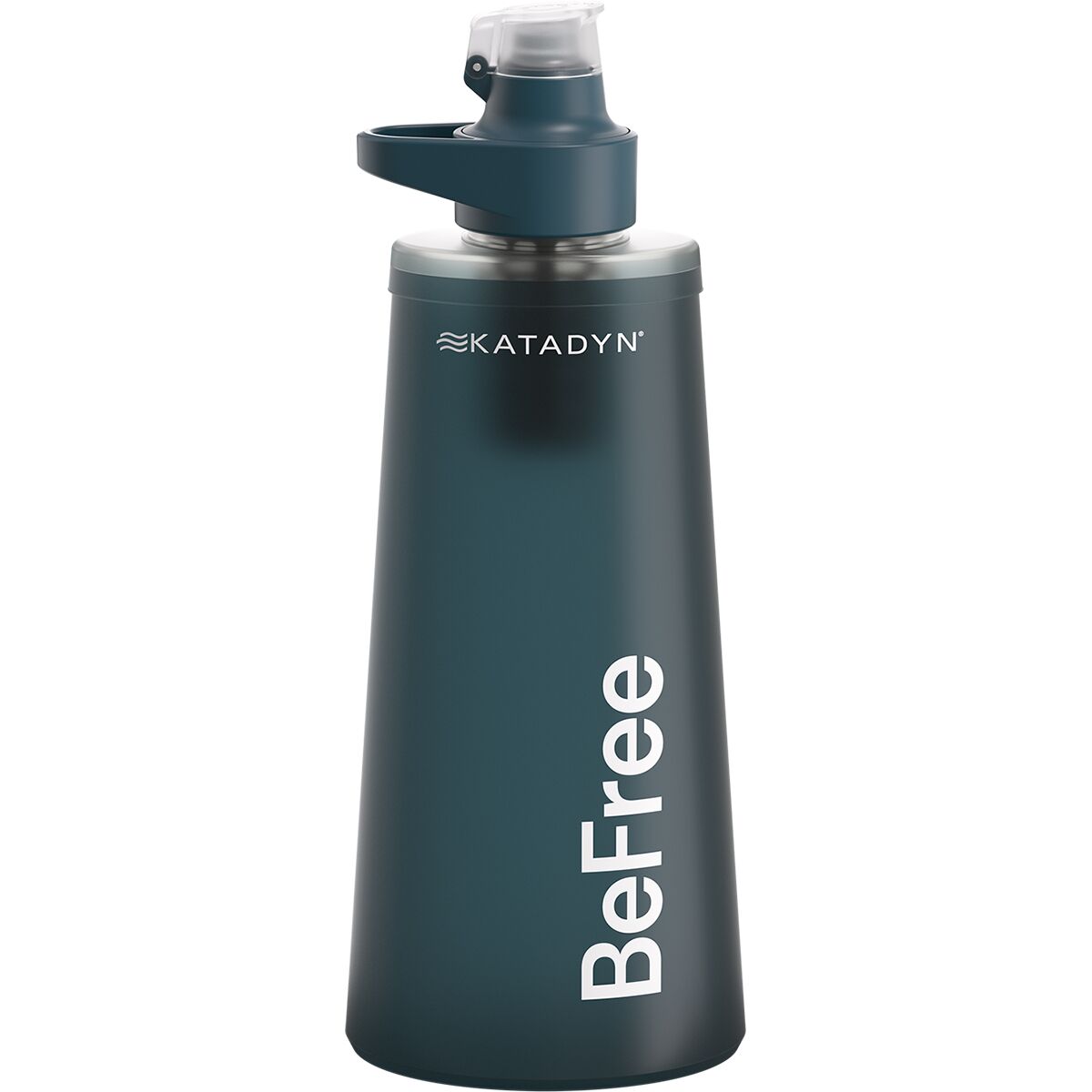
Katadyn BeFree AC 1.0L Microfilter
A soft-flask design works especially well when water is frequent along the trail, because a hiker can refill, squeeze and move. The carbon stage may improve taste and odor, but this is not a promise to remove all pesticides, metals or chemical pollution.
Fast and intuitive flask workflow; refill without attaching a separate bottle; integrated activated carbon taste-treatment feature.
Flask requires appropriate care; carbon has finite useful life; no reliable virus-removal claim; vulnerable to freezing after wetting.
Who should buy it: Hikers who prefer collecting and drinking from a dedicated flexible bottle.
Use and safety note: Check the exact membrane and carbon cartridge care instructions; do not confuse clean-tasting water with water proven free of pathogens or chemicals.
Affiliate link. Selection, options and price may differ at checkout.
LifeStraw Peak Series Collapsible Squeeze 1L Water Bottle with Filter
For a first backpacking kit, buying a filter with its own collection vessel can simplify the dirty/clean organization. The 1L size is useful on day hikes and moderate trail days, but carries less water than a full group gravity setup.
Includes a flexible bottle for collection; compact and practical; strong value among complete systems; versatile use on short treks.
Squeezing repeatedly takes effort for a group; not a virus purifier; soft container is a wear item; flow depends on water quality.
Who should buy it: Budget-conscious backpackers seeking an integrated portable system.
Use and safety note: Keep the dirty bottle exterior separate from cleaned water. Inspect the cap and bottle before trips and replace damaged parts.
Affiliate link. Selection, options and price may differ at checkout.
Grayl GEOPRESS Water Purifier
The GeoPress serves a distinct role: when viruses are plausible, choosing a product with validated purifier claims matters more than shaving a few ounces. It is best suited to individual use or modest shared needs, not continuous high-volume base-camp filtering.
Purifier approach instead of ordinary microfiltration; simple press workflow; cartridge includes media for specified taste and chemical reduction.
Bulkier and heavier than ultralight squeeze filters; cartridge costs accumulate; volume per press is limited; source quality still matters.
Who should buy it: International trekkers who need the broader microorganism coverage of a purifier.
Use and safety note: Follow current cartridge service limits and pressing instructions. Avoid fuel, industrial waste, mining runoff and saltwater; no trail bottle is a universal solution to unknown contaminants.
Affiliate link. Selection, options and price may differ at checkout.
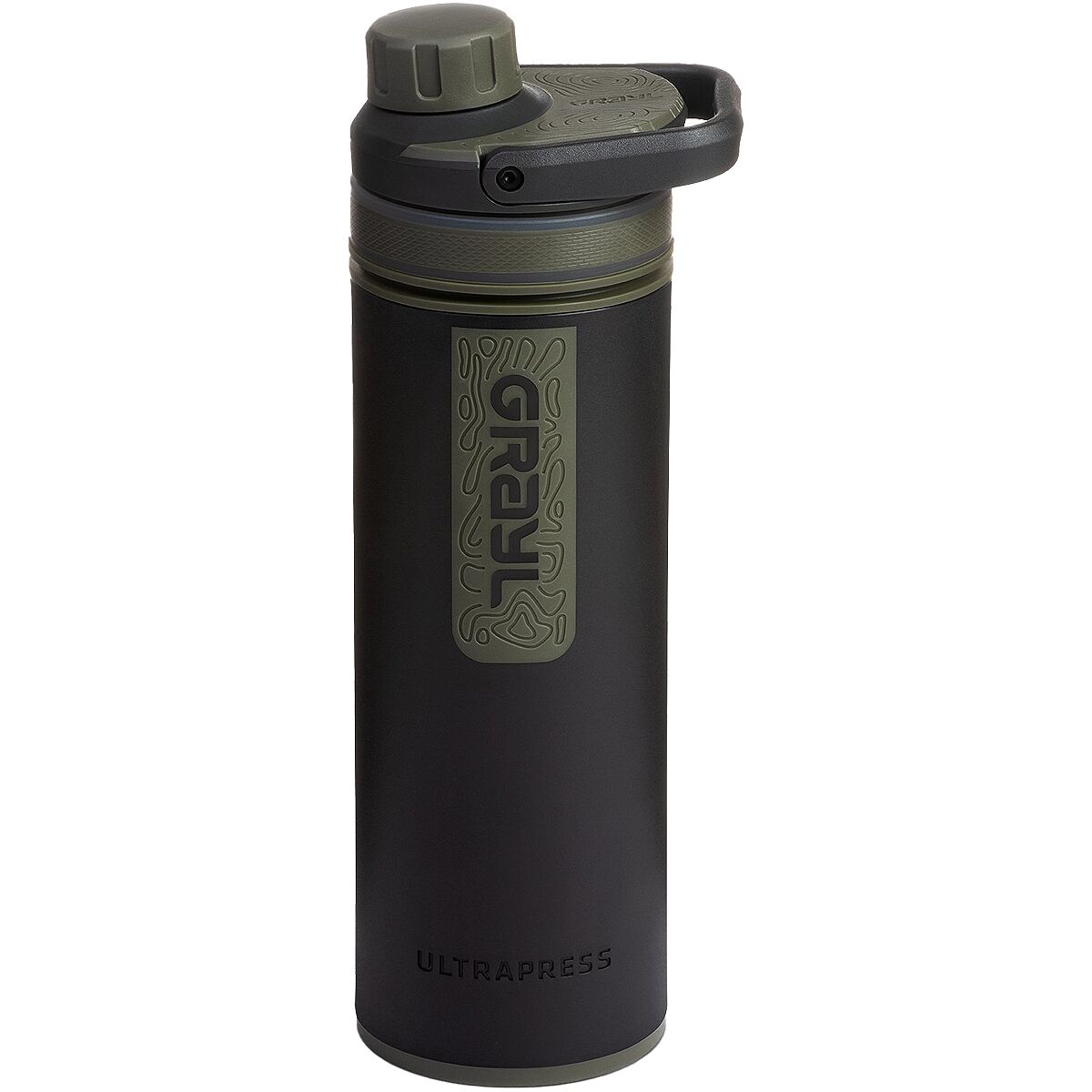
Grayl UltraPress Purifier Bottle
The UltraPress offers a portable compromise for hiking itineraries that pass through towns or areas with uncertain sanitation. Compared with the larger GeoPress, it is a convenient single-person option when pack volume is more important than batch throughput.
Purifier-level intended pathogen spectrum; straightforward bottle form; versatile urban/trail crossover; easy to carry at hand.
Lower batch volume than large group systems; relatively heavy compared with squeeze microfilters; replacement cartridge required.
Who should buy it: Travelers who prioritize broad microorganism protection in a smaller bottle format.
Use and safety note: Check the manufacturer instructions for cartridge life, permitted water sources and correct press procedure; never use the label alone to infer removal of every chemical hazard.
Affiliate link. Selection, options and price may differ at checkout.
MSR TrailShot Microfilter
Some streams are too shallow to submerge a typical flask. The TrailShot pickup tube can make filling easier without disturbing sediment. This is an ergonomic advantage, not a reason to skip checking the contamination risks of the watershed.
Hose allows pickup from shallow sources; avoids repeated bottle squeezing; portable and handy for on-the-move refills.
Hand pumping takes effort; can slow in sediment; not virus treatment; wet filter can be freeze damaged.
Who should buy it: Trail runners and hikers drawing from narrow or awkward streams.
Use and safety note: Pre-screen turbid water where practical and follow cleaning steps. If water may contain viruses, pair with an appropriate disinfection method.
Affiliate link. Selection, options and price may differ at checkout.
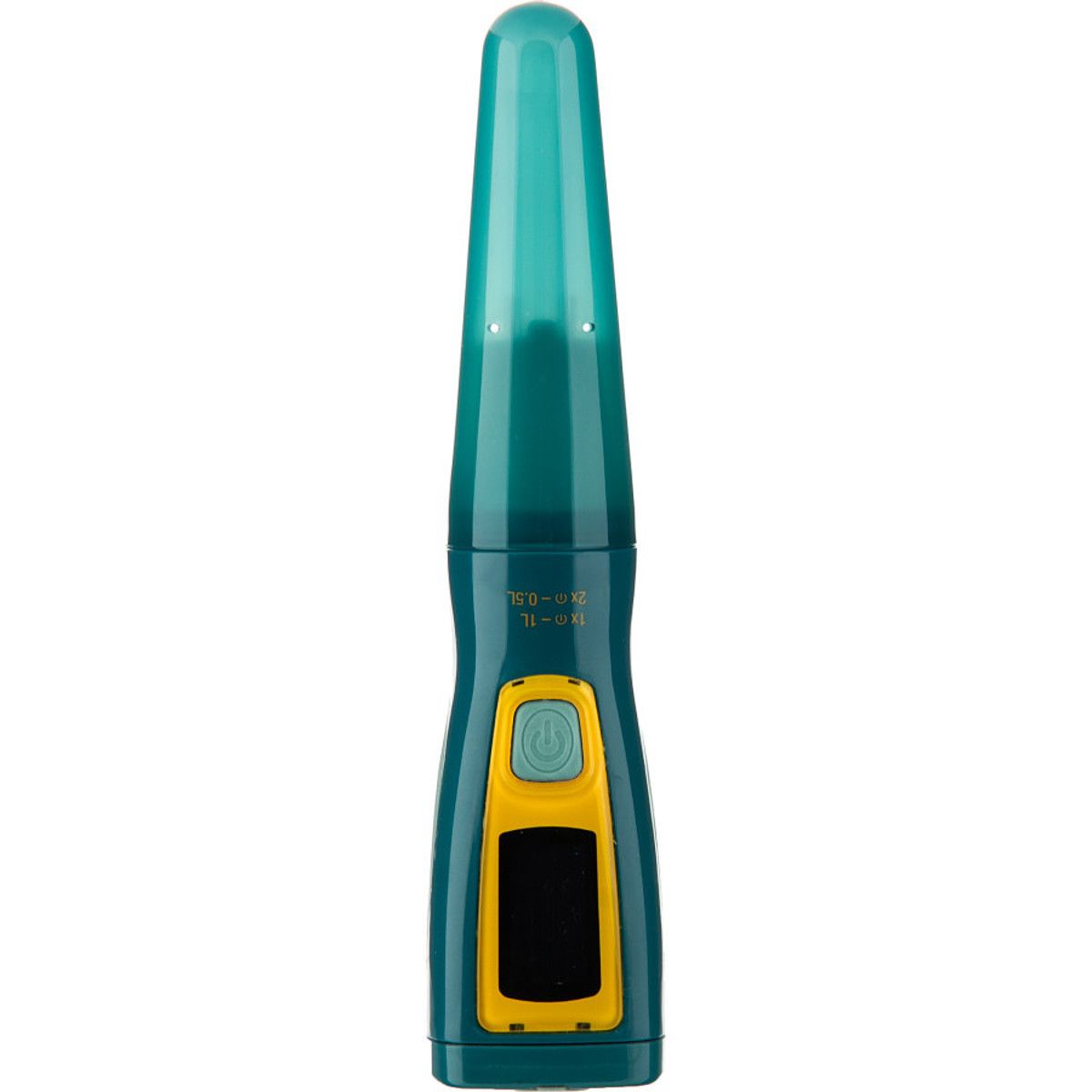
SteriPEN Ultra UV Water Purifier
UV works by inactivating microorganisms rather than physically filtering them out. It can be effective on clear water when the correct device cycle, container geometry and mixing procedure are followed. Highly turbid water should be prefiltered, and a charged battery matters.
No filter cartridge to push water through; light-based treatment in a bottle; useful second technology in an intentional water-treatment system.
Does not remove sediment or chemical contaminants; requires clear water and battery power; correct stirring and exposure are essential.
Who should buy it: Travelers treating individual clear-water batches who can manage charging.
Use and safety note: UV does not make muddy, chemically contaminated or saline water suitable for drinking. Use only in suitable clear water with the correct treatment cycle.
Affiliate link. Selection, options and price may differ at checkout.
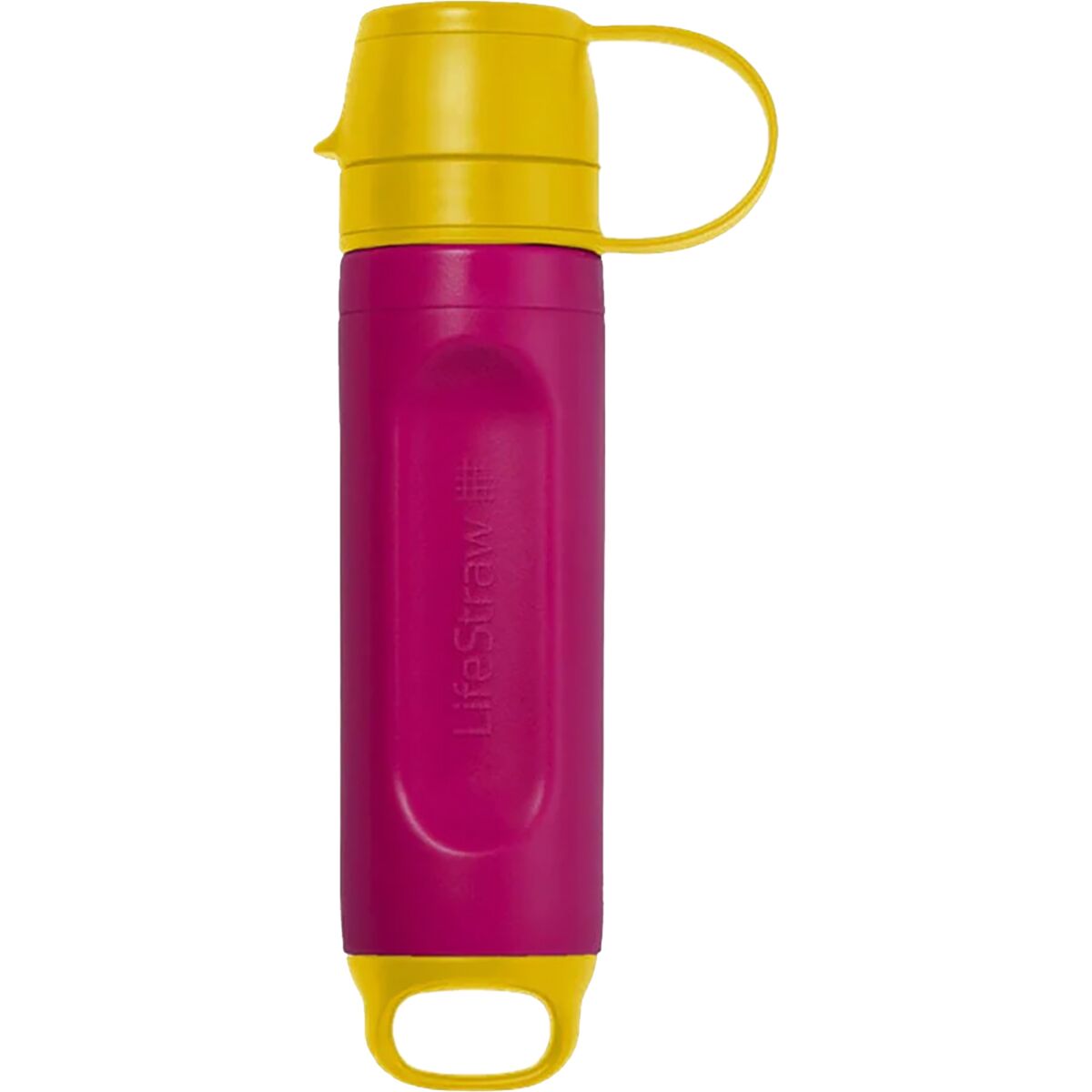
LifeStraw Peak Series Solo Water Filter
A compact backup helps when a primary system clogs or breaks, but carrying two identical membranes does not solve virus or chemical contamination problems. Pair backup planning with awareness of the water risks on your particular route.
Very portable; can be convenient emergency kit component; affordable; little pack volume.
Small element not ideal for treating a large camp; no virus protection; requires appropriate bottle or handling method; freeze risk.
Who should buy it: Lightweight hikers wanting a small backup or bottle-mounted filter.
Use and safety note: Verify compatibility with your bottle and practice use before a trip. Keep clean ends off the ground and away from untreated splashes.
Affiliate link. Selection, options and price may differ at checkout.
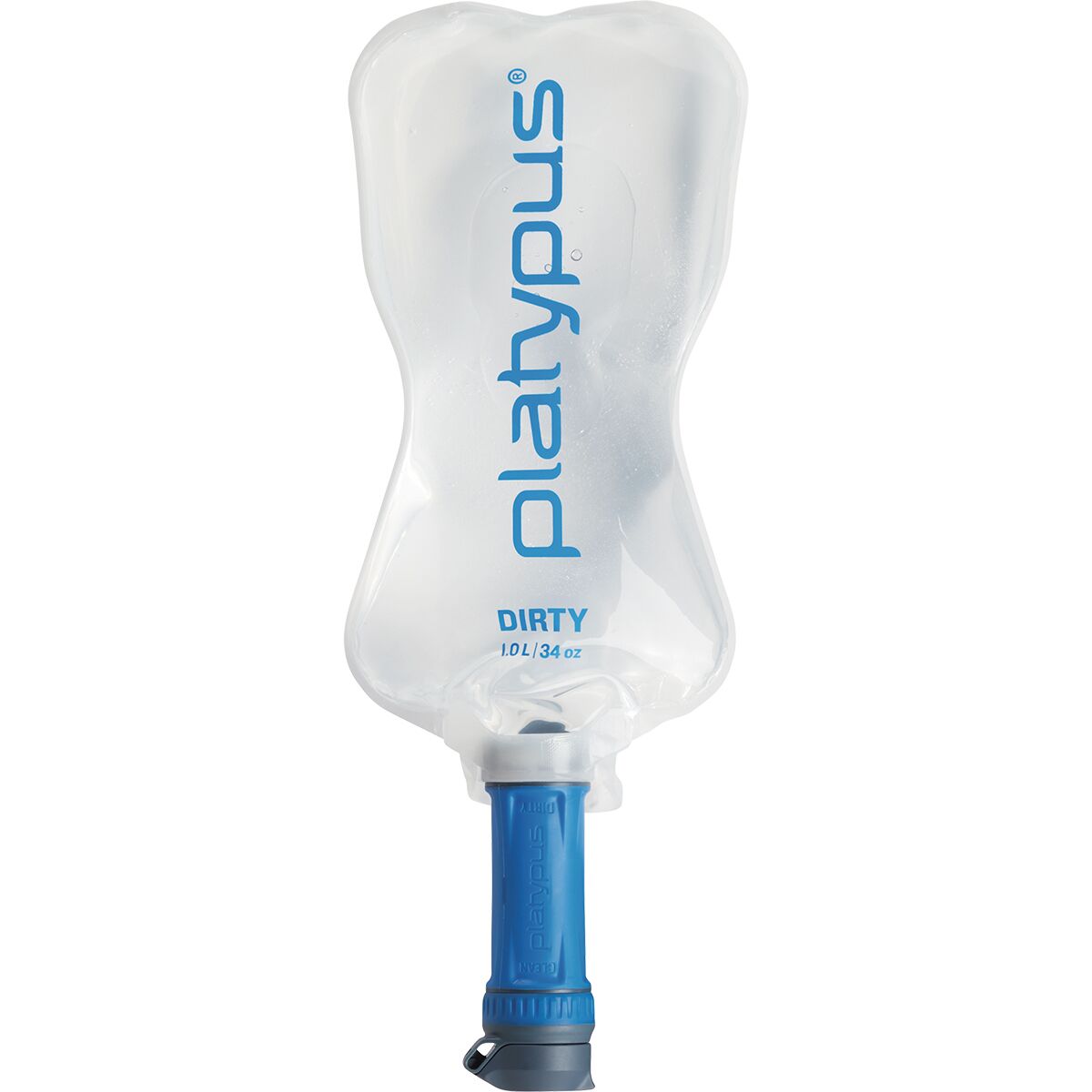
Platypus QuickDraw Microfilter System
This complete kit is the easiest QuickDraw option when starting with no suitable dirty-water collection bottle. Compared with the stand-alone filter, the upgrade buys convenience and a cleaner routine rather than a different class of pathogen protection.
Integrated system reduces compatibility guesswork; convenient collection workflow; field-maintainable element.
Higher purchase cost than filter-only version; bag can puncture; no virus treatment; wet membrane needs freeze protection.
Who should buy it: Hikers who want the QuickDraw approach without assembling a system from separate parts.
Use and safety note: Mark the untreated reservoir and use a separate clean bottle. Inspect threaded connections each time you fill.
Affiliate link. Selection, options and price may differ at checkout.
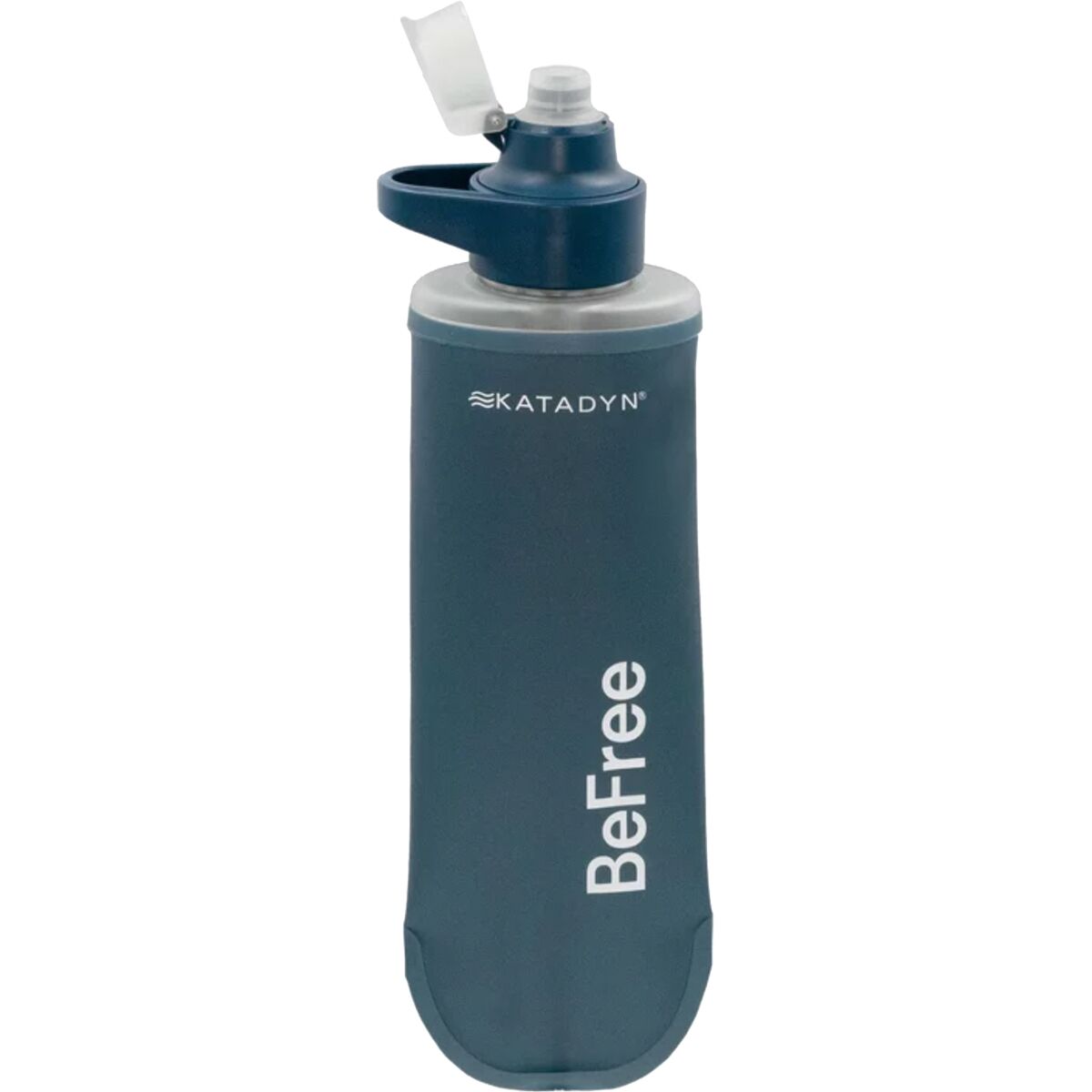
Katadyn BeFree AC 0.5L Microfilter
Half-liter soft flasks make sense for runners and light hikers who know where the next treatment opportunity will occur. For dry trails, hot weather or uncertain sources, choose more capacity and redundancy.
Smaller packed package; built-in flask; quick access at frequent streams; convenient trail running form factor.
Limited carried capacity; not suited to long dry stretches alone; carbon does not guarantee chemical safety; no viruses.
Who should buy it: Fastpackers and shorter outings with frequent reliable water access.
Use and safety note: Do not choose bottle capacity based only on filter weight. Assess dry distances, exertion, group needs and weather first.
Affiliate link. Selection, options and price may differ at checkout.
Who Should Buy Which Filter?
Choose a treatment method that matches your water risk first, then optimize weight, speed, convenience and price. These straightforward categories help avoid the common mistake of picking the most popular bottle without understanding its coverage.
A lightweight squeeze microfilter such as QuickDraw or LifeStraw Peak can be appropriate where water risk is primarily bacteria and protozoa. Keep a backup treatment method.
Prioritize compatible dirty-water containers, repeatable cleaning, replacement availability and secure storage of the clean outlet. Do not chase the lowest claimed weight alone.
A soft flask such as the BeFree AC 0.5L or 1.0L is compact, but map your dry sections and carry enough water volume for weather and effort.
Consider a verified virus-capable purifier such as a suitable Grayl system, or correct filtration followed by disinfection, when sanitation and virus risk justify it.
A high-volume gravity system often makes more sense than passing a half-liter bottle around. Check group liters per day and contamination risk before selecting the treatment method.
A pickup-hose filter like the TrailShot can help collect from trickles. Avoid disturbing sediment and recognize that access convenience does not change pathogen protection.
Carry wet hollow-fiber filters close to your body when freezing is possible. If you cannot verify an exposed membrane remains intact, replace or use a safe alternate treatment method.
Look for a different proven-safe water source. Carbon can address certain tastes and specific contaminants but is not universal detoxification.
Backcountry Water Sources Are Part of the Route Plan
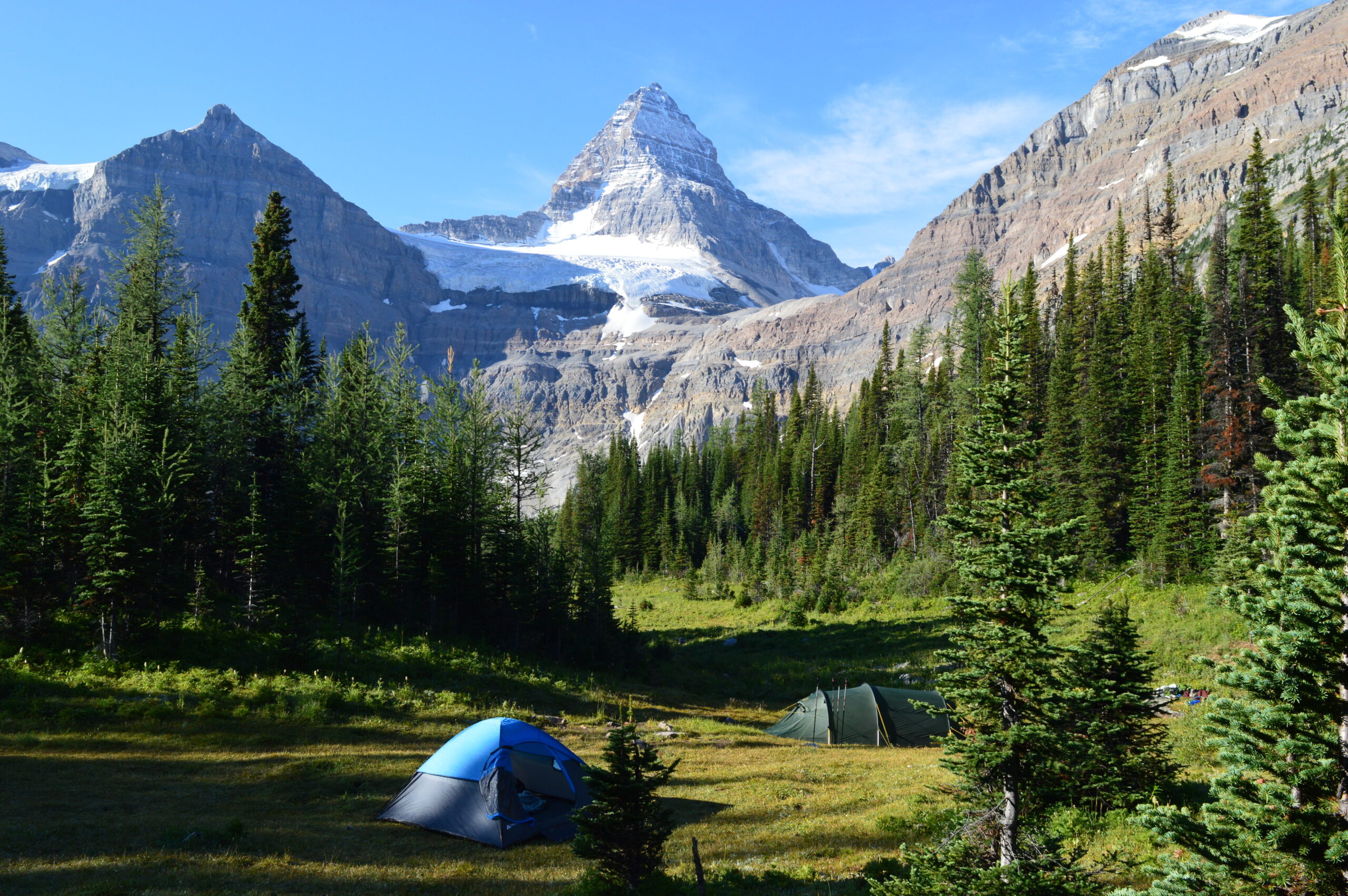
Actual route conditions affect water availability and cleanliness. Think beyond a photographed stream: late-season flow can vanish, a glacial river can become highly turbid, and a campsite shared with livestock can introduce avoidable microbiological hazards. Scout reliable collection points, maintain dirty-to-clean separation, and treat every source based on its actual context rather than its scenic appearance.

How to Choose a Water Treatment System for Your Actual Route
Squeeze Filters vs Gravity Filters: Workflow Matters
A squeeze device moves water through the membrane by applying hand pressure to a pouch or bottle. It is excellent for treating small quantities quickly, especially when one person needs a liter at a time. Gravity systems use elevation difference to create a slow but relatively hands-free treatment process. They can be convenient for families, teams and busy camps but involve more hardware, hoses and bags to keep clean. Neither approach is inherently a virus purifier: what matters is the validated element inside and the exact pathogen claims for the complete system.
At a lunch stop, a small squeeze system often wins because there is almost no setup. At a group base camp, a hanging clean/dirty-bag workflow can free people to cook, layer up or organize food. In gritty water, any membrane can slow down, so consider settling sediment first. Avoid forcing a clogged cartridge with excessive pressure or improvised tools.
Pump Filters: When Collection Is the Hardest Part
Pumps can draw water through a pickup hose and deliver it into a clean bottle. This helps in shallow, muddy or awkward source locations where inserting a soft flask is frustrating. The trade-off is pumping work, additional moving parts and the need to maintain any prefilter on the pickup line. A pump filter is not automatically superior for pathogenic risk; compare its verified reduction claims to those of squeeze and gravity devices.
At glacial margins, choose calmer source locations whenever possible and keep sediment out of the intake. Do not stand directly in dangerous channels, unstable banks or flood zones to fill water. A device that can reach water at arm length is useful but does not justify risky exposure.
Press Purifiers: Broad Pathogen Intent, Less Trail-Speed Efficiency
Press purifiers place the collection and treatment process in a self-contained bottle system. That simplicity is attractive for international travel and climbing approaches when water might pass through populated areas. Their wider claimed microorganism coverage can justify a higher cost and heavier carry, but each press treats a fixed volume and cartridges need replacement. The phrase purifier does not mean every possible chemical contaminant or salt will be removed.
Before departure, inspect the current maker documentation for the exact version and cartridge. Check service life, operating temperature, compatible water types and the time required for a treatment cycle. A worn or damaged cartridge may undermine the whole plan.
UV Disinfection: A Complement, Not a Physical Filter
Portable UV treatment relies on ultraviolet exposure to inactivate microorganisms in suitable clear water. Unlike a membrane, it does not strain out silt, debris or other physical particles. It also depends on a functioning battery, the correct container, complete exposure and the manufacturer-specified stirring or treatment pattern. Cloudy water can shield microorganisms from exposure, requiring clarification before UV treatment.
For travel with access to clear water, UV can be a compact disinfection technology. For remote trips, a failed charging cable or dead battery can leave no treatment ability; plan redundancy. Follow exact time and volume limits rather than guessing at one generic UV cycle.
How to Handle Freezing and a Previously Wet Filter
Hollow-fiber membranes can be damaged when trapped water expands during freezing. A filter may look intact even if internal pathways have changed, so some brands instruct users to replace a filter after likely freezing. This is an especially important issue during overnight alpine starts, winter backpacking and high camps where temperatures can drop sharply after sunset.
Store a damp microfilter in a protected location, follow the exact manufacturer policy, and make a safe alternate treatment plan. Never assume that backflushing automatically restores a freeze-damaged membrane. A dry new filter may have different handling requirements than a filter previously used and wetted.
The Real Cost: Consumables, Reliability and Service Life
A lower upfront sticker price does not always mean lower lifetime cost. Compare the price of replacement cartridges, soft reservoirs, cleaning accessories, carbon media and batteries. Estimate how much water your group will treat on the full itinerary rather than overemphasizing very high theoretical life claims. Manufacturers may state life spans under controlled water conditions, while actual turbid or sediment-heavy water can reduce practical performance.
For extended trips, a serviceable system with available replacement parts may be worth more than a cheaper item you cannot repair. Do not use a cartridge beyond the maker’s stated limit. Keep the planned cleaning materials and spare caps organized with the filter.
Evaluating Weight Without Misleading Numbers
One catalog lists the filter element alone; another includes a bottle, cap, hose and bag; another lists a filled-container weight. These are not equivalent numbers. The meaningful packed comparison is the complete working system you need for your style of trip, including dirty reservoir, clean container and critical accessories. A tiny filter attached to a large bottle might be heavier in practical use than expected.
For the same reason, advertised flow rates are not a reliable substitute for field conditions. They can reflect clean test water and ideal technique. When shopping, compare published test methods, ease of maintenance, storage method and the amount of water you actually need.
Building Redundancy Into Your Water Plan
A treatment plan is more resilient with a compatible backup method, spare collection capacity and an understanding of when filtering is insufficient. Some backpackers carry an extra membrane, but that does not solve virus threats if both devices are microfilters. A suitable backup may be boiling supplies or an appropriate disinfectant with adequate contact time.
Redundancy also means avoiding cross-contamination: never put an untreated-water cap on a clean drinking bottle, do not let hoses drag through dirty soil, and never use one unmarked container for both sides of the process. In a team, teach everyone the dirty/clean routine before someone is thirsty.
Choosing Water on a Glacier, Desert or Forest Trail
A clear alpine stream can still carry pathogens. Glacial silt can clog membranes quickly; desert springs may be contaminated by animals or unreliable in late season; popular forest camps can have upstream human impact. Water planning should be treated as a route decision, not an afterthought after arriving at camp.
Find source notes in recent route reports where available, carry enough capacity for exposed sections and obey local closures or water advisories. If the source smells of fuel or is downstream of mine waste, treatment with a general hiking filter is not a safe assumption.
How We Evaluated These Products
We identified exact in-stock product listings in the approved Backcountry affiliate inventory and recorded their current listed names, photographs and November 2026 prices. We examined the functional categories and communicated their practical trade-offs using publicly available product information and established public-health guidance. This is a specification-and-use-case assessment rather than a laboratory pathogen challenge test or original head-to-head measurement of flow, longevity or weight.
A product does not earn an award for having the highest commission, the flashiest headline or an unverifiable online rating. We prioritize fit with the intended microbial risk, consistent water collection workflow, availability of maintenance and replacement parts, cost and the clarity of a product’s stated limitations. Star ratings are omitted because a comparable verified rating data set for these listings was not supplied. Exact certification and performance claims should be checked on the current manufacturer documents and corresponding certification listing.
We do not suggest drinking untreated water for an A/B comparison, and we do not infer that water is safe because it tastes good or looks clear. The recommended practical test before departure is a dry run of the handling workflow with known-safe practice water: assemble the complete kit, separate dirty and clean containers, confirm cap compatibility, learn maker-specified maintenance and practice safe storage without pretending to validate microbial reduction.
Price update schedule: compare approved feed snapshots at least quarterly and whenever a featured product is replaced or discontinued. Last editorial review: November 2026. For media and attribution, visit Global Summit Guide Media.
Water Filter and Purifier FAQs
What is the best water filter for backpacking?
For typical U.S. trail use when bacteria and protozoa are the primary concern, a lightweight squeeze microfilter such as Platypus QuickDraw is a practical starting point. The right answer changes when viruses, chemicals, group volume or freezing are concerns.
Does a backpacking filter remove viruses?
Do not assume so. Many standard microfilters do not reliably remove viruses. Choose a device with an appropriate verified purifier claim or use a safe filter-plus-disinfection strategy when that risk matters.
Is a Grayl bottle a filter or a purifier?
The GeoPress and UltraPress products are marketed as press purifiers with broader pathogen reduction than ordinary microfilters. Verify current cartridge and organism claims for the exact unit before use.
Can I use water straight from a clear mountain stream?
Clear water is not proof of microbiological or chemical safety. Treat water according to local source risks, warnings and accepted public-health guidance.
What happens if a wet hollow-fiber filter freezes?
Its internal membrane can be damaged. Follow the manufacturer replacement and inspection guidance; if integrity cannot be assured, use a safe alternative.
What is the best approach for group camping?
A suitable gravity system can simplify high-volume work, but confirm that its actual treatment element covers your likely pathogens. Large containers do not turn a microfilter into a purifier.
Are activated carbon filters enough for chemicals?
Carbon can improve taste and remove certain specified contaminants, but broad or unknown chemical pollution should not be assumed removable by a compact hiking filter.
Can UV purification work on muddy water?
Cloudiness and particles can block UV exposure. Prefilter and clarify as the manufacturer directs, and follow exact dosage and container instructions.
Why do you not include universal star ratings?
The approved affiliate feed did not provide a consistent verified rating dataset. This guide uses clear use-case awards and specifications instead of inventing comparisons.
How frequently should product prices be updated?
At least quarterly, and whenever a tracked product becomes unavailable or a new generation changes its capacity or claims.
Build a Complete Mountain Water and Gear Strategy
Link water-treatment selection with the full route plan, hiking equipment, camping gear and group responsibilities. For more product comparisons, read the supporting Global Summit Guide articles.
Editorial and affiliate links are separated. All retail buying buttons point to tracked, approved Backcountry feed products only.
Was this helpful?
Global Summit Guide is an independent mountaineering resource founded in 2026. The team combines first-hand trekking and climbing experience with in-depth research and professional health and nutrition review to help climbers choose objectives, prepare properly, and stay safe.
Health, altitude, and nutrition content is reviewed by Taylor Ludlow (Registered Nurse) and Brigg Hoopes (Nutritionist).
What We Don't Know Yet
Mountain information changes quickly. This box explains the limits of what this page can responsibly promise.
- Total trip cost can change with flights, lodging, guide pricing, permits, gear rentals, transportation, and exchange rates.
- Comparisons simplify complex decisions; the better mountain depends on current conditions, skills, timing, budget, and risk tolerance.
- Visa, passport, vaccination, border, insurance, and local transportation rules may change before your trip.
Verify current conditions with official land managers, guide services, local forecasts, and current route reports before booking or climbing.
Mountaineering, rock and ice climbing, glacier travel, and high-altitude activity are inherently dangerous and can result in serious injury or death. The information on Global Summit Guide is provided for general informational and educational purposes only and is not a substitute for professional instruction, qualified guiding, proper equipment, or your own judgment and experience.
Route conditions, weather, snowpack, permits, regulations, and hazards change constantly and may differ from what is described here. Details may be incomplete, out of date, or contain errors. Always verify current information with local authorities, certified guides, and official sources before making any decision in the mountains.
Nothing on this site is medical, legal, or financial advice. Our fitness, acclimatization, altitude, and nutrition content is general in nature; consult a qualified physician before beginning any strenuous exercise program or exposing yourself to high altitude.
You are solely responsible for your own safety and decisions. To the fullest extent permitted by law, Global Summit Guide and its team accept no liability for any loss, injury, damage, or expense arising from use of, or reliance on, this information. By using this site you acknowledge these risks and accept these terms.
Some links on this site may be affiliate links. If you buy through them we may earn a small commission at no extra cost to you; this never affects our recommendations.
Global Summit Guide recommendation path
Next Best Mountain to Research
Use these recommendations to continue the right planning path instead of stopping on one page.
Use current permit, weather, route, and operator information before booking or climbing.