
Cerro Torre Death Rate: How Deadly Is Patagonia’s Hardest Spire?
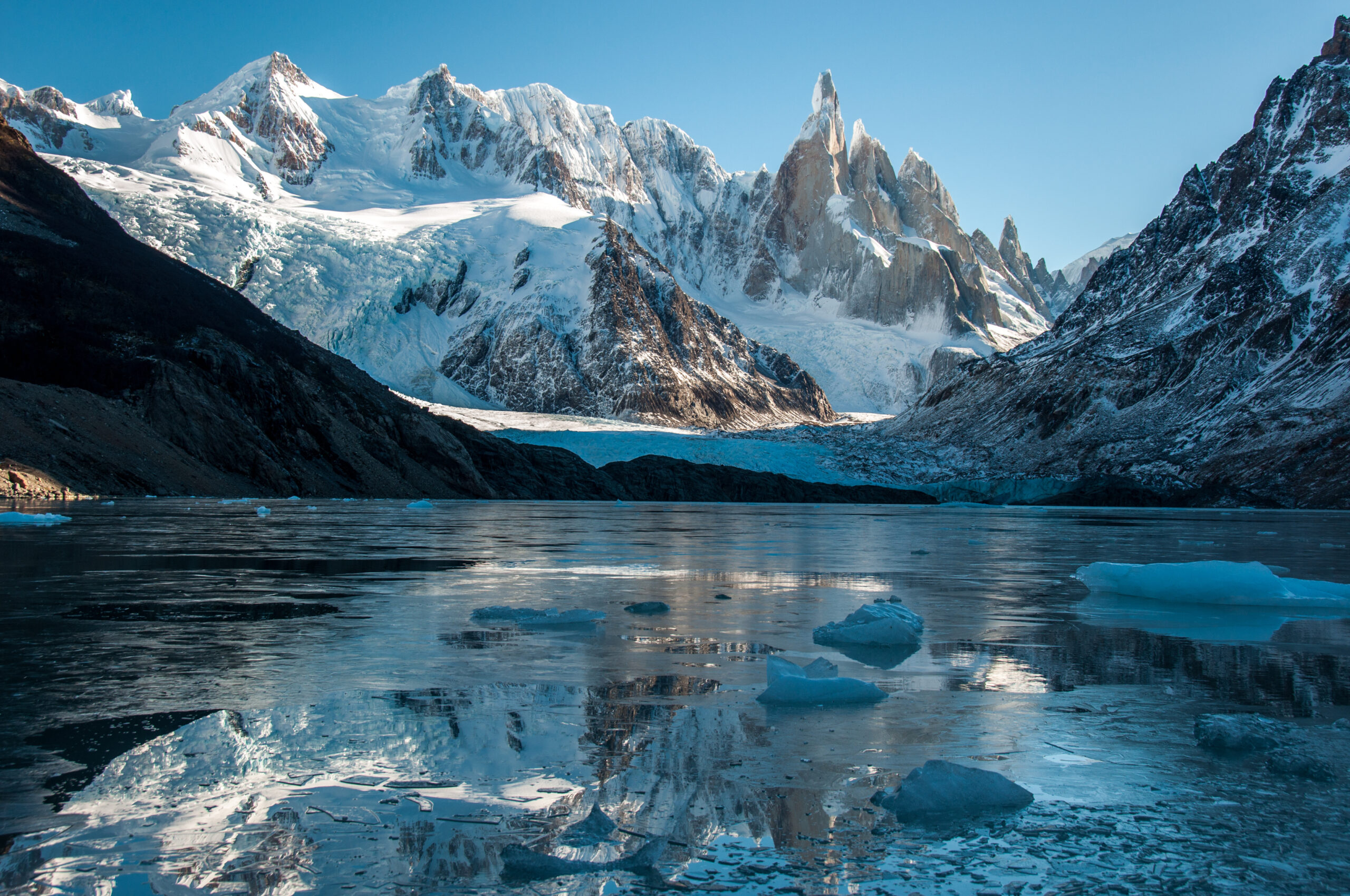
Barely 3,128 metres tall, yet one of the most feared mountains on Earth. Cerro Torre’s danger has nothing to do with altitude and everything to do with vertical granite, rime ice, and the worst weather in the inhabited world. Here’s the real death rate, what it means, and the deaths that built the legend.
Around 6% per climber among serious attempts – extreme for a peak under 3,200 m.
Cerro Torre’s estimated fatality rate is roughly 6% per climber among serious attempts – far below the deadliest 8,000ers (Annapurna ~27-32%, K2 ~22-25%), but severe for its modest height. Its danger is technical, not altitudinal: vertical granite, rime ice, and ferocious weather.
The number works differently here than on commercial 8,000ers. Cerro Torre is an elite objective attempted by relatively few, where most attempts are turned back by storms rather than reaching the top – so read it as danger-per-attempt, not a death-to-summit ratio. For where it sits among all peaks, see our most dangerous mountains ranking.
Fatality Snapshot
As of Jul 17, 2026 · directional risk band · few attempts, elite objective~6% per climber, serious attempts
Technical + weather not altitude
Falling far lower than 1959-1980s
Annapurna ~27-32% deadliest 8000er by ratio
What the number means
Danger-per-attempt, not a death-to-summit ratio.
On the 8,000ers, “death rate” almost always means deaths divided by successful summits. Cerro Torre can’t be measured that cleanly: it’s an elite technical objective climbed by comparatively few people, and on any given expedition most attempts are turned back by weather without reaching the summit. So its estimated ~6% per-climber fatality rate among serious attempts is best read as danger-per-attempt. That’s low next to Annapurna or K2 – but for a peak barely 3,128 m high, it reflects just how unforgiving the climbing is.
Why it’s so dangerous
Everything hard about mountaineering, minus the altitude.
Cerro Torre rises as a near-vertical granite spire straight out of the Southern Patagonian Ice Field, and its danger is a stack of technical hazards rather than thin air:
| Hazard | Why it kills |
|---|---|
| Rime ice | Fragile, feathery ice mushrooms cap the spire; climbers must tunnel through unstable, unprotectable rime |
| Patagonian weather | Among the fiercest on Earth – violent storms arrive fast, and windows are measured in hours |
| Vertical granite | Sustained hard rock and mixed climbing where a fall is typically fatal |
| Rockfall | Warming has increased rockfall on some sections – a factor in recent deaths |
| No rescue | Remote, committing terrain; if a storm traps you high, there is often no safe retreat and no help |
The deaths that defined it
From the disputed first ascent to a modern tragedy.
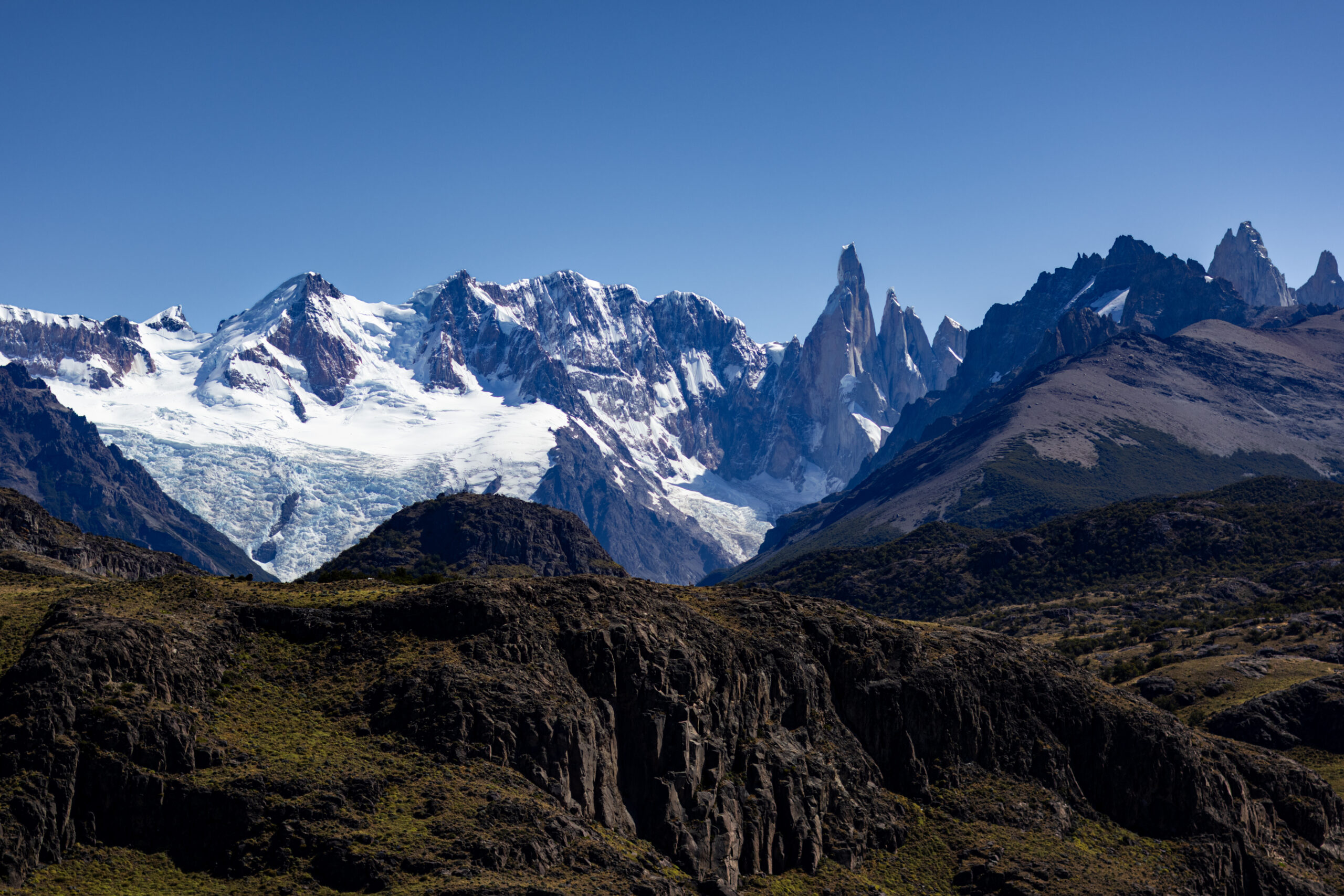
Cerro Torre’s reputation was forged in controversy and loss. In 1959, Cesare Maestri claimed the first ascent with Austrian climber Toni Egger – but Egger was swept to his death on the descent, taking the only camera and with it the proof. When later expeditions failed to repeat the line and brought further deaths, doubt hardened into one of climbing’s most famous disputes; the first undisputed ascent came only in 1974, by Casimiro Ferrari’s Ragni di Lecco team via the west face. Decades later, in 2022, the accomplished alpinist Korra Pesce was struck by rockfall while descending and died – a reminder that even for the world’s best, the mountain’s margins are razor-thin.
Cerro Torre vs the 8000ers
A different kind of deadly.
Comparing Cerro Torre’s rate to an 8,000er’s is almost comparing two different sports. The great Himalayan and Karakoram killers – Annapurna, K2, Nanga Parbat – are lethal through a mix of extreme altitude and objective hazard on expeditions that many attempt. Cerro Torre is lethal through pure technical difficulty and weather on a peak few can even seriously try. It’s why it appears near the top of every “hardest mountain” list but well down the fatality-rate table.
~6% per attempt · technical climbing + Patagonian weather, not altitude.
~22-32% death-to-summit · thin air, avalanche, serac on commercial expeditions.
Has it become safer?
Safer than it was – not safe.
The modern fatality rate is dramatically lower than during the 1959-1980s era. Better equipment, vastly improved forecasting, refined technique, and accumulated route knowledge have all cut the risk for skilled parties who wait for the right window. But the mountain hasn’t changed: the rime, the storms, and the exposure remain, and warming has increased rockfall on some sections. Cerro Torre rewards experience and patience – and still humbles the best climbers alive.
Cerro Torre death rate FAQ
The questions people search right after “cerro torre death rate.”
What is Cerro Torre’s death rate?
Roughly 6% per climber among serious attempts – far below Annapurna (~27-32%) or K2 (~22-25%), but extreme for a 3,128 m peak. It’s danger-per-attempt, not death-to-summit, since most attempts are turned back by weather. The modern rate is far lower than the 1959-1980s era.
Why is it so dangerous under 3,200 m?
Its danger is technical and weather-driven, not altitude: vertical granite, fragile rime ice, violent Patagonian storms, rockfall, and no rescue. A fall on this terrain is typically fatal.
How many have died on it?
There’s no official tally as for the 8,000ers, but deaths have accumulated since the first-ascent era. The most famous is Toni Egger (1959); more recently, Korra Pesce died in 2022 from rockfall on the descent.
Is it the deadliest mountain?
No – by rate it’s well below the deadliest 8,000ers, and Mont Blanc has a far higher total toll. It’s among the most feared for difficulty, not for topping the death charts. See most dangerous mountains.
Has it become safer?
Yes – modern gear, forecasting, and technique have cut the rate sharply since the 1980s. But the rime, storms, and exposure are unchanged, so it’s safer, not safe.
How we built this
- Patagonian climbing records, alpine journals, and accident reporting for fatality context
- First-ascent history (Maestri 1959 dispute; Ferrari / Ragni di Lecco 1974) for the historical record
- GSG house estimate of ~6% per-climber fatality among serious attempts, cross-checked against the most-dangerous ranking
- Presented as a directional risk band, since Cerro Torre sees far fewer attempts than the 8,000ers
Last updated: July 17, 2026. Next review: January 2027. Research-based safety data, not a record of personal ascents; figures are directional, not exact probabilities.
See how Cerro Torre stacks up
One spire, one very specific kind of danger. Compare it against every major peak – by fatality rate and by difficulty – in our safety-data hub.
Most Dangerous Mountains The 10 Hardest Mountains