Global Summit Guide logo featuring mountain imagery, symbolizing hiking and mountaineering resources for trip planning and safety.

Tag: mountaineering crampons

  • How to choose mountaineering crampons: steel vs aluminum, boot compatibility, and binding types

    Gear & Safety Guides / Mountaineering

    How to choose mountaineering crampons: steel vs aluminum, boot compatibility, and binding types

    4
    Boot rating tiers
    10-14
    Point count range
    $150-$350
    Typical price range
    10+ yrs
    Typical lifespan
    Part of the crampons gear series This decision guide supports our crampons buyers guide and our microspikes vs crampons comparison. Buyers guide →

    Choosing mountaineering crampons is more complicated than picking the cheapest option that looks aggressive. The wrong crampons can be dangerous on technical terrain, frustrating on long approaches, or simply incompatible with your boots — and you only discover the mismatch when you’re already on the mountain. This guide gives you the practical decision framework: match your boots to a compatibility rating, then choose material, point count, and binding type based on your climbing objectives. The result is crampons that work for the specific climbing you’ll actually do. For broader context see our crampons buyers guide and our microspikes vs crampons decision guide.

    The 4 decisions you actually need to make in order

    Every crampon purchase comes down to four sequential decisions. Get them in this order and the choice becomes simple:

    1. Boot compatibility — what boots do you have or plan to buy? This determines what crampon bindings work.
    2. Material — steel or aluminum? Driven by your objectives, not by aesthetics.
    3. Point count — 10, 12, or 14+ points? Driven by terrain difficulty.
    4. Binding type — strap, hybrid, or step-in? Driven by your boots and use case.

    Most first-time buyers reverse this order, starting with “what crampons look cool” and ending up with incompatible gear. The correct sequence prevents this.

    The most important rule

    Your boots determine your crampons, not the other way around. If you already own mountaineering boots, the boot rating constrains your crampon choices. If you’re buying both boots and crampons at the same time, build the system together — but boots come first in the decision sequence because boots last longer and are harder to return.

    Decision 1: Boot compatibility ratings B0 through B3

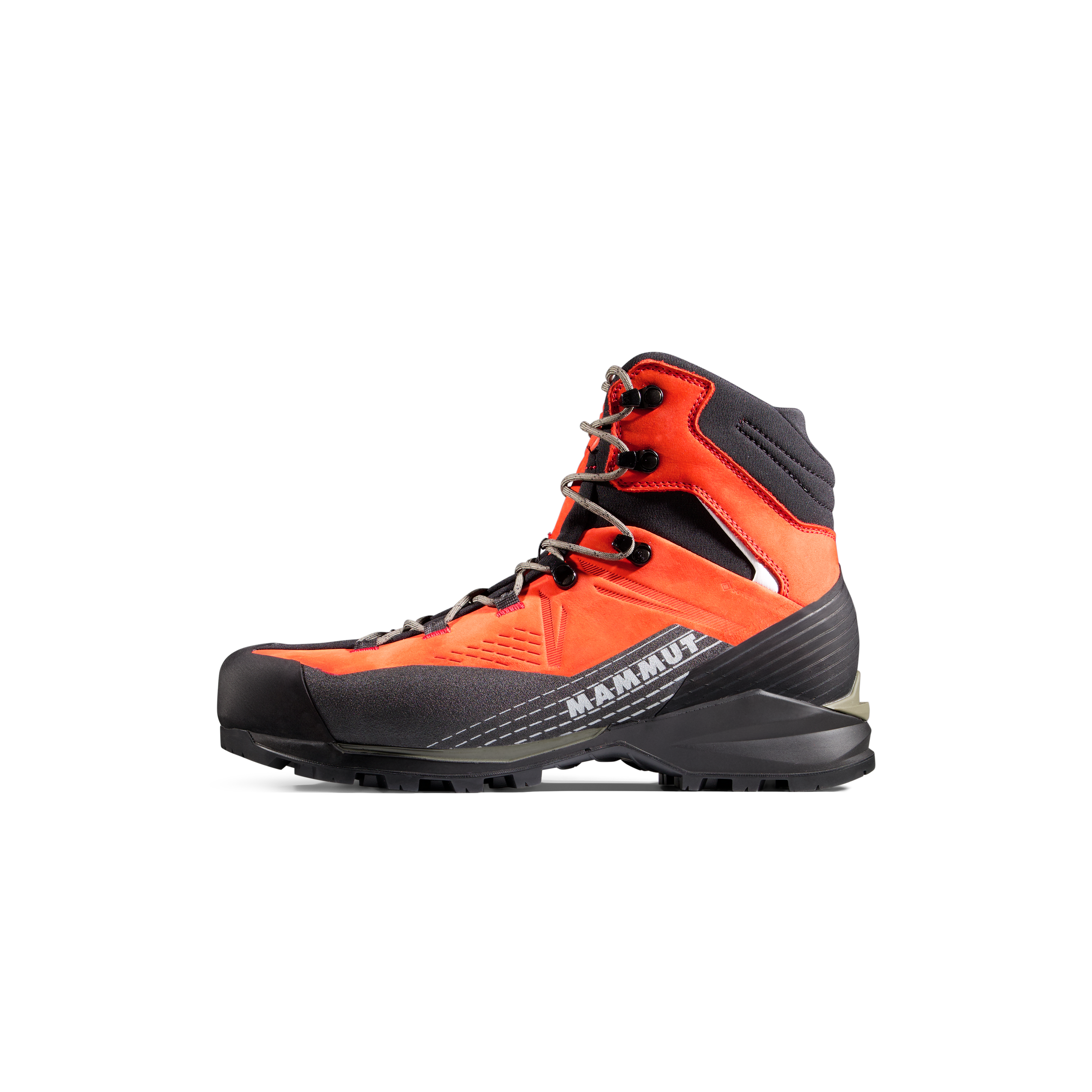
    The European boot rating system from B0 to B3 is the international standard for mountaineering boot stiffness. Each rating defines which crampons can attach safely. Understanding your boot rating is the single most important step in choosing crampons.

    B0

    B0 — Flexible Hiking Boots

    Example boots: Salomon Quest, Merrell Moab, La Sportiva TX5 · Use: Hiking, light backpacking, approach
    Strap-on only
    B1

    B1 — 3-Season Mountaineering Boots

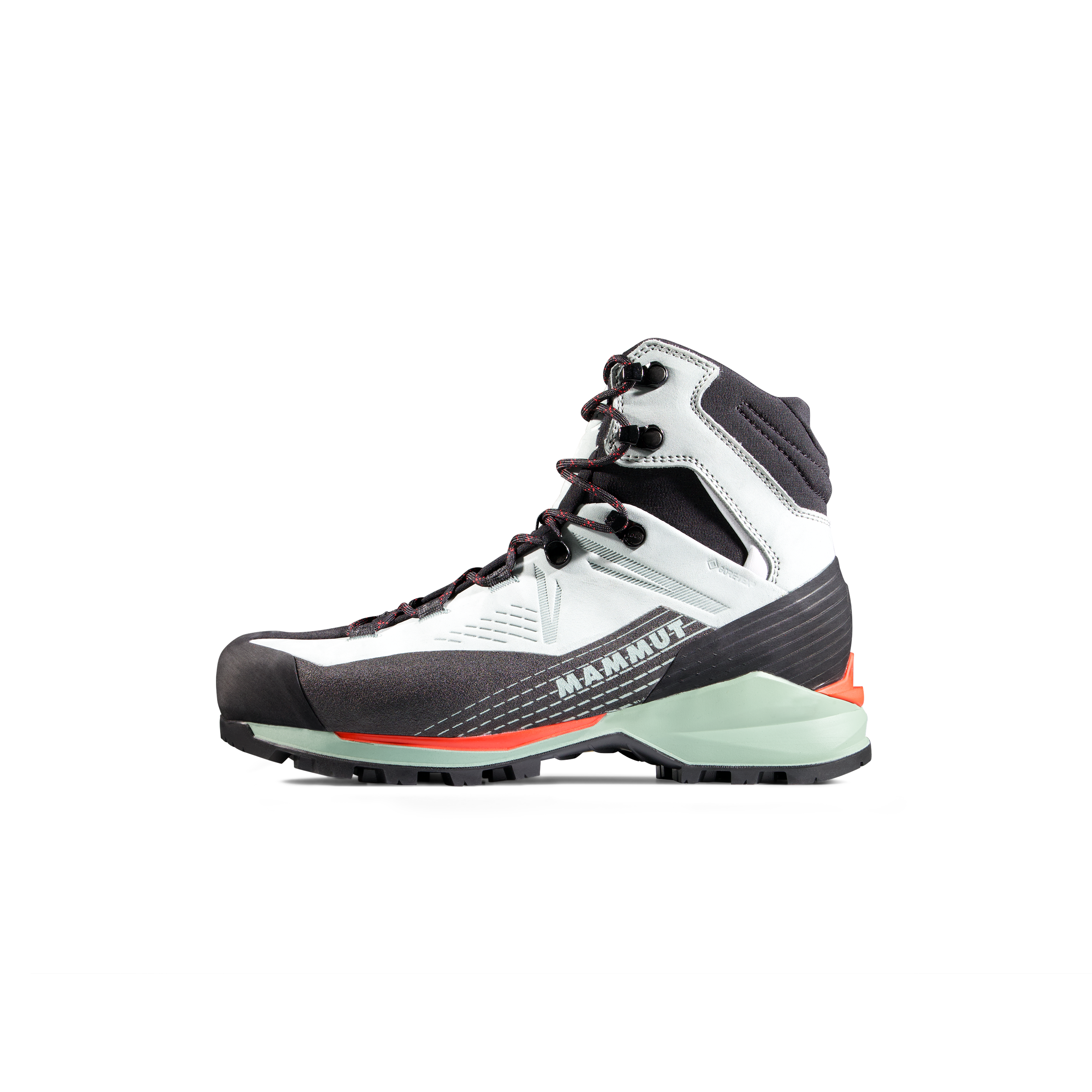
    Example boots: Scarpa Manta Tech, La Sportiva Trango, Salewa Mtn Trainer · Use: Summer alpine, moderate altitude, ski touring
    C1 – C2 crampons
    B2

    B2 — 4-Season Mountaineering Boots

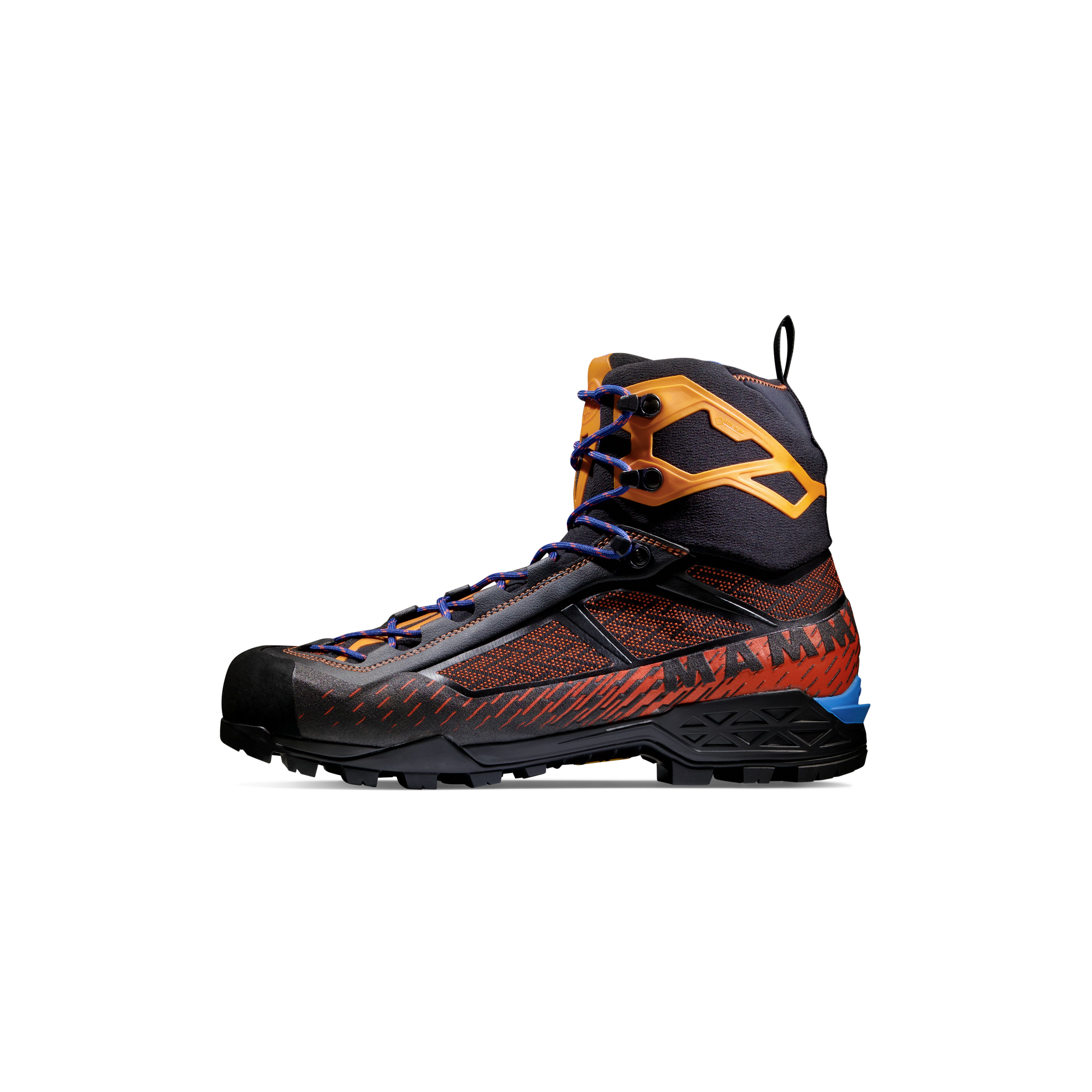
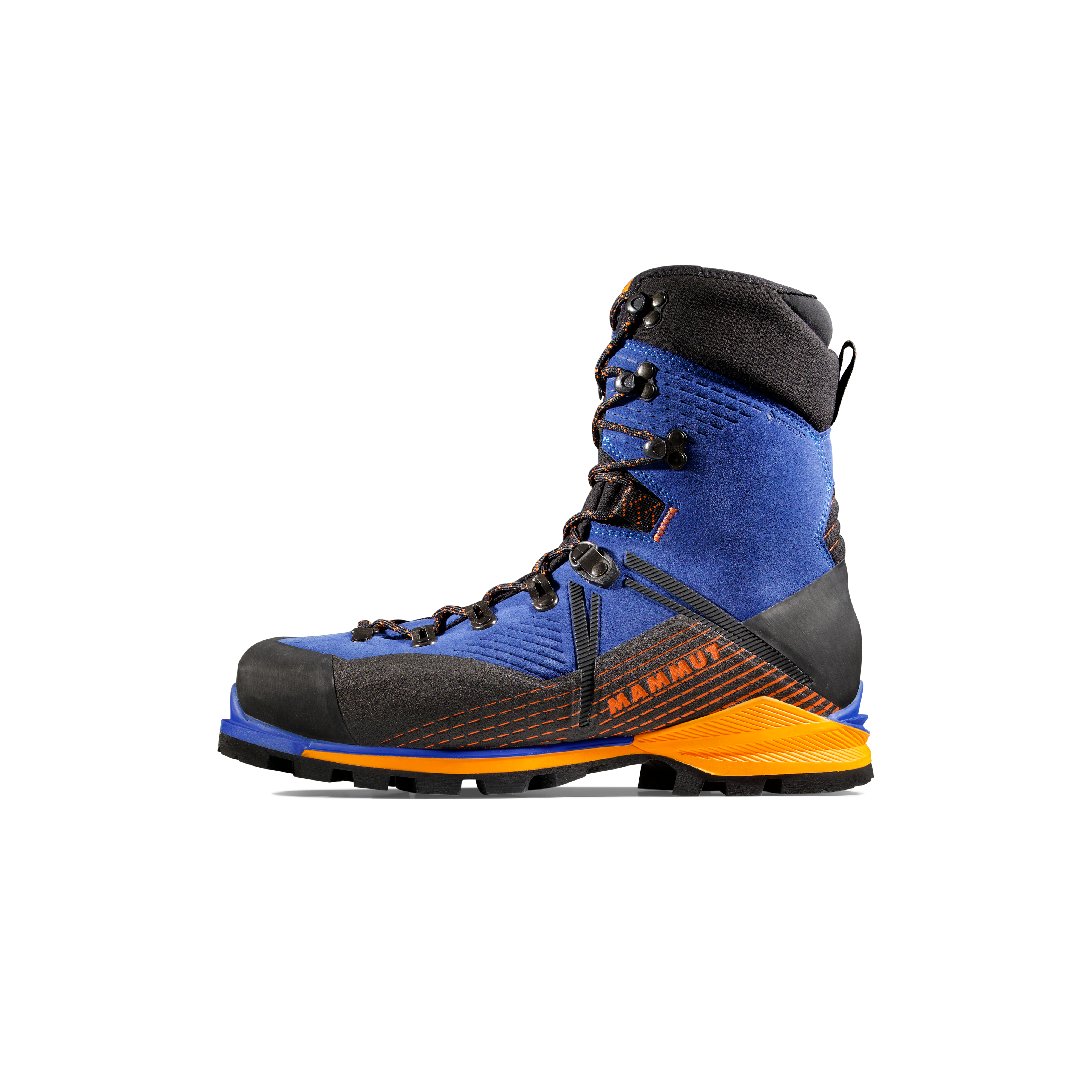
    Example boots: Scarpa Mont Blanc Pro GTX, La Sportiva Nepal Cube, Lowa Mountain Expert GTX · Use: Mont Blanc, Matterhorn, Aconcagua, Mexican volcanoes
    C2 hybrid bindings
    B3

    B3 — Full Mountaineering / Expedition Boots

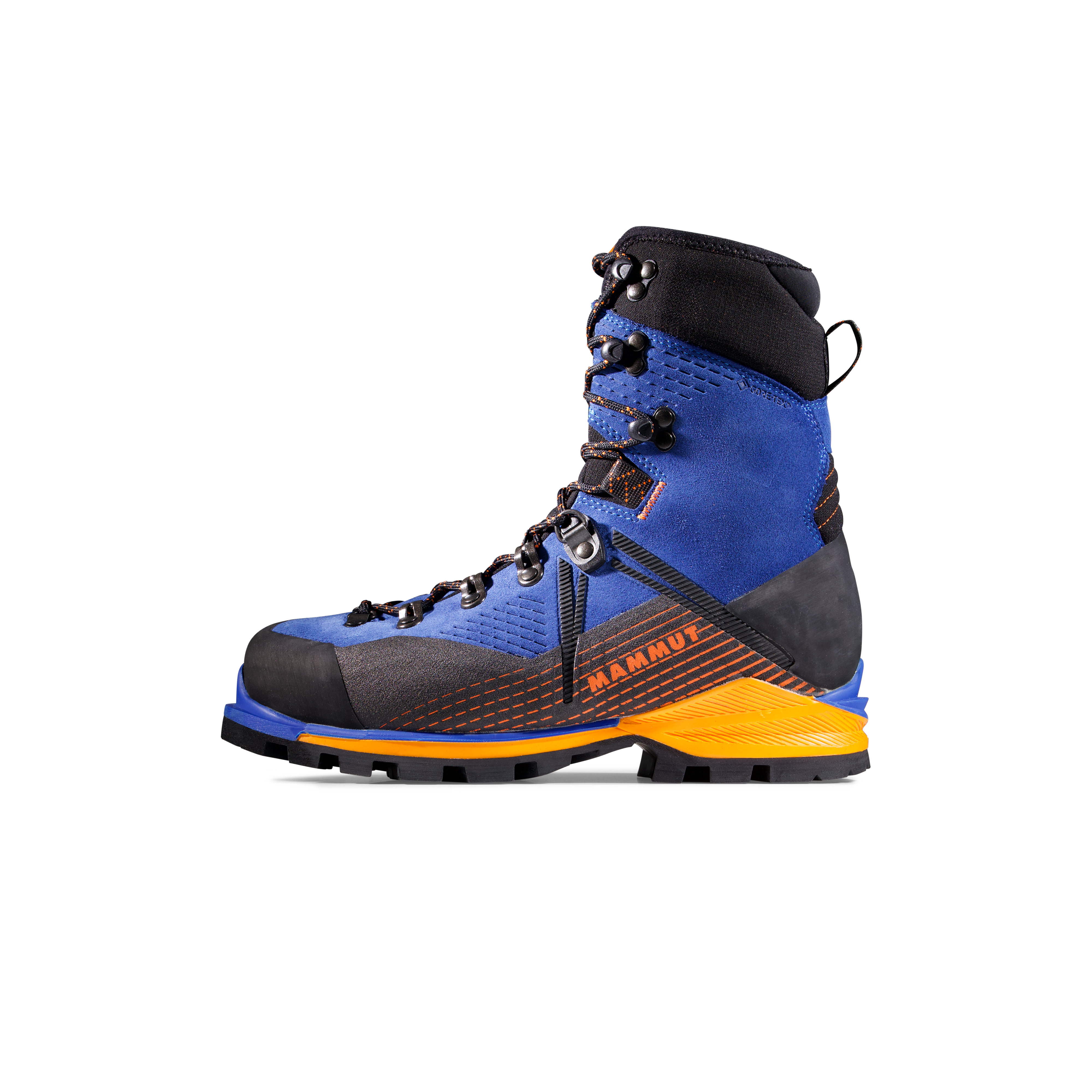
    Example boots: La Sportiva G2 Evo, Scarpa Phantom 6000, La Sportiva Olympus Mons · Use: Denali, 8000ers, technical winter alpine, ice climbing
    C3 step-in bindings
    Boot ratingCompatible crampon typesWhat it tells you
    B0 (flexible)C1 strap-on onlyHiking boots — limited mountaineering capability
    B1 (semi-stiff)C1 strap-on, C2 hybridIntro mountaineering boots — versatile
    B2 (stiff midsole)C1, C2, semi-rigid C2Standard mountaineering boots — most common
    B3 (fully rigid)C1, C2, C3 all optionsExpedition boots — all crampons compatible
    Why this matters for safety

    Attaching fully rigid C3 step-in crampons to a flexible B0 boot creates a binding system that can fail under load. The boot flexes; the crampon doesn’t. The result is the crampon working loose, points binding in soft positions, or the entire crampon dislodging mid-step. This has caused serious injuries. Never use C3 step-in crampons on B0 or B1 boots, even if you can force them on.

    Decision 2: Steel vs aluminum match material to objective

    The material decision is the second-largest cost driver after boots themselves. Steel and aluminum crampons serve different purposes — and choosing the wrong one wastes money or compromises safety.

    Steel Crampons

    The workhorse standard
    Weight (pair)800-1,200 g
    Durability10+ years
    Bite into iceExcellent
    Handles rockYes (mixed terrain)
    Best forAll-around mountaineering
    Price range$200-$350

    The right choice for nearly all general mountaineering, technical climbing, ice climbing, and any terrain where points contact rock. Heavier but more durable and sharper. Most climbers’ first and only crampons are steel. Examples: Petzl Vasak, Grivel G12, Black Diamond Sabretooth.

    Aluminum Crampons

    Lightweight specialist
    Weight (pair)500-700 g
    Durability3-5 years typical
    Bite into iceGood (softens fast)
    Handles rockNo (points blunt quickly)
    Best forGlacier travel, ski mountaineering
    Price range$150-$220

    The right choice for non-technical glacier travel and ski mountaineering where weight savings matter. 300-500g lighter than steel – a meaningful difference on multi-day expeditions. Examples: Black Diamond Neve, Petzl Leopard FL.

    The mistake most first-time buyers make

    Buying aluminum crampons because they’re lighter and cheaper, then trying to use them on technical terrain. The aluminum points blunt after a few hours on mixed rock-and-ice routes. The crampons are effectively destroyed in a single climbing weekend. For 90% of mountaineers, steel crampons are the correct first purchase even though they cost more and weigh more.

    Decision 3: Point count 10, 12, or 14 points

    Modern mountaineering crampons have 10 to 14 points. More points generally means more security on harder terrain but more weight and complexity. The right point count depends on what you’re climbing.

    Point countBest forWeightExamples
    10 pointsSki mountaineering, non-technical glacier travel, lightweight objectives~500-700g (aluminum)Petzl Leopard FL, Black Diamond Neve
    12 pointsGeneral mountaineering, most alpine routes, Aconcagua, Denali~800-1,000g (steel)Petzl Vasak, Grivel G12, Black Diamond Sabretooth
    14 pointsTechnical ice climbing, mixed alpine, vertical ice~1,000-1,200g (steel)Petzl Dart, Black Diamond Cyborg, Grivel G14

    The 12-point recommendation: for a first mountaineering crampon purchase, 12 points in steel is almost always the right choice. This covers Mont Blanc, Matterhorn (standard route), Aconcagua, Denali, the Mexican volcanoes, Cotopaxi, Chimborazo, and the vast majority of mountaineering objectives below true ice climbing. You can climb harder objectives with 12-point crampons; you can’t make a 10-point aluminum crampon work for ice climbing.

    Front point configuration: beyond the total count, crampons differ in front point shape (horizontal “T-shape” for general mountaineering vs vertical “monopoint” or “dual points” for technical ice). General mountaineering crampons use horizontal front points. Technical ice crampons use vertical front points. Most climbers should stick with horizontal front points unless they’re specifically pursuing ice climbing.

    Decision 4: Binding type strap, hybrid, or step-in

    The binding type determines how the crampon attaches to your boot. This is constrained by your boot rating but also by personal preference and use case.

    Strap (Universal)

    C1 — works on any boot
    Boot compatibilityB0, B1, B2, B3
    On/off speedSlow (60-120 sec)
    SecurityGood with practice
    Best forHiking, mixed gear quivers

    Universal binding with straps at toe and heel. Works with any boot but takes longer to put on and adjust. The right choice if you’ll use the crampons with multiple boots or with B0/B1 boots that don’t have welts.

    Hybrid (Semi-Auto)

    C2 — boots with heel welts
    Boot compatibilityB1, B2, B3
    On/off speedFast (30-60 sec)
    SecurityExcellent
    Best forMost general mountaineering

    Strap at toe, lever at heel. Requires a heel welt on the boot. The most common binding for general mountaineering boots. Faster than strap-on, more secure than universal. The standard choice for most first-time mountaineering buyers.

    Step-In (Auto)

    C3 — boots with toe + heel welts
    Boot compatibilityB2 (sometimes), B3
    On/off speedVery fast (15-30 sec)
    SecurityMaximum
    Best forTechnical, ice climbing, cold

    Toe bail and heel lever — no straps. Requires both toe and heel welts. Fastest on/off, most secure, but only works with B3 (and some B2) boots. The standard for ice climbing and technical alpine where rapid transitions matter.

    Matching crampons to specific climbs practical recommendations

    Different mountaineering objectives demand different crampon specs. Here’s the practical mapping:

    ObjectiveRecommended cramponsBoot rating
    Mount Whitney / 14er snow10-12 point steel, strap or hybridB1-B2
    Mount Hood / Mount Adams12 point steel, hybrid bindingB2
    Mont Blanc Goûter route12 point steel, hybrid bindingB2-B3
    Matterhorn Hörnli Ridge12 point steel, step-in or hybridB2-B3
    Aconcagua Normal Route12 point steel, hybrid (warmth)B2-B3
    Pico de Orizaba Jamapa Glacier12 point steel, hybridB2
    Denali West Buttress12 point steel, step-in (cold)B3
    Cotopaxi / Ecuador volcanoes10-12 point aluminum or steelB2
    Ski mountaineering 4000ers10 point aluminum, strap (universal)B1-B2
    WI4-WI5 ice climbing14 point technical steel monopointB3
    Everest South Col12 point steel, step-inB3 expedition

    The pattern across these recommendations: 12-point steel crampons with hybrid bindings on B2-B3 boots covers approximately 75% of mountaineering objectives. If you’re buying one pair of crampons for general use, this is the sweet spot. The Mont Blanc route detail is in our Mont Blanc Goûter route guide, with similar route-specific gear context across our peak-by-peak pages.

    Quality brands to consider honest assessment

    The crampons market is dominated by four major manufacturers, each with established quality and specific strengths:

    Petzl (France)

    The dominant brand for general and technical mountaineering. The Petzl Vasak (12-point steel general mountaineering) is the most-recommended first crampon worldwide. The Petzl Sarken adds technical capability. The Petzl Dart is the premium technical/ice option. The Petzl Leopard FL is the standard lightweight aluminum option.

    Grivel (Italy)

    The oldest crampon manufacturer (founded 1818) and still produces some of the best crampons available. The Grivel G12 is comparable to the Vasak and preferred by many alpinists for its anti-balling plate design. The G14 is the technical ice option. The G10 is the aluminum lightweight option.

    Black Diamond (USA)

    The dominant North American brand. The Black Diamond Sabretooth is a strong general mountaineering option. The Black Diamond Cyborg is the technical/ice option. The Black Diamond Neve is the lightweight aluminum option. Black Diamond crampons tend to be slightly more durable and slightly heavier than European equivalents.

    Camp / Cassin (Italy)

    Smaller but high-quality. The Camp XLC 470 is one of the lightest aluminum crampons available (470g pair). The Cassin Blade Runner is a strong technical option. Camp brands offer good value compared to the dominant brands.

    A note on price-to-quality

    Crampons are one of the best-value pieces of mountaineering gear. A $250 pair of quality steel crampons will last 10+ years with reasonable care, making them less expensive per use than virtually any other mountaineering equipment. Don’t try to save money by buying cheap unknown-brand crampons – quality matters because the consequences of failure are severe. Stick with Petzl, Grivel, Black Diamond, or Camp/Cassin.

    Fit and adjustment getting it right

    Even the perfect crampons fail if they’re not properly fitted to your boots. The fitting process matters and most retailers will help with this:

    1. Take your boots to the store when buying crampons. Trying crampons with your actual boots is essential.
    2. Adjust the bar length so the heel and toe sections sit firmly without overhanging.
    3. Verify the heel lever engages cleanly with the boot’s heel welt (for hybrid/step-in).
    4. Check that the toe bail or strap holds firmly without slop. Walk around the store with crampons on – they shouldn’t shift.
    5. Test the front points alignment. Front points should extend straight forward, not splayed or angled.
    6. Practice on/off at home before your first climb. Doing this for the first time at 4 AM on a mountain in cold weather is a recipe for problems.
    7. Install anti-balling plates if not already present. These plastic inserts prevent snow from sticking to the crampons – critical safety feature.

    Maintenance and longevity caring for crampons

    Quality crampons can last decades with proper care. The basics:

    • Dry thoroughly after each use. Wet crampons rust, particularly in the binding hardware.
    • Sharpen the points annually if you climb regularly. A flat file works for the main points. Don’t over-sharpen – you remove metal each time.
    • Replace anti-balling plates when they crack. These are wear items, not permanent.
    • Inspect the binding hardware before each trip. Worn straps, broken levers, or damaged toe bails should be replaced.
    • Avoid walking on rock unnecessarily. Rock blunts the points. Remove crampons for extended rock sections.
    • Store dry. Crampons in a wet pack or boot box will rust quickly.

    Common mistakes to avoid honest pitfalls

    • Buying crampons before boots. Boots determine compatibility – get them first or buy them together.
    • Choosing aluminum for general mountaineering. The weight savings aren’t worth the loss of durability and rock tolerance for most users.
    • Going overboard on points. 14-point technical crampons on a Mont Blanc trip are unnecessary weight. Match the tool to the job.
    • Buying without trying. Online purchases without trying with your specific boots cause many returns. Try in person.
    • Ignoring anti-balling plates. Snow balling under crampons is a serious safety issue – always use anti-balling plates.
    • Not practicing on/off at home. First-time crampon use should not be on a serious objective. Practice in your backyard or on easy terrain first.
    • Skipping the file. Dull crampons are dangerous. Sharpen annually or when you notice slipping.
    • Mixing crampons and crampons in the same pair. Buy a matched pair from one brand. Avoid bargain mix-and-match setups.
    ★ Complete Crampons Resources

    The crampons buyers guide

    Detailed product recommendations, model-specific reviews, and the complete crampons buying framework.

    Buyers guide →

    The bottom line on choosing mountaineering crampons

    Choosing the right mountaineering crampons requires matching four factors in sequence: boot compatibility (B0-B3 rating), material (steel vs aluminum), point count (10-14), and binding type (strap, hybrid, or step-in). For 75% of mountaineering objectives, the answer is 12-point steel crampons with hybrid bindings, paired with B2-B3 mountaineering boots. This covers Mont Blanc, Matterhorn, Aconcagua, Denali, the Mexican volcanoes, and most general alpine objectives. Specialized objectives demand specialized crampons: aluminum 10-point for ski mountaineering and lightweight glacier travel, 14-point technical steel for ice climbing and mixed routes. Boot rating constrains compatibility — never use C3 step-in crampons on B0 or B1 boots even if you can physically attach them. Quality crampons from Petzl, Grivel, Black Diamond, or Cassin/Camp cost $200-$350 and last 10+ years with proper maintenance, making them excellent value compared to other mountain gear. The full product-specific framework is in our crampons buyers guide, with the broader snow-travel-gear context in our microspikes vs crampons decision guide.

    Frequently asked questions

    How do I choose the right crampons for mountaineering?

    Choosing the right mountaineering crampons requires matching four factors to your climbing objectives: boot compatibility (B0 to B3 rating), point count (10 vs 12 points), material (steel vs aluminum), and binding type (strap, hybrid, or step-in). Start with your boot – your boot’s rating determines which crampons can be used. B0 boots (flexible hiking boots) only accept strap-on crampons. B1 boots accept strap or hybrid bindings. B2 boots accept hybrid or step-in bindings. B3 mountaineering boots accept all crampon types including step-in bindings. After confirming boot compatibility, choose material and point count based on your objectives: aluminum for non-technical glacier travel, steel for technical mountaineering or ice climbing.

    What is the difference between steel and aluminum crampons?

    Steel crampons are heavier (around 900 to 1,100 grams per pair) but more durable, sharper, and better for technical climbing on ice and mixed terrain. They are the standard choice for serious mountaineering, ice climbing, and any climbing where the points might contact rock. Aluminum crampons are dramatically lighter (around 500 to 700 grams per pair) and excellent for non-technical glacier travel, snow plods on volcanoes, and ski mountaineering where weight savings matter. Aluminum points blunt quickly on rock, so aluminum crampons should not be used for mixed terrain or technical climbing. For most general mountaineering, steel is the right choice. For specific lightweight applications, aluminum is excellent.

    How many points should mountaineering crampons have?

    Mountaineering crampons typically have 10 to 14 points, with 12 points being the standard for general mountaineering. 10-point crampons are lighter and suitable for non-technical glacier travel and snow climbing – common for ski mountaineering and lightweight objectives. 12-point crampons are the versatile workhorse standard – sufficient for nearly all general mountaineering including Aconcagua, Denali, and Himalayan trekking peaks. 14-point technical crampons add additional secondary points for ice climbing and mixed terrain. For a first mountaineering crampon purchase, 12 points is almost always the right choice.

    What boot is compatible with crampons?

    Crampon-compatible boots are rated B0 through B3 based on stiffness. B0 (flexible hiking boots) accept only strap-on universal crampons. B1 (3-season boots with stiff midsoles) accept strap-on or hybrid bindings. B2 (stiffer 4-season boots with heel welts) accept hybrid or step-in bindings. B3 (full mountaineering boots with toe and heel welts) accept all crampon types. The matching crampon ratings are C1 (flexible binding for B0-B1), C2 (semi-rigid for B1-B2), and C3 (fully rigid for B2-B3). Trying to fit a fully rigid C3 crampon to a flexible B0 boot is unsafe and may not bind properly. Always confirm boot-crampon compatibility before purchasing.

    What is the best binding type for mountaineering crampons?

    The best binding type depends on your boot. Strap bindings (universal) work with any boot including flexible hiking boots and are the most versatile but slowest to put on. Hybrid bindings (semi-automatic) use a strap at the toe and a heel lever for boots with heel welts – they balance security and versatility. Step-in bindings (automatic) use a toe bail and heel lever requiring boots with both toe and heel welts – they offer the fastest on/off and most secure attachment but only work with B2-B3 mountaineering boots. For first-time mountaineering boots and crampons, hybrid bindings are the most common recommendation because they pair with the widest range of intermediate mountaineering boots.

    How much should I spend on mountaineering crampons?

    Mountaineering crampons typically cost 150 to 350 USD depending on type and quality. Entry-level aluminum crampons for general use cost approximately 150 to 200 USD (Black Diamond Neve, Petzl Leopard). Standard steel general mountaineering crampons cost 200 to 260 USD (Petzl Vasak, Grivel G12, Black Diamond Sabretooth). Technical steel crampons for ice climbing and mixed routes cost 260 to 350+ USD (Petzl Dart, Black Diamond Cyborg, Grivel G14). For first-time mountaineers buying crampons for Aconcagua, Denali, or Mont Blanc, the 200 to 260 USD steel general mountaineering range is the standard. Quality crampons last 10+ years if maintained properly, making them excellent value compared to other mountain gear.

    Are heavier crampons better than lighter ones?

    Heavier crampons are generally more durable but not necessarily better – the right weight depends on the objective. For technical ice climbing and mixed terrain where durability and bite matter most, heavier steel crampons (900 to 1,200 grams per pair) are better. For non-technical glacier travel and snow plods on high-altitude peaks where weight savings compound over multi-day climbs, lighter aluminum crampons (500 to 700 grams) are better. The general rule: match crampon weight to expected terrain. Climbers buying their first pair should choose steel crampons in the 800 to 1,000 gram range as the most versatile workhorse choice covering 90 percent of mountaineering objectives.
    Was this helpful?

    Yes
    No
    Thanks for your feedback!
  • Best Mountaineering Crampons 2026: How to Choose + Top Picks by Category

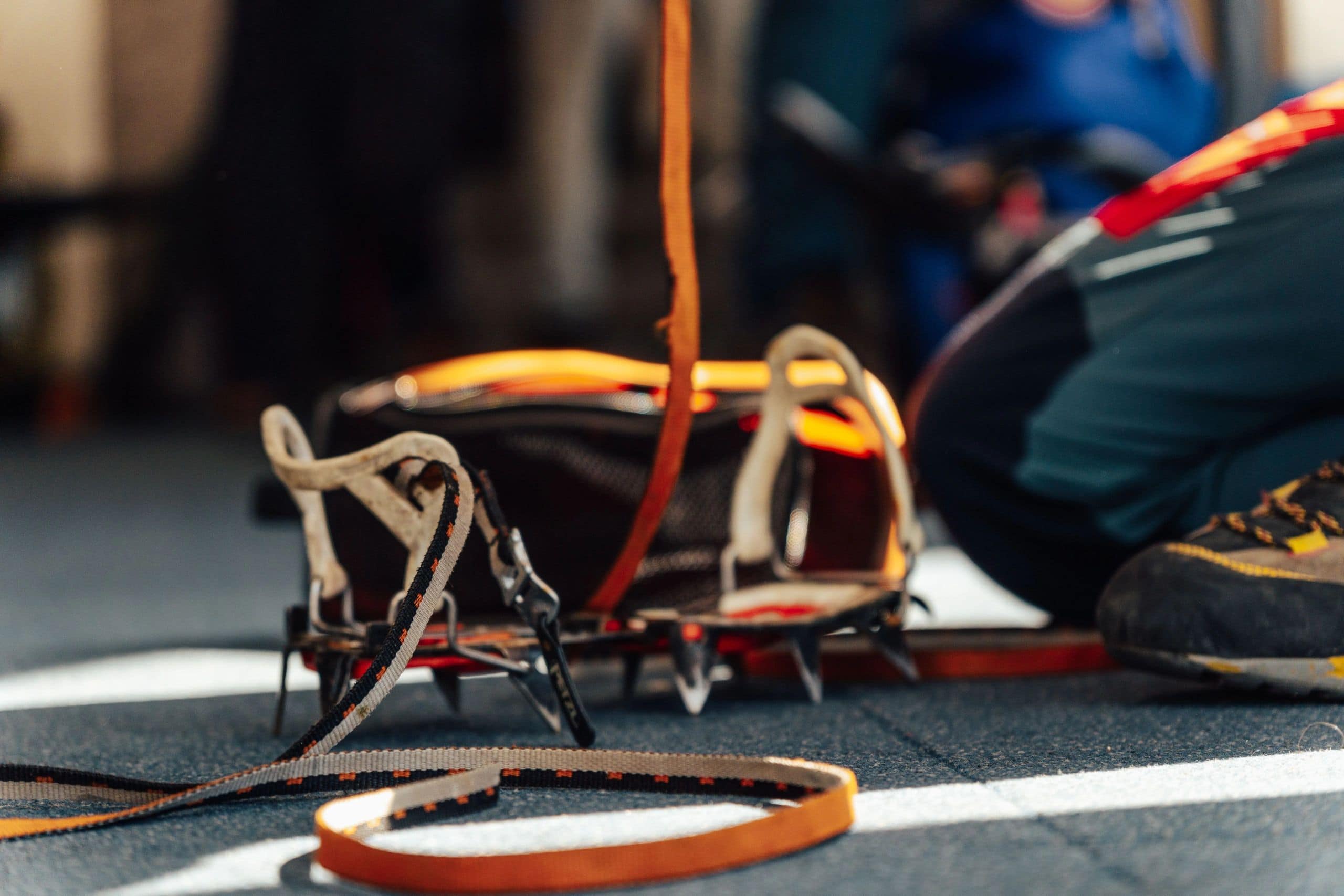
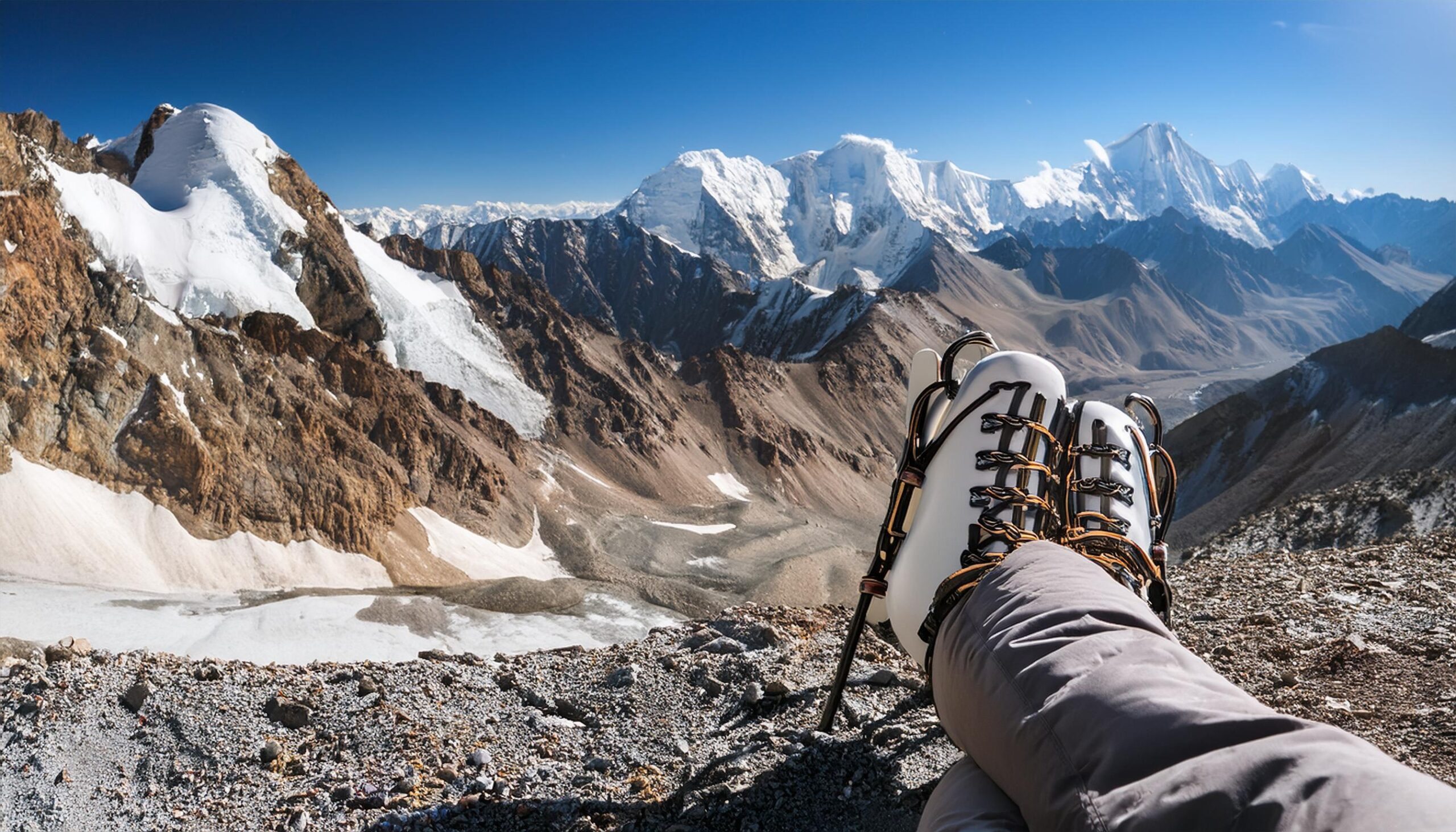
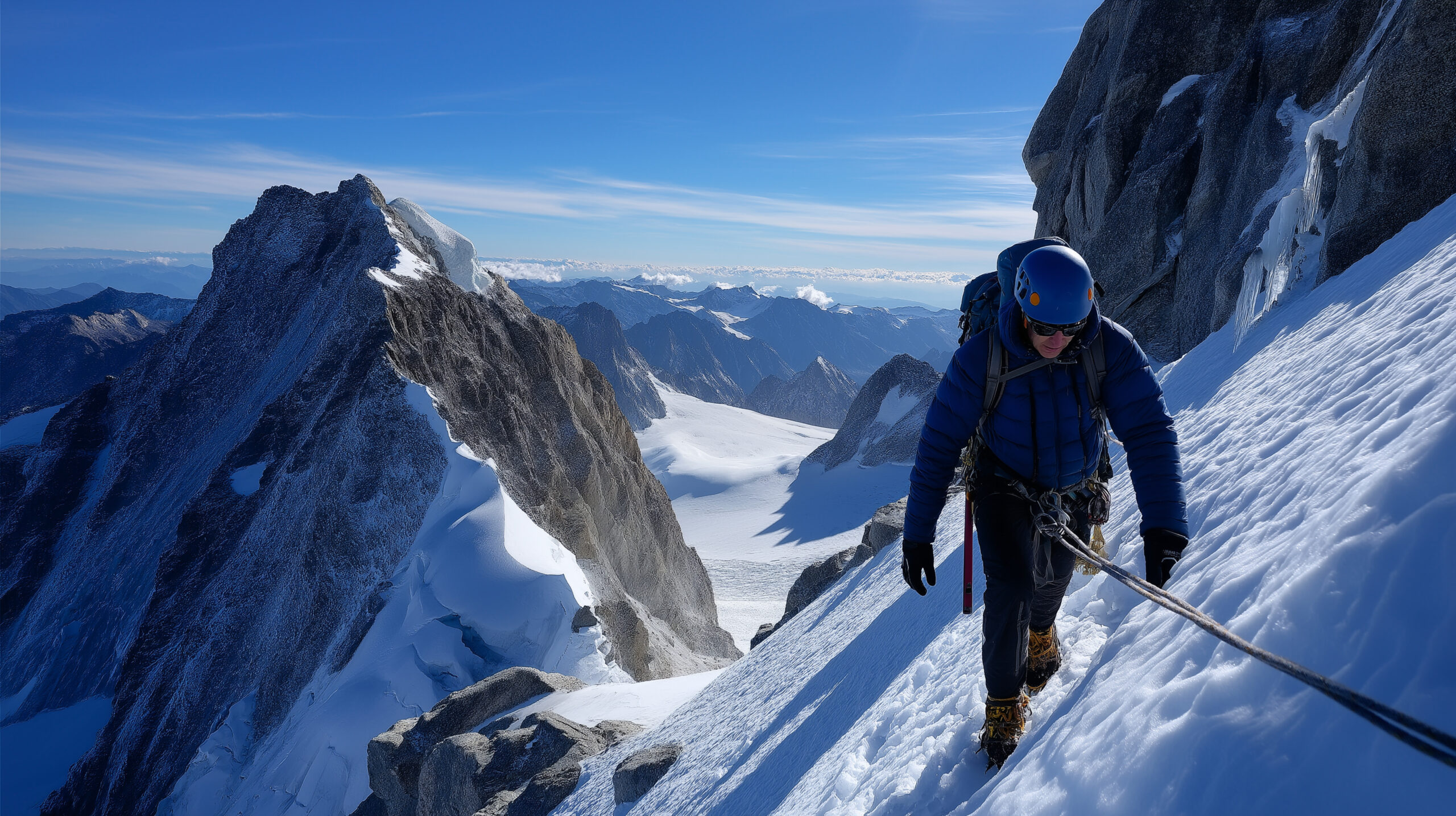
    Mountaineering boots and crampons on snow with mountain range backdrop, illustrating C1/C2/C3 compatibility.
    Gear & Equipment · Buyer’s Guide · 2026 Models & Prices

    Best mountaineering crampons 2026: how to choose by boot fit, points & terrain

    Crampons are your connection to the mountain on snow and ice, and choosing the right pair comes down to three things – which boots you own, what terrain you climb, and how much weight you carry. This guide explains the boot-and-crampon grading system, walks through points, material, and bindings, and recommends the best 2026 models in every category, with prices and specs.

    Quick answer

    Buy for boots first, terrain second, weight third.

    For most mountaineers the right first pair is a 12-point steel all-rounder – the Grivel G12 ($150-170), Petzl Vasak ($170-200), or Black Diamond Sabretooth ($180-200) – in the binding version that matches your boots. That covers glacier travel, general alpinism, and moderate ice, which is most of what climbers actually encounter.

    Match the grades: the crampon grade (C1/C2/C3) must be equal to or lower than your boot grade (B1/B2/B3) – a stiff binding on a too-soft boot can pop off under load. Reserve aluminum (Petzl Leopard) for snow-dominant objectives, and technical modular crampons (Petzl Lynx, Grivel G22 Plus) for steep ice. Anti-balling plates are essential, not optional.

    10-14Point range
    C1/C2/C3Binding grades
    Steel / AluMaterials
    12-pointAll-round standard
    $150-200Typical first pair

    How to choose crampons: the three decisions

    Every crampon choice reduces to three questions – answer them in order and you land on the right pair.

    Boots first, terrain second, weight third. Boot compatibility is non-negotiable: the crampon must match the boot’s stiffness grade or it will not attach safely. Terrain sets your point count and front-point geometry. Weight versus durability decides steel or aluminum. Get the boot match wrong and nothing else matters – so that is where the guide starts.

    DecisionWhat it determinesThe rule
    1. Boot compatibilityWhich binding type you can useMatch the crampon grade (C1/C2/C3) to your boot grade (B1/B2/B3)
    2. TerrainPoint count and front-point geometry10-point walking · 12-point all-round · 12-14 technical
    3. Weight vs durabilitySteel or aluminumAluminum for snow/glacier · steel for everything else

    Boot compatibility: the B/C grading system

    The single most important crampon decision – and a real safety issue.

    Boots are graded B1 to B3 by stiffness, and crampons are graded C1 to C3 by binding type. The crampon grade must be equal to or lower than the boot grade: a stiffer binding needs a stiffer boot with the right welts. All crampons require at least a semi-rigid boot for a secure fit – a too-flexible boot is unsafe regardless of the crampon.

    Crampon gradeBinding typeCompatible bootsUse case
    C1Strap-on (plastic toe & heel baskets)B1 or stifferWinter walking · universal compatibility
    C2Semi-automatic (heel clip + toe strap)B2 or B3 (needs heel welt)General mountaineering · glacier travel
    C3Fully automatic (wire toe bail + heel lever)B3 only (toe & heel welts)Technical ice · steep mixed climbing
    ⚠ Match the binding to the boot – this is a safety issue.

    A fully automatic C3 binding needs a fully rigid B3 boot with both a toe and heel welt to lock the wire bail and heel lever. Put an automatic crampon on a too-soft boot and it can pop off under load – exactly when you need it most. If you are unsure of your boot grade, a C1 strap-on or C2 semi-automatic crampon offers the widest safe compatibility. To choose boots to match, see our mountaineering boots guide.

    Point count & front-point geometry

    After boot compatibility, point count sets what terrain a crampon can handle.

    More points and more aggressive front-point angles mean steeper-terrain capability. The front points matter most: horizontal front points suit general mountaineering, while vertical front points bite better into steep ice. The all-round standard is a 12-point steel crampon with two forward-angled front points for kicking into steep snow and ice.

    Point countFront pointsTerrainTypical boot
    10-pointMinimal / angledWinter walking, trekkingRegular hiking boots (B1)
    12-point (all-round)2 horizontal, forward-angledGlacier travel, general alpinism, moderate iceMountaineering boots (B2/B3)
    12-14 point (technical)Aggressive, often verticalSteep ice, mixed climbingRigid technical boots (B3)
    Modular (mono/dual)Swappable monopoint or dualVertical ice, dry-toolingRigid technical boots (B3)
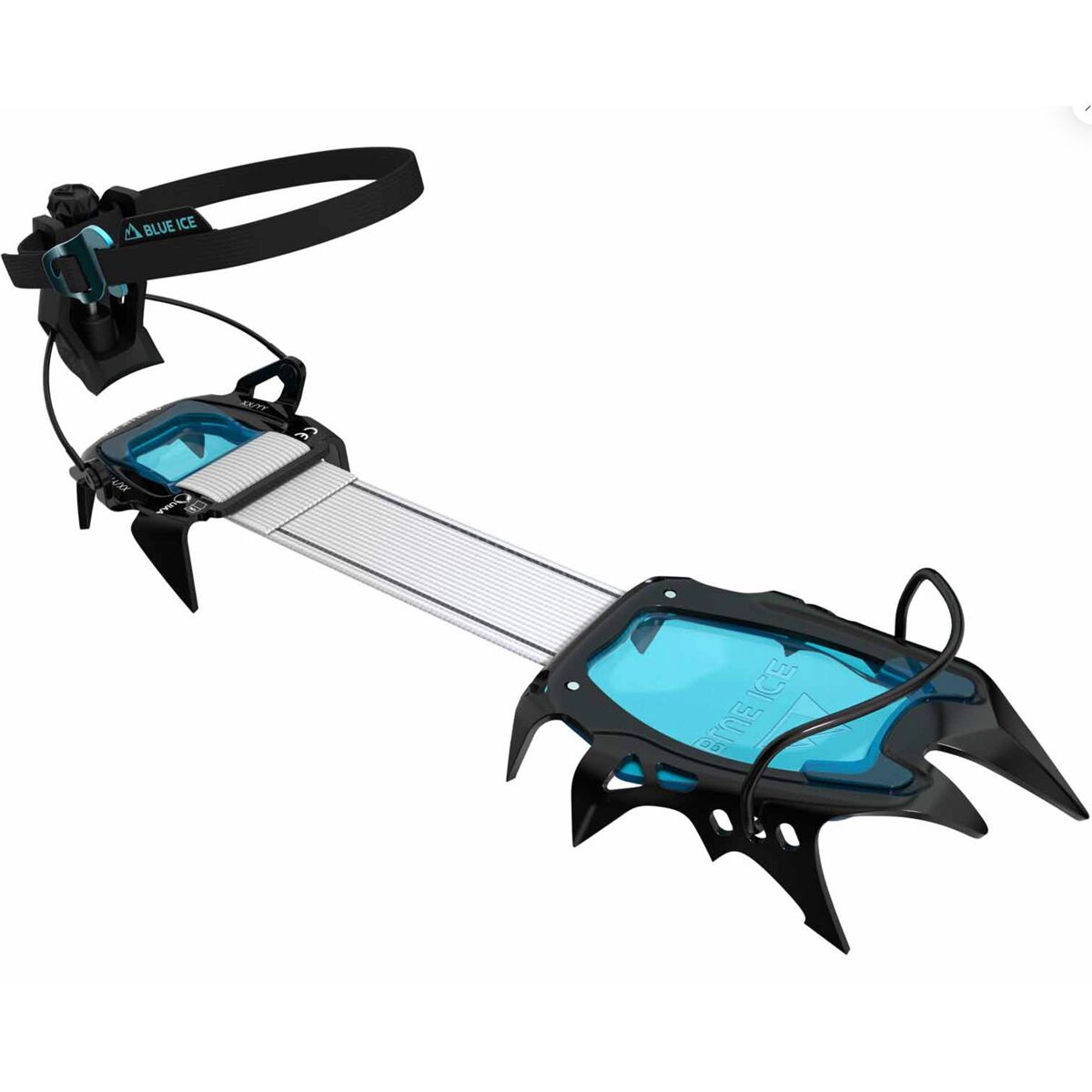
    Fully automatic mountaineering crampons with heel lever and toe strap basket.
    Steel crampons give the bite that connects you to snow and ice. The all-round standard is a 12-point steel model with two forward-angled front points and anti-balling plates – match it to your boots first, terrain second, weight third.

    Steel vs aluminum & anti-balling plates

    The material choice trades weight against durability – and one accessory is never optional.

    Steel is the default for any climber buying one versatile pair; aluminum is a specialist choice. Steel grips ice and rock far better and lasts for years, whereas aluminum saves real weight but wears down quickly on rock. Reserve aluminum for snow-dominant objectives.

    FeatureSteelAluminum
    Best forGeneral mountaineering, ice, mixed, rockSnow, glacier approaches, ski mountaineering
    DurabilityExcellent – lasts yearsWears quickly on rock
    WeightHeavier (~1,000 g/pair)Much lighter (~330-390 g)
    Grip on ice/rockSuperior biteAdequate on snow only
    Best useOne versatile all-round pairDedicated snow-travel / ski-touring
    ⚠ Anti-balling plates are not optional.

    Anti-balling (anti-bott) plates are plastic plates fitted under the crampon frame that stop snow packing into a heavy, slippery ball under your boot. Snow balling up negates the points entirely and is a common cause of slips in soft or wet snow. Every modern mountaineering crampon should have anti-balling plates front and rear – confirm they are included or available before buying. Hybrid models like the Petzl Irvis Hybrid pair an aluminum heel with a steel front to balance weight and durability.

    Binding types: strap-on, semi-auto & automatic

    The binding is how the crampon attaches – and it follows directly from your boot grade.

    There are three binding systems matching the three crampon grades. Strap-on bindings are universal; semi-automatic bindings clip the heel and strap the toe; fully automatic bindings use wire bails front and back. Most all-round crampon models are sold in all three versions, so you can buy the same crampon to match your specific boots.

    BindingHow it worksProsNeeds
    Strap-on (C1)Plastic baskets strap over toe and heelUniversal fit, field-repairableAny semi-rigid boot
    Semi-automatic (C2)Heel lever clip + toe strap basketSecure, quicker than strapsBoot with heel welt
    Fully automatic (C3)Wire toe bail + heel leverMost secure for technical climbingRigid boot, toe + heel welts

    Best crampons by category: 2026 picks

    The right pick depends on your primary objective – glacier and snow travel, general mountaineering, or technical ice.

    Best all-round mountaineering crampons

    12-point steel · the standard first pair · glacier travel through moderate ice. Three classic 12-point steel crampons have stood the test of time. The Grivel G12 ($150-170) is a long-serving all-rounder with slightly longer downward front points, a horizontal frame to reduce flex, and a choice of binding types. The Petzl Vasak ($170-200) uses 12 tempered steel points with broad, forward-directed front points that excel on snow and moderate ice. The Black Diamond Sabretooth ($180-200) is the lightest of the three and modular, adapting as your objectives evolve. All three come in strap-on, semi-automatic, and fully automatic versions to match your exact boot grade. Buying one versatile pair? Start here.

    Best lightweight crampons for glacier & snow travel

    Aluminum or hybrid · ski mountaineering, glacier approaches, long snow routes. Where weight matters most, aluminum is the answer. The Petzl Leopard ($169-189) is the benchmark – aluminum construction keeps weight around 330-390 g per pair while holding adequate durability for snow. The Petzl Irvis Hybrid ($170-190, about 570 g/pair) is a clever compromise, pairing an aluminum heel with steel front points for 10 contact points and a better weight-durability balance than full aluminum. The Grivel Air Tech Light is an aluminum 12-point version of the G12 with real front points, versatile for mixed snow on long trails. Aluminum wears quickly on rock, so reserve it for snow-dominant objectives.

    Best technical crampons for steep ice & mixed climbing

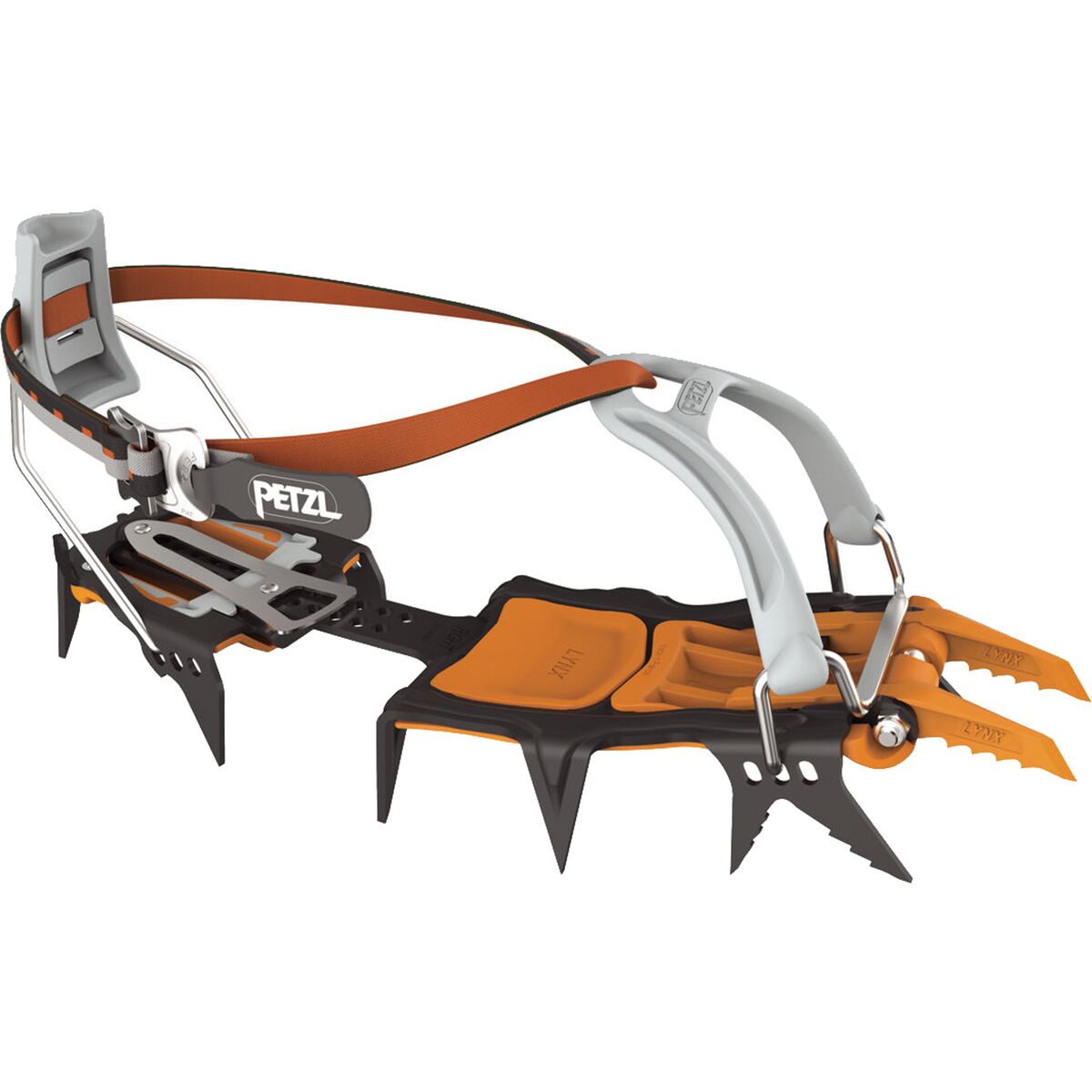
    12-14 point steel · aggressive vertical front points · modular monopoint options. For steep ice and mixed climbing, technical crampons take over. The Petzl Lynx ($259-289) is the professional-grade choice – a competition-proven modular design allowing single monopoint or dual front-point setups for precision on vertical terrain. The Grivel G14 and G22 Plus ($245-275) deliver Italian precision with leverlock tool-free adjustment for demanding vertical disciplines. For the steepest waterfall ice and dry-tooling, dedicated tools like the Petzl Dart and Grivel Rambo round out the top tier – but for general mountaineering, the all-round 12-point models above are the better and more economical choice.

    Building your kit?

    Match your crampons to the right boots (boots guide) and axe (ice axe guide), and see the full climbing gear checklist. Heading somewhere glaciated? Compare lodging and flights through the Global Summit Guide Expedia travel shop.

    Disclosure: the Expedia link is an affiliate link; we may earn a small commission at no extra cost to you, and it never affects our recommendations. We do not earn commission on the gear models above.

    Match Your Boots Full Gear Checklist

    Crampon model comparison table

    The recommended 2026 models across all three categories – compare material, points, weight, bindings, and price at a glance.

    ModelCategoryMaterialPointsWeight (approx/pair)Bindings2026 priceBest for
    Grivel G12All-roundSteel12~1,000 gC1 / C2 / C3$150-170The default first pair
    Petzl VasakAll-roundSteel12~960 gC1 / C2$170-200Broad front points, snow & ice
    Black Diamond SabretoothAll-roundSteel12~880 gC1 / C2 / C3$180-200Lightest all-rounder, modular
    Grivel G10Entry all-roundSteel10~900 gC1 / C2 / C3$135-155Budget winter walking / easy glacier
    Petzl LeopardLightweightAluminum10~330-390 gC1 / C2$169-189Ski mountaineering, snow approaches
    Petzl Irvis HybridLightweight hybridAlu heel / steel front10~570 gC2$170-190Weight saving with some durability
    Petzl LynxTechnicalSteelModular (mono/dual)~920 gC3$259-289Steep ice & mixed
    Grivel G22 PlusTechnicalSteelModular~1,000 gC3$245-275Vertical ice, dry-tooling
    Reading the table. The all-round steel models suit most buyers; the aluminum models suit snow specialists; the technical models suit ice and mixed climbers. The single biggest spec difference is weight: an aluminum Leopard is roughly a third the weight of a steel all-rounder – which matters on long snow approaches and matters not at all on a short glacier day, where steel’s durability and grip win. Prices are approximate and vary by binding version and retailer.

    Fitting, care & which to buy first

    The right crampons mean little if they are poorly fitted or maintained – fit matters as much as the model.

    TaskWhat to doWhy
    Size to bootAdjust the center bar so the crampon matches boot length exactlyExcess movement is unsafe and inefficient
    Secure strapsTrim or tape excess strap after fittingLoose straps catch front points and trip you
    Check anti-balling platesInspect for cracks before each seasonDamaged plates let snow ball up underfoot
    Maintain pointsFile burrs; avoid over-sharpening steelKeeps reliable grip without weakening points
    Store dryDry fully before storage; use a point guardPrevents rust on steel and protects gear
    Which crampons should you buy first? For most mountaineers, a 12-point steel all-rounder – the Grivel G12, Petzl Vasak, or Black Diamond Sabretooth, in the binding version that matches your boots. That covers glacier travel, general alpinism, and moderate ice, which is the terrain the vast majority of climbers actually encounter. Buy aluminum only if your objectives are truly snow-dominant (ski mountaineering, glacier approaches), and dedicated technical crampons only once you are climbing steep ice regularly. Match the crampon to your boots first, terrain second, and resist over-buying for terrain you do not yet climb. Then pair them with the right axe using our ice axe guide and learn to walk in them with how to use crampons.

    Crampons FAQ

    The questions buyers search most.

    How do I choose mountaineering crampons?

    Three factors in order: boot compatibility (the B1/B2/B3 boot to C1/C2/C3 crampon match), point configuration (10-point walking, 12-point all-round, 12-14 technical), and material (aluminum for snow, steel for everything else). For most climbers, a 12-point steel crampon matched to the boot grade is the right first pair.

    What are the best all-round mountaineering crampons?

    The classic 12-point steel models: Grivel G12 ($150-170), Petzl Vasak ($170-200), and Black Diamond Sabretooth ($180-200). All handle glacier travel to moderate ice and come in C1/C2/C3 binding versions to match your boots.

    How much do mountaineering crampons cost in 2026?

    $135-200 for steel all-round/entry pairs, $169-190 for lightweight aluminum or hybrid, and $245-289 for technical modular crampons. Most first-time buyers spend about $150-200. Prices vary by binding version and retailer.

    Grivel G12 vs Petzl Vasak vs BD Sabretooth?

    All three are excellent 12-point steel all-rounders. The G12 is the value pick with longer downward front points; the Vasak has broad front points strong on snow and ice; the Sabretooth is the lightest and modular. Buy whichever is available in the binding version that fits your boots.

    Steel or aluminum crampons?

    Steel for general mountaineering, ice, and mixed terrain; aluminum only for snow and glacier approaches where weight matters. Aluminum (Petzl Leopard, ~330-390 g) is far lighter than steel (~1,000 g) but wears quickly on rock. For one versatile pair, buy steel.

    How many points should crampons have?

    10-point for winter walking, 12-point as the all-round mountaineering standard (two front points for kicking into snow and ice), and 12-14 point technical models for steep ice and mixed. For general mountaineering, 12-point is the standard and best first choice.

    What do C1/C2/C3 binding types mean?

    They match boot grades. C1 strap-on works with B1+ boots (universal). C2 semi-automatic needs a B2/B3 boot with a heel welt. C3 fully automatic needs a rigid B3 boot with toe and heel welts. The crampon grade must be equal to or lower than the boot grade.

    Do I need crampons or microspikes?

    Microspikes give traction for walking on packed snow and frozen trails; crampons are for mountaineering on steep snow and ice, glacier travel, and climbing. Flat or rolling frozen terrain: microspikes. Steep snow, ice, or glaciers: crampons matched to mountaineering boots. They are not interchangeable.

    Can you use crampons on regular hiking boots?

    Only strap-on C1 crampons on a semi-rigid boot, and even then the fit is compromised – a soft boot flexes and can let the crampon shift or pop off, so it is unsafe on anything steep. For mountaineering you need at least a B1 boot; for walking traction on flexible boots, use microspikes instead.

    Methodology & sources

    • Model specs, weights, and prices compiled from Petzl, Grivel, and Black Diamond manufacturer specifications and cross-checked against independent 2026 testing.
    • Independent reviews and field testing: The Great Outdoors (TGO), Outdoors Magic, Climber Magazine, Trailspace. Binding-compatibility framework: the UIAA B/C boot-crampon grading standard.
    • Research-based; gear reviewed by Walker Ludlow, safety framing by Dawson Ludlow. Prices are approximate and change – confirm current pricing before buying.

    Last updated: July 18, 2026 · Next scheduled refresh: November 2026 (2026/2027 model lineup and pricing). Travis Ludlow, Founder & Head of Research.

    Confidence: High on the grading system and model lineup; Medium on exact weights and prices, which vary by binding version and retailer.

    Travis Ludlow

    Founder & Head of Research, Global Summit Guide · Gear review: Walker Ludlow · Safety: Dawson Ludlow

    Travis leads research at Global Summit Guide from Nephi, Utah. Our gear guides are research-based – built from manufacturer specifications and independent field testing rather than sponsored placements. We earn no commission on the crampon models recommended here; the picks reflect the boot-first, terrain-second, weight-third logic serious mountaineers actually use.

    Read the editorial mission and team background.

    Choose the right crampons

    Boots first, terrain second, weight third. A 12-point steel all-rounder – Grivel G12, Petzl Vasak, or Black Diamond Sabretooth – matched to your boot grade is the best first pair for most mountaineers. Reserve aluminum for snow-dominant objectives and dedicated technical crampons for steep ice.

    Start With Your Boots Full Gear Checklist

    Was this helpful?

    Yes
    No
    Thanks for your feedback!
Language »