
Last updated July 21, 2026
Adaptive Hiking and Mountaineering: equipment and possible summits
The mountains belong to everyone, and a generation of equipment, organizations, and athletes has made that real. People with physical and sensory disabilities hike wilderness trails and climb serious peaks, and blind and amputee climbers have stood on the highest summits on earth. This guide covers the equipment that opens the terrain, where to start, what is achievable, and how to do it safely. Elevations in feet (metres).
There is an old assumption that the mountains are only for a narrow band of the able-bodied. It was never quite true, and today it is plainly false. Adaptive equipment has grown from improvised rigs into a mature toolkit, adaptive climbing gyms and organizations have built real pathways into the sport, and disabled athletes have reached objectives that were once thought impossible for anyone. The point of this guide is practical, not sentimental: to lay out the equipment that makes hiking and climbing accessible, the organizations that get you started, the summits that are within reach, and the safety planning that makes them go well.
With the right equipment and support, the trails and the summits are open.
Adaptive hiking runs from hand-powered off-road wheelchairs to guide-assisted mountain chairs like the Joelette; adaptive climbing runs from inclusive gyms to outdoor rock, ice, and alpine objectives. Blind climbers have summited Everest, and amputees have reached Everest and the Matterhorn.
The three things that make it work: the right adaptive equipment, an experienced adaptive organization or guide, and sound medical and logistical planning. This is the inclusive capstone of our lifelong mountaineering cluster.
Already done
By blind and amputee climbers.
A Joelette hike
Rough mountain trails, made accessible.
Where it starts
Adaptive gyms and organizations.
Adaptive hiking equipment
From independent off-road chairs to guide-assisted mountain chairs, the terrain that opens up is striking. And adaptive does not mean less effective.
| Equipment | What it does | Who it suits |
|---|---|---|
| All-terrain / off-road wheelchair | Hand-powered chair for graded and rough trails (GRIT Freedom Chair, Mountain Trike) | Independent trail use with upper-body mobility |
| Powered all-terrain vehicle | Motorized off-road mobility (TerrainHopper) | Rougher terrain with less upper-body demand |
| Joelette | Single-wheel mountain wheelchair steered by two or more guides | Steep, rough mountain trails; riders who cannot self-propel |
| TrailRider | Single-wheel wilderness chair moved by a small team | Trails and peaks with a group of companions |
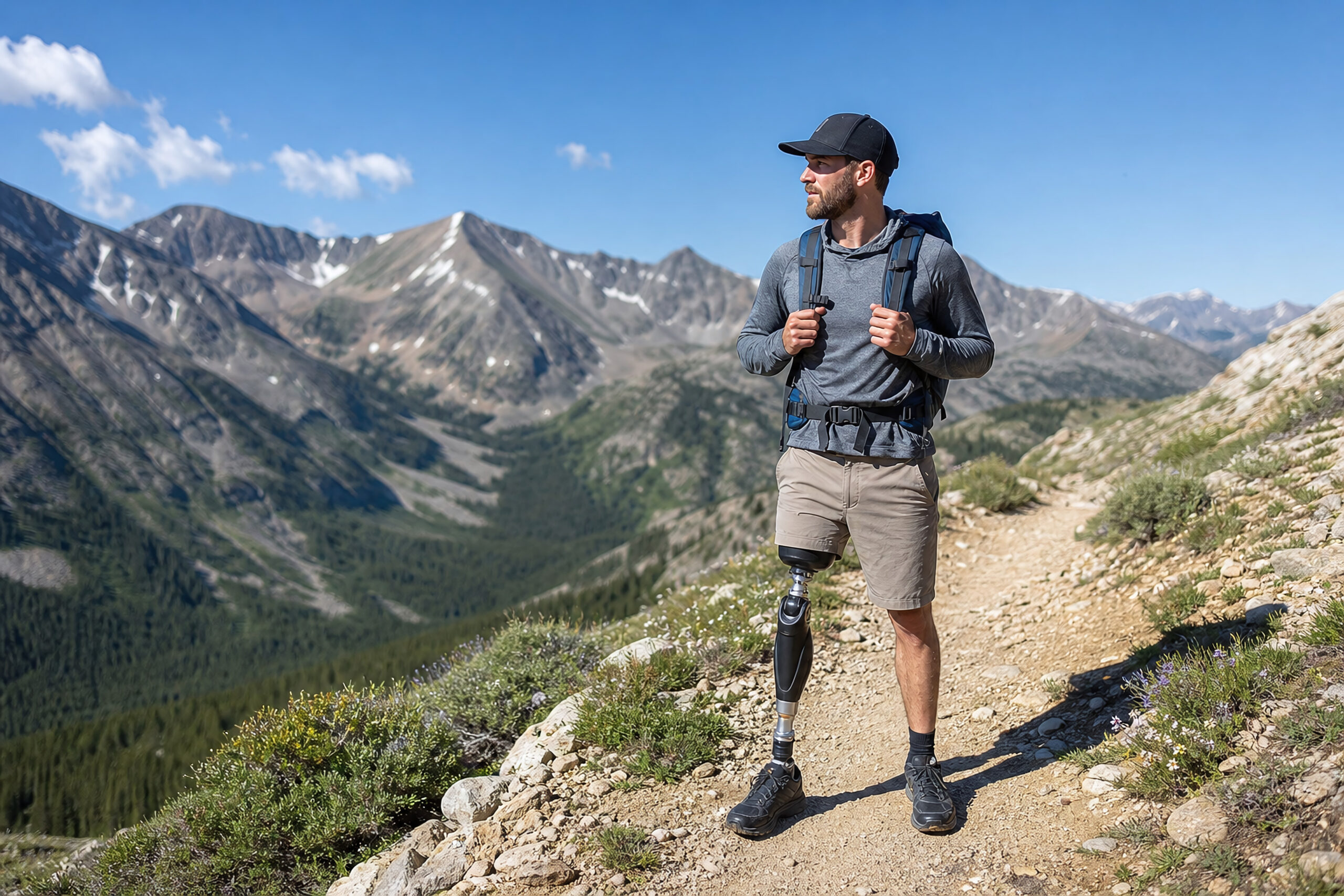
| Trail prosthetics | Activity-specific limbs built for trail and mountain use | Amputees |
| Ergonomic poles / forearm crutches | Offset grips and balance support for limited grip or stability | Balance, grip, or partial mobility needs |
| Exoskeletons | Emerging powered support for lower-body function | Limited lower-body function (developing tech) |
| Sensory aids | Guiding systems, simplified maps, hearing and sensory supports | Blind, low-vision, and neurodiverse hikers |
The Joelette deserves a special mention, because it has quietly transformed mountain access. Built around a single central wheel, it works like a lightweight sedan chair: a rider sits secured with a chest harness and footrests while a guide at the front handles direction and traction and a guide at the rear manages balance. E-assist versions add power on the climbs, and the whole thing folds into a car boot. With a willing team, it turns rocky, steep, and otherwise impossible trails into a shared day out, and it has carried riders from gentle forest paths to genuine summits.
Adaptive climbing and mountaineering
The path usually starts indoors and leads, for those who want it, to rock, ice, and alpine peaks.
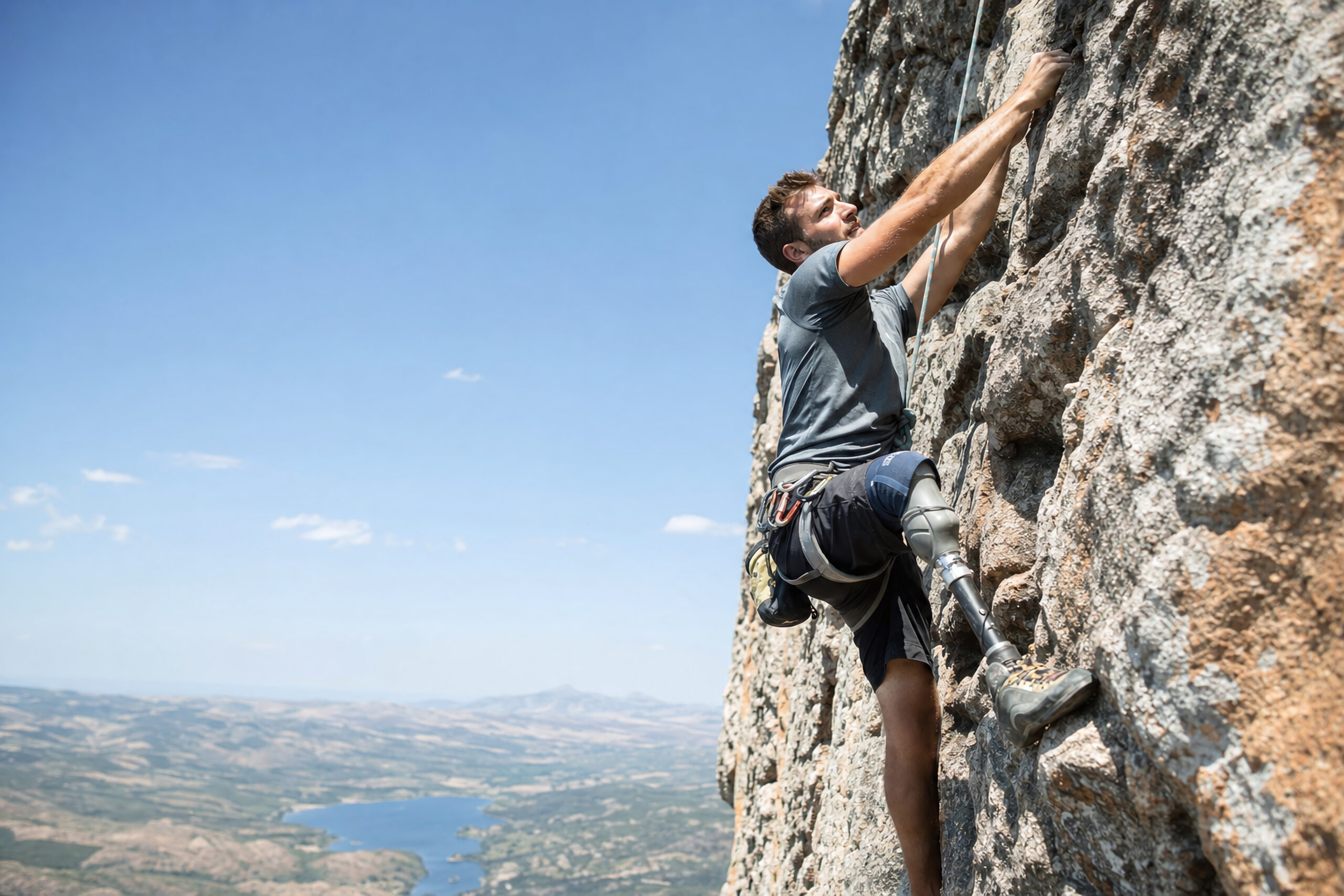
Adaptive climbing has grown fastest in the gym, where inclusive routes, movable holds, and wheelchair-accessible walls let climbers with a wide range of disabilities build strength and technique. Organizations then bridge the gap to the outdoors. Paradox Sports in Colorado, for example, runs outdoor rock climbing, ice climbing, and mountaineering programs built for people with disabilities, and similar programs exist around the world. The techniques are varied and often ingenious: one-arm and one-leg systems, foot loops and pulley assists, tandem and verbally guided climbing for blind and low-vision climbers, and highly personal prosthetic solutions. One quadruple amputee ice climber, for instance, uses bespoke prostheses with ice axes and crampons built into the sockets. The common thread is that the sport adapts to the athlete, not the other way around.
Possible summits and objectives
What is actually achievable, from accessible trails to the highest mountains on earth.
The range of what disabled athletes have achieved is very wide, and it is worth knowing because it reframes what feels possible. Blind climber Erik Weihenmayer summited Everest (29,032 ft / 8,849 m) and went on to complete the Seven Summits. Quadruple amputee Kyle Maynard reached the summit of Kilimanjaro. Amputee climbers have stood on top of Everest, and a quadruple amputee has climbed the Matterhorn (14,692 ft / 4,478 m) using custom prostheses. These are exceptional achievements by exceptional athletes, but they mark out the territory, and most adaptive objectives sit far below them and are reachable with good support.
Accessible trails and day hikes
Many national parks and reserves maintain graded, accessible trails, and a Joelette or TrailRider with a willing team extends that to rough mountain paths. This is where most adaptive hiking happens, and where most people start.
Kilimanjaro: the achievable big summit
As a non-technical walk-up, Kilimanjaro (19,341 ft / 5,895 m) is the standout large summit for adaptive teams, reached by amputees and wheelchair-assisted groups. It is still a serious high-altitude climb needing acclimatization, fitness, and an experienced operator, but the lack of technical climbing puts it within reach.
A sensible progression
The reliable path is gym to outdoor crag to mountain, building skills and support with each step, much as any climber progresses. Our best beginner mountains guide is a good source of achievable early objectives to build toward.
Organizations & where to start
Community is the fastest way in. You do not have to figure this out alone.
The single most useful step for most people is to connect with an adaptive-outdoor organization rather than trying to assemble equipment and know-how from scratch. Groups such as Paradox Sports, No Barriers, and a network of regional adaptive-sports programs run gym sessions, guided hikes, and expeditions, provide or loan specialized equipment, and carry the hard-won experience of doing this safely. They are also where the community lives, and many adaptive athletes describe that community as the best part of the sport. For mountain objectives, an experienced adaptive guide or operator is worth even more, because the right one plans the pacing, logistics, and bail-outs around the athlete. See how to choose an expedition operator and compare options in our operators hub, and look for those with real adaptive experience.
Health & safety
Adaptive trips reward extra planning, and some disabilities carry specific mountain risks worth knowing.
Every mountain trip needs planning, and adaptive trips need a little more. Start with medical clearance from a doctor who knows the athlete, and build the trip with people who have real adaptive experience. Some disabilities carry specific considerations at altitude and in the mountains. People with spinal cord injuries may have impaired temperature regulation, so cold and heat both need active management, and long hours seated or being carried raise the risk of pressure injuries, so skin checks and cushioning matter; autonomic dysreflexia and bladder and bowel management also need planning. Amputees should watch for changes in prosthetic and socket fit as limbs swell at altitude or over long days, and care for the skin at the interface. Across the board, hydration, medication schedules, continence logistics, and a clear evacuation plan all deserve thought in advance. None of this is a reason to stay home; it is simply the preparation that makes an adaptive trip go well.
The health notes here are general. Get individual medical clearance and advice from a doctor who knows the athlete’s condition, and plan mountain objectives with an experienced adaptive guide or organization.
At altitude, the standard rules still apply to everyone: ascend gradually, acclimatize, and descend on worsening symptoms. Our acclimatization guide covers the protocol.
Planning an adaptive mountain adventure
- Connect with an adaptive organization – for equipment, guides, and community.
- Get medical clearance – from a doctor who knows the athlete’s condition.
- Match equipment to terrain – off-road chair, Joelette, prosthetics, or climbing setup.
- Choose an experienced adaptive guide – for any mountain objective.
- Plan the disability-specific details – thermoregulation, skin and pressure care, continence, medication.
- Follow standard altitude rules – gradual ascent, acclimatization, and descent on symptoms.
The Lifelong & Inclusive Mountaineering cluster
Mountaineering at every age, and as every kind of climber.
Adaptive mountaineering FAQ
The questions people ask most about getting into the mountains with a disability.
Can people with disabilities go hiking and mountaineering?
Yes, at every level. With the right equipment and support, people with a wide range of physical and sensory disabilities hike wilderness trails and climb serious mountains. Blind climbers have summited Everest and amputees have reached the highest summits on earth. The keys are the right adaptive equipment, an experienced adaptive organization or guide, and sound medical and logistical planning.
What equipment makes hiking accessible?
All-terrain and off-road wheelchairs (GRIT Freedom Chair, Mountain Trike) for independent trail use, guide-assisted mountain chairs (Joelette, TrailRider) for rougher terrain, trail-specific prosthetics, ergonomic poles and forearm crutches, emerging exoskeletons, and sensory aids for blind, low-vision, and neurodiverse hikers. Adaptive does not mean less effective.
What is a Joelette?
An all-terrain wheelchair built around a single central wheel that lets a person with a disability travel rough mountain trails with at least two guides, one steering at the front and one managing balance at the rear. E-assist versions add powered support, and it folds to fit in a car. The TrailRider is a similar wilderness chair moved by a small team.
Can wheelchair users climb mountains?
Yes, in several ways: guide-assisted mountain chairs like the Joelette and TrailRider carry a rider over trails and peaks with a team, hand-powered off-road chairs allow independent travel on graded terrain, and adaptive climbing systems let wheelchair users climb rock with upper-body strength and specialized setups. The approach depends on the person, terrain, and support.
Where do I start with adaptive climbing?
Usually at an adaptive climbing gym or through an organization such as Paradox Sports, which runs indoor and outdoor rock, ice, and mountaineering programs for people with disabilities. Many gyms now have inclusive routes and accessible walls, and from that foundation you can progress outdoors and, with the right guides, to mountains.
Is Kilimanjaro accessible for adaptive climbers?
Kilimanjaro (19,341 ft / 5,895 m) is a non-technical walk-up, one of the most achievable big summits for adaptive teams, and it has been climbed by amputees and wheelchair-assisted groups. It is still a serious high-altitude undertaking needing acclimatization, fitness, an experienced operator, and medical planning, but the lack of technical climbing puts it within reach for many.
📋 How this guide is built
This is a research synthesis by the Global Summit Guide Editorial Team, drawing on adaptive-outdoor organizations and equipment makers, adaptive-sports and mountain-medicine sources, and documented ascents by disabled athletes. It was reviewed for safety by Dawson Ludlow and for the disability-specific health notes by Taylor Ludlow, a Registered Nurse. It is educational only. The medical and safety guidance is general and does not replace individual advice from a doctor who knows the athlete or from an experienced adaptive guide.
Sources and further reading
- Paradox Sports and other adaptive-climbing and mountaineering organizations.
- Adaptive-equipment makers and programs (Joelette, TrailRider, GRIT Freedom Chair, Mountain Trike).
- Adaptive-sports and accessible-outdoor recreation resources.
- Publicly documented ascents by blind and amputee climbers of Everest, Kilimanjaro, and the Matterhorn.
- Mountain-medicine guidance on altitude, thermoregulation, and disability-specific considerations.
Was this helpful?
Global Summit Guide is an independent mountaineering resource founded in 2026. The team combines first-hand trekking and climbing experience with in-depth research and professional health and nutrition review to help climbers choose objectives, prepare properly, and stay safe.
Health, altitude, and nutrition content is reviewed by Taylor Ludlow (Registered Nurse) and Brigg Hoopes (Nutritionist).
What We Don't Know Yet
Mountain information changes quickly. This box explains the limits of what this page can responsibly promise.
- Route conditions, trailhead access, crevasse exposure, stream crossings, and rescue access may vary from published planning guidance.
- Fitness and altitude response vary by person; no guide, itinerary, or training plan can guarantee acclimatization or summit success.
- Route conditions, snowpack, closures, and weather can change quickly after this page is updated.
- Permit rules, fees, quotas, and reservation windows may change between review cycles.
- Operator availability, pricing, guide ratios, and cancellation terms can change by season.
Verify current conditions with official land managers, guide services, local forecasts, and current route reports before booking or climbing.
Mountaineering, rock and ice climbing, glacier travel, and high-altitude activity are inherently dangerous and can result in serious injury or death. The information on Global Summit Guide is provided for general informational and educational purposes only and is not a substitute for professional instruction, qualified guiding, proper equipment, or your own judgment and experience.
Route conditions, weather, snowpack, permits, regulations, and hazards change constantly and may differ from what is described here. Details may be incomplete, out of date, or contain errors. Always verify current information with local authorities, certified guides, and official sources before making any decision in the mountains.
Nothing on this site is medical, legal, or financial advice. Our fitness, acclimatization, altitude, and nutrition content is general in nature; consult a qualified physician before beginning any strenuous exercise program or exposing yourself to high altitude.
You are solely responsible for your own safety and decisions. To the fullest extent permitted by law, Global Summit Guide and its team accept no liability for any loss, injury, damage, or expense arising from use of, or reliance on, this information. By using this site you acknowledge these risks and accept these terms.
Some links on this site may be affiliate links. If you buy through them we may earn a small commission at no extra cost to you; this never affects our recommendations.
Global Summit Guide recommendation path
Next Best Mountain to Research
Use these recommendations to continue the right planning path instead of stopping on one page.
Use current permit, weather, route, and operator information before booking or climbing.