<

Tag: mountaineering gear

  • How to choose mountaineering crampons: steel vs aluminum, boot compatibility, and binding types

    How to Choose Mountaineering Crampons: Steel vs Aluminum, Boot Compatibility, and Binding Types | Global Summit Guide
    Gear & Safety Guides / Mountaineering

    How to choose mountaineering crampons: steel vs aluminum, boot compatibility, and binding types

    4
    Boot rating tiers
    10-14
    Point count range
    $150-$350
    Typical price range
    10+ yrs
    Typical lifespan
    Part of the crampons gear series This decision guide supports our crampons buyers guide and our microspikes vs crampons comparison. Buyers guide →

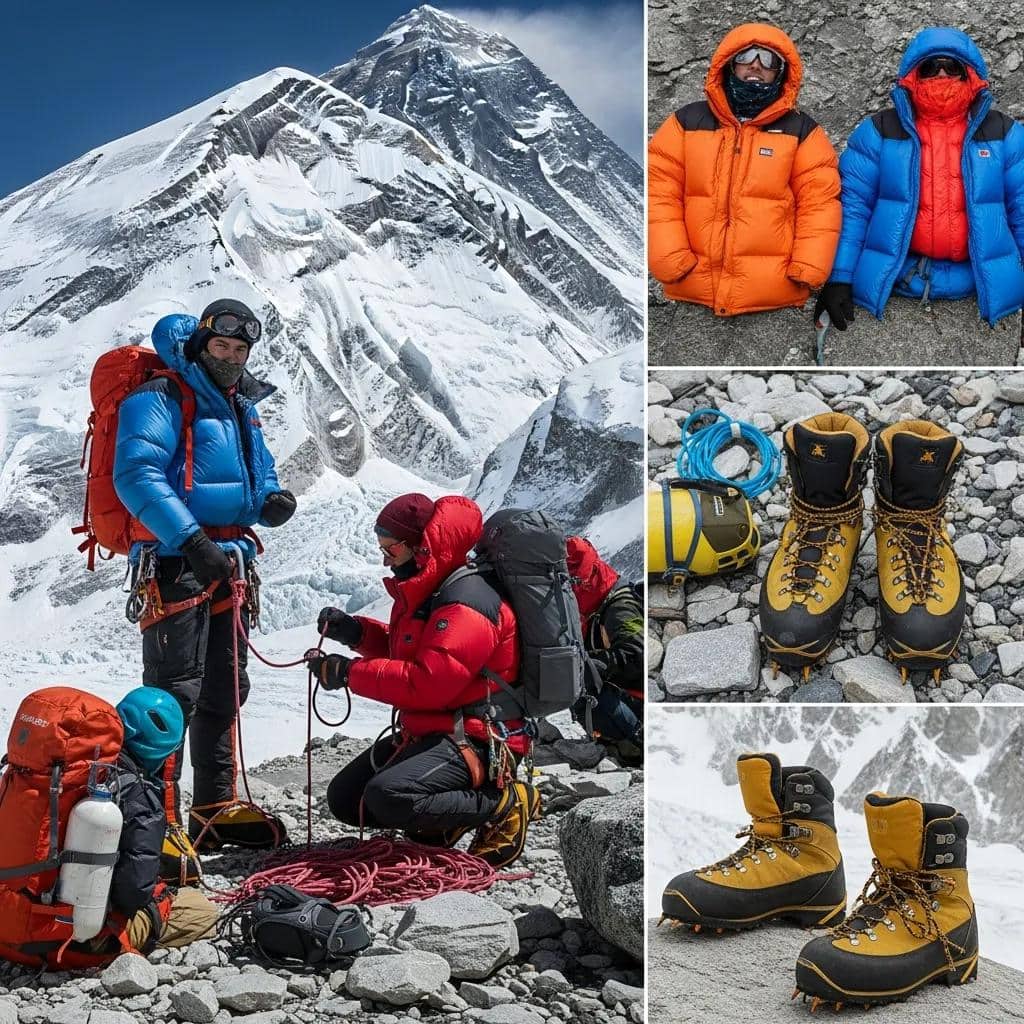
    Choosing mountaineering crampons is more complicated than picking the cheapest option that looks aggressive. The wrong crampons can be dangerous on technical terrain, frustrating on long approaches, or simply incompatible with your boots — and you only discover the mismatch when you’re already on the mountain. This guide gives you the practical decision framework: match your boots to a compatibility rating, then choose material, point count, and binding type based on your climbing objectives. The result is crampons that work for the specific climbing you’ll actually do. For broader context see our crampons buyers guide and our microspikes vs crampons decision guide.

    The 4 decisions you actually need to make in order

    Every crampon purchase comes down to four sequential decisions. Get them in this order and the choice becomes simple:

    1. Boot compatibility — what boots do you have or plan to buy? This determines what crampon bindings work.
    2. Material — steel or aluminum? Driven by your objectives, not by aesthetics.
    3. Point count — 10, 12, or 14+ points? Driven by terrain difficulty.
    4. Binding type — strap, hybrid, or step-in? Driven by your boots and use case.

    Most first-time buyers reverse this order, starting with “what crampons look cool” and ending up with incompatible gear. The correct sequence prevents this.

    The most important rule

    Your boots determine your crampons, not the other way around. If you already own mountaineering boots, the boot rating constrains your crampon choices. If you’re buying both boots and crampons at the same time, build the system together — but boots come first in the decision sequence because boots last longer and are harder to return.

    Decision 1: Boot compatibility ratings B0 through B3

    The European boot rating system from B0 to B3 is the international standard for mountaineering boot stiffness. Each rating defines which crampons can attach safely. Understanding your boot rating is the single most important step in choosing crampons.

    B0

    B0 — Flexible Hiking Boots

    Example boots: Salomon Quest, Merrell Moab, La Sportiva TX5 · Use: Hiking, light backpacking, approach
    Strap-on only
    B1

    B1 — 3-Season Mountaineering Boots

    Example boots: Scarpa Manta Tech, La Sportiva Trango, Salewa Mtn Trainer · Use: Summer alpine, moderate altitude, ski touring
    C1 – C2 crampons
    B2

    B2 — 4-Season Mountaineering Boots

    Example boots: Scarpa Mont Blanc Pro GTX, La Sportiva Nepal Cube, Lowa Mountain Expert GTX · Use: Mont Blanc, Matterhorn, Aconcagua, Mexican volcanoes
    C2 hybrid bindings
    B3

    B3 — Full Mountaineering / Expedition Boots

    Example boots: La Sportiva G2 Evo, Scarpa Phantom 6000, La Sportiva Olympus Mons · Use: Denali, 8000ers, technical winter alpine, ice climbing
    C3 step-in bindings
    Boot rating Compatible crampon types What it tells you
    B0 (flexible)C1 strap-on onlyHiking boots — limited mountaineering capability
    B1 (semi-stiff)C1 strap-on, C2 hybridIntro mountaineering boots — versatile
    B2 (stiff midsole)C1, C2, semi-rigid C2Standard mountaineering boots — most common
    B3 (fully rigid)C1, C2, C3 all optionsExpedition boots — all crampons compatible
    Why this matters for safety

    Attaching fully rigid C3 step-in crampons to a flexible B0 boot creates a binding system that can fail under load. The boot flexes; the crampon doesn’t. The result is the crampon working loose, points binding in soft positions, or the entire crampon dislodging mid-step. This has caused serious injuries. Never use C3 step-in crampons on B0 or B1 boots, even if you can force them on.

    Decision 2: Steel vs aluminum match material to objective

    The material decision is the second-largest cost driver after boots themselves. Steel and aluminum crampons serve different purposes — and choosing the wrong one wastes money or compromises safety.

    Steel Crampons

    The workhorse standard
    Weight (pair)800-1,200 g
    Durability10+ years
    Bite into iceExcellent
    Handles rockYes (mixed terrain)
    Best forAll-around mountaineering
    Price range$200-$350

    The right choice for nearly all general mountaineering, technical climbing, ice climbing, and any terrain where points contact rock. Heavier but more durable and sharper. Most climbers’ first and only crampons are steel. Examples: Petzl Vasak, Grivel G12, Black Diamond Sabretooth.

    Aluminum Crampons

    Lightweight specialist
    Weight (pair)500-700 g
    Durability3-5 years typical
    Bite into iceGood (softens fast)
    Handles rockNo (points blunt quickly)
    Best forGlacier travel, ski mountaineering
    Price range$150-$220

    The right choice for non-technical glacier travel and ski mountaineering where weight savings matter. 300-500g lighter than steel – a meaningful difference on multi-day expeditions. Examples: Black Diamond Neve, Petzl Leopard FL.

    The mistake most first-time buyers make

    Buying aluminum crampons because they’re lighter and cheaper, then trying to use them on technical terrain. The aluminum points blunt after a few hours on mixed rock-and-ice routes. The crampons are effectively destroyed in a single climbing weekend. For 90% of mountaineers, steel crampons are the correct first purchase even though they cost more and weigh more.

    Decision 3: Point count 10, 12, or 14 points

    Modern mountaineering crampons have 10 to 14 points. More points generally means more security on harder terrain but more weight and complexity. The right point count depends on what you’re climbing.

    Point count Best for Weight Examples
    10 pointsSki mountaineering, non-technical glacier travel, lightweight objectives~500-700g (aluminum)Petzl Leopard FL, Black Diamond Neve
    12 pointsGeneral mountaineering, most alpine routes, Aconcagua, Denali~800-1,000g (steel)Petzl Vasak, Grivel G12, Black Diamond Sabretooth
    14 pointsTechnical ice climbing, mixed alpine, vertical ice~1,000-1,200g (steel)Petzl Dart, Black Diamond Cyborg, Grivel G14

    The 12-point recommendation: for a first mountaineering crampon purchase, 12 points in steel is almost always the right choice. This covers Mont Blanc, Matterhorn (standard route), Aconcagua, Denali, the Mexican volcanoes, Cotopaxi, Chimborazo, and the vast majority of mountaineering objectives below true ice climbing. You can climb harder objectives with 12-point crampons; you can’t make a 10-point aluminum crampon work for ice climbing.

    Front point configuration: beyond the total count, crampons differ in front point shape (horizontal “T-shape” for general mountaineering vs vertical “monopoint” or “dual points” for technical ice). General mountaineering crampons use horizontal front points. Technical ice crampons use vertical front points. Most climbers should stick with horizontal front points unless they’re specifically pursuing ice climbing.

    Decision 4: Binding type strap, hybrid, or step-in

    The binding type determines how the crampon attaches to your boot. This is constrained by your boot rating but also by personal preference and use case.

    Strap (Universal)

    C1 — works on any boot
    Boot compatibilityB0, B1, B2, B3
    On/off speedSlow (60-120 sec)
    SecurityGood with practice
    Best forHiking, mixed gear quivers

    Universal binding with straps at toe and heel. Works with any boot but takes longer to put on and adjust. The right choice if you’ll use the crampons with multiple boots or with B0/B1 boots that don’t have welts.

    Hybrid (Semi-Auto)

    C2 — boots with heel welts
    Boot compatibilityB1, B2, B3
    On/off speedFast (30-60 sec)
    SecurityExcellent
    Best forMost general mountaineering

    Strap at toe, lever at heel. Requires a heel welt on the boot. The most common binding for general mountaineering boots. Faster than strap-on, more secure than universal. The standard choice for most first-time mountaineering buyers.

    Step-In (Auto)

    C3 — boots with toe + heel welts
    Boot compatibilityB2 (sometimes), B3
    On/off speedVery fast (15-30 sec)
    SecurityMaximum
    Best forTechnical, ice climbing, cold

    Toe bail and heel lever — no straps. Requires both toe and heel welts. Fastest on/off, most secure, but only works with B3 (and some B2) boots. The standard for ice climbing and technical alpine where rapid transitions matter.

    Matching crampons to specific climbs practical recommendations

    Different mountaineering objectives demand different crampon specs. Here’s the practical mapping:

    Objective Recommended crampons Boot rating
    Mount Whitney / 14er snow10-12 point steel, strap or hybridB1-B2
    Mount Hood / Mount Adams12 point steel, hybrid bindingB2
    Mont Blanc Goûter route12 point steel, hybrid bindingB2-B3
    Matterhorn Hörnli Ridge12 point steel, step-in or hybridB2-B3
    Aconcagua Normal Route12 point steel, hybrid (warmth)B2-B3
    Pico de Orizaba Jamapa Glacier12 point steel, hybridB2
    Denali West Buttress12 point steel, step-in (cold)B3
    Cotopaxi / Ecuador volcanoes10-12 point aluminum or steelB2
    Ski mountaineering 4000ers10 point aluminum, strap (universal)B1-B2
    WI4-WI5 ice climbing14 point technical steel monopointB3
    Everest South Col12 point steel, step-inB3 expedition

    The pattern across these recommendations: 12-point steel crampons with hybrid bindings on B2-B3 boots covers approximately 75% of mountaineering objectives. If you’re buying one pair of crampons for general use, this is the sweet spot. The Mont Blanc route detail is in our Mont Blanc Goûter route guide, with similar route-specific gear context across our peak-by-peak pages.

    Quality brands to consider honest assessment

    The crampons market is dominated by four major manufacturers, each with established quality and specific strengths:

    Petzl (France)

    The dominant brand for general and technical mountaineering. The Petzl Vasak (12-point steel general mountaineering) is the most-recommended first crampon worldwide. The Petzl Sarken adds technical capability. The Petzl Dart is the premium technical/ice option. The Petzl Leopard FL is the standard lightweight aluminum option.

    Grivel (Italy)

    The oldest crampon manufacturer (founded 1818) and still produces some of the best crampons available. The Grivel G12 is comparable to the Vasak and preferred by many alpinists for its anti-balling plate design. The G14 is the technical ice option. The G10 is the aluminum lightweight option.

    Black Diamond (USA)

    The dominant North American brand. The Black Diamond Sabretooth is a strong general mountaineering option. The Black Diamond Cyborg is the technical/ice option. The Black Diamond Neve is the lightweight aluminum option. Black Diamond crampons tend to be slightly more durable and slightly heavier than European equivalents.

    Camp / Cassin (Italy)

    Smaller but high-quality. The Camp XLC 470 is one of the lightest aluminum crampons available (470g pair). The Cassin Blade Runner is a strong technical option. Camp brands offer good value compared to the dominant brands.

    A note on price-to-quality

    Crampons are one of the best-value pieces of mountaineering gear. A $250 pair of quality steel crampons will last 10+ years with reasonable care, making them less expensive per use than virtually any other mountaineering equipment. Don’t try to save money by buying cheap unknown-brand crampons – quality matters because the consequences of failure are severe. Stick with Petzl, Grivel, Black Diamond, or Camp/Cassin.

    Fit and adjustment getting it right

    Even the perfect crampons fail if they’re not properly fitted to your boots. The fitting process matters and most retailers will help with this:

    1. Take your boots to the store when buying crampons. Trying crampons with your actual boots is essential.
    2. Adjust the bar length so the heel and toe sections sit firmly without overhanging.
    3. Verify the heel lever engages cleanly with the boot’s heel welt (for hybrid/step-in).
    4. Check that the toe bail or strap holds firmly without slop. Walk around the store with crampons on – they shouldn’t shift.
    5. Test the front points alignment. Front points should extend straight forward, not splayed or angled.
    6. Practice on/off at home before your first climb. Doing this for the first time at 4 AM on a mountain in cold weather is a recipe for problems.
    7. Install anti-balling plates if not already present. These plastic inserts prevent snow from sticking to the crampons – critical safety feature.

    Maintenance and longevity caring for crampons

    Quality crampons can last decades with proper care. The basics:

    • Dry thoroughly after each use. Wet crampons rust, particularly in the binding hardware.
    • Sharpen the points annually if you climb regularly. A flat file works for the main points. Don’t over-sharpen – you remove metal each time.
    • Replace anti-balling plates when they crack. These are wear items, not permanent.
    • Inspect the binding hardware before each trip. Worn straps, broken levers, or damaged toe bails should be replaced.
    • Avoid walking on rock unnecessarily. Rock blunts the points. Remove crampons for extended rock sections.
    • Store dry. Crampons in a wet pack or boot box will rust quickly.

    Common mistakes to avoid honest pitfalls

    • Buying crampons before boots. Boots determine compatibility – get them first or buy them together.
    • Choosing aluminum for general mountaineering. The weight savings aren’t worth the loss of durability and rock tolerance for most users.
    • Going overboard on points. 14-point technical crampons on a Mont Blanc trip are unnecessary weight. Match the tool to the job.
    • Buying without trying. Online purchases without trying with your specific boots cause many returns. Try in person.
    • Ignoring anti-balling plates. Snow balling under crampons is a serious safety issue – always use anti-balling plates.
    • Not practicing on/off at home. First-time crampon use should not be on a serious objective. Practice in your backyard or on easy terrain first.
    • Skipping the file. Dull crampons are dangerous. Sharpen annually or when you notice slipping.
    • Mixing crampons and crampons in the same pair. Buy a matched pair from one brand. Avoid bargain mix-and-match setups.
    ★ Complete Crampons Resources

    The crampons buyers guide

    Detailed product recommendations, model-specific reviews, and the complete crampons buying framework.

    Buyers guide →

    The bottom line on choosing mountaineering crampons

    Choosing the right mountaineering crampons requires matching four factors in sequence: boot compatibility (B0-B3 rating), material (steel vs aluminum), point count (10-14), and binding type (strap, hybrid, or step-in). For 75% of mountaineering objectives, the answer is 12-point steel crampons with hybrid bindings, paired with B2-B3 mountaineering boots. This covers Mont Blanc, Matterhorn, Aconcagua, Denali, the Mexican volcanoes, and most general alpine objectives. Specialized objectives demand specialized crampons: aluminum 10-point for ski mountaineering and lightweight glacier travel, 14-point technical steel for ice climbing and mixed routes. Boot rating constrains compatibility — never use C3 step-in crampons on B0 or B1 boots even if you can physically attach them. Quality crampons from Petzl, Grivel, Black Diamond, or Cassin/Camp cost $200-$350 and last 10+ years with proper maintenance, making them excellent value compared to other mountain gear. The full product-specific framework is in our crampons buyers guide, with the broader snow-travel-gear context in our microspikes vs crampons decision guide.

    Frequently asked questions

    How do I choose the right crampons for mountaineering?

    Choosing the right mountaineering crampons requires matching four factors to your climbing objectives: boot compatibility (B0 to B3 rating), point count (10 vs 12 points), material (steel vs aluminum), and binding type (strap, hybrid, or step-in). Start with your boot – your boot’s rating determines which crampons can be used. B0 boots (flexible hiking boots) only accept strap-on crampons. B1 boots accept strap or hybrid bindings. B2 boots accept hybrid or step-in bindings. B3 mountaineering boots accept all crampon types including step-in bindings. After confirming boot compatibility, choose material and point count based on your objectives: aluminum for non-technical glacier travel, steel for technical mountaineering or ice climbing.

    What is the difference between steel and aluminum crampons?

    Steel crampons are heavier (around 900 to 1,100 grams per pair) but more durable, sharper, and better for technical climbing on ice and mixed terrain. They are the standard choice for serious mountaineering, ice climbing, and any climbing where the points might contact rock. Aluminum crampons are dramatically lighter (around 500 to 700 grams per pair) and excellent for non-technical glacier travel, snow plods on volcanoes, and ski mountaineering where weight savings matter. Aluminum points blunt quickly on rock, so aluminum crampons should not be used for mixed terrain or technical climbing. For most general mountaineering, steel is the right choice. For specific lightweight applications, aluminum is excellent.

    How many points should mountaineering crampons have?

    Mountaineering crampons typically have 10 to 14 points, with 12 points being the standard for general mountaineering. 10-point crampons are lighter and suitable for non-technical glacier travel and snow climbing – common for ski mountaineering and lightweight objectives. 12-point crampons are the versatile workhorse standard – sufficient for nearly all general mountaineering including Aconcagua, Denali, and Himalayan trekking peaks. 14-point technical crampons add additional secondary points for ice climbing and mixed terrain. For a first mountaineering crampon purchase, 12 points is almost always the right choice.

    What boot is compatible with crampons?

    Crampon-compatible boots are rated B0 through B3 based on stiffness. B0 (flexible hiking boots) accept only strap-on universal crampons. B1 (3-season boots with stiff midsoles) accept strap-on or hybrid bindings. B2 (stiffer 4-season boots with heel welts) accept hybrid or step-in bindings. B3 (full mountaineering boots with toe and heel welts) accept all crampon types. The matching crampon ratings are C1 (flexible binding for B0-B1), C2 (semi-rigid for B1-B2), and C3 (fully rigid for B2-B3). Trying to fit a fully rigid C3 crampon to a flexible B0 boot is unsafe and may not bind properly. Always confirm boot-crampon compatibility before purchasing.

    What is the best binding type for mountaineering crampons?

    The best binding type depends on your boot. Strap bindings (universal) work with any boot including flexible hiking boots and are the most versatile but slowest to put on. Hybrid bindings (semi-automatic) use a strap at the toe and a heel lever for boots with heel welts – they balance security and versatility. Step-in bindings (automatic) use a toe bail and heel lever requiring boots with both toe and heel welts – they offer the fastest on/off and most secure attachment but only work with B2-B3 mountaineering boots. For first-time mountaineering boots and crampons, hybrid bindings are the most common recommendation because they pair with the widest range of intermediate mountaineering boots.

    How much should I spend on mountaineering crampons?

    Mountaineering crampons typically cost 150 to 350 USD depending on type and quality. Entry-level aluminum crampons for general use cost approximately 150 to 200 USD (Black Diamond Neve, Petzl Leopard). Standard steel general mountaineering crampons cost 200 to 260 USD (Petzl Vasak, Grivel G12, Black Diamond Sabretooth). Technical steel crampons for ice climbing and mixed routes cost 260 to 350+ USD (Petzl Dart, Black Diamond Cyborg, Grivel G14). For first-time mountaineers buying crampons for Aconcagua, Denali, or Mont Blanc, the 200 to 260 USD steel general mountaineering range is the standard. Quality crampons last 10+ years if maintained properly, making them excellent value compared to other mountain gear.

    Are heavier crampons better than lighter ones?

    Heavier crampons are generally more durable but not necessarily better – the right weight depends on the objective. For technical ice climbing and mixed terrain where durability and bite matter most, heavier steel crampons (900 to 1,200 grams per pair) are better. For non-technical glacier travel and snow plods on high-altitude peaks where weight savings compound over multi-day climbs, lighter aluminum crampons (500 to 700 grams) are better. The general rule: match crampon weight to expected terrain. Climbers buying their first pair should choose steel crampons in the 800 to 1,000 gram range as the most versatile workhorse choice covering 90 percent of mountaineering objectives.

  • Microspikes vs crampons: when to use each on snow, ice, and mixed terrain

    Microspikes vs Crampons: When to Use Each on Snow, Ice, and Mixed Terrain | Global Summit Guide
    Gear Guides / Snow Travel

    Microspikes vs crampons: when to use each on snow, ice, and mixed terrain

    ~10 mm
    Microspike length
    ~30 mm
    Crampon length
    25°
    Slope threshold
    $60+ vs $200+
    Price difference
    Part of the snow travel gear series This decision framework supports our snow travel gear master guide and our crampons buyers guide. Master guide →

    Microspikes and crampons are the two snow-traction tools most winter hikers and mountaineers eventually own, but they solve different problems and using the wrong one can be dangerous. Microspikes give you surface traction on packed icy trails. Crampons give you secure penetration into steep hard snow and ice. The line between when one works and when you need the other comes down to slope angle, consequence of a fall, and surface hardness. This guide gives you the practical decision framework — when each works, when each fails, and how to choose between them. For the full snow-travel gear context see our snow travel gear master guide.

    The head-to-head at a glance

    Microspikes

    Surface traction tool
    Point length~10 mm
    Weight (pair)~12 oz / 350 g
    AttachmentElastic stretch
    Boot typeAny hiking boot
    Best terrainPacked icy trails
    Slope limit~20-25°
    Glacier capable?No
    Typical cost$60-80
    Setup time~30 seconds

    Crampons

    Mountaineering traction tool
    Point length25-38 mm
    Weight (pair)~32 oz / 900 g
    AttachmentBinding to boot
    Boot typeMountaineering boot
    Best terrainSteep snow, ice, glaciers
    Slope limitUnlimited
    Glacier capable?Yes
    Typical cost$150-350
    Setup time2-5 minutes
    The 30-second answer

    Microspikes for trails. Crampons for mountaineering.

    If the terrain is a hiking trail with ice or packed snow and the slope angle is moderate, microspikes are the right tool. If the terrain is steep snow, glacier, or true ice — or if a fall would have serious consequences — crampons are required. The line between them is roughly 25 degrees slope angle and the consequence of a fall.

    What each tool actually does the mechanics

    How microspikes work

    Microspikes consist of small metal points (typically 3/8 inch, or about 10mm) arranged in a chain pattern beneath your foot, held in place by an elastic harness that stretches over the boot. The points are short enough to feel comfortable while walking but long enough to bite into packed snow and ice on most trail conditions. Microspikes are designed for surface traction — they prevent slipping on icy or snow-packed terrain by adding mechanical grip, similar in concept to studded tires on a car.

    The dominant brand is Kahtoola MICROspikes, which essentially defined the category in 2008. Hillsound, Yaktrax, and STABILicers also produce comparable products at various price and quality tiers. Quality matters: cheap traction devices often have poor elastic that breaks, shorter points that don’t bite, or chain patterns that bunch under the foot.

    How crampons work

    Crampons are a fundamentally different category of equipment. They consist of 10-14 steel points (typically 1 to 1.5 inches long, or 25-38mm) mounted on a rigid or semi-rigid frame that binds firmly to a mountaineering boot. The longer points penetrate hard snow and ice rather than just providing surface friction. The binding system locks the crampon to the boot so the foot and crampon move as a single unit — essential for steep terrain where a loose crampon could be catastrophic.

    Modern crampons fall into three categories:

    • Aluminum crampons — lighter weight, designed for general mountaineering on snow. Examples: Black Diamond Neve, Petzl Leopard.
    • Steel general mountaineering crampons — versatile workhorses for most alpine objectives. Examples: Petzl Vasak, Grivel G12.
    • Technical steel crampons — for ice climbing and serious alpine routes. Examples: Petzl Dart, Black Diamond Cyborg.

    The full crampons framework is in our crampons buyers guide.

    The fundamental difference

    Microspikes prevent you from slipping on flat or moderate-angle ice. Crampons let you climb steep snow and ice without falling. Both deal with snow and ice, but they solve completely different problems.

    When to use microspikes the right scenarios

    Microspikes are the correct tool when you need surface traction on icy or snow-packed terrain without the depth-of-bite that crampons provide:

    Packed icy trails in winter

    Established hiking trails with consolidated snow and ice underfoot. Most winter day hikes fit this category — Colorado Front Range trails, New England winter peaks, the Pacific Northwest forest trails after a freeze-thaw cycle.

    Microspikes

    Trail running on snow and ice

    Microspikes work with trail running shoes for winter running. The lower weight and quick on/off make them practical for moving fast on mixed conditions.

    Microspikes

    Approach to climbing objectives

    The lower portions of mountaineering approaches where the terrain is moderate-angle packed snow. Many climbers wear microspikes from the trailhead to the start of technical terrain, then switch to crampons.

    Microspikes

    Daily winter walking in icy conditions

    Sidewalks, parking lots, and urban environments after freezing rain. Many people keep microspikes by the front door for everyday winter use when ice is a problem.

    Microspikes

    Shoulder-season alpine trails

    Spring and fall hikes when lingering snow and ice patches make terrain slippery but not steep enough to require crampons. Often paired with trekking poles for additional stability.

    Microspikes

    When to use crampons the required scenarios

    Crampons are required when the terrain demands actual ice penetration rather than just surface grip, or when a fall would have serious consequences:

    !

    Steep snow above ~25 degrees

    The threshold is approximate but consistent — snow slopes steeper than about 25 degrees require crampons for secure footing. Microspikes will slip on this angle, especially on hard snow conditions.

    Crampons
    !

    Glacier travel

    Any travel on glaciated terrain requires crampons. The combination of variable snow conditions, hidden crevasses, and the need for secure foot placement makes glacier travel a non-negotiable crampon requirement. The framework is in our glacier travel basics guide.

    Crampons
    !

    Ice climbing

    True water ice climbing requires technical crampons with vertical front points designed to penetrate ice. This is well outside microspike territory.

    Crampons
    !

    Hard snow with high fall consequence

    Any terrain where a slip would result in a serious fall — even if the slope angle is moderate. Cascade volcano descents, exposed ridges, terrain above cliffs. The rule is: if you would not want to fall here, do not rely on microspikes.

    Crampons
    !

    14ers in spring and early summer snow conditions

    Many Colorado 14ers in May-June still have snow on the upper sections that requires crampons. Climbers attempting these peaks before the snow melts need real mountaineering equipment, not just microspikes. The full 14er context is in our Colorado 14ers guide.

    Crampons

    The grey zone when neither is perfect

    Real conditions often fall between clean microspike and clean crampon scenarios. Honest assessment of the grey zone:

    ?

    Deep soft snow (no ice)

    Powder snow does not need traction devices — it needs flotation. The right tool is snowshoes, not microspikes or crampons. Microspikes do nothing in deep snow except make your feet heavier. Crampons can actually be hazardous in deep snow because they ball up with snow.

    Snowshoes
    ?

    Mixed conditions on a single hike

    Many spring and fall hikes have stretches of bare trail, then patches of ice, then steeper snow, then back to bare trail. Carrying both microspikes and trail boots (or microspikes plus crampons for serious objectives) is sometimes the practical answer. Many experienced winter hikers carry both.

    Carry both
    ?

    Hard ice on moderate slope

    Ice patches at 15-25 degrees can be challenging. Microspikes are technically capable but feel insecure. Crampons feel overkill but bite better. The honest answer depends on consequence: if a fall is just an inconvenience, microspikes work. If a fall could be serious, use crampons.

    Conditions-dependent

    Cost comparison honest numbers

    Item Microspikes price range Crampons price range
    Entry-level / budget$30-50 (Yaktrax, basic chains)$150-200 (aluminum)
    Standard / quality$60-80 (Kahtoola MICROspikes)$200-260 (Petzl Vasak, Grivel G12)
    Premium / technical$80-120 (Hillsound Trail Pro)$260-350 (Petzl Dart, BD Cyborg)
    Required compatible bootAny hiking boot ($100+)Mountaineering boot ($350-600+)
    System total cost$160-200 (microspikes + boots)$500-1,000 (crampons + boots)

    The cost difference is substantial. A complete microspikes-and-hiking-boots system runs $160-200. A complete crampons-and-mountaineering-boots system runs $500-1,000+. For most casual winter hikers, the microspikes route is the right starting point — you can always upgrade to crampons later if your objectives evolve toward true mountaineering. The full mountaineering boots context is in our crampons buyers guide.

    Common mistakes that cause injuries

    The mistake that produces most rescues

    Hikers attempting steep snow objectives with microspikes instead of crampons. This combination produces a consistent pattern of mid-hike rescues: the trail steepens, the microspikes slip, the hiker tries to descend without proper equipment, and a fall becomes serious. If you are heading into terrain where steep snow is possible, bring crampons even if you think you might not need them. The weight penalty is small; the consequence of not having them is large.

    The other common mistakes:

    • Microspikes on trail runners or thin shoes: the elastic harness can slip off, especially on technical terrain. Use microspikes with at least a sturdy hiking shoe.
    • Crampons on inappropriate boots: crampons require rigid or semi-rigid boots to bind properly. Strapping crampons to soft hiking boots is unsafe — the binding cannot remain secure under load.
    • Not removing crampons on rock: walking on rock or mixed terrain with crampons is hazardous. The points slip on rock and create awkward foot positions. Remove crampons for any extended rock travel.
    • Wearing microspikes in deep snow: they don’t help and they make your feet heavier. Use snowshoes instead.
    • Skipping practice: crampons require practice to use safely. The first time using crampons should not be on a serious objective. Most mountaineering courses spend time on crampon technique before sending students up real terrain.

    What experienced climbers actually carry practical kit

    For climbers building toward serious mountaineering, the typical gear progression looks like this:

    1. Year 1 — Winter hiker: Microspikes + trekking poles + winter hiking boots. Total system cost ~$250-350. Handles 80% of winter trail hiking scenarios.
    2. Year 2 — Aspiring mountaineer: Add aluminum crampons + mountaineering boots + ice axe. Total system cost ~$700-1,000. Handles non-technical glacier travel and easier 14ers.
    3. Year 3+ — Active mountaineer: Steel general mountaineering crampons + harder boots + ice axe tools. Total system cost varies but typically $1,200-1,800. Handles most general mountaineering.
    4. Technical climber: Multiple crampon pairs for different applications. Aluminum for general use, steel for harder objectives, technical crampons for ice. Total kit easily exceeds $2,000.

    The honest progression is that microspikes never go away even after you own crampons. Experienced mountaineers keep microspikes for trail approaches, daily winter walking, and shoulder-season conditions where crampons would be overkill. The two systems are complementary, not alternatives.

    Seasonal decision framework when to bring what

    Season / conditions Likely tool Backup option
    October-November (early snow)MicrospikesTrekking poles
    December-February (winter trails)MicrospikesSnowshoes if deep snow
    December-February (peak climbing)CramponsMicrospikes for approach
    March-April (variable)Both — conditions-dependentCheck trip reports
    May-June (lingering snow on peaks)CramponsMicrospikes for trail
    July-August (summer alpine)Crampons for high routesNone for low elevation
    September (early winter)Microspikes for shoulder seasonCrampons if snow has started

    The general rule for any specific trip: check recent trip reports for current conditions on your target. Microspikes-vs-crampons decisions are usually obvious once you know what other hikers found that week. Sites like AllTrails, the Mountaineers in Washington, the Colorado Mountain Club, and local backcountry conditions reports give specific gear recommendations for current conditions.

    Quality brands to consider honest assessment

    Microspikes

    • Kahtoola MICROspikes ($65-75) — the industry standard. Most experienced winter hikers own these. Excellent build quality, predictable performance.
    • Hillsound Trail Crampon ($65-80) — comparable to Kahtoola with slightly different chain pattern. Strong durability reports.
    • Hillsound Trail Crampon Pro ($90-100) — longer points for harder snow conditions, sometimes called “between microspikes and crampons.”
    • STABILicers ($50-65) — budget-friendly option, less aggressive bite but solid for casual use.

    Aluminum crampons (intro mountaineering)

    • Black Diamond Neve ($160-180) — lightweight aluminum for general mountaineering on snow.
    • Petzl Leopard FL ($180-200) — popular lightweight option with flexible binding.

    Steel general mountaineering crampons

    • Petzl Vasak ($200-220) — versatile workhorse, the most common general mountaineering crampon.
    • Grivel G12 ($220-260) — comparable to Vasak with slightly different geometry.
    • Black Diamond Sabretooth ($220-250) — solid alternative with good binding system.

    The full buyers framework is in our mountaineering crampons buyers guide.

    ★ Snow Travel Master Guide

    The complete snow travel gear framework

    Microspikes, crampons, trekking poles, gaiters, and the broader snow travel gear system — everything you need for winter hiking and mountaineering.

    Master guide →

    The bottom line on microspikes vs crampons

    Microspikes and crampons solve different problems and using the wrong tool can be dangerous. Microspikes provide surface traction on packed icy trails at moderate angles — perfect for winter day hiking, trail running, urban ice, and mountaineering approaches. Crampons provide secure penetration into steep snow and ice — required for slopes above approximately 25 degrees, glacier travel, ice climbing, and any terrain where a fall would have serious consequences. The honest framework: microspikes for trails, crampons for mountaineering, and accept that real conditions sometimes fall in the grey zone where the right answer is “bring both” or “check conditions first.” Most winter hikers should start with quality microspikes (Kahtoola or Hillsound, $60-80) and upgrade to crampons only when their objectives evolve toward true mountaineering. The full snow travel framework is in our snow travel gear guide, with the crampons-specific deep dive in our crampons buyers guide.

    Frequently asked questions

    What is the difference between microspikes and crampons?

    Microspikes are lightweight traction devices with small metal spikes (typically 3/8 inch or about 10mm) on a chain pattern that stretches over hiking boots or trail running shoes. They are designed for icy or snow-packed trails at moderate angles. Crampons are heavier mountaineering equipment with longer steel points (typically 1 to 1.5 inches or 25 to 38mm) attached to a rigid or semi-rigid frame that binds firmly to mountaineering boots. Crampons are designed for steep snow, glacier travel, and ice climbing. The fundamental distinction is depth of bite into the surface: microspikes provide surface traction, while crampons provide secure penetration into hard snow and ice.

    When should you use microspikes instead of crampons?

    Use microspikes on packed snow trails, icy paths, and moderate-angle terrain (typically below 20 degrees slope) where surface traction is needed but ice penetration is not. Microspikes work well for winter day hiking on established trails, walking on icy sidewalks or parking lots, light backcountry travel on consolidated snow, and approaches to climbing objectives where the technical terrain has not yet started. They are not appropriate for steep snow slopes above approximately 25 degrees, glacier travel with crevasse risk, or any terrain where a fall would be consequential.

    When are crampons required instead of microspikes?

    Crampons are required when the terrain involves steep snow slopes above approximately 25 to 30 degrees, hard ice that microspikes cannot penetrate, glacier travel where crevasse fall risk requires secure footing, ice climbing or mixed alpine routes, and any technical mountaineering terrain. The general rule is that if a fall would result in serious injury or death, crampons (not microspikes) are the appropriate gear. Crampons also become necessary on the descents of many summer peaks when snow conditions are firmly frozen in early morning hours.

    Can microspikes be used for mountaineering?

    Microspikes can be used on the approach portions of mountaineering objectives where the terrain is moderate-angle packed snow or icy trail, but they are not appropriate for the technical sections of mountaineering routes. Mountaineering generally involves steep snow, glaciers, or technical ice and mixed terrain — all conditions that require true crampons. Many mountaineers carry microspikes for the lower-elevation trail approach and switch to crampons at the start of technical terrain. Using microspikes alone on technical mountaineering routes is dangerous and not recommended.

    How much do microspikes and crampons cost?

    Microspikes cost approximately 60 to 80 USD for quality brands like Kahtoola MICROspikes, the industry standard. Crampons cost dramatically more: aluminum crampons for general mountaineering cost 150 to 250 USD, while technical steel crampons for ice climbing and serious alpine objectives cost 200 to 350 USD. Crampons also require compatible mountaineering boots with rigid or semi-rigid soles to bind properly, while microspikes work with virtually any hiking footwear. The total cost difference between the two systems can be significant when boots are factored in.

    What about snowshoes and trekking poles?

    Snowshoes serve a different purpose than microspikes or crampons. Snowshoes provide flotation on deep soft snow, preventing the hiker from postholing knee-deep into powder. They are used when snow depth is the problem, not surface ice or traction. Trekking poles provide stability and reduce knee impact on descents, and they pair well with microspikes for winter trail hiking. The ideal winter kit varies by conditions: snowshoes for deep snow, microspikes for packed icy trails, crampons for steep or technical terrain. Many winter hikers carry multiple options because conditions change throughout a single trip.

    Are microspikes good for ice?

    Microspikes work well on flat or moderate-angle ice such as frozen sidewalks, icy parking lots, and packed icy trails. They provide secure footing on most ice conditions a hiker encounters in everyday winter conditions. However, microspikes are not adequate for steep ice (anything above approximately 25 degrees), pure water ice climbing, or technical mountaineering ice. For these conditions, crampons are required. The practical test is the slope angle and consequence of a fall: gentle ice with low fall consequence is fine for microspikes; steep ice or high-consequence terrain requires crampons.

Language »