Last updated November 1, 2026
North Face (2008): The True Story of the Eiger Disaster
Is North Face a true story? Yes—the four climbers, their failed July 1936 Eiger North Face attempt and Toni Kurz’s desperate rescue are historical. But the film’s romance, dialogue, some interpersonal tensions and several story beats are dramatized.
Historical account contains spoilers, including the outcome of the expedition. Research reviewed October 31, 2026.

Is North Face (2008) based on a true story?
The central Eiger disaster is real. What the film cannot provide is a complete verbatim record of conversations, private motivations or what happened out of sight on the wall.
Four real men
Toni Kurz, Andreas Hinterstoisser, Willy Angerer and Edi Rainer attempted the Eiger’s western North Face in July 1936 and all died during the descent and rescue crisis.
A failed retreat
The Hinterstoisser Traverse, violent weather, an injured climber and a retreat complicated by climbing ropes and terrain all feature in the historical record.
Luise’s perspective
The movie uses journalist Luise Fellner and an evolving romance to connect the climbers with the spectators below. The director described this character treatment as a narrative device.
What is the film North Face about?
A German-language historical adventure drama directed by Philipp Stölzl, following an attempt to conquer the Eiger’s north face in 1936, while journalists and tourists observe from Kleine Scheidegg.
Released in 2008 as Nordwand, the film follows Bavarian climbing partners Toni Kurz and Andreas “Andi” Hinterstoisser. They join forces with two Austrian climbers as deteriorating conditions transform an ambitious first-ascent attempt into a struggle to survive. Scenes on the wall alternate with a fictionalized journalist storyline below the mountain.
Director: Philipp Stölzl. Runtime: 121 minutes in the distributor’s release materials. Language: German, with English-subtitled editions. Genre: historical mountaineering drama, not a documentary.
The film’s suspense comes not from inventing the disaster but from reconstructing a catastrophe whose essential outcome was already known. Its visual realism is one reason it is often discussed alongside Touching the Void and later climbing films such as Meru.

Who plays whom in North Face?
The four mountaineers are historical figures. Their dialogue and relationships on screen should not be treated as historical transcripts.
| Film character | Actor | Historical status | Editorial note |
|---|---|---|---|
| Toni Kurz | Benno Fürmann | Real German climber | Last survivor during the attempted rescue. |
| Andreas “Andi” Hinterstoisser | Florian Lukas | Real German climber | The traverse bears his name. |
| Willy Angerer | Simon Schwarz | Real Austrian climber | Injured during the climb, according to contemporary accounts. |
| Edi (Eduard) Rainer | Georg Friedrich | Real Austrian climber | Part of the combined four-man party. |
| Luise Fellner | Johanna Wokalek | Fictionalized role | The director said Kurz had a girlfriend named Luise, but the screen character and her journalist storyline were constructed for the movie. |
| Henry Arau | Ulrich Tukur | Film character | Newspaper editor and political counterpoint; do not assume his depicted conversations are documented history. |
Cast and film details: filmportal.de, distributor press notes, and director interview.
What really happened on the Eiger in July 1936?
A dated account assembled from the contemporary Alpine Journal, which itself drew on eyewitnesses, telescope observations, rescue guides and fragmentary reports. The climbers’ final private conversations remain unknown.
The north wall has not been conquered by this line.
The Eiger summit had been reached long before 1936, and other portions of the northern mountain had been climbed. The notorious western North Face wall remained a different technical problem. In 1935, Max Sedlmayr and Karl Mehringer had died attempting it.
Kurz and Hinterstoisser reconnoiter.
The Germans made an earlier attempt that was turned back. Their reconnaissance helped them move rapidly on the opening day of the later four-man attempt.
Four climbers depart together.
The Germans and Austrians set out from the Kleine Scheidegg area in the early hours. The party negotiated a difficult sideways traverse—the feature later named for Hinterstoisser—then continued upward as bad weather gathered.
Bad weather, injury and retreat.
Storms, snow, water and rockfall slowed the party. Observers saw the climbers begin their descent; at least one man appeared injured, although the exact sequence remains partly reconstructed.
Descent becomes a rescue emergency.
The party could not safely retrace the traverse. In the ensuing rope crisis three climbers died. Kurz survived, hanging high above rescuers who had approached from the Jungfrau railway tunnel gallery.
Toni Kurz dies just above rescue.
Swiss guides returned at dawn. Despite extraordinary rope work by the frostbitten Kurz, a knot jammed at his carabiner and he died within feet of possible help.

Historical precision: The 1936 Alpine Journal records the climbers’ July 18 departure and Kurz’s death on July 22. Some modern summaries simplify or change the sequence. This page follows the contemporary dates while identifying gaps in what observers actually knew.
The four men behind the film
All four were experienced mountaineers, not invented characters. Their individual motivations, private words and moment-to-moment decisions cannot be reconstructed with the same certainty as their identities.
Toni Kurz
A skilled Bavarian climber and soldier whose final struggle dominates the historical rescue narrative. His survival long enough to communicate with Swiss guides accounts for some of the most detailed eyewitness information.
Andreas Hinterstoisser
A strong Bavarian climber credited with an exceptionally difficult sideways movement on the face. The traverse took his name because crossing it proved so decisive for the ascent and retreat.
Willy Angerer
Part of the Austrian team. Accounts describe an injury on the face, though the precise manner and timing of the injury are reconstructed from incomplete observations.
Eduard “Edi” Rainer
The Austrian partner of Angerer. He died in the final descent crisis. Much of the exact sequence comes from the rescue guides’ later accounts and Kurz’s fragmentary reports.
Birth years are based on common biographical accounts; the contemporary record identifies all four and documents a range of ages. To avoid inventing biography, their film personalities are not presented as documentary fact.
Why the Hinterstoisser Traverse mattered
The climbers had to negotiate a steep sideways passage across compact Eiger rock. On the way up, the line was manageable with carefully engineered movement. On the way down in storm conditions, reversing it became a devastating obstacle.

A traverse is not a simple way back.
The key historical problem was not merely that climbers were too tired. A difficult sideways passage that can be crossed in one direction may become nearly impossible to reverse with an injured teammate, soaked ropes, ice and rockfall. Many accounts describe the failure to leave a permanent rope across the traverse as an important factor.
The original 1936 report, however, does not provide a complete recording of every rope placement. The famous narrative—especially exactly when the men understood they could not reverse the crossing—has been repeated and retold in later mountaineering histories.
Why it matters for the movie: North Face turns a technical route-finding and retreat problem into understandable dramatic suspense. That central dilemma is authentic even when its precise onscreen dialogue cannot be verified.
North Face movie vs. true story: 10 key differences
The most useful way to judge the film is to separate the documented core, plausible reconstruction and screenwriting choices—not to label the entire movie either “true” or “fake.”
| Scene or claim | Verdict | What historical sources support |
|---|---|---|
| Four climbers attempted the Eiger in 1936 | Documented | Kurz, Hinterstoisser, Angerer and Rainer began the attempt on July 18. Contemporary mountaineering sources identify all four. |
| Two rival parties meet on the mountain | Altered for drama | The Alpine Journal describes German and Austrian pairs who had arranged to climb together; film staging emphasizes rivalry and later union. |
| Hinterstoisser’s difficult traverse | Historical | The sideways passage and retreat problem are central to surviving accounts, though precise conversations and rope actions are reconstructed. |
| A climber was injured and the group turned back | Broadly documented | Observers noted a wounded member during retreat; minute-by-minute causes and actions are uncertain. |
| The storm and severe exposure | Historical | Contemporary records describe rain, snow, avalanches, ice and rockfall trapping the men. |
| Toni and Luise’s journalist romance | Fictionalized | Director Stölzl said Kurz had a girlfriend named Luise, but described the depicted character and romance as a device to connect mountain and hotel scenes. |
| Hotel spectators and press interest | Historical setting; dramatized individuals | Observers watched through telescopes from Kleine Scheidegg and Alpiglen; individual scenes and conversations in the hotel are scripted. |
| Nazi-era publicity pressure | Historical context; film interpretation | Contemporary sources mention Olympic recognition and German publicity, but specific private allegiance and anti-Nazi dialogue are not fully established. |
| Swiss guides attempted a rescue via railway infrastructure | Documented | Adolf and Christian Rubi, Hans Schlunegger and Arnold Glatthard made dangerous approaches from a Jungfrau railway gallery. |
| Toni Kurz was stopped by a rope knot | Documented | The 1936 record reports the knot jamming at a carabiner on July 22. Kurz died just beyond the rescuers’ reach. |
What is unknowable: No survivor returned from the four-man climbing party. The finale is unusually well documented by rescue witnesses, but many earlier scenes must remain informed reconstructions rather than exact records.
Toni Kurz’s rescue: what happened and why did it fail?
This is the emotional center of the film, and also the section with unusually detailed testimony from contemporaneous rescue records.
After the failed retreat on July 21, Kurz was suspended on the face with three dead companions. Local Swiss guides approached from a tunnel gallery near the former Eigerwand railway station. They could hear Kurz and communicate with him but could not climb the last ice-coated rock between them.
They withdrew that night and resumed early on July 22. Kurz, severely frostbitten and exhausted, had to free himself from the dead climbers’ rope system and painstakingly improvise a longer rope connection. He was then able to lower himself toward the rescuers.
As he descended, a knot joining sections of rope reached his carabiner and would not pass through. The Swiss rescuers were still out of reach below. Despite hours of effort—and contrary to the sense that a simple reach might have saved him—the situation was technically almost impossible from the positions the climbers occupied.
The contemporary account places Kurz’s death around 11:30 a.m. on July 22, 1936. The film’s essential rope-knot tragedy is not invented.

Important distinction: This is a tragic case study in rescue access, rope mechanics and severe exposure—not an instruction for modern climbing or rope rescue. The Eiger North Face is a technical mountaineering objective requiring specialist skills.
How accurate is the Nazi propaganda storyline?
The politics are historically relevant, but the film dramatizes the personalities and private convictions of its characters.
Germany was preparing for the 1936 Berlin Olympics, and mountaineering achievements could be used for nationalist prestige. Contemporary accounts describe an anticipated Olympic mountaineering medal and publicity surrounding the attempt. The Alpine Journal also reports that a military officer attempted to forbid the Germans from starting—but the telegram arrived after they had set off.
What cannot be reliably deduced from these facts is each climber’s private political commitment. In a Tribeca interview, director Philipp Stölzl explained that he made Kurz and Hinterstoisser appear less aligned with Nazi ideology to keep them sympathetic. That is an admitted screenwriting choice.
Neither romantic heroism nor political propaganda should erase the tragedy of four real climbers and the perilous efforts by Swiss mountain rescuers to reach them.
The historical context is not a license to claim exact quotations, party memberships or motives that the evidence does not establish.
Where is the Eiger North Face—and why was it so feared?
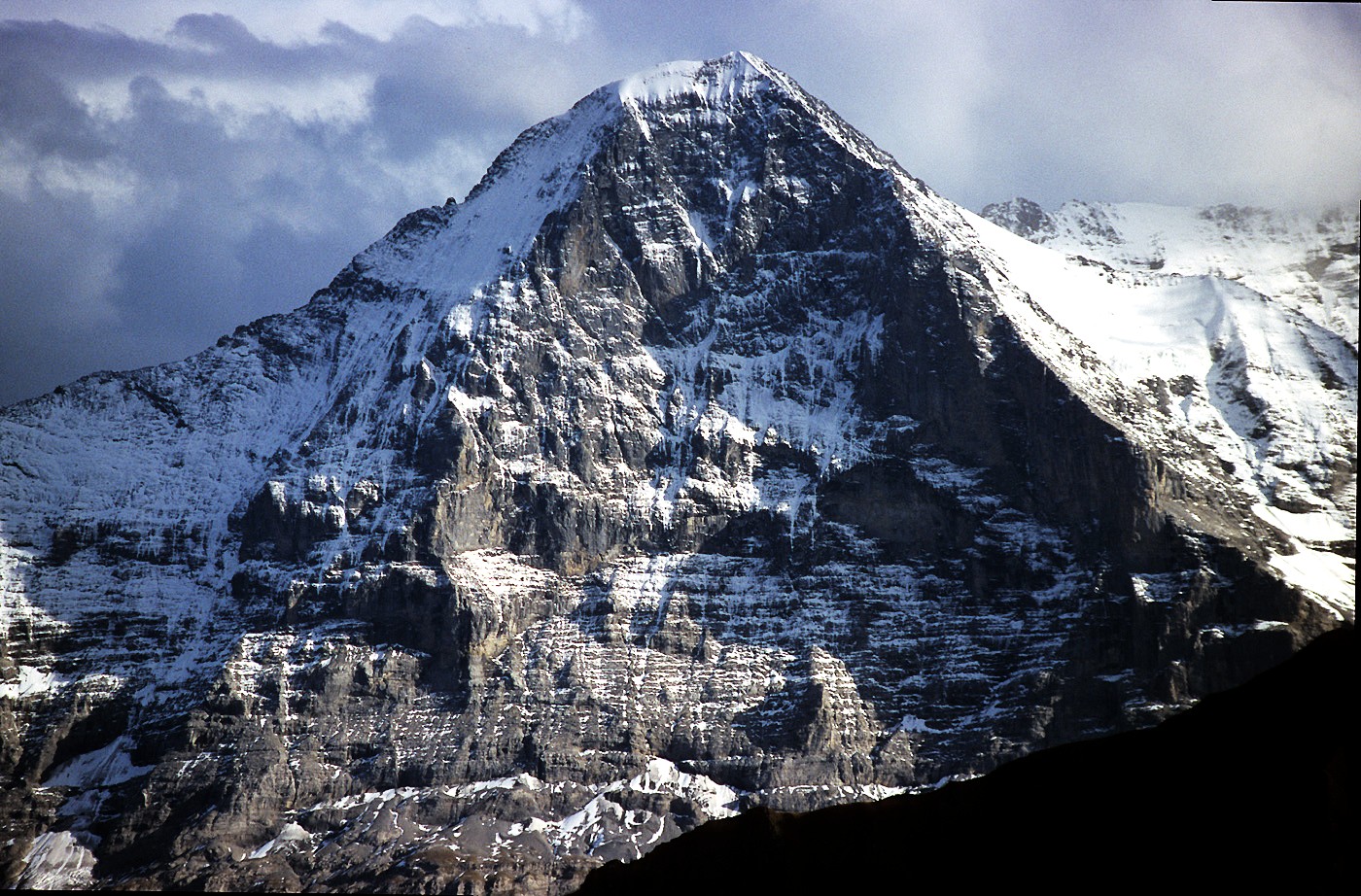
The setting of North Face is the Nordwand of the Eiger above Grindelwald and Kleine Scheidegg, not a generic mountain backdrop.
A wall, a railway and an audience
The Eiger stands in Switzerland’s Bernese Oberland. Its steep northern wall rises roughly 1,800 meters from the surrounding terrain and became famous as one of the Alps’ great north faces. The Jungfrau railway and nearby Kleine Scheidegg meant people could watch parts of major climbs using telescopes—an unusual contrast between high-altitude peril and comfortable spectators below.
The 1936 attempt was not the first climb of the Eiger summit: Charles Barrington, Christian Almer and Peter Bohren reached the top in 1858. Nor did the disaster mark a successful first ascent of the Nordwand. That breakthrough came in July 1938 with Anderl Heckmair, Ludwig Vörg, Fritz Kasparek and Heinrich Harrer.

What changed after the 1936 Eiger disaster?
The film captures the emotional cost of a failed attempt, but the longer Eiger story includes the 1938 first ascent, decades of new routes and ongoing debates about objective danger.
First Eiger summit
The summit had already been climbed from a different side. The notorious western north wall was a separate technical problem.
Fatal north-wall attempts
The 1935 and 1936 disasters brought global attention to the dangers, media spectacle and possibility of retreat.
The north face is finally climbed
Heckmair, Vörg, Kasparek and Harrer completed the famous line; the later Heckmair Route became a historic Alpine benchmark.
For modern readers, the lesson is not that the mountain was “conquered” permanently. Rockfall, snow, ice, temperature and weather continue to make the face a condition-dependent serious climb. Read the Eiger expedition conditions overview.
Is North Face worth watching?
For mountain-film fans, yes—particularly if you want a tense dramatization of an authentic tragedy rather than a documentary reconstruction.

The best parts of North Face communicate the friction between technical climbing, human ambition and deteriorating conditions. The film’s blend of actual Alpine environments, staged climbing and studio sequences gives the wall a physical presence.
The main reservation concerns the romantic and political subplots. Critics including Roger Ebert and the Guardian argued that those additions sometimes distract from the already powerful historical material. But the filmmaker acknowledged that they were crafted for a broader dramatic audience.
Best for: viewers interested in mountaineering history, Alpine rescue, historical dramas and films in the tradition of Touching the Void.
Not for: anyone expecting a documentary, precise climbing instruction or a record of all authentic dialogue.
For viewing availability, check a legitimate film distributor or your usual rental service. Streaming catalogs vary by country and date.
Official film information →Where can visitors see the Eiger North Face?
The face is visible from viewpoints in the Bernese Oberland. Seeing the mountain does not require climbing it.
Kleine Scheidegg
The famous pass gives wide views toward the Eiger’s north wall and preserves the sense of a mountain watched from nearby transport and hotel terraces.
Grindelwald
A practical valley base for Eiger viewpoints, railway outings and mountain walks. Route conditions and railway services change seasonally.
For a sightseeing-focused visit, check the Bernese Oberland hiking guide and the Eiger mountain guide. Neither is a recommendation to attempt the North Face.
Affiliate disclosure: Global Summit Guide may earn a commission if you book qualifying travel through the following Expedia link, at no additional cost to you. Browse lodging for the Jungfrau region on Expedia →
North Face true story: frequently asked questions
Concise answers to the major film, disaster, climber and Eiger questions. Expand a question to explore.
Is North Face (2008) a true story?
Yes. Its central events—the four-man July 1936 attempt, failed retreat and Toni Kurz rescue—are historical. The romance and much dialogue are dramatized.
What is the original German title of the film?
Nordwand, literally “North Wall” or “North Face,” referring to the Eiger’s north face.
Who directed North Face?
Philipp Stölzl directed the German-language 2008 feature.
When did the real Eiger disaster happen?
The four climbers started on July 18, 1936. Toni Kurz, the final survivor, died during the rescue attempt on July 22, 1936.
Who were the four real climbers?
The Germans Toni Kurz and Andreas Hinterstoisser, and Austrians Willy Angerer and Eduard (Edi) Rainer.
Did any of the four climbers survive?
No. All four died, although Kurz survived several days and briefly communicated with the Swiss rescuers.
Was Luise Fellner a real person?
The director said Kurz had a girlfriend named Luise, but the film’s journalist character and romantic storyline were largely invented for drama. Do not regard her screen biography as a historical record.
Did the Germans and Austrians start as rivals?
The film emphasizes separate parties, but the contemporary Alpine Journal describes two pairs who had arranged to climb together before the July 18 start.
What is the Hinterstoisser Traverse?
A difficult sideways crossing on the Eiger North Face associated with Andreas Hinterstoisser. Its reversibility became a critical challenge during the party’s retreat.
What stopped Toni Kurz from reaching rescuers?
A knot joining rope sections could not pass through his carabiner while he was abseiling, leaving him hanging just above the Swiss guides.
Who tried to rescue Toni Kurz?
Contemporary records name Swiss guides Adolf and Christian Rubi, Hans Schlunegger and Arnold Glatthard.
Is the Eiger a real mountain?
Yes. The Eiger stands in the Bernese Oberland of Switzerland, above Grindelwald and Kleine Scheidegg.
Did the four climbers reach the summit?
No. The four-man 1936 North Face attempt failed, and the group began retreating before reaching the summit.
Who first climbed the Eiger North Face?
The celebrated 1938 first ascent of the western north wall was completed by Anderl Heckmair, Ludwig Vörg, Fritz Kasparek and Heinrich Harrer.
Did the Nazis use mountain climbing for propaganda?
Mountaineering achievements were entangled with nationalist prestige in 1930s Germany, and contemporary accounts mention recognition linked to the Olympic year. The movie’s personal political dialogue is dramatized.
How long is North Face (2008)?
The distributor’s press materials list 121 minutes. Some databases and releases show different cuts or runtimes.
Was North Face filmed on the actual Eiger?
The production used Alpine location photography as well as staged and studio sequences. It was not a documentary filmed in the 1936 rescue.
Is this the same as the outdoor clothing brand The North Face?
No. North Face (2008), or Nordwand, is a mountaineering feature film about the Eiger.
Is North Face a documentary?
No. It is a historical feature drama based on real events, with scripted scenes and fictionalized characters.
What should I watch after North Face?
Touching the Void offers a different, documentary-style reconstruction of a survival story; Meru follows climbers on an expedition. Both provide useful contrasts with North Face.
Primary records, filmmaker interviews and film details
The page distinguishes historical reporting, a director’s own admissions and later critical opinion. The sources below are directly relevant to the claims they support.
- Alpine Journal, “Accidents in 1936,” pp. 369–373 — the contemporary chronology, July 18 departure, failed retreat and Kurz rescue.
- Tribeca Film, interview with Philipp Stölzl (2010) — director’s explanation of the Luise storyline, reconstructed history and Nazi-era characterization.
- Music Box Films, distributor press notes — cast, running time, premise and production context.
- filmportal.de, Nordwand — independent German film archive credits and release data.
- Swiss Alpine Club, historical accident register — names of the four Eiger fatalities.
- Roger Ebert review (2010) and Guardian review (2009) — reactions to the filmmaking and fictional romantic additions.
How this guide was researched: We have not interviewed surviving participants (there were none). The early climbing sequence remains a historical reconstruction, and filmmakers’ narrative choices are labeled as such. Photos depict the real Eiger and its surroundings in later decades; they are not presented as imagery from 1936 or stills from the film.
More Eiger history and mountain films
Follow the mountain’s actual history, then compare what makes different climbing films compelling.
The Eiger climbing guide
Explore the real mountain, its different faces and routes, climbing difficulty and geographic setting.
The Alpine North Faces
Compare the Eiger’s North Face with other celebrated technical Alpine walls and their first-ascent histories.
Touching the Void and Meru
Two contrasting mountaineering films: survival reconstruction versus expedition documentary. Look for dedicated film guides as they are published.
Understand the story.
Remember the climbers.
The real Eiger disaster is compelling enough without invented certainty. Discover the events, the people and the dramatic choices that brought this tragedy to the screen.
Was this helpful?
🏔Related peaks nearby
🧭Explore & compare
Global Summit Guide is an independent mountaineering resource founded in 2026. The team combines first-hand trekking and climbing experience with in-depth research and professional health and nutrition review to help climbers choose objectives, prepare properly, and stay safe.
Health, altitude, and nutrition content is reviewed by Taylor Ludlow (Registered Nurse) and Brigg Hoopes (Nutritionist).
What We Don't Know Yet
Mountain information changes quickly. This box explains the limits of what this page can responsibly promise.
- Visa, passport, vaccination, border, insurance, and local transportation rules may change before your trip.
- Route conditions, snowpack, closures, and weather can change quickly after this page is updated.
- Permit rules, fees, quotas, and reservation windows may change between review cycles.
- Operator availability, pricing, guide ratios, and cancellation terms can change by season.
- Your fitness, altitude response, risk tolerance, and experience level may change what is safe or realistic.
Verify current conditions with official land managers, guide services, local forecasts, and current route reports before booking or climbing.
Mountaineering, rock and ice climbing, glacier travel, and high-altitude activity are inherently dangerous and can result in serious injury or death. The information on Global Summit Guide is provided for general informational and educational purposes only and is not a substitute for professional instruction, qualified guiding, proper equipment, or your own judgment and experience.
Route conditions, weather, snowpack, permits, regulations, and hazards change constantly and may differ from what is described here. Details may be incomplete, out of date, or contain errors. Always verify current information with local authorities, certified guides, and official sources before making any decision in the mountains.
Nothing on this site is medical, legal, or financial advice. Our fitness, acclimatization, altitude, and nutrition content is general in nature; consult a qualified physician before beginning any strenuous exercise program or exposing yourself to high altitude.
You are solely responsible for your own safety and decisions. To the fullest extent permitted by law, Global Summit Guide and its team accept no liability for any loss, injury, damage, or expense arising from use of, or reliance on, this information. By using this site you acknowledge these risks and accept these terms.
Some links on this site may be affiliate links. If you buy through them we may earn a small commission at no extra cost to you; this never affects our recommendations.
Global Summit Guide recommendation path
Next Best Mountain to Research
Use these recommendations to continue the right planning path instead of stopping on one page.
Use current permit, weather, route, and operator information before booking or climbing.