
Last updated September 14, 2026

Everest 1922 Disaster: The First Climbing Deaths
The 1922 Everest expedition pushed humans above 8,000 metres for the first time and tested supplemental oxygen on the world’s highest mountain. Then, on June 7, an avalanche below the North Col swept away high-altitude porters supporting the third summit attempt. Seven men died—the first recorded climbing fatalities on Mount Everest itself.
Seven high-altitude porters died below the North Col during Everest’s third 1922 summit attempt.
On June 7, 1922, George Mallory, Howard Somervell and Colin Crawford set out with fourteen high-altitude porters to re-establish the route toward the North Col after heavy snowfall.
The party tested snow on the steeper lower section and believed it was stable. Higher on the slope, however, a slab released above the party. Two porter rope teams were swept over an ice cliff and into a crevasse system. Seven men were killed.
These were the first recorded deaths during climbing on Everest itself. They began the fatality record that the Everest Death Map traces forward through more than a century of expeditions.
- Date: June 7, 1922.
- Location: approach to the North Col from the East Rongbuk side.
- Hazard: fresh-snow avalanche.
- Victims: seven expedition porters.
- Attempt: third summit push of the 1922 expedition.
- Result: the expedition’s climbing ended.
“First Everest deaths” needs one qualification.
These were the first recorded climbing fatalities on Mount Everest itself. Alexander Kellas had died during the approach to the 1921 reconnaissance expedition, so it would be inaccurate to call June 1922 the first death associated with any Everest expedition.
The Expedition Was Already Rewriting High-Altitude History
The disaster is easier to understand when placed beside what the expedition had accomplished during the preceding seventeen days.
26,985 ft / about 8,225 m
Mallory, Edward Norton and Howard Somervell climbed to a point beneath Everest’s North Ridge shoulder, setting a new human altitude record.
About 27,300 ft / 8,320 m
George Finch and Geoffrey Bruce climbed higher using bottled oxygen, providing one of the earliest dramatic demonstrations of oxygen’s value at extreme altitude.
One More Push
The team tried again after worsening weather and substantial new snow. This time the defining danger was not oxygen deprivation or technical climbing—it was snow stability.

How Everest Reached the June 7 Disaster
The avalanche did not occur during an isolated reconnaissance. It came after the first deliberate full-scale expedition organized to try to reach Everest’s summit.
The northern route is identified.
The 1921 British reconnaissance mapped Everest’s northern approaches. George Mallory identified the East Rongbuk Glacier and North Col as the practical gateway toward the North Ridge.
The first expedition organized specifically to climb Everest arrives.
Charles Granville Bruce led the expedition through Tibet toward Rongbuk. A dedicated corps of high-altitude porters carried camps, food, oxygen and equipment progressively higher on the mountain.
Mallory, Norton and Somervell climb to 26,985 feet.
They did so without supplemental oxygen, pushing human experience above 8,000 metres and establishing a new world altitude record.
Finch and Geoffrey Bruce reach roughly 27,300 feet.
Their oxygen-assisted climb surpassed the first attempt’s altitude record and helped establish supplemental oxygen as a serious tool for future Everest expeditions.
Heavy snow alters the approach to the North Col.
The established track disappeared. Deep unconsolidated snow covered sections that had previously been harder ice.
Mallory, Somervell and Crawford leave with fourteen porters.
They started at about 8 a.m. to carry loads upward and prepare another summit attempt. Movement through knee-deep snow was extremely slow.
The snowpack fractures above the party.
An avalanche carried members of the group downslope. Two porter rope teams were swept beyond an ice cliff and into the crevasse zone below.
Seven porters are dead. The third attempt ends.
Two deeply buried workers survived. Seven others were killed. The expedition abandoned further summit attempts and later built a cairn at Camp III in their memory.
Why Did the 1922 Everest Avalanche Release?
The most valuable part of Mallory’s own account is that the team had thought about avalanche danger—and still misread the snow.
The Mountain Had Changed
Heavy snowfall had erased earlier tracks and deposited deep new snow across the North Col approach.
The Steep Snow Held
The climbers deliberately tested the snow over a steeper icy section. It remained attached despite attempts to make it move.
Gentler Looked Safer
Because the snow held on steeper terrain, the team concluded that the gentler slopes above should present less avalanche danger.
The Slab Broke Above Them
The eventual fracture began roughly 100 feet above the climbers, possibly where shaded snow had drifted more deeply and remained less consolidated.
The accident became an early lesson in the danger of “proof by appearance.”
Mallory later wrote that more experience and knowledge might have warned them away. The lower snow tests had been real—but the tests did not describe the structure of every part of the slope above.

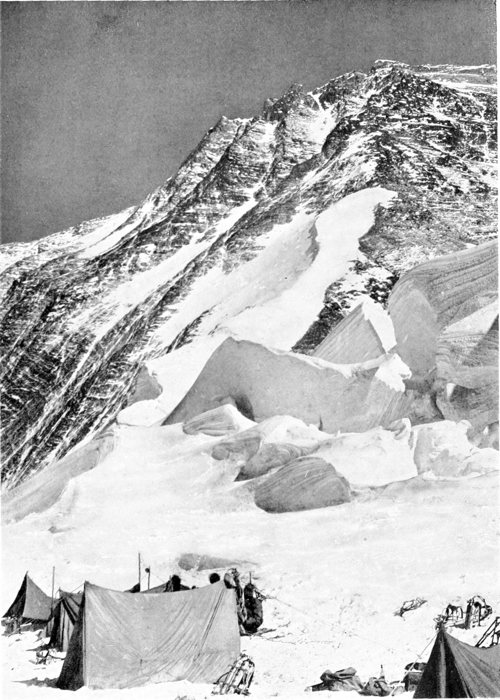
The First Recorded Climbing Fatalities on Everest
The names below follow the surviving Mount Everest Committee compensation record cited in modern archival research. Spellings can vary in later historical sources.
Why Global Summit Guide uses “high-altitude porters” here.
The 1922 expedition book uses period terminology that is now outdated and often reductive. The archival casualty record identifies six of the dead as ethnic Sherpa and one as Bhotia. Their expedition role was high-altitude load carrying, so this page distinguishes occupation from ethnicity wherever possible.
We Know Much More About the Climbers Than the Workers
That imbalance is itself part of understanding early Everest history.

The disaster survives almost entirely through the voices of expedition leadership.
Mallory left a detailed account of the avalanche. The expedition published extensive descriptions of snow conditions, climbing decisions, rescue work and the psychology of the survivors.
The seven men who died did not leave equivalent written accounts in the surviving expedition archive. Modern archival research notes that even their names are preserved principally because the Mount Everest Committee recorded compensation payments to their surviving dependants.
That means a modern history should not confuse a detailed British account with a complete account of everyone’s experience. The logistics system depended heavily on Himalayan workers, but the surviving written record disproportionately preserves the perspectives of the expedition’s European organizers and climbers.
This problem did not begin with modern commercial Everest. It is visible at the beginning of organized summit attempts.
Everest’s Oxygen Debate Also Began Here
The expedition is remembered for tragedy, but technically it also changed how climbers thought about survival above 8,000 metres.

Four cylinders, roughly 30 pounds—and an argument about whether oxygen belonged in mountaineering.
Supplemental oxygen was controversial. The apparatus was heavy, cumbersome and experimental, and some climbers questioned whether using it diminished the sporting achievement.
George Finch took the opposite view. During the second summit attempt, Finch and Geoffrey Bruce used oxygen to climb to roughly 27,300 feet, higher than any human had previously climbed.
The expedition therefore produced two very different altitude milestones: a record without oxygen and, six days later, a still higher record with it. Both happened before the avalanche ended the season.
Why this matters to the disaster story
Some of the loads being carried during the June 7 third attempt included oxygen cylinders. The fatal accident therefore connects Everest’s earliest technological experimentation directly to the human labor required to move that technology up the mountain.
1922 Everest Was a North-Side Expedition
Nepal was not yet open to foreign climbing expeditions. The early British attempts approached Everest through Tibet and the Rongbuk glaciers.

The 1922 avalanche was not the Khumbu Icefall disaster.
The June 1922 accident occurred on the northern approach below the North Col. The famous 2014 disaster occurred on the Nepal side in the Khumbu Icefall when hanging glacier ice collapsed from Everest’s West Shoulder. Both killed expedition workers, but the terrain, avalanche mechanism and commercial-era context were fundamentally different.
1922 vs 2014: Two Worker Disasters, Different Hazards
Linking these events is useful only if the differences remain clear.
| Event | Side of Everest | Location | Primary Mechanism | Deaths | Historical Meaning |
|---|---|---|---|---|---|
| 1922 Everest disaster | Tibet / north | Below the North Col | Fresh-snow avalanche on the North Col approach. | Seven high-altitude porters. | First recorded climbing fatalities on Everest and an early lesson in snow judgment and expedition-worker exposure. |
| 2014 Everest avalanche | Nepal / south | Khumbu Icefall | Hanging-glacier / serac collapse from the West Shoulder. | Sixteen Nepali high-altitude workers. | Major modern turning point in insurance, labor conditions, worker risk and commercial-expedition ethics. |
Four Lessons From Everest’s First Fatal Climbing Accident
The equipment has changed almost beyond recognition. Several decision-making problems have not.
A Passed Test Is Local
Stable snow in one section does not prove that the entire slope shares the same layering, loading or wind history.
Gentler Is Not Automatically Safer
The party relaxed after the steepest test slope held. The avalanche initiated higher on seemingly less threatening terrain.
Logistics Create Exposure
Summit ambitions require camps, food, equipment and—already in 1922—supplemental oxygen to be carried upward by other people.
Historical Records Have Blind Spots
A detailed accident narrative can still omit the voices of the people who carried much of the expedition’s physical risk.
Sources Used for the 1922 Everest Disaster
The event reconstruction prioritizes the expedition’s own published 1923 account, then modern archival scholarship for the worker names and record limitations.
The Assault on Mount Everest, 1922
The primary expedition narrative published in 1923, including
Mallory’s account of the third attempt and avalanche.
Read the primary source →
Other Everests
Modern scholarly research using the Royal Geographical Society
archives, including the surviving compensation record naming
the seven men who died.
Explore the research →
Royal Geographical Society
The RGS holds the official photographic and documentary archive
for Britain’s early Everest expeditions, including worker records.
Explore RGS collections →
1922 Expedition Photography
Historical expedition photographs from the 1923 volume and
public-domain reproductions preserved through Wikimedia Commons.
View the Commons collection →
Everest Death Map
Global Summit Guide’s cumulative fatality dataset owns the larger
question of where and when Everest deaths occurred.
Open the Death Map →
Editorial Boundary
This article treats 1922 as a historical event. Current route conditions, commercial risks and modern operator decisions belong in their dedicated Everest guides.
Continue Through the Everest Disaster & Risk Library
The 1922 avalanche starts Everest’s recorded climbing-fatality history. These pages carry the story forward into the full death record, modern disasters, route risk and expedition labor.
Everest 1922 Disaster FAQ
These answers refer specifically to the June 7 accident and the 1922 British Everest expedition.
What happened on Everest in 1922?
Who were the first people to die climbing Everest?
How many people died in the 1922 Everest disaster?
Where did the 1922 Everest avalanche happen?
What caused the 1922 Everest avalanche?
Did George Mallory cause the 1922 avalanche?
Did the 1922 Everest expedition use oxygen?
How high did Mallory climb Everest in 1922?
Did anyone summit Everest in 1922?
Why is the 1922 disaster important today?
Was this helpful?
🏔Related peaks nearby
🧭Explore & compare
Global Summit Guide is an independent mountaineering resource founded in 2026. The team combines first-hand trekking and climbing experience with in-depth research and professional health and nutrition review to help climbers choose objectives, prepare properly, and stay safe.
Health, altitude, and nutrition content is reviewed by Taylor Ludlow (Registered Nurse) and Brigg Hoopes (Nutritionist).
What We Don't Know Yet
Mountain information changes quickly. This box explains the limits of what this page can responsibly promise.
- Visa, passport, vaccination, border, insurance, and local transportation rules may change before your trip.
- Route conditions, snowpack, closures, and weather can change quickly after this page is updated.
- Permit rules, fees, quotas, and reservation windows may change between review cycles.
- Operator availability, pricing, guide ratios, and cancellation terms can change by season.
- Your fitness, altitude response, risk tolerance, and experience level may change what is safe or realistic.
Verify current conditions with official land managers, guide services, local forecasts, and current route reports before booking or climbing.
Mountaineering, rock and ice climbing, glacier travel, and high-altitude activity are inherently dangerous and can result in serious injury or death. The information on Global Summit Guide is provided for general informational and educational purposes only and is not a substitute for professional instruction, qualified guiding, proper equipment, or your own judgment and experience.
Route conditions, weather, snowpack, permits, regulations, and hazards change constantly and may differ from what is described here. Details may be incomplete, out of date, or contain errors. Always verify current information with local authorities, certified guides, and official sources before making any decision in the mountains.
Nothing on this site is medical, legal, or financial advice. Our fitness, acclimatization, altitude, and nutrition content is general in nature; consult a qualified physician before beginning any strenuous exercise program or exposing yourself to high altitude.
You are solely responsible for your own safety and decisions. To the fullest extent permitted by law, Global Summit Guide and its team accept no liability for any loss, injury, damage, or expense arising from use of, or reliance on, this information. By using this site you acknowledge these risks and accept these terms.
Some links on this site may be affiliate links. If you buy through them we may earn a small commission at no extra cost to you; this never affects our recommendations.
Global Summit Guide recommendation path
Next Best Mountain to Research
Use these recommendations to continue the right planning path instead of stopping on one page.
Use current permit, weather, route, and operator information before booking or climbing.