Last updated October 25, 2026
127 Hours: The Real Aron Ralston Survival Story
Danny Boyle’s 2010 film 127 Hours is based on a real emergency in Utah’s Bluejohn Canyon. In April 2003, outdoorsman Aron Ralston was trapped by a fallen boulder for nearly five and a half days. Here’s what really happened, what the movie changes, and the most important lesson the canyon leaves behind.
Historical narrative · Film fact-check · Bluejohn Canyon geography · Non-graphic account

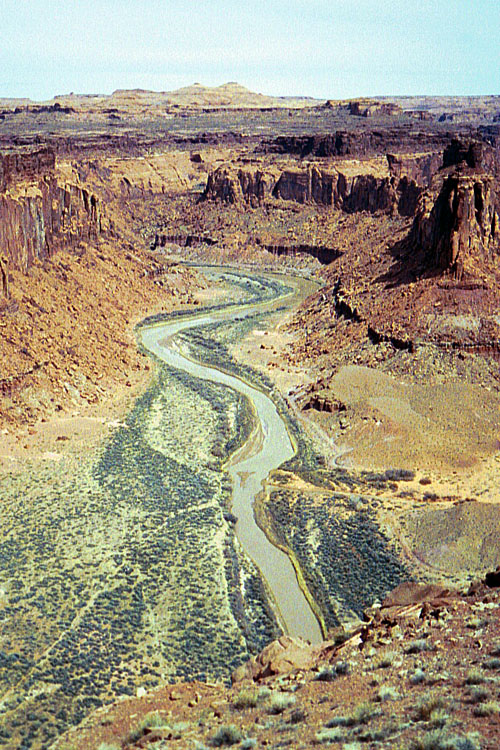
Actual Bluejohn Canyon, photographed in 2011 · Michael Grindstaff, CC BY-SA 3.0. Image source and license.
Is 127 Hours a true story?
Yes. The central story is true. On April 26, 2003, 27-year-old Aron Ralston was exploring Bluejohn Canyon on his own when a chockstone shifted and pinned his right forearm in a narrow sandstone passage. He had not left a specific itinerary with a trusted contact, and no one knew where to search.
Unable to move the boulder and with limited water, food and no reliable means of contacting help, Ralston remained there until May 1. He ultimately made the extraordinary decision to free himself by amputating his trapped forearm, then navigated out of the canyon and encountered other hikers before a helicopter evacuation. This article describes that decision without graphic detail.
The 2010 movie, directed by Danny Boyle and starring James Franco, closely follows those events. Ralston consulted on the production and praised its overall fidelity, while acknowledging that some moments—most notably a swimming scene with hikers before the accident—were invented or expanded for cinema.
National Geographic’s 2003 reporting and Ralston’s 2010 retrospective interview are useful starting points for the firsthand and contemporary record.

Ralston was an experienced mountaineer and winter fourteeners climber. His experience shows that technical skill does not replace a shared itinerary, realistic rescue assumptions or thoughtful risk management.
Explore the GSG mountain directory →127 Hours official trailer and film details
Official trailer published by Searchlight Pictures. Video is provided by the film’s distributor; GSG does not own the trailer.
| Film | 127 Hours (2010) |
| Director | Danny Boyle |
| Aron Ralston | James Franco |
| Writing | Danny Boyle and Simon Beaufoy |
| Source book | Between a Rock and a Hard Place (2004), by Aron Ralston |
| Runtime | Approximately 93 minutes |
| U.S. theatrical release | November 5, 2010 |
| Rating | R; contains an intense injury sequence |
For official availability and details, see Searchlight Pictures and 20th Century Studios. Streaming availability varies by region and may change.
Where did Aron Ralston get trapped?
Bluejohn Canyon is in the isolated Robbers Roost landscape of southeastern Utah, not a busy, marked roadside attraction. The broader area lies east of Hanksville and near the Horseshoe Canyon and Maze country associated with Canyonlands National Park. Accounts frequently use the broad label “Canyonlands,” but that can obscure the complex public-land boundaries and unmaintained approaches.
The canyon’s narrow slots are carved through sandstone and can include downclimbs, chokestones, difficult exits and stretches where a party cannot simply reverse its route. The setting is important: Ralston was not missing on a popular day-hiking path where a regular stream of visitors would have found him.
The Bureau of Land Management’s Robbers Roost overview emphasizes the low likelihood of encountering other parties, limited facilities and unpatrolled backcountry.

Bluejohn Canyon, a remote slot within the Robbers Roost area.
Eastern Wayne County, Utah; approached via remote desert roads.
Unreliable cell service, difficult road conditions and highly variable route hazards.
The Robbers Roost landscape can look close to populated Utah on a map yet remain effectively isolated. Visitors should review official land-management rules for the exact approach rather than assuming every segment follows one national-park permit system.
The real 127 Hours timeline
This sequence is assembled from Ralston’s later interviews and contemporary reporting. The exact minute-by-minute reconstruction of every action varies between retellings, but the six-day sequence is well established.
Saturday, April 26: A day trip becomes an emergency
Ralston enters Bluejohn Canyon alone during a planned day of recreation. A heavy chockstone shifts as he negotiates a narrow drop and pins his right forearm. He tries to move the rock and assess whether he can release his hand, but the stone remains immobile.
He is carrying supplies suitable for a normal short outing—not several nights immobilized in the desert. Critically, he had not shared an actionable route and return plan before leaving.
April 27–30: Limited supplies and mounting isolation
For days, Ralston attempts different methods of freeing himself while rationing supplies and documenting thoughts on his video camera. The film uses memories and imagined encounters to depict his physical and emotional state.
People in his life begin to notice his unexplained absence, but a general concern is not the same as knowing which remote slot canyon to search. He cannot rely on someone simply happening by.
Thursday, May 1: Escape, hikers and air rescue
After almost five and a half days, Ralston frees himself by amputating his trapped forearm. He then makes his way down the canyon terrain, including a substantial rappel, and walks toward an exit.
He encounters other visitors in the broader Horseshoe Canyon area. A rescue helicopter reaches him later that day. Contemporary accounts vary on the distances stated for each part of the exit, but consistently place the rescue on May 1.
The boulder accident
An approximately 800-pound chockstone pins Ralston’s arm in Bluejohn Canyon.
The waiting period
Repeated efforts to free himself and the exhaustion of provisions.
The escape and rescue
Ralston exits the slot, encounters other people and is evacuated to medical care.
The film reaches theaters
Danny Boyle’s dramatization brings the story to an international audience.

Why this timeline matters
The title 127 Hours compresses a highly complex experience into a single memorable number. It should not be read as a precise timecode for each scene. It indicates the extraordinary duration of confinement before he freed himself.
The accident began on a Saturday, and his escape came on Thursday. The crucial distinction is between being trapped and being rescued: after freeing himself, he still had to get out of canyon terrain and reach other people.
127 Hours: what really happened, and what changed?
Rather than a “completely true” or “completely fictional” verdict, the best way to judge the film is to separate its documented core from dramatized scenes.
| Film detail | Historical record | GSG assessment |
|---|---|---|
| Aron is alone when a boulder traps his arm | The 2003 accident was real, and he was alone in Bluejohn Canyon. | Accurate foundation. |
| He has not told anyone his precise destination | Contemporary accounts confirm he did not leave a specific itinerary. | Accurate; central risk factor. |
| Aron meets two women before the accident | He did meet two women, but the exact sequence and emphasis differ from his recollection. | Based on real people; dramatized. |
| He leads them to a hidden pool | The memorable swimming-pool sequence was invented for cinematic effect. | Invented set piece. |
| Video messages and memories during confinement | Ralston made real recordings and later described emotional memories and imagined encounters. | Historically grounded; stylized depiction. |
| Days of trying to free the arm | Ralston remained stuck until May 1, after repeated unsuccessful attempts. | Accurate broad sequence. |
| He escapes and meets other hikers | He freed himself and encountered visitors before being reached by a helicopter. | Accurate result; details compressed. |
| The canyon footage depicts the actual accident site | Some filming and research occurred on location, while much of the close-quarters action used a meticulously recreated set. | Mixed locations and a controlled replica. |
In his interview with The Guardian, Ralston endorsed the film’s overall fidelity while explaining why selective inventions could still convey his experience. Danny Boyle described the adaptation decisions in National Geographic.

Who was Aron Ralston before the accident?

Aron Ralston was not a fictional wilderness novice. Before April 2003, he was an experienced climber and outdoorsman, passionate about Colorado fourteeners and solo mountain trips. His background helps explain why the dangerous day trip initially seemed manageable to him.
James Franco portrays Ralston in the 2010 film. Other cast members play his family and the women he met before the incident, but the film deliberately centers one man’s interior experience rather than recreating every conversation with documentary precision.
The footage Ralston recorded while trapped was deeply personal. Public interviews make clear that the film’s re-created messages were not an unrestricted release of his private original video diaries.
Ralston’s pre-accident mountaineering experience and his later return to outdoor challenges are a reminder that risk management isn’t merely for beginners.
Real climber, writer and survivor. His memoir Between a Rock and a Hard Place supplies the core account.
Actor who portrays Ralston; the movie is a scripted dramatic feature, not an interview documentary.
Director who used location research, recreated canyon space and visual storytelling to translate the ordeal to film.
How did Aron Ralston escape Bluejohn Canyon?
Ralston was unable to lift or shift the rock. After extensive attempts and as dehydration and exhaustion worsened, he chose an emergency self-amputation to free himself. The historic fact is central to the story, but it is not a procedure or a technique anyone should attempt to learn from a movie.
Once free, the emergency was not over. Ralston still had to negotiate steep canyon terrain. He descended a cliff section by rope and walked out until he was noticed and assisted by other visitors; a search-and-rescue helicopter evacuated him to care.
Early reporting sometimes gives different figures for the walking distance or rope descent. That does not change the essential sequence: immobilization → escape → difficult exit → contact with other people → helicopter rescue.
For a direct look at the immediate reporting, see the Los Angeles Times report from May 3, 2003 and the National Geographic retrospective published that July.
Was 127 Hours filmed in the real canyon?
Partly. The creative team visited Bluejohn Canyon with Ralston and filmed material in the surrounding landscapes. But the extraordinarily tight trapped-space sequences required a recreated set, allowing controlled lighting, camera access, staging and reduced impact on the real site.
Director Danny Boyle discussed the trips to the real Bluejohn with National Geographic. Detailed production accounts in Vanity Fair explain why the filmmakers built a highly realistic replica of the trapped setting.
Remote canyon country
The real Bluejohn landscape informed the movie’s sense of isolation and exposure.
Controlled canyon replica
Close-up scenes could be filmed safely and precisely, without transforming the actual slot into a movie set.
Memory and imagination
Dreamlike transitions and flashbacks convey experiences that an exterior camera could not have observed directly.
The 127 Hours pool scene, in particular, should not be interpreted as a real hidden swimming hole in Bluejohn Canyon. Ralston confirmed that element was fictionalized.
Why did nobody know where to search?

The lasting lesson of the story is not just the physical accident. Ralston was traveling alone, and no reliable contact had a precise plan specifying the canyon he intended to explore and when he would return. The rescue problem therefore began before the boulder moved.
This distinction matters for experienced climbers as much as beginners. Technical competence can reduce some risks, but it cannot make an unreported itinerary searchable. In a slot canyon, even a helicopter may not easily see someone trapped deep beneath overhanging rock.
Bluejohn is remote from major visitor corridors. The BLM describes Robbers Roost as an area without regular patrols, with few developed facilities and a small chance of encountering others.
Read the broader GSG guide to mountains and expedition objectives for an appropriate next step from this human story into practical outdoor planning.
Six lessons from the 127 Hours story
These are broad safety practices grounded in BLM and NPS recommendations, not route-specific technical instruction. A slot canyon requires terrain-specific training, appropriate equipment and current agency information.
Leave a usable trip plan
Tell a trusted person where you’re going, which canyon or route, who is with you, and when they should contact emergency services.
Respect solo-travel limitations
Consider a suitable partner or group for committing canyoneering terrain, especially where reversing the route would be difficult.
Check the whole watershed
Slot floods can originate from rainfall out of sight upstream. Do not enter narrow washes when threatening weather is forecast.
Carry appropriate essentials
Match food, water, navigation, protection and communication to the remoteness and difficulty. Don’t assume cellular service.
Understand route commitment
Some canyons require rappels, difficult downclimbs or special equipment. Research the route with experienced local sources.
Set a realistic turnaround
A schedule should contain time buffers and an agreed missed-check-in response, rather than relying on improvisation.
Interactive departure checklist
Use these prompts to think about your next remote hike; a checked box doesn’t certify that a canyon or route is safe.

Official safety resources: BLM flash-flood and slot-canyon guidance and NPS canyon-travel preparation.
Can visitors hike Bluejohn Canyon today?
Bluejohn remains a real, remote canyoneering destination, but this film article is not a navigation guide and is not a recommendation to enter the accident passage. A visit demands more than searching for a pin labeled “Aron Ralston boulder.” Access, private/public land boundaries, road conditions, hazards and technical requirements can change; the canyon’s multiple forks are not interchangeable with easy sightseeing paths.
For the most authoritative starting point, consult the BLM Robbers Roost / Dirty Devil information and the appropriate local field office before planning. If you’re researching the history rather than seeking technical canyoneering, the landscape can be better understood through official maps, public-land interpretation and the film itself.
If you want to explore additional mountain stories rather than this particular slot, start with our 50 mountain movies and true climbing stories directory.
What happened to Aron Ralston after 127 Hours?
Ralston survived, received medical care and rehabilitation, and later spoke publicly about the incident. He published his 2004 memoir, Between a Rock and a Hard Place, on which the movie was based. His public work has included speaking, writing and returning to outdoor pursuits.
The film’s enduring appeal comes partly from the contrast between someone known as fiercely self-reliant and the eventual importance of human connection—family, those he encountered on the trail, and rescue crews. That is a more useful reading of the experience than treating the ordeal as a challenge for adventurers to imitate.
For an account of the aftermath close to the time of release, see the CBS 2010 interview with Ralston.
127 Hours true-story FAQs
Is 127 Hours based on a true story?
Yes. Aron Ralston was trapped by a boulder in Bluejohn Canyon, Utah, from April 26 until May 1, 2003, and the film dramatizes his real ordeal.
Where is the real 127 Hours canyon?
Bluejohn Canyon is in the remote Robbers Roost area of southeastern Utah near the broader Horseshoe Canyon and Canyonlands country.
Did Aron Ralston really survive for 127 hours?
He was trapped for almost five and a half days. The title describes the duration of the central ordeal, not the timing of every film scene.
Is the 127 Hours swimming pool scene real?
No. Ralston met two hikers before the incident, but the swimming sequence was created for the film.
Who plays Aron Ralston in the movie?
James Franco plays Aron Ralston in Danny Boyle’s 2010 film.
Who directed 127 Hours?
Danny Boyle directed it; he co-wrote the screenplay with Simon Beaufoy.
What book inspired the movie?
Aron Ralston’s memoir Between a Rock and a Hard Place, published in 2004.
How was Aron Ralston rescued?
After escaping the boulder and descending the canyon, he encountered other hikers and was reached by a rescue helicopter on May 1, 2003.
Was 127 Hours filmed at Bluejohn Canyon?
The filmmakers researched and filmed in the real area, but close-quarters sequences also used a detailed recreated set.
Did Ralston tell anyone where he was going?
No. He had not given a trusted contact a specific actionable itinerary for his Bluejohn outing.
Can you visit Bluejohn Canyon?
It is a real remote canyoneering location, not an easy movie sightseeing trail. Consult the BLM and local land managers for current access and technical requirements.
Is 127 Hours a documentary?
No. It is a scripted, R-rated dramatic feature based on real events.
What is the most useful lesson from 127 Hours?
Share a detailed trip plan with a responsible contact; evaluate route commitment and environmental hazards instead of relying on experience alone.
Sources, corrections and photo credits
GSG separates the documentary record from film dramatization, and uses no copyrighted movie stills. Only the embedded official distributor trailer is shown. The lead image depicts Bluejohn Canyon itself; regional images are explicitly labeled as context and not as photographs of the 2003 incident.
- Official film overview and credits — Searchlight Pictures
- 20th Century Studios — runtime, cast and release information
- National Geographic, 2003 — contemporary reporting on the accident
- Los Angeles Times, May 3, 2003 — early rescue account
- The Guardian, 2010 — Ralston on the film and real events
- National Geographic, 2010 — director Danny Boyle interview
- Vanity Fair — set design and filming adaptation
- BLM — Robbers Roost / Dirty Devil landscape and access
- BLM — Utah flash floods and slot-canyon safety
- NPS — canyon safety and trip plans
- Film4 — production and award context
Photographs and reuse terms
These links identify each individual image, its original creator and the license under which it is available. Attribution and changes should be maintained if images are downloaded, cropped or re-uploaded to WordPress.
- Main Fork, Bluejohn Canyon, Utah — Michael Grindstaff · CC BY-SA 3.0. Actual Bluejohn Canyon — the location of the 2003 accident. Photographed in 2011.
- Aron Ralston on Capitol Peak, Colorado, February 2003 — Aron Ralston · CC BY-SA 3.0. Aron Ralston on a Colorado winter summit before his Utah canyon accident — not a movie still.
- Upper Robbers Roost Canyon, Utah — Doc Searls · CC BY 2.0. Upper Robbers Roost: landscape from the wider remote desert region, not Bluejohn itself.
- Little Wild Horse Canyon, Utah — BLM Utah / Matt Blocker · U.S. public domain. A different Utah slot canyon photographed by BLM staff. Context for narrow-canyon travel, not the accident site.
- Henry Mountains from Robbers Roost, Utah — Jason Hollinger · CC BY 2.0. The remote Robbers Roost landscape at sunset; the image is not an accident photograph.
- Aron Ralston at the 127 Hours film premiere, 2010 — Tony Shek · CC BY-SA 2.0. The real Aron Ralston at the film premiere, not James Franco in character.
- Dirty Devil River near Twin Corral Box Canyon, Utah — Seth G. Cowdery · CC BY 2.0. Dirty Devil River drainage: a nearby regional landscape, not the trapped location.
- Great Gallery in Horseshoe Canyon, Utah — Ken Lund · CC BY-SA 2.0. Horseshoe Canyon cultural landscape near Robbers Roost; the accident did not occur at this art site.
- Aron Ralston in Paris, January 2011 — Nicolas Richoffer · CC BY-SA 4.0. Aron Ralston following the release of 127 Hours, photographed in 2011.
Editorial note: This is a historical and film-accuracy article, not medical advice or route beta. Always confirm current access and safety information with the relevant public-land agency. Article researched October 2026.
Where to go after the true story
The film introduces a larger world of climbers, expeditions and consequential decisions. Follow the subject that interests you most.
From movie curiosity to informed adventure
Start with the story, understand the real decisions and terrain, then read the mountain and travel guides that match your experience. Great outdoor storytelling should increase respect for the wilderness—not encourage copying an extraordinary emergency.
Was this helpful?
Global Summit Guide is an independent mountaineering resource founded in 2026. The team combines first-hand trekking and climbing experience with in-depth research and professional health and nutrition review to help climbers choose objectives, prepare properly, and stay safe.
Health, altitude, and nutrition content is reviewed by Taylor Ludlow (Registered Nurse) and Brigg Hoopes (Nutritionist).
What We Don't Know Yet
Mountain information changes quickly. This box explains the limits of what this page can responsibly promise.
- Route conditions, trailhead access, crevasse exposure, stream crossings, and rescue access may vary from published planning guidance.
- Comparisons simplify complex decisions; the better mountain depends on current conditions, skills, timing, budget, and risk tolerance.
- Visa, passport, vaccination, border, insurance, and local transportation rules may change before your trip.
Verify current conditions with official land managers, guide services, local forecasts, and current route reports before booking or climbing.
Mountaineering, rock and ice climbing, glacier travel, and high-altitude activity are inherently dangerous and can result in serious injury or death. The information on Global Summit Guide is provided for general informational and educational purposes only and is not a substitute for professional instruction, qualified guiding, proper equipment, or your own judgment and experience.
Route conditions, weather, snowpack, permits, regulations, and hazards change constantly and may differ from what is described here. Details may be incomplete, out of date, or contain errors. Always verify current information with local authorities, certified guides, and official sources before making any decision in the mountains.
Nothing on this site is medical, legal, or financial advice. Our fitness, acclimatization, altitude, and nutrition content is general in nature; consult a qualified physician before beginning any strenuous exercise program or exposing yourself to high altitude.
You are solely responsible for your own safety and decisions. To the fullest extent permitted by law, Global Summit Guide and its team accept no liability for any loss, injury, damage, or expense arising from use of, or reliance on, this information. By using this site you acknowledge these risks and accept these terms.
Some links on this site may be affiliate links. If you buy through them we may earn a small commission at no extra cost to you; this never affects our recommendations.
Global Summit Guide recommendation path
Next Best Mountain to Research
Use these recommendations to continue the right planning path instead of stopping on one page.
Use current permit, weather, route, and operator information before booking or climbing.